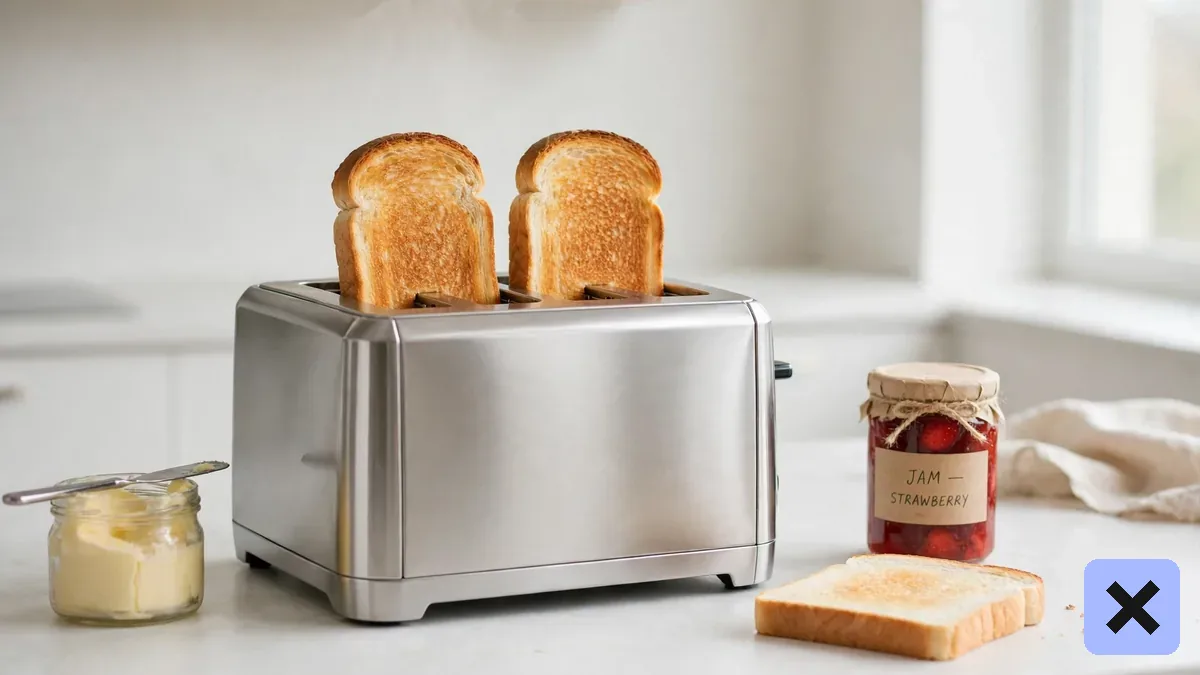
Finding the best toasters in 2026 should be simple, and in one sense it is: a toaster has one job, and most of them do it reasonably well. The trouble starts when you want more than reasonably well. You want both sides browned evenly, bread that pops up without a fight, bagels toasted on one side only, and a machine that still looks good on the counter after two years of daily use.
The best toasters share a simple quality: they brown evenly, they handle different breads without fuss, and they are easy to clean. Everything else, from digital displays to motorised lifts, is a bonus that matters only if it matches how you actually eat breakfast.
This guide compares the best toasters of 2026 across the types that matter most, from two-slice compacts to four-slice family models, with honest advice on slots, browning, and value, so you can buy once and enjoy breakfast for years.
Key Takeaways
- Wide slots matter more than wattage: a toaster that fits thick sourdough and bagels is useful every single day.
- Even browning depends on element design, not power, so look for consistent colour across both sides of the slice.
- Four-slice models are the best choice for households of three or more, because they halve breakfast time.
- A removable crumb tray and a high-lift lever make daily use and cleaning far easier.
- A good toaster should brown a slice evenly in two to three minutes on a medium setting.
Two-Slice vs Four-Slice: Which Size Suits You?
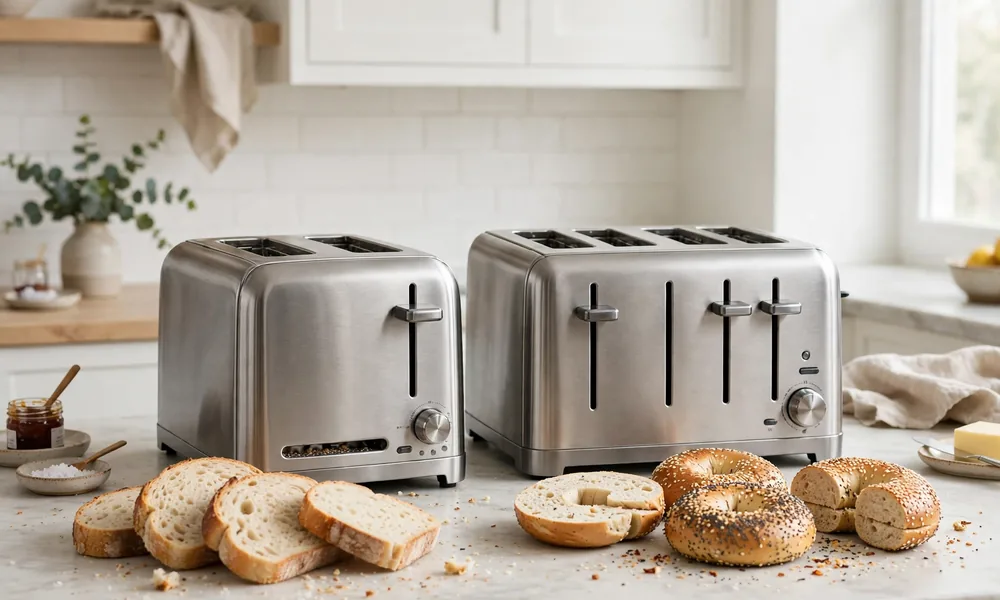
The first decision is capacity, and it is the one most buyers get wrong. A two-slice toaster is cheaper, smaller, and perfectly fine for one or two people, but it becomes a bottleneck the moment a third person wants breakfast at the same time. A four-slice toaster costs more and takes more counter space, but it turns a ten-minute breakfast queue into a five-minute one.
Two-Slice Toasters
Two-slice toasters suit singles, couples, and small kitchens. They are compact, light, and easy to store in a cupboard, and the best ones brown just as evenly as their bigger siblings. The trade-off is throughput: feeding a family means multiple rounds, and the first slices are cold before the last ones pop up.
Four-Slice Toasters
Four-slice toasters are the best choice for households of three or more, and for anyone who entertains at breakfast. Most four-slice models have two independent sets of controls, so you can toast two slices dark and two slices light at the same time, which ends the morning argument about browning.
How to Choose the Right Toaster
Once you know your size, the rest of the choice comes down to five practical questions: what bread you eat, how much control you want, how easy the machine is to clean, how it looks on your counter, and how much you want to spend. Answer those honestly and the right toaster almost picks itself.
Slot Width and Self-Centring Guides
Slot width decides what you can actually toast. Standard slots fit thin sandwich bread, but thick sourdough, bagels, crumpets, and artisan loaves need wide slots, ideally around 38 millimetres or more. Self-centring guides are the feature that makes wide slots work: they hold the bread in the middle of the slot so both sides brown evenly, instead of letting it lean against one element and burn on one side.
Browning Control and Settings
Adjustable browning control is the most used feature on any toaster, because households rarely agree on how dark toast should be. A dial with six or more settings gives you real control, from a gentle warming to a deep golden crunch. Bagel, defrost, and reheat settings are genuinely useful rather than gimmicks: bagel mode toasts the cut side and warms the crust side, defrost handles frozen bread without burning the outside, and reheat warms cold toast without browning it further.
Build Quality and Materials
Build quality decides whether a toaster lasts two years or ten. Stainless steel bodies look good and wipe clean, but cheap thin steel can discolour with heat over time. Look for a solid, stable base that does not rock when you press the lever, a lever that moves smoothly, and a crumb tray that slides out without sticking.
The Best Toasters of 2026 Compared
The strongest toasters of 2026 fall into four clear groups: premium four-slice models, reliable mid-range all-rounders, compact two-slice makers, and design-led statement toasters. The table below shows how they stack up on the features that decide whether a toaster becomes a daily favourite or a source of morning irritation.
| Type | Best For | Slots | Typical Price | Why It Wins |
|---|---|---|---|---|
| Premium four-slice | Families, entertaining | 4 wide | £90–£180 | Even browning, dual controls, fast |
| Mid-range two-slice | Couples, small kitchens | 2 wide | £40–£80 | Great value, wide slots, bagel mode |
| Compact two-slice | Singles, tiny kitchens | 2 standard | £20–£40 | Tiny footprint, cheap, simple |
| Long-slot toaster | Artisan and sourdough bread | 2 long | £50–£100 | Fits long slices, even browning |
| Design-led toaster | Style-conscious kitchens | 2–4 wide | £100–£200 | Beautiful finish, solid build, good performance |
| Budget four-slice | Large households on a budget | 4 standard | £35–£60 | Feeds four fast, simple controls |
Premium Four-Slice Toasters
Premium four-slice toasters are the best choice if you feed a household every morning and you want the result to be right every time. They offer wide self-centring slots, independent dual controls, and element designs that brown both sides evenly, plus extras such as a motorised lift that raises small items high enough to grab safely. If you make waffles at the weekend too, our guide to the best waffle makers of 2026 will help you complete the breakfast setup.
Reliable Mid-Range All-Rounders
Mid-range toasters are where most buyers should land. They offer wide slots, adjustable browning, bagel and defrost modes, and solid build quality without the premium price of a motorised lift or a digital display. A good mid-range toaster will brown a slice evenly in two to three minutes, pop it up high enough to grab without burning your fingers, and last for years with basic care.
Compact and Budget Toasters
Budget toasters have improved enormously, and a well-chosen cheap model can make a genuinely good slice of toast. The compromises are usually in slot width, browning evenness, and durability: narrow slots struggle with thick bread, thin elements brown unevenly, and light plastic bodies can feel flimsy. If you eat thin sandwich bread and you toast occasionally, a compact budget toaster is a sensible buy.
Getting Perfect Toast Every Time
Even the best toaster will disappoint you if the bread and the technique are wrong. The good news is that perfect toast depends on a handful of simple habits, and once they become routine, the results are consistent every single morning.

Start With the Right Bread
Fresh bread toasts better than stale bread, and bread that is a day old toasts better than bread straight from the oven, because it has lost a little moisture and browns more evenly. Thick slices need a lower setting and a longer time, while thin slices need a higher setting and a shorter time.
Find Your Setting and Stick to It
Every toaster has its own personality, and the numbers on the dial are not comparable between brands. Start in the middle of the dial, taste the result, and adjust by one step at a time until you find your setting. Once you find it, write it down, because the whole household will want to know.
Serve Toast Immediately
Toast goes soft within minutes as steam escapes from the crumb and condenses on the crust. Serve it straight from the toaster, butter it immediately so the butter melts into the crumb, and add toppings at the table rather than in advance. A good coffee completes the meal, and our guide to the best coffee makers of 2026 will help you match your breakfast setup.
Cleaning and Looking After Your Toaster
Cleaning is where most toasters are won or lost. A toaster that is hard to clean will fill with crumbs, start to smell, and eventually become a fire risk, so think about cleaning before you buy, not after your first year of use.
The Crumb Tray Is Essential
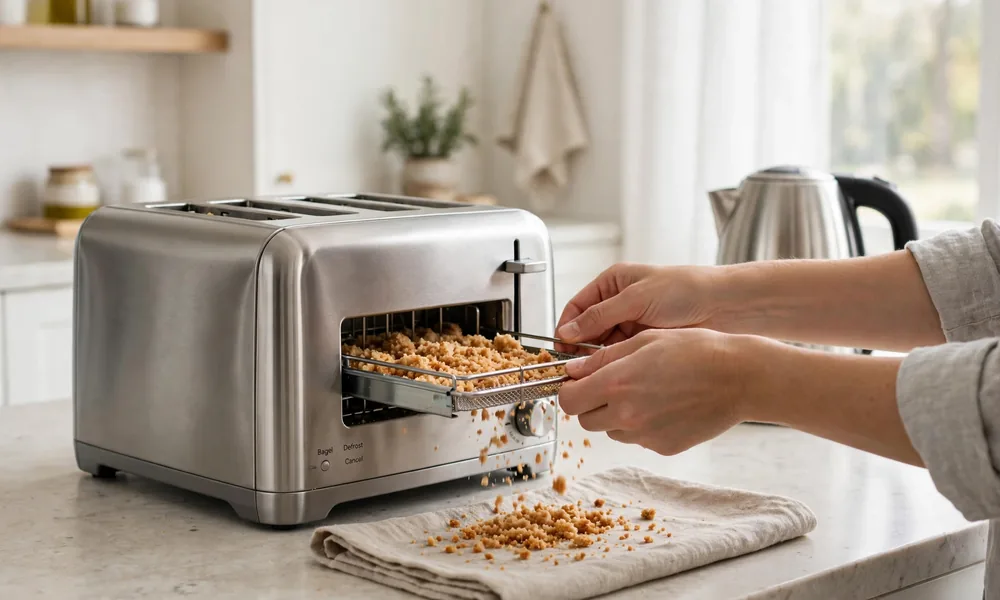
A removable crumb tray transforms cleaning from a chore into a ten-second job: slide it out, tip the crumbs into the bin, wipe it, and slide it back. Toasters without a proper tray force you to turn the whole machine upside down over the sink, which never gets all the crumbs out. Empty the tray at least once a week, and more often if you toast crumbly bread.
Daily and Monthly Cleaning
After use, unplug the toaster and let it cool completely. Empty the crumb tray, wipe the outside with a damp cloth, and polish stainless steel with a dry cloth to remove fingerprints. Once a month, give the machine a deeper clean: remove the tray, shake out loose crumbs over the sink, and wipe the inside of the slots gently with a dry pastry brush.
Toaster Buying Checklist
- Count how many people eat breakfast at the same time and choose two-slice or four-slice to match.
- Check slot width against the thickest bread you eat, including bagels and sourdough.
- Choose self-centring guides and adjustable browning with at least six settings.
- Make sure the crumb tray slides out easily and the lever lifts small items high.
- Check the warranty and the cord length before you commit.
- Budget for good bread and toppings, because the toaster is only the start.
Frequently Asked Questions
What is the best toaster for thick bread?
A toaster with wide slots, ideally around 38 millimetres or more, and self-centring guides is the best choice for thick bread. The guides hold the slice in the middle of the slot so both sides brown evenly, instead of letting it lean against one element.
Are expensive toasters worth the money?
Yes, up to a point. A mid-range toaster with wide slots and good element design will outperform a cheap toaster every day, and it will last longer.
Why does my toaster burn one side of the bread?
Uneven browning is usually caused by bread leaning against one element, by an element that has worn unevenly, or by crumbs built up inside the machine. Use the self-centring guides if your toaster has them, clean the crumb tray, and try turning the slice halfway through if the problem persists.
Can I toast bagels and crumpets in a normal toaster?
Yes, if the slots are wide enough. Use the bagel setting for bagels so the cut side toasts and the crust side warms, and use a medium setting for crumpets so they heat through without burning. Thick items should be watched on the first attempt, because the right setting varies between machines.
How do I clean a toaster safely?
Unplug the toaster and let it cool completely, then slide out the crumb tray and empty it. Wipe the outside with a damp cloth and use a dry pastry brush for the slots. Never put water inside a toaster, never use a metal knife to remove stuck bread while it is plugged in, and never use abrasive cleaners on the outside.
What goes well with toast for breakfast?
Toast is the base for endless breakfasts: avocado and egg, smoked salmon and cream cheese, peanut butter and banana, or simply butter and jam. A blender opens up smoothies to go with it, and our guide to the best blenders of 2026 covers the strongest options.
The Bottom Line
The best toasters of 2026 are the ones that match your household: a four-slice model with wide slots for a family, a long-slot toaster for artisan bread lovers, or a reliable mid-range two-slice for a couple who want good toast without fuss. Choose the size first, then slot width, then browning control, and buy the best build quality your budget allows.


