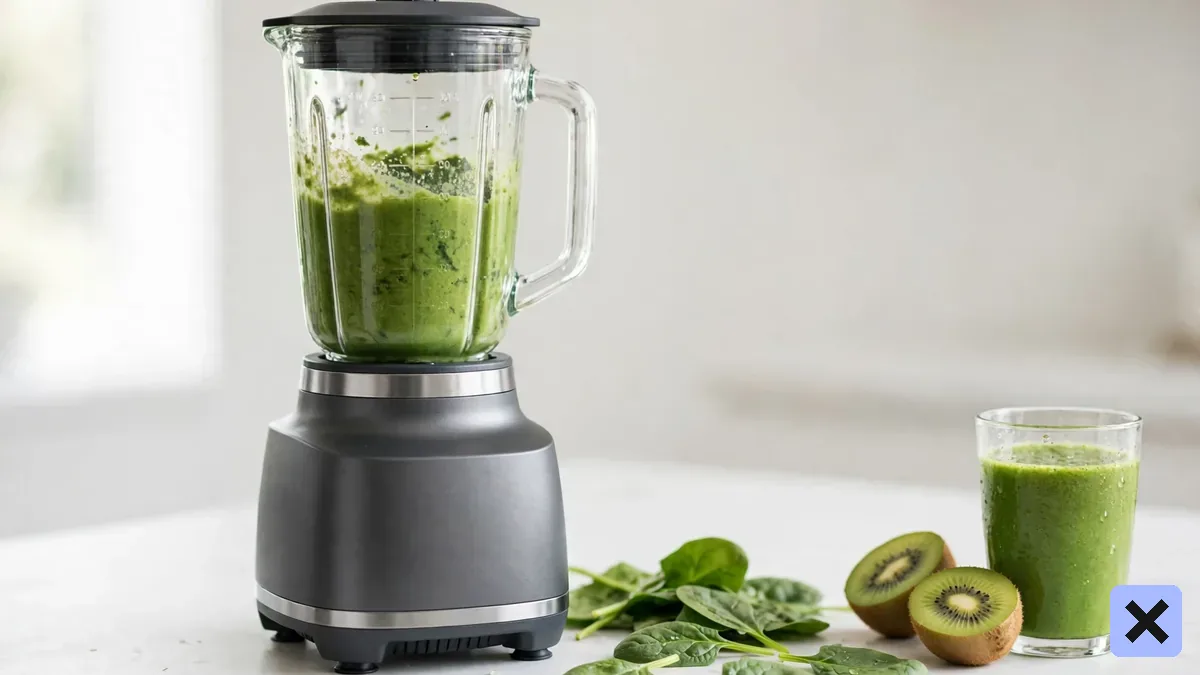
The best blenders in 2026 do far more than make a morning smoothie. A good blender crushes ice for frozen drinks, turns hot vegetables into silky soup, grinds nuts into butter, and mixes batters and sauces without a second thought. The right machine earns its place on the counter every single day, while the wrong one ends up pushed to the back of a cupboard after a month of disappointing results.
Choosing well is not about buying the most expensive machine on the shelf. It is about matching power, jar design, capacity, and controls to the way you actually cook. A family that blends soups and frozen desserts every week needs a very different machine from someone who makes one single-serve shake before work. Size, noise, and cleaning matter just as much as wattage, and they matter every time you use the blender.
This guide compares the best blenders of 2026 across every type, explains what actually matters when you shop, and helps you pick the machine that fits your kitchen, your cooking, and your budget. Every recommendation below is based on how blenders perform in real kitchens, not on what their boxes promise.
Key takeaways
- The best blenders of 2026 pair at least 1,000 watts with a jar that pulls ingredients down into the blades for a smooth, even blend.
- High-performance full-size blenders suit families and heavy use, while personal blenders suit single servings and small kitchens.
- A wide jar, a well-sealed lid, and a tamper matter more than preset buttons or a touchscreen.
- Glass jars look elegant but are heavy, while sturdy plastic jars are lighter, safer, and easier to lift when full.
- Match capacity to your household and clean the jar straight after blending so the machine stays ready to use.
What Makes a Great Blender
A blender has one of the hardest jobs in the kitchen. It must turn solid frozen fruit, fibrous greens, hard ice, and raw nuts into something smooth and even, with no lumps, no grit, and no unblended pieces stuck to the sides of the jar. That takes motor power, blade design, and jar geometry working together, and a weakness in any one of them shows up in the finished drink or dish.
Power and Motor Strength
Wattage is a useful guide, but it tells you only part of the story. A well-designed blade assembly and a jar that creates a strong vortex can outperform a more powerful machine with a poor layout. Look for stainless steel blades that are angled to pull ingredients downward, and for a motor that runs smoothly rather than rattling or smelling hot after thirty seconds of blending. A blender that strains on every blend will not last long, however impressive its specification sheet looks.
Jar Design and Capacity
Jar shape matters just as much as power. Wide, short jars let thick mixtures circulate freely, so you stop less often to scrape the sides. Tall, narrow jars often trap ingredients above the blades, which is why owners add extra liquid just to get things moving. For thick smoothie bowls, nut butters, and hummus, a wide jar wins every time. A tamper, the plastic stick that pushes food down while the blades spin, is a genuinely useful tool on a high-performance machine and is worth having.
The Best Blenders of 2026 Compared
| Blender Type | Best For | Power | Capacity | Price Range |
|---|---|---|---|---|
| High-performance full-size | Daily family use, soups, nut butters | 1,400–1,800 W | 48–64 oz | High |
| Mid-range full-size | Everyday smoothies and sauces | 900–1,200 W | 48–64 oz | Mid-range |
| Personal blender | Single servings, small kitchens | 600–1,000 W | 16–24 oz | Low–mid |
| Budget full-size | Occasional blending, soft ingredients | 500–800 W | 40–48 oz | Low |
| Immersion blender | Soups in the pot, small batches | 200–500 W | Pot-sized | Low |
High-Performance Full-Size Blenders
High-performance blenders are the workhorses of the category. With motors of 1,400 watts or more, they turn frozen fruit, ice, and raw vegetables into a perfectly smooth drink in under a minute, and they can heat soup through friction alone after several minutes of blending. They also handle the jobs other blenders cannot: grinding nuts into butter, milling grains, and crushing ice into snow for frozen desserts.
The trade-off is size, noise, and price. These machines are tall, heavy, and loud, and they cost several times more than a basic model. That cost makes sense if you blend every day or cook for a family, because the motor is built to last for years of heavy use. If you blend once a week, the extra power is mostly wasted. A wide jar and a tamper come as standard on most high-performance models, and both make a real difference with thick mixtures. Our guide to the best blenders for smoothies looks closely at how these powerful machines handle frozen fruit and leafy greens.
Mid-Range Full-Size Blenders
Mid-range full-size blenders are the sweet spot for most kitchens. With 900 to 1,200 watts, they handle everyday smoothies, sauces, dressings, and milkshakes with ease, and they manage frozen fruit and ice well enough for regular use. They cost far less than high-performance models, take up the same amount of counter space, and are usually a little quieter.
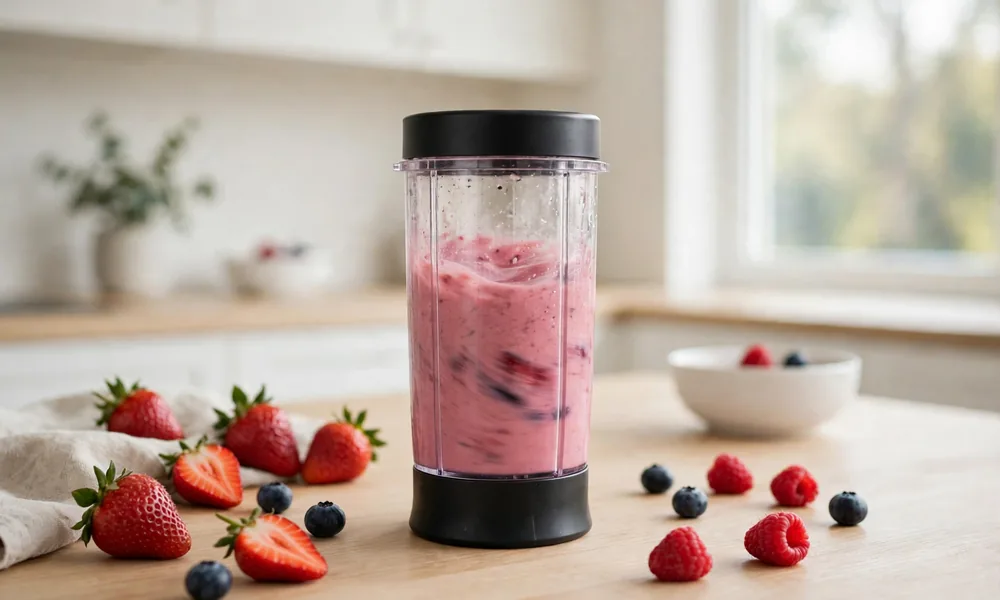
Personal Blenders
Personal blenders blend directly into a cup you can take with you, which makes them ideal for single servings, small kitchens, and busy mornings. They are compact, quick to rinse, and easy to store in a cupboard or even a desk drawer. Most come with two cups and a travel lid, so one person can blend and go without washing a full-size jar.
The limits are capacity and power. A personal blender holds 16 to 24 ounces, which is one serving and no more, and its motor will struggle with large amounts of frozen fruit or ice. It is also the wrong tool for soups, sauces, and family cooking. As a second blender for one person’s daily shake, though, it is hard to beat. If smoothies are your main use, our guide to the best smoothie blenders for home compares the strongest personal and full-size options side by side.
Budget Full-Size Blenders
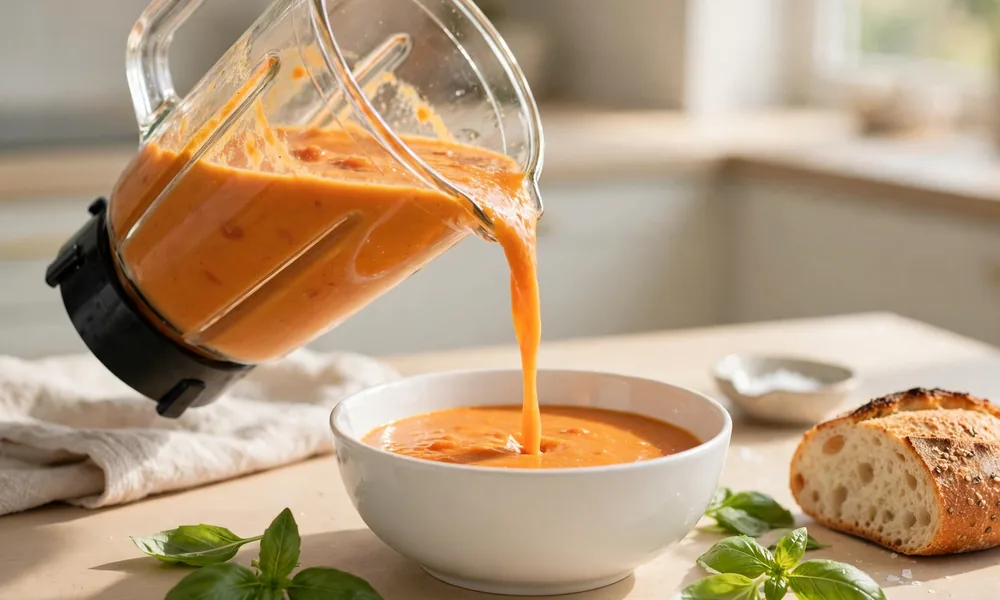
Budget blenders do a respectable job with soft ingredients at a fraction of the price of a premium machine. They make milkshakes, soft-fruit smoothies, sauces, and pancake batter without fuss, and they are a sensible choice for a first blender, a student kitchen, or a household that blends only occasionally.
Immersion Blenders
An immersion blender, also called a stick blender, is a handheld wand that blends directly in a pot, jug, or bowl. It is the best tool for pureeing hot soup without transferring it to a jar, and it is excellent for small batches of sauces, dressings, and baby food. It takes up almost no storage space and cleans in seconds under a running tap.
It is not a replacement for a full-size blender. An immersion blender cannot crush ice, make a smooth frozen smoothie, or handle large volumes, and it needs a deep container to avoid splashing. As a second tool alongside a countertop blender, however, it is one of the most useful gadgets in the kitchen, and many cooks reach for it more often than the big machine. If you are building out your kitchen, pairing a good blender with one of the best air fryers for small kitchens covers most everyday cooking in very little counter space.
How to Choose the Right Blender
Start with what you blend most. If smoothies and frozen drinks dominate, prioritise power and a jar that handles ice. If soups and sauces are the main job, look for a machine that handles hot liquids safely, with a vented lid and a jar rated for heat. If you make nut butters or thick dips, a wide jar and a tamper matter more than preset programmes. Write down your three most common blending jobs before you shop, and judge every machine against that list rather than against its marketing.

Getting the Best Results From Your Blender
Good technique closes the gap between a mid-range blender and a premium one. Always add liquid first, then soft ingredients, then frozen fruit and ice on top. The liquid lets the blades catch and start the vortex, while the heavy frozen pieces press everything down into the blades. Cut large frozen fruit into smaller pieces, and never fill the jar past its maximum line, especially with hot liquids, which expand and need room to move.
Blender Buying Checklist
- Match power to your hardest job: at least 1,000 watts for frozen fruit and ice, 1,400 watts or more for nut butters and daily heavy use.
- Choose a wide jar with a tamper for thick mixtures, and check the jar fits under your cabinets.
- Pick a capacity that suits your household: 16 to 24 ounces for one person, 48 to 64 ounces for a family.
- Check the lid seals well and vents safely if you plan to blend hot soup.
- Look for a self-cleaning cycle and dishwasher-safe parts so cleaning takes seconds.
- Compare warranties: five years or more signals a motor built to last.
Frequently Asked Questions
What is the best blender for everyday use?
For most households, a mid-range full-size blender with 900 to 1,200 watts is the best choice. It handles daily smoothies, sauces, and milkshakes well, costs far less than a high-performance model, and is easy to clean. Upgrade to a high-performance machine only if you blend frozen ingredients or thick mixtures every day.
How many watts does a good blender need?
A good blender needs at least 900 watts for everyday smoothies with frozen fruit. Machines under 700 watts can manage soft fruit and liquids, but they stall on ice and frozen ingredients. For nut butters, frozen desserts, and heavy daily use, look for 1,400 watts or more.
Are glass jars better than plastic jars?
Glass jars look elegant, do not stain or hold odours, and feel solid in the hand, but they are heavy and can crack if dropped. Sturdy plastic jars are lighter, safer, and easier to lift when full, and modern BPA-free plastic does not stain easily. For daily use, plastic is usually the more practical choice.
Can a blender make hot soup?
Yes, but only with care. Use a jar rated for hot liquids, fill it no more than halfway, and use a vented lid so steam can escape. Blend in short bursts at first, holding the lid down with a folded towel. Some high-performance blenders heat soup through friction after several minutes of blending.
How do I clean a blender properly?
Rinse the jar straight after use, then fill it halfway with warm water and a drop of washing-up liquid and run it on high for thirty seconds. Rinse again and leave it to dry upside down. For dried-on food, soak the jar in warm soapy water for ten minutes before cleaning. Never put your hand near the blades.
Is a personal blender enough for smoothies?
A personal blender is enough if you make one serving at a time and use mostly soft or partly thawed fruit. It struggles with large amounts of frozen fruit and ice, and it cannot make soup or family-sized batches. For a single daily shake, it is fast, compact, and easy to clean.
The Bottom Line
The best blender of 2026 is the one that matches your kitchen, not the most powerful machine on the shelf. A high-performance full-size blender is the best choice for families and daily heavy use, a mid-range full-size model suits most households, and a personal blender is ideal for single servings and small kitchens. Match power to your hardest job, choose a jar that fits your counter and your recipes, and pick a machine that is easy to clean, because the blender you enjoy using is the one that earns its place on the counter.