Finding the best blenders for smoothies in 2026 is simpler than the shelves suggest, but only if you know what actually matters. A great smoothie blender needs enough power to crush ice and frozen fruit, a jar that moves ingredients toward the blades instead of trapping them, and controls simple enough to use before you have had your coffee. Everything else is decoration.
The market is crowded with machines that look nearly identical and promise the same results. Some are powerful workhorses that last for years, while others struggle with a handful of frozen strawberries. Price alone does not tell you which is which.
This guide sorts the best blenders for smoothies by what they do in a real kitchen, not by what their boxes claim. It compares the main types side by side, explains how to match a blender to your habits, and ends with a practical checklist and answers to the questions buyers ask most often.
Key takeaways
- The best blenders for smoothies in 2026 combine at least 1,000 watts with a jar that pulls ingredients into the blades.
- High-performance blenders handle frozen fruit, ice and leafy greens best, while personal blenders suit single servings and small kitchens.
- A tamper, a wide base and a well-sealed lid matter more than preset buttons or touchscreen controls.
- Glass jars look elegant but are heavy, while sturdy plastic jars are lighter and less likely to crack.
- Clean the jar straight after blending and use frozen fruit instead of extra ice.

What Makes a Great Smoothie Blender
A smoothie blender has a harder job than most kitchen machines. It must turn solid frozen fruit, fibrous greens and hard ice into a drink with no lumps, no grit and no unblended leaves stuck to the sides of the jar. That takes motor power, blade design and jar geometry working together.
Power is the starting point. Machines under 700 watts can make a decent smoothie from soft fruit and milk, but they slow down or stall when frozen mango or a full tray of ice cubes goes in. Blenders in the 1,000 to 1,500 watt range handle frozen ingredients comfortably, and the strongest machines also cope with nuts, seeds and raw vegetables.
Motor Power and Blade Design
Wattage is a useful guide, but it is not the whole story. A well-designed blade assembly and a jar that creates a strong vortex can outperform a more powerful machine with a poor layout. Look for stainless steel blades set low in the jar, with angles that pull food downward rather than simply spinning it around in a circle.
Speed control matters just as much. A blender that jumps straight to full speed can fling ingredients up the sides of the jar, while one with a proper low-to-high range lets you start gently and build up.
Jar Shape and Size
The shape of the jar decides whether ingredients keep moving or get stuck. Wide-based jars create a better vortex for thick blends, while tall narrow jars are better for large liquid batches.
Size should match your household. A 64-ounce jar is ideal for families and batch blending, a 48-ounce jar suits most couples, and a single-serve cup is perfect for one person who blends a breakfast smoothie and heads out the door. Buying a jar far larger than you need means small blends sit below the blades and never mix properly.
The Best Blenders for Smoothies in 2026
The best blenders for smoothies in 2026 fall into four clear groups, and the right group depends on how often you blend, how many people you serve, and how thick you like your drinks.
High-performance blenders sit at the top of the range. They crush ice to snow, pulverise kale and spinach until no trace of fibre remains, and power through frozen fruit without needing extra liquid. They are loud, heavy and expensive, but for daily smoothie drinkers they are the most reliable option, and they double as capable machines for soups, sauces and nut butters.
High-Performance Full-Size Blenders
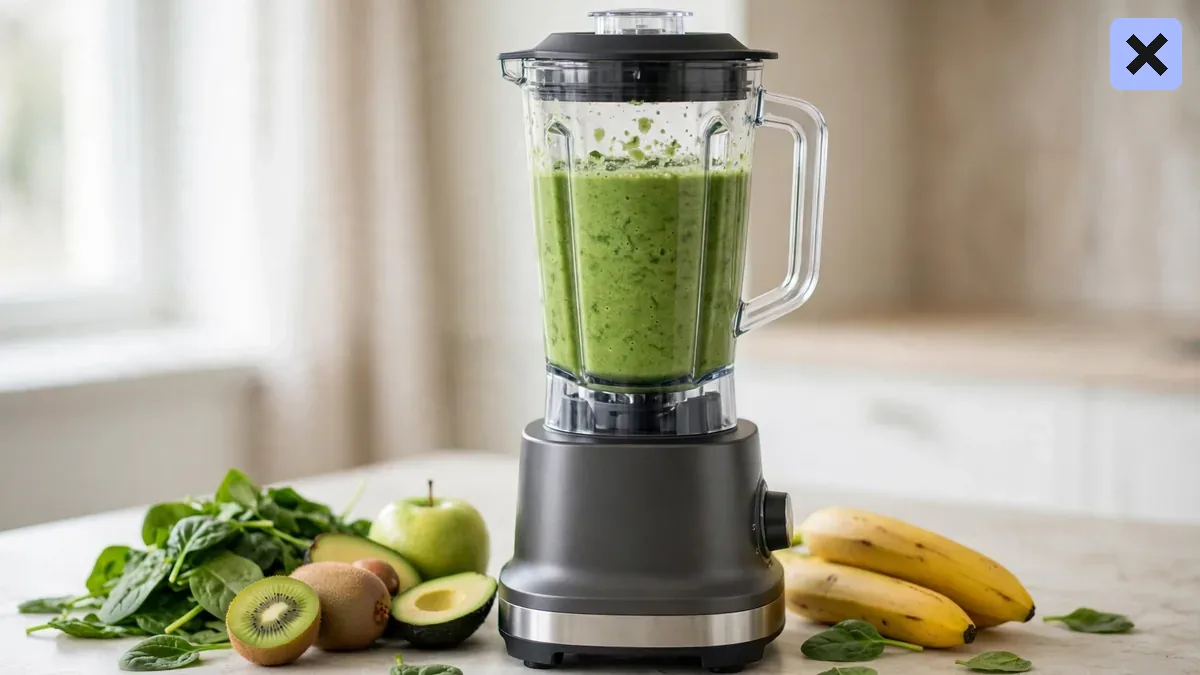
These are the machines smoothie bars rely on, and the difference is obvious from the first blend. A high-performance blender turns a cup of frozen berries, a banana, a handful of spinach and a splash of oat milk into a silky drink in under a minute, with no stopping to scrape down the sides.
The trade-offs are real. These blenders are the loudest machines in the kitchen, they take up a permanent spot on the counter, and they cost several times more than a mid-range model.
Mid-Range Blenders Worth Buying
Mid-range blenders are where most buyers should look. A good machine in this group offers 1,000 to 1,200 watts, a solid jar and a simple set of speeds, at a price that does not sting. It will handle frozen fruit and ice with a little help, such as adding liquid first or letting frozen fruit soften for a minute before blending.
Choosing between a full-size mid-range blender and a smaller personal model is also worth thinking about in the context of your wider kitchen, since a machine that only blends is a poor use of counter space if you already own a good stand mixer for baking and other single-purpose appliances.
Personal and Single-Serve Blenders
Personal blenders blend directly into a travel cup, which means less washing up and a smoothie that is ready to carry out the door. They are compact, quiet and cheap, and for one person making one smoothie a day they are often the most practical choice. The cup doubles as the jar, so there is no extra container to clean.
Their limits show up with thick blends and frozen ingredients. A personal blender has a smaller motor and a narrower cup, so it needs more liquid and smaller pieces of fruit to work well. It also struggles with large batches, so it is a poor choice for families.
Budget Blenders That Still Deliver
A tight budget does not have to mean lumpy smoothies. The best budget blenders use a simple design, a decent motor and a narrow jar that keeps ingredients close to the blades. They will not match a premium machine on frozen fruit, but with soft fruit, yoghurt and milk they produce a genuinely smooth result.
When shopping at the lower end, ignore flashy presets and count the basics instead: a motor of at least 700 watts, a jar that fits your serving size, a lid that seals properly, and blades you can reach to clean.
| Blender type | Best for | Power | Typical price |
|---|---|---|---|
| High-performance full-size | Daily smoothies, frozen fruit, families | 1,400 watts and above | Premium |
| Mid-range full-size | Regular smoothies, good all-round value | 1,000 to 1,200 watts | Mid-range |
| Personal single-serve | One person, quick breakfast smoothies | 700 to 1,000 watts | Affordable |
| Budget blender | Soft fruit smoothies, occasional use | 700 watts and above | Low |
How to Choose the Right Blender for You
Start with how you will actually use the machine. Count how many smoothies you make in a typical week, how many people they serve, and whether your recipes lean on frozen fruit and ice or on fresh fruit and yoghurt.
Next, think about texture. If you love thick smoothie bowls topped with granola, you need a wide jar and a tamper. If you prefer thin, drinkable smoothies, a standard tall jar will do.
Noise, Cleaning and Counter Space
Noise is the complaint buyers mention most after purchase. High-performance blenders are loud enough to wake a sleeping household, so if you blend early in the morning, look for a model with a sound shield or choose a quieter mid-range machine.
Cleaning decides whether a blender becomes a daily habit or a cupboard ornament. Self-cleaning cycles help, but nothing beats a jar that comes apart easily and blades you can wipe safely. Before buying, measure your counter space and the gap under your wall cabinets.
Common Smoothie Mistakes to Avoid
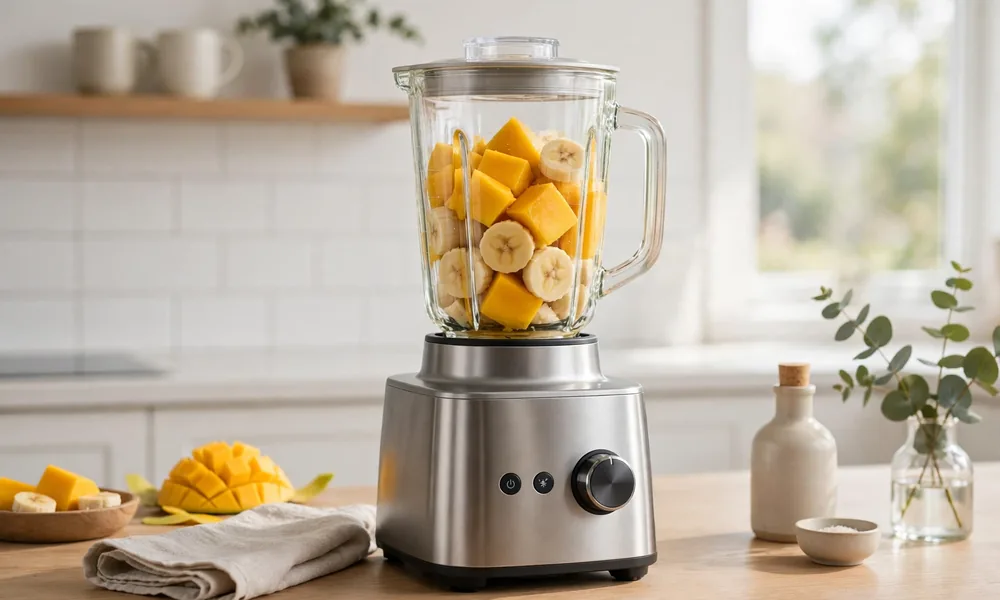
The most common mistake is loading the jar in the wrong order. Liquids should go in first, then soft ingredients, then frozen fruit and ice on top. This order lets the blades spin freely at the start and pulls the heavier ingredients down gradually.
Too much ice is another frequent error. Ice waters a smoothie down and forces the blender to work harder than it needs to. Frozen fruit gives the same thick, cold texture with far more flavour, so use frozen banana or berries as the chill and add only a few cubes of ice if the drink still needs it. Even the best machine cannot rescue a bad combination, and the worst smoothie trends for taste are a useful reminder of which fashionable additions are better left out of the jug.
Overfilling the jar causes just as many problems. A jar filled to the brim has no room for a vortex to form, so ingredients sit still while the blades spin underneath them. Finally, do not blend for too long. Stop as soon as the texture looks right.
Buying Checklist
Use this checklist before you buy, and you will avoid the most common regrets.
- Motor of at least 1,000 watts for frozen fruit and ice, or 700 watts for soft fruit only.
- Jar size matched to your household, with a wide base if you make thick blends.
- Variable speed control and a pulse function for texture control.
- A tamper included if you plan to make smoothie bowls or nut butters.
- A lid that seals firmly and a jar that is easy to take apart and clean.
- A warranty of at least two years, with spare jars and blades available to buy.

Frequently Asked Questions
What wattage is best for smoothie blenders?
For regular smoothies with frozen fruit and ice, look for at least 1,000 watts. Machines in the 1,000 to 1,500 watt range handle most recipes easily.
Are personal blenders good enough for smoothies?
Yes, for one person making a single serving. Personal blenders are fast, easy to clean and ideal for breakfast smoothies with fresh or lightly frozen fruit.
Do I need a tamper for smoothies?
A tamper is useful but not essential. It helps with thick smoothie bowls and frozen blends by pushing ingredients into the blades.
Glass or plastic jar: which is better?
Both work well, and the choice is mostly practical. Glass jars resist stains and odours and feel premium, but they are heavy and can break. Sturdy plastic jars are lighter, safer if dropped, and usually larger.
How do I clean a blender properly?
Clean it straight after use. Fill the jar halfway with warm water and a drop of washing-up liquid, run it for thirty seconds, then rinse and dry. Check whether your jar and blades are dishwasher safe, and never put a motor base in water.
Why is my smoothie still lumpy?
Lumps usually come from the wrong loading order, too little liquid, or pieces that are too large. Add liquid first, cut fruit into small chunks, and let frozen fruit soften for a minute before blending. If the problem continues, your blender may simply lack the power for your recipe. A machine that cannot do its basic job belongs on the same shelf as the kitchen tools beginners should skip rather than on your counter.
The Bottom Line
The best blenders for smoothies in 2026 are the ones that match your real routine: enough power for your ingredients, a jar sized for your household, and controls simple enough to use every day. Spend more only if you blend daily with frozen fruit, and choose a personal blender if you blend for one. Get those basics right, and any good blender will give you smooth, reliable smoothies for years.