The best air purifiers for bedrooms in 2026 are the ones you forget are running. They clean the air all night without a bright display, a rattling fan or a hum that keeps you awake.
Shopping for one has become harder, not easier. Almost every box promises hospital-grade filtration and coverage for rooms far larger than the machine can handle.
Terms such as HEPA-type and HEPA-like sound reassuring, but they are not the same as a true HEPA filter. This guide compares bedroom purifiers on filtration, room coverage, noise, running costs and ease of use, and shortlists the best of them for 2026. For the wider picture, see our guide to the best air purifiers for home.
Key takeaways
- Choose a true HEPA filter, not HEPA-type or HEPA-like, for real allergy and dust relief.
- Match the purifier to your room size using CADR, not the headline coverage number.
- For sleep, the noise level on medium speed matters more than the quietest setting.
- Budget for replacement filters: they are the real running cost of any purifier.
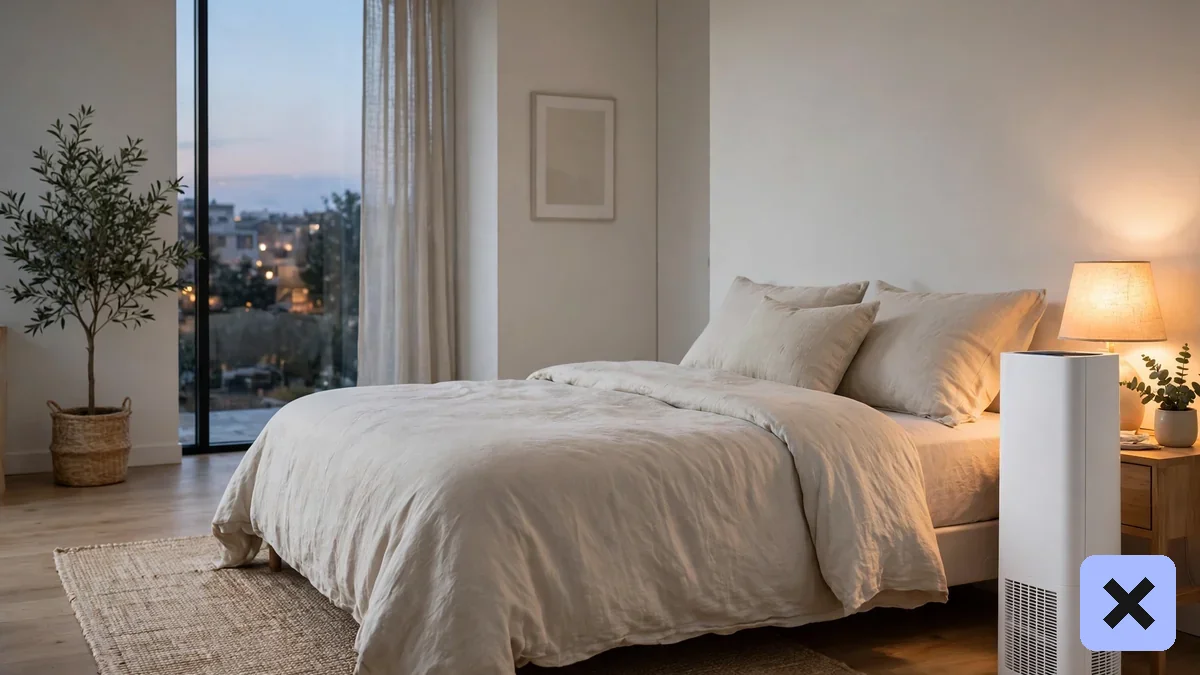
- Place the purifier where air can circulate, away from walls and curtains.
Why Bedroom Air Quality Matters More Than You Think
You spend roughly a third of your life in the bedroom, breathing the same air for hours with the door closed and the windows shut. Dust mites, pollen, pet dander and fine particles collect in bedding, carpets and curtains, and they are stirred up every time you move in your sleep.
What a Bedroom Purifier Can and Cannot Do
A good purifier removes airborne particles such as dust, pollen, pet dander, mould spores and fine smoke particles. It cannot fix damp, remove carbon dioxide or replace ventilation.
How We Chose the Best Air Purifiers for Bedrooms
We judged bedroom purifiers on filtration quality, honest room coverage, noise at sleep-friendly speeds, running costs and ease of living with.
Filtration and Room Coverage
Every pick here uses a true HEPA filter, which captures at least 99.97 percent of particles 0.3 microns across. That covers the pollen, dust mite debris and pet dander behind most allergy symptoms, while a carbon layer absorbs odours that HEPA alone cannot touch.
For coverage we used CADR, the clean air delivery rate, and looked for machines that manage four to five air changes per hour in a typical bedroom of 120 to 250 square feet.
Noise and Running Costs
We paid most attention to noise on low and medium speeds, because those are the speeds a bedroom purifier actually runs at overnight. The best picks stay under about 35 decibels on the speed that covers their rated room size, and their sleep mode lowers the fan and dims the display without effectively switching the machine off.
Running costs matter just as much. Replacement filters typically cost a fifth to a third of the machine price and need changing every six to twelve months.
The Best Air Purifiers for Bedrooms in 2026
These eight picks cover allergies, light sleepers, small rooms, large rooms, pet owners and tight budgets. The table below gives you the short version before the detail.
| Pick | Best for | Room size | Filter | Sleep noise |
|---|---|---|---|---|
| Best Overall | Most bedrooms | Up to 250 sq ft | True HEPA + carbon | Very quiet |
| Best for Allergies | Hay fever, dust | Up to 300 sq ft | True HEPA + carbon | Quiet |
| Best for Light Sleepers | Noise-sensitive sleep | Up to 200 sq ft | True HEPA + carbon | Near-silent |
| Best Small Bedroom | Rooms under 150 sq ft | Up to 150 sq ft | True HEPA + carbon | Very quiet |
| Best Large Bedroom | Rooms over 250 sq ft | Up to 400 sq ft | True HEPA + carbon | Quiet |
| Best Budget | First purifier | Up to 180 sq ft | True HEPA + carbon | Quiet |
| Best for Pet Owners | Pet hair, dander | Up to 300 sq ft | True HEPA + carbon | Quiet |
| Best Smart Pick | App control, auto mode | Up to 250 sq ft | True HEPA + carbon | Very quiet |
Best Overall: A True HEPA Tower Purifier
The best all-round bedroom purifier is a slim tower with a true HEPA filter, an activated carbon layer and a sleep mode that genuinely dims the display. It covers a typical bedroom of up to 250 square feet at four to five air changes per hour and stays quiet enough to sleep beside on medium speed.
Best for Allergies: A High-CADR HEPA Purifier
Allergy sufferers need air changes more than anything else, because pollen and dust mite debris settle fast and must be pulled out of the air continuously. This pick pairs a large true HEPA filter with a higher CADR, turning the air over five times an hour in a room of up to 300 square feet, so it can run on medium rather than high and stay quiet.
Best for Light Sleepers: A Near-Silent Bedroom Purifier
If you wake at a dripping tap, noise is your first filter, not your last. This pick is built around low-speed performance, with a large, slow-spinning fan and a roomy filter that can move enough air without working hard, so its sleep setting is close to the sound of a quiet room.
Best Small Bedroom: A Compact Bedside Purifier
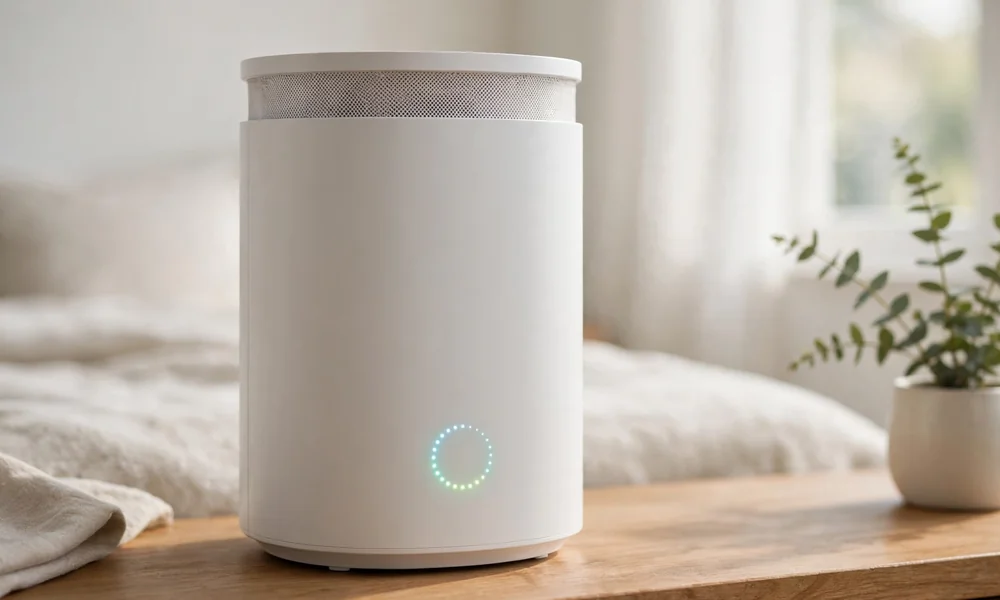
Small bedrooms punish oversized machines, which take up floor space and often end up switched off because they feel in the way. This compact cylindrical unit sits on a dresser or bedside table, covers up to 150 square feet properly, and draws air from all sides so placement is forgiving.
Best Large Bedroom: A High-Capacity Room Purifier
Large bedrooms, and bedrooms that open into an en-suite or dressing area, need more capacity than the standard picks offer. This purifier covers up to 400 square feet at four air changes per hour, with a bigger filter, a stronger fan and a larger footprint, so check the filter price before you buy.
Best Budget: A Simple HEPA Purifier
A good budget bedroom purifier is simple: a true HEPA filter, a carbon layer, three fan speeds and nothing you do not need. It skips the app, the air quality display and the voice control, and spends the money on the filter and the fan instead.
Best for Pet Owners: A Pet-Focused HEPA Purifier
Pets add two problems to bedroom air: dander, which triggers allergies, and odour, which a HEPA filter alone cannot remove. This pick combines a large HEPA filter with a thicker carbon layer than usual, plus a pre-filter designed to catch hair before it clogs the main filter.
Best Smart Pick: An App-Controlled Bedroom Purifier
Smart features are worth paying for only when they change how the purifier behaves. This pick uses its air quality sensor to raise the fan when the room needs it and drop it back when the air is clean, and it lets you schedule sleep mode, check filter life and switch the machine off from bed.
What Size Air Purifier Does Your Bedroom Need?
Size is the most common mistake in bedroom purifier buying, and it is usually made in the same direction: too small. A purifier rated for 100 square feet in a 200-square-foot bedroom will run on high all night, be loud, wear its filter out early and still leave the air only partly cleaned.
Measure your room before you buy, including any open dressing area or en-suite that shares the air. A 12 by 14 foot bedroom is 168 square feet, which needs a dust CADR of roughly 250 for five air changes per hour, and buying slightly larger than you need is usually smarter, since a bigger purifier running on low is quieter than a small one running on high. Our guide to the best bedside lamps for reading follows the same rule of choosing for the room you actually have.
Noise Levels: What Quiet Really Means
Noise figures are the most misleading numbers on a purifier box. A rating of 24 decibels is usually measured on the lowest setting, in a silent test chamber, with the machine doing very little filtering, so the number that matters is the noise on the speed you will actually use.
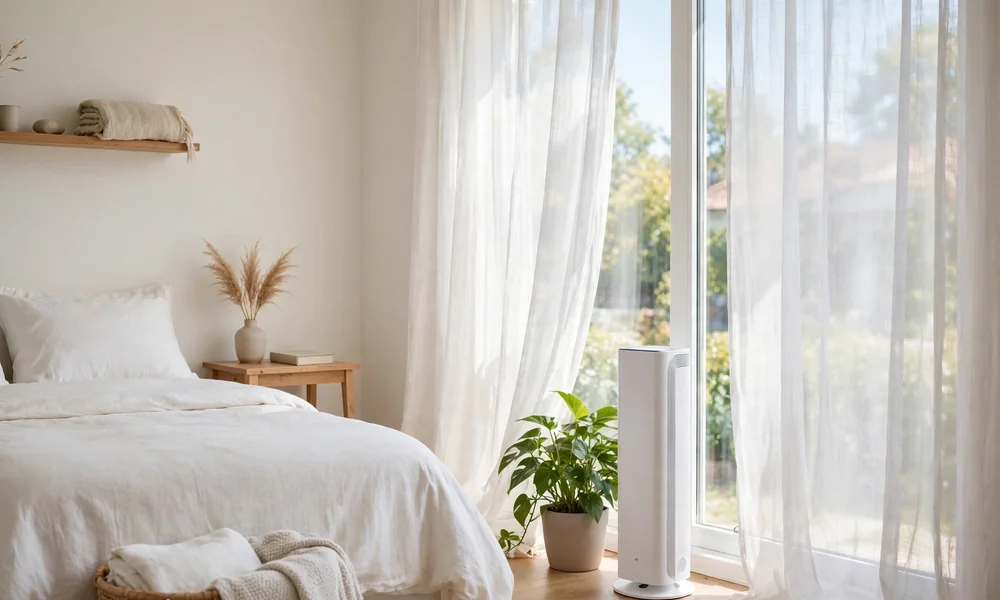
For most people, anything under 35 decibels is easy to sleep beside, and many find a low, steady fan sound helps them sleep by masking sudden noises from outside. What disturbs sleep is not steady sound but change: a fan that ramps up and down, a whine at a particular speed, or a beep when a button is touched.
Filters and Running Costs
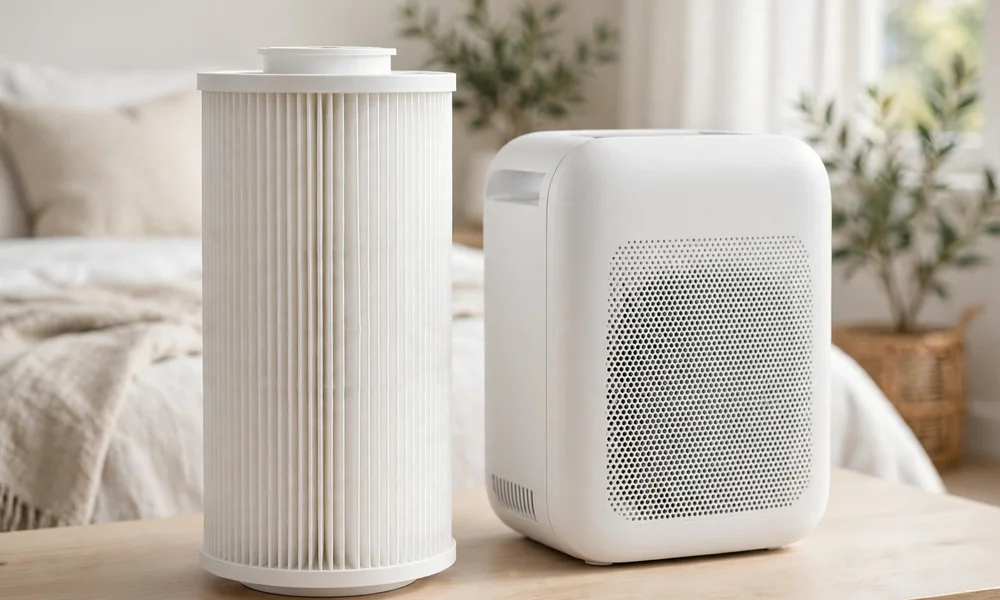
A purifier is only as good as its filter, and the filter is a consumable. The pre-filter catches hair, large dust and fibres before they reach the expensive HEPA layer, and cleaning it every two to four weeks is the easiest way to extend the life of the main filter.
The HEPA layer does the serious work, trapping the fine particles that cause allergy symptoms, and most last six to twelve months. The carbon layer absorbs smells and gases that HEPA cannot catch, but it saturates in three to six months, so if your bedroom smells musty despite the purifier running, the carbon layer is the first thing to check. Our guide to the best scented candles for bedrooms covers options that sit happily alongside a purifier.
Bedroom Air Purifier Checklist
- Measure the room and choose a purifier with a dust CADR that covers it at four to five air changes per hour.
- Confirm the filter is true HEPA, not HEPA-type or HEPA-like, and that a carbon layer is included.
- Check the noise level on medium speed, not just the quietest setting, and test it in your own bedroom.
- Make sure the display can be dimmed or switched off completely for the night.
- Price the replacement filters and check they are easy to buy before you commit to the machine.
- Place the purifier with clear space around it, away from walls, curtains and bedding, so air can circulate freely.
Frequently Asked Questions
Should I run an air purifier all night?
Yes. A bedroom purifier is designed to run continuously, and it does its most useful work overnight, when the room is closed and you are breathing the same air for hours.
Where should I put an air purifier in a bedroom?
Put it where air can reach it from all sides, ideally a few feet from the bed and away from walls and curtains. Do not tuck it behind furniture or under a desk, and do not place it so close to the bed that the airflow blows directly onto you.
How loud is a bedroom air purifier?
A good bedroom purifier runs at roughly 24 to 35 decibels on its sleep or low setting, comparable to a quiet room or a soft whisper. On medium speed, expect 35 to 45 decibels.
Do air purifiers help with allergies?
They help with airborne allergy triggers such as pollen, dust mite debris and pet dander, which a true HEPA filter captures effectively. They do not cure allergies, and they cannot remove allergens that have settled into bedding and carpets.
How often do I need to change the filter?
Most HEPA filters last six to twelve months and carbon filters three to six months, depending on use and how dusty the room is. Clean the pre-filter every two to four weeks, and replace the main filter on schedule even if it still looks clean.
Can an air purifier replace opening a window?
No. A purifier cleans the air that is already in the room, but it does not bring in fresh air or remove carbon dioxide. The best routine is to ventilate during the day and let the purifier keep the air clean through the night, when the windows are closed.
The Bottom Line
The best air purifiers for bedrooms in 2026 are the ones that match your room, run quietly enough to sleep beside, and use a true HEPA filter with a carbon layer. Size by CADR, check noise at your usual speed, and budget for filters first.


