
A nightstand is the smallest piece of furniture in your bedroom, and it is also the one you reach for most. It holds the lamp you switch off last thing at night, the glass of water you need at three in the morning, the book you are halfway through, your phone, your glasses, and everything else that belongs within arm’s reach of your pillow. When it works, you never think about it. When it does not, you find out at the worst possible moment: the drawer jams, the whole thing tips when you lean on it, or the top is so small that the lamp and the glass of water are fighting for space.
The difference between the best nightstands of 2026 and the worst ones is rarely the price on the tag, and it is almost never the finish in the photograph. It is the engineering you cannot see: the thickness of the top, the way the drawer is built and guided, whether the legs are properly joined, and whether the whole thing stays put when you pull the drawer open with one hand in the dark. The best nightstands feel boringly solid. They do not wobble, they do not tip, and their drawers glide open and shut without a sound. The worst ones look fine in the showroom and then quietly fail in exactly the places that matter most.
Key Takeaways
- Measure first: a nightstand should sit within a few centimetres of the top of your mattress, so you can reach the lamp and a glass of water without sitting up.
- Look for a top at least 45 centimetres wide and 40 deep; anything smaller will not hold a lamp, a book and a glass at the same time.
- Check the drawer by hand: it should open smoothly on proper runners, close without a slam, and hold weight without sagging at the front.
- Solid wood or good plywood lasts; thin particleboard and hollow plastic crack, chip and lose their grip on screws within a year.
- A nightstand should be heavy enough to stay put when you lean on it, and wide enough at the base that it cannot tip forward when a drawer is open.
How This Comparison Was Judged
We judged nightstands the way they are actually used, not the way they are photographed. A nightstand that looks smart in a product shot but tips forward when you pull the drawer open is not a good nightstand, whatever the marketing says. So the tests were practical: we put a lamp, a book, a glass of water and a phone on the top, opened the drawer one-handed in the dark, leaned on the corner as if reaching for something, and pushed the piece from the side to see how easily it moved. We checked the drawer by loading it with books, looked at what the piece was actually made of, and measured whether it sat at a sensible height next to a real bed.
Best vs Worst Nightstands 2026 at a Glance
| Pick | Best For | Build | Price Range |
|---|---|---|---|
| Best Overall: The Solid Oak Bedside | Most bedrooms | Solid oak, two drawers | $250–$450 |
| Best Budget: The Honest Pine One-Drawer | First homes and rentals | Solid pine, open shelf | $80–$150 |
| Best Small Space: The Slim Floating Shelf | Tiny rooms | Wall-mounted, solid wood | $120–$220 |
| Worst: The Flimsy Plastic Corner | Avoid | Hollow plastic | $25–$50 |
| Worst: The Wobbly Flat-Pack Cube | Avoid | Particleboard, cam locks | $40–$90 |
Best Overall: The Solid Oak Bedside
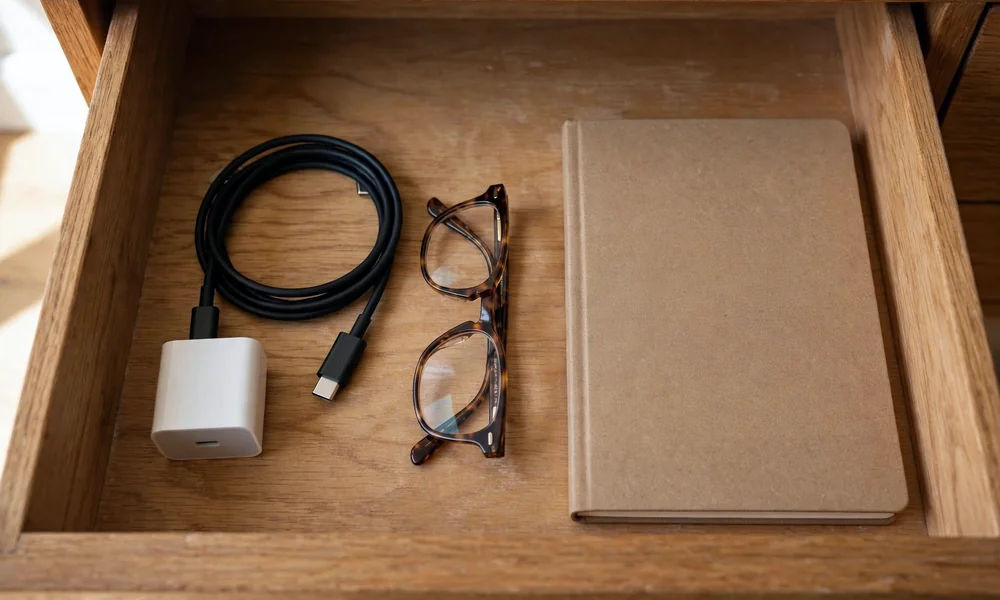
The best nightstand in this comparison is the one that does the least to draw attention to itself. The Solid Oak Bedside is a plain two-drawer piece in solid oak with a top big enough for a lamp, a book and a glass of water at the same time. There is nothing clever about it, and that is the point: every part is doing a simple job well, and there is nothing to break, rattle or come loose.
What sets it apart is the drawer. It runs on proper metal runners with a soft close, so it glides open with one finger and shuts without a sound, even when it is loaded with books and chargers. The drawer box is solid wood with proper joints, not stapled fibreboard, so it does not fall apart when you pull it out too far. The whole piece is heavy enough to stay exactly where you put it, and the top is thick enough that a hot mug will not leave a mark.
Best Budget: The Honest Pine One-Drawer
A good budget nightstand is not a cheap copy of an expensive one; it is a simpler design executed properly. The Honest Pine One-Drawer costs less than a third of our overall winner, and it earns its place by refusing to pretend. It is solid pine, not veneered chipboard, with one proper drawer and an open shelf underneath for the books you are currently reading. The finish is plain and a little pale, but nothing about it is false.
The reason most budget nightstands fail is that they cut the invisible parts first: thinner tops, drawers that run in wooden grooves, legs joined with a single small screw. This one does the opposite. It spends its money where it matters and saves it where it does not, which means it will survive a house move and a few years of daily use without developing the wobble that sends most cheap bedside tables to the kerb. For a first home or a rental, this is the nightstand that will not embarrass you in a year.
Best Small Space: The Slim Floating Shelf
Small bedrooms need furniture that takes up no floor at all, and the Slim Floating Shelf is the best small-space nightstand we tested. It is a single solid wood shelf, fixed to the wall beside the bed with proper brackets, deep enough for a lamp and a phone and nothing more. There is no drawer, no legs and no wasted space, which makes it ideal for a box room or a bed pushed into a corner where a normal nightstand would block the door.
Worst: The Flimsy Plastic Corner
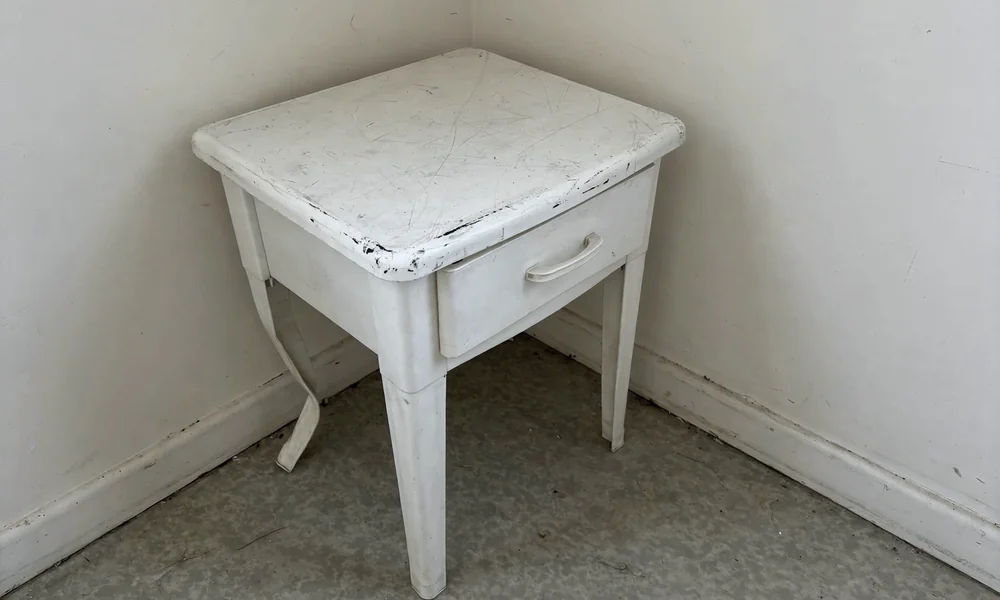
The worst nightstand in this comparison is the one you have probably owned in a student flat or a cheap rental. The Flimsy Plastic Corner is a hollow plastic table that looks tidy in a photograph and falls apart in real life. The legs are thin enough to bend when you lean on the top, the drawer is a shallow plastic tray that sticks every time the temperature changes, and the whole piece slides across the floor a little more every night. It cannot hold a lamp steadily, and it certainly cannot be trusted with a full glass of water.
The real problem is the material. Hollow plastic flexes under load, so the drawer never runs true and the top dips in the middle after a few months. It scratches easily, it stains from a single coffee ring, and it cannot be repaired when a leg cracks. It is cheap, and it is light enough to carry up the stairs with one hand, but those are the only good things about it. A nightstand this flimsy is not furniture; it is a placeholder, and it will not survive a single house move.
Worst: The Wobbly Flat-Pack Cube
The Wobbly Flat-Pack Cube is the nightstand that looks like furniture and behaves like packaging. It arrives flat-packed, assembles in half an hour with a small Allen key, and looks genuinely smart for about a month. Then the cam locks start to loosen, the particleboard around the screws starts to crumble, and the drawer develops a sag at the front that no amount of tightening will fix. Once particleboard loses its grip on a screw, it never gets it back.
The damage is worst where you cannot see it. The back panel is a thin sheet of hardboard held by a few pins, so the whole cube can rack sideways when you pull the drawer open. The drawer itself is stapled fibreboard that comes apart if you load it with anything heavier than a paperback. And because the piece cannot be repaired, the only honest fix is a replacement. It is the most expensive kind of cheap furniture: the kind you buy twice. If a nightstand is mostly particleboard and mostly held together by cam locks, walk away.
What the Best Nightstands Share
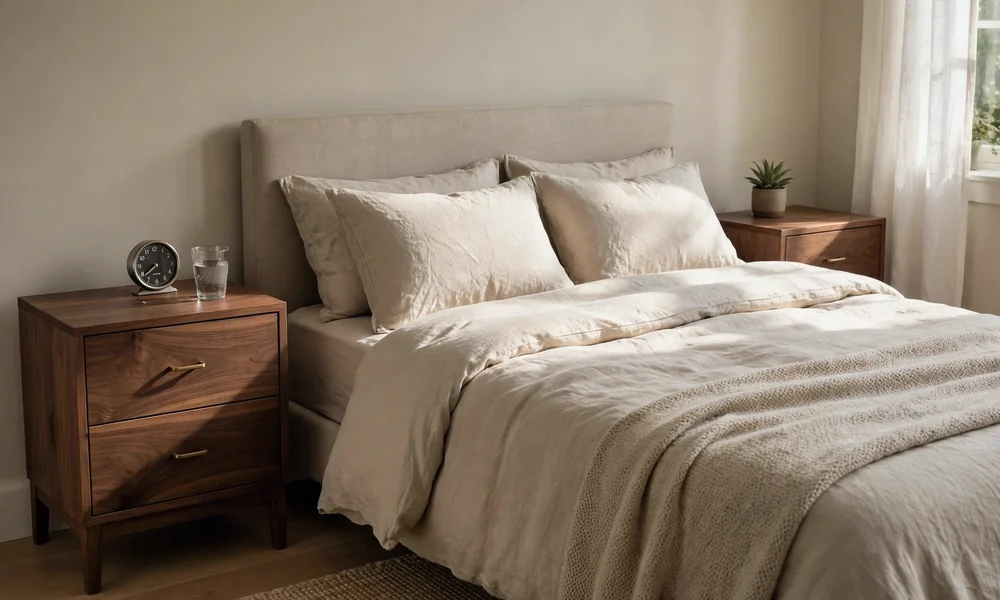
Across every good nightstand in this comparison, the same qualities kept showing up. The top is thick and flat, the drawer is properly built and runs on metal runners, the legs or base are properly joined, and the whole piece is heavy enough to stay put when you lean on it. None of that is glamorous, and none of it appears in the advertising, but it is what separates a nightstand that lasts a decade from one that lasts a year.
How to Measure Before You Buy
Measuring takes five minutes and saves you from the most common nightstand mistake. Start with the height of your mattress from the floor, and look for a nightstand whose top sits within five centimetres of that height, ideally a little lower rather than higher. Then measure the space beside the bed: you need at least the width of the nightstand plus a few centimetres of clearance, and enough room to open the drawer fully without it hitting the bed frame.
Think about what actually lives on your nightstand, too. If you read in bed, you need room for a lamp and a book; the right bedside lamp for reading changes the whole equation, because a tall lamp needs a stable, level top and a little more depth than a small one. If you like a lamp with a wider shade, our comparison of table lamps explains which shapes work best on a small surface. And if the nightstand is doing double duty as storage, be honest about what needs to fit inside: chargers, medication, a notebook and a pair of glasses need a real drawer, not a shallow tray. The same thinking applies to the rest of the room: if your bedroom storage is already overflowing, a good closet organizer will do more for the room than any nightstand ever could.
The Verdict
The best nightstand is the one you never have to think about. For most people that is a solid wood piece with a thick top, a proper drawer on metal runners and enough weight to stay put: the Solid Oak Bedside if the budget allows, or the Honest Pine One-Drawer if it does not. Choose a floating shelf only if the room is genuinely too small for a freestanding piece, and buy a matched pair only if both sides of the bed actually get used.
The worst nightstands all fail the same way: they save money on the parts you cannot see, and they make you pay for it every night. Hollow plastic, wobbly particleboard and oversized proportions are not bargains, they are a slow subscription to bad sleep and a cluttered bedroom. Buy the nightstand that is boring, heavy and well joined, and you will not think about it again for a decade. That is the whole point of a nightstand, and it is the best compliment any of them can earn.


