
An umbrella is a small thing until the rain starts, and then it is the only thing that matters. The best umbrellas of 2026 keep you dry through a proper downpour, open with one hand while you are carrying a bag, and survive a gust of wind that sends lesser umbrellas cartwheeling down the street. The worst umbrellas do the opposite. They flip inside out at the first strong breeze, drip on your shoulders, and fall apart just when the sky opens.
This comparison puts the best umbrellas of 2026 head to head against the worst, judging them the way you would actually use them: on a wet walk to the station, waiting for a bus in sideways rain, crossing a car park in a storm, and squeezing through a crowded pavement with everyone else’s umbrella in your face. The same honest approach sits behind our guide to the best rain jackets of 2026, because staying dry is a team effort and an umbrella is only half of it.
Key Takeaways
- Judge an umbrella by how it behaves in wind, not by how it looks folded up in a shop.
- A vented double canopy is the single best defence against an umbrella flipping inside out.
- Eight ribs are the minimum for a full-size umbrella; fewer ribs mean a canopy that sags and leaks.
- Size matters more than most buyers think: a canopy that is too small leaves your shoulders and bag soaked.
- Buy the umbrella for the weather you actually walk in, not the weather you hope for.
What Makes an Umbrella Good or Bad
A good umbrella starts with its frame. The best umbrellas of 2026 are built around fibreglass or steel ribs that flex instead of snapping, with a shaft that does not bend when the wind catches the canopy. The worst umbrellas are built around thin aluminium ribs and plastic joints that loosen within weeks, and the first strong gust finishes them off for good.
The second thing that separates good from bad is the canopy itself. A good canopy is made from tightly woven pongee or similar water-repellent fabric that sheds rain in beads rather than soaking through. The best canopies are double-layered with vents, so wind passes through instead of lifting the umbrella like a sail. A bad canopy is made from thin, loosely woven nylon that wets through in minutes, leaving you damp even while you are holding it overhead.
Coverage is the third test, and it is the one most buyers get wrong. A canopy that is too small might look neat, but it leaves your shoulders, your bag, and the back of your legs exposed to the rain. The best umbrellas give you a generous arc of cover, usually around 100 centimetres across for a full-size walking umbrella, so you and what you are carrying stay properly dry. A compact travel umbrella will always cover less, and that is a trade-off worth understanding before you buy.
The Best Umbrellas of 2026
The best umbrellas of 2026 are mostly the sensible ones, and that is exactly the point. They are the sturdy walking umbrellas with wooden or rubberised handles that feel good in the hand, the vented golf umbrellas that stand up to a storm on an open course, and the well-made compact umbrellas that open smoothly and stay open. They are not flashy, but they are the ones their owners reach for every single rainy morning without a second thought.
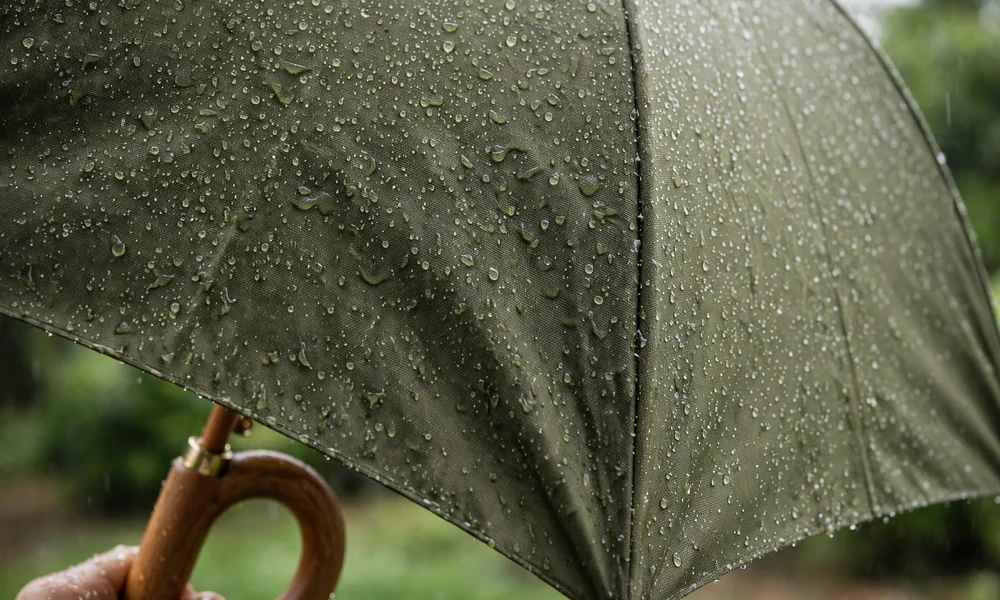
What the best umbrellas share is a feeling of solidity. The handle sits comfortably in the hand, the shaft has no wobble, and the canopy opens with a firm snap and stays taut, with no sagging panels or loose stitching. Their water-repellent coating works properly too: rain beads up and rolls off, and a quick shake leaves the umbrella nearly dry, so it does not drip all over the hallway floor when you get home.
Wind resistance is another area where the best umbrellas quietly win. Vented double canopies let gusts pass through instead of catching them, and flexible fibreglass ribs bend and spring back rather than snapping. Whatever the size, the best umbrellas are honest about their limits: they are built for real weather, not just for a light shower.
The Worst Umbrellas of 2026
The worst umbrellas of 2026 are not always the cheapest, and that is what makes them so frustrating. Some look smart in the shop and come in attractive colours, but within a few weeks the problems start: a rib that pops out of its socket, a canopy that sags between the ribs, and a handle that works loose. Owners find themselves buying a replacement before the rainy season is even over.
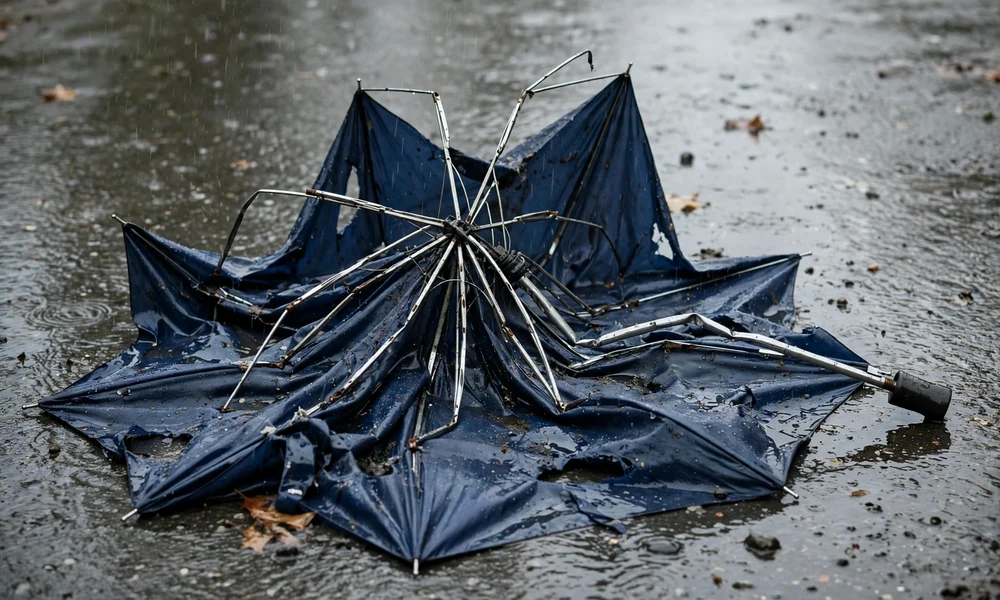
Wind is where many of the worst umbrellas fall down hardest. They are often built with a single flat canopy and stiff metal ribs that cannot flex, so the first strong gust catches the canopy like a sail and either flips it inside out or snaps a rib clean through. Once a rib is bent, the canopy never sits properly again, and the umbrella starts leaking at the seams. An umbrella that cannot survive a windy day is an umbrella that fails at its only job.
Then there is the coverage problem. The worst umbrellas are often far too small, with canopies that barely cover the head and leave the shoulders and bag to get soaked. A bargain umbrella that leaves you damp is no bargain at all, however little it cost.
Wind, Size, and Coverage: Which Type Wins
Full-size walking umbrellas win for everyday use, and it is not close. A proper walking umbrella with a canopy of around 100 centimetres gives you real cover, a comfortable handle, and a frame strong enough for a windy day. The best walking umbrellas of 2026 are light enough to carry all day, with vented canopies and fibreglass ribs that handle gusts without drama. Their weakness is size: they are long to carry and awkward on a crowded train. For a daily walk to work, though, a good walking umbrella is hard to beat.
Compact travel umbrellas are the clever middle ground, and the best of them are now genuinely good. They fold down small enough for a coat pocket or a handbag, they open with one hand, and the best ones have vented canopies and flexible ribs that survive a gust. For a commuter who needs an umbrella just in case, a good compact is often the most practical choice. A good jacket can cover what a small umbrella misses, and our comparison of the best and worst jackets of 2026 shows which ones are actually worth wearing.
Golf umbrellas are the heavyweights of the umbrella world, with canopies of 120 centimetres or more and frames built to stand up on an open course. They give you the most cover of any umbrella, and they are the best choice for anyone who spends long stretches outdoors in the rain. For a crowded pavement, though, they are too big and too likely to poke someone in the eye. Choose the size that fits the walk you actually do, not the biggest canopy you can find.
Canopy, Frame, and Handle: The Details That Actually Matter
Canopy fabric is the first detail worth checking. Pongee is the standard for a good umbrella: it is tightly woven, quick to dry, and it holds a water-repellent coating well. Nylon is cheaper and lighter, but it wets through faster and takes longer to dry. The best umbrellas use a coating that makes rain bead and roll off, and they keep that coating working for a long time.
Frames are the second detail, and they decide how long an umbrella lasts. Fibreglass ribs are the best choice for wind resistance because they flex and spring back, while steel ribs are strong but heavier. Aluminium ribs are light and cheap, but they bend and stay bent. Count the ribs too: eight is the standard for a full-size umbrella, and fewer than that usually means a canopy that sags and flaps in the wind.
Handles are the third detail, and they matter more than most people realise. A wooden crook handle is comfortable, easy to hang on a chair or a hook, and it does not slip when wet. A straight rubberised handle is better for a compact umbrella, because it grips well with one hand. The same attention to small details applies to everything you wear in wet weather, and our guide to the winter coats that actually keep you warm in 2026 shows how much difference good construction makes.
How to Buy an Umbrella Without Regret
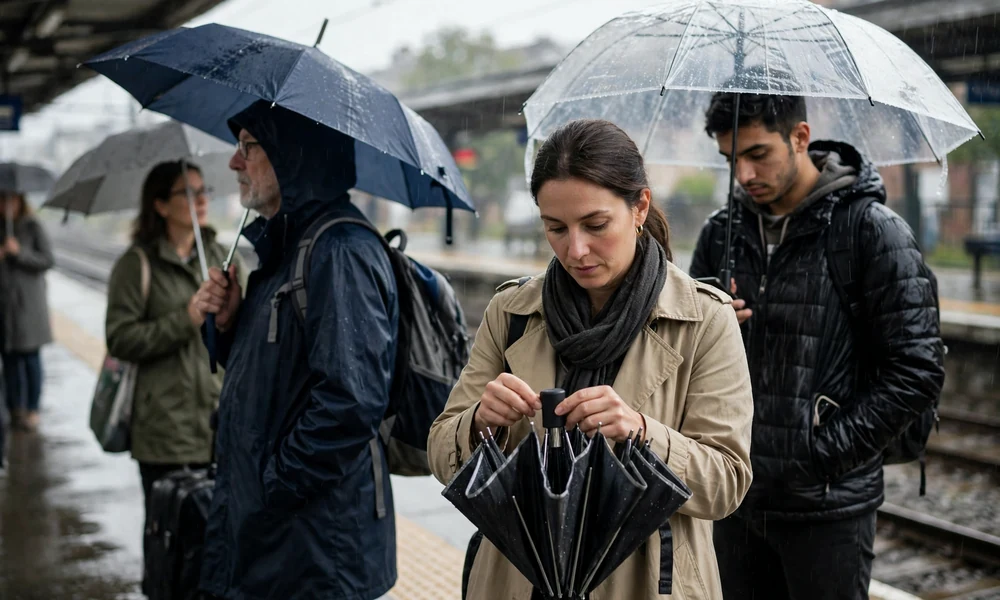
The single most useful thing you can do before buying an umbrella is to open it properly. A quick flick in the shop tells you almost nothing. Instead, open it fully and look at the canopy: it should be taut, with no sagging panels, and every rib should sit evenly. If anything sticks, wobbles, or feels loose, believe it: it will feel worse after a month of rainy days, not better.
Check the size against your real life before you buy. Hold the open umbrella over your head and your bag, and ask yourself whether your shoulders stay dry. Think about where you will carry it: a full-size umbrella needs a home by the door, while a compact needs to fit in the bag you actually carry. Look at the handle too, and make sure it is comfortable in your hand and easy to hang up when you get indoors.
Finally, do not be fooled by a low price. A good umbrella costs more than a bargain one, but it lasts for years instead of weeks, and it keeps you dry through weather that destroys a cheap one. Check the stitching at the seams, look for a reinforced tip, and if you are buying online, read reviews from people who have used the umbrella in real wind and rain. A few pounds more buys an umbrella you will still be using next winter.
The Verdict
The best umbrellas of 2026 are the ones that make a rainy day feel like nothing at all. They are strong in wind, generous in cover, quick to dry, and comfortable to carry, and they last because they are built from good materials put together properly.
The worst umbrellas of 2026 are the ones that give up at the first sign of trouble: a gust that flips them, a seam that leaks, and a frame that bends and never comes back. An umbrella is a tool you rely on when the weather turns, and when the tool fails, you arrive wet, cold, and annoyed.
So buy with your head as well as your eyes. Choose the size that fits your real walk and the frame that fits your real weather. Open it properly before you buy it, check the fabric and the ribs, and walk away from anything that rattles, sags, or feels flimsy.
| Best Umbrellas | Worst Umbrellas | |
|---|---|---|
| Wind resistance | Vented double canopy, flexible ribs | Flat canopy, stiff ribs that snap |
| Canopy fabric | Tightly woven pongee, rain beads off | Thin nylon that soaks through |
| Coverage | Generous arc, about 100 cm | Too small, shoulders left exposed |
| Frame | Eight-plus ribs, tight joints | Few thin ribs, loose joints |
| Handle | Solid wood or rubber grip | Loose handle that twists |
| After the rain | Quick shake leaves it dry | Stays wet and drips |


