The best winter coats in 2026 are the ones that keep you warm on the coldest morning of the year, not just the ones that look good in the shop window. A great winter coat should block the wind, hold in your body heat, and still let you move, sit, and climb stairs without feeling like you are wearing a sleeping bag. Down is lighter and warmer than ever, synthetic insulation keeps working even when it gets damp, and wool coats are cut to move with you. But a coat built for a short walk to the train is a poor choice for standing on a frozen touchline, and a heavy parka is miserable on a crowded bus. Match the coat to the cold you actually face, and the rest of the decision gets much easier.
Key Takeaways
- The warmest winter coats combine good insulation with a windproof outer, because wind strips heat away faster than cold air alone.
- Down is the warmest insulation for its weight, while synthetic insulation keeps more of its warmth when it gets wet.
- A coat should cover your hips at least, and your knees if you spend long periods standing still in the cold.
- Check the fill, the lining, and the cuffs before the price: cheap coats save money on the parts that keep you warm.
- Buy a little roomy so the coat fits over a jumper, and try it on zipped up, sitting down, and with your arms raised.
Winter Coat Types at a Glance
Every winter coat traps a layer of warm air next to your body and stops the wind blowing it away, but each type does it differently:
| Type | How it keeps you warm | Best for | Watch out for |
|---|---|---|---|
| Down parka | Lofted down traps warm air | Deep cold, long spells outdoors | Loses warmth when soaked |
| Wool overcoat | Dense wool holds heat when damp | Smart commutes, city winters | Weak in bitter wind |
| 3-in-1 coat | Insulated liner in a waterproof shell | Changeable weather | Liner can feel bulky |
| Packable puffer | Light fill in a thin shell | Travel and layering | Too thin alone in deep cold |
| Insulated work coat | Thick synthetic fill, tough face | Outdoor work | Heavy on mild days |
| Long waterproof parka | Full-length insulation, waterproof outer | Snow, sleet, standing outside | Overheats indoors |
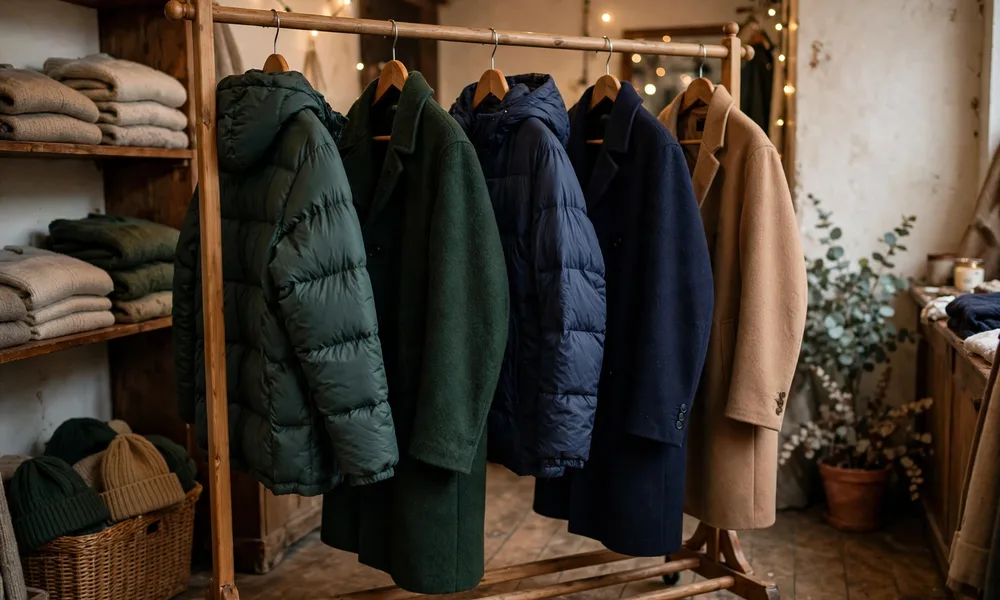
What Actually Keeps You Warm
Warmth comes down to three things working together: insulation, windproofing, and fit. Insulation traps warm air. Down does this best for its weight, because each cluster lofts up and holds a large volume of air, but it needs to stay dry, since wet down collapses and stops insulating. Synthetic insulation is made of fine fibres that hold their shape when damp, so a synthetic coat keeps you warmer in sleet and wet snow, though it is heavier than down for the same warmth. Wool fibres are naturally crimped, so they trap air, and wool can absorb a surprising amount of moisture before it feels cold against your skin.
Insulation: Down, Synthetic, and Wool
Down is measured by fill power: a higher number means the down lofts more and traps more air for the same weight. A fill power of 600 is solid for everyday winter wear, 700 to 800 is excellent for serious cold, and anything above 800 is expedition grade. What matters just as much is how much down is in the coat, since a high fill power in a thin jacket is still colder than a lower fill power in a thick one. Synthetic insulation is measured in grams per square metre: 100 to 200 grams suits a mild winter, while 200 grams and above is what you want for freezing weather. Wool coats carry no fill rating, so judge them by weight and density: a heavy, tightly woven wool coat is far warmer than a light, loosely woven one.
The Shell Matters as Much as the Filling
The outer fabric keeps the wind out, and wind is the great thief of warmth. A coat with a windproof shell can feel ten degrees warmer than the same coat with a wind-permeable face, because still air insulates and moving air does not. Look for a tightly woven outer, a storm flap over the zip, and cuffs that close snugly around your wrists, since wind sneaks in through every gap. A water-resistant finish helps in light snow, but a coat only counts as waterproof if its seams are sealed, so do not expect a wool overcoat to keep you dry in a downpour.
The Best Winter Coats of 2026
Best for Deep Cold: The Heavyweight Down Parka
When the temperature drops well below freezing and stays there, nothing beats a heavyweight down parka. Thick baffles of high fill power down wrap you from shoulders to knees, the storm hood seals out the wind, and the deep pockets are big enough for gloves as well as hands. It is too warm for mild days and too bulky to pack small, but on the coldest day of the year it is the coat you will be glad you own.
Best for the Commute: The Wool Overcoat
A wool overcoat is the smartest way to stay warm on the way to work. It looks right over office clothes, it moves well when you walk, and a good heavy wool keeps you comfortable from the station to the office door without overheating on the train. The weakness is wind and wet weather, so choose an overcoat with a full lining and a high collar, and keep a compact umbrella for the worst days.
Best for Changeable Weather: The 3-in-1 Coat
A 3-in-1 coat is really three coats in one: a waterproof outer shell, a zip-out insulated liner, and the two worn together for full winter protection. On a mild autumn day you wear the shell alone, on a dry cold day you wear the liner as a jacket, and when winter turns truly nasty you zip them together. The compromise is bulk, so try the full combination on before you buy.
Best for Layering: The Packable Puffer
A packable puffer is the coat you keep in your bag for when the temperature drops. It weighs almost nothing, stuffs into its own pocket, and adds a surprising amount of warmth over a jumper or under a heavier coat. Wear it under a wool overcoat on the coldest commute days. The same layering idea works from the feet up: wool socks that keep feet warm without the itch make a real difference, because cold feet make your whole body feel colder.
Best for Outdoor Work: The Insulated Work Coat
If you work outside in winter, you need a coat that is warm, tough, and easy to move in, and that is exactly what an insulated work coat is built for. The synthetic fill keeps working in wet snow and drizzle, the face fabric shrugs off scrapes, and the cut is roomy enough to reach, lift, and bend without the coat riding up. These coats are heavier than a town coat and too warm for a heated office, but for anyone who spends the working day outdoors they are the most practical winter coat you can buy.
Best for Snow and Sleet: The Long Waterproof Parka
A long waterproof parka is the coat for the worst winter weather: heavy snow, freezing rain, and long spells standing still. The length covers your knees, so your legs stay warm and dry, the waterproof shell keeps sleet out, and the insulation is thick enough for hours outdoors. This is the coat for watching a match from the sidelines and walking the dog in a blizzard. But when the weather turns, it handles everything winter can throw at you.

Fit and Length: Getting the Size Right
A winter coat that fits badly will never keep you warm, however good its insulation is. Too tight, and it compresses the fill and squeezes out the warm air it is meant to trap. Too loose, and cold air circulates inside it like a draught through an open door. The right fit leaves room for a jumper underneath without gaping at the chest, and the shoulders should sit on your shoulders. When you try a coat on, zip it right up, raise both arms, and sit down in it: the hem should not ride up past your hips and the sleeves should still cover your wrists. If you wear your coat over a hoodie, try them on together, and the best hoodies for men are cut to layer neatly under a winter coat without adding bulk at the neck. Coming in from a freezing day, a good heating pad can take the chill out of stiff shoulders while your coat dries by the door.

Winter Coat Buying Checklist
- Decide your coldest regular day first, then choose the insulation weight for that day, not for an average one.
- Check the fill power or insulation weight on the label, and compare it with the coat’s thickness and weight.
- Try the coat on over the jumper you will wear with it, zipped up, sitting down, and arms raised.
- Test the hood, the cuffs, and the storm flap: they are where wind and snow get in.
- Look for deep pockets, a two-way zip, and a lining that does not cling to your clothes.
- Check the care label before you buy: if you will not dry clean it, do not buy a coat that needs dry cleaning.
Frequently Asked Questions
How warm should a winter coat be?
Warm enough for the coldest day you regularly face, not the average day. A coat rated for mild winters will leave you cold on the one freezing morning that matters, while a coat that is slightly too warm can always be unzipped.
Is down or synthetic insulation better?
Down is warmer for its weight and packs smaller, but it loses its insulation when it gets wet. Synthetic insulation is heavier for the same warmth but keeps working in damp conditions, which makes it safer for wet snow and sleet.
What length of winter coat is warmest?
Longer is warmer, because it covers more of your body and stops cold air rising from below. A knee-length coat is noticeably warmer than a hip-length one when you are standing still, though a shorter coat is easier to drive in.
Can a winter coat be too warm?
Yes, and an overheated coat is almost as uncomfortable as a cold one. If you sweat inside your coat, the moisture makes you colder when you stop moving, so choose a coat you can vent, and layer underneath rather than buying the thickest coat available.
How do I wash a down coat?
Wash it rarely, on a gentle cycle, with a detergent made for down, and dry it on a low heat with dryer balls to restore the loft. Never use fabric softener, and make sure the coat is completely dry before you store it.
When should I buy a winter coat?
Late summer and early autumn usually offer the best choice and the best prices, before the cold weather arrives and the popular sizes sell out. End-of-winter sales can be cheaper, but the size and colour range is often limited by then.
The Bottom Line
The best winter coat in 2026 is the one that matches your winter: a heavyweight down parka for deep cold, a wool overcoat for the commute, a 3-in-1 for changeable weather, or a long waterproof parka for snow and sleet. Check the insulation, the windproofing, and the fit before you check the price, try it on over the layers you will actually wear, and buy for your coldest regular day.