
A Guide to T-Shirts That Keep Their Shape in 2026
The best T-shirts that keep their shape in 2026 are not the most expensive ones on the rail. They are the ones built from the right fabric, cut with a little structure, and washed the right way. A good T-shirt should look the same on its fiftieth wear as on its first: the collar sits flat, the shoulders stay put, the hem hangs straight, and the body neither bags out at the waist nor creeps up after every wash.
Most T-shirts fail slowly. The collar goes wavy first, then a shoulder seam drifts, then the whole shirt twists slightly to one side. By the time you notice, it has become a sleep shirt. This guide explains why, and which fabrics, fits and care habits keep a T-shirt looking new for years.
Key takeaways
- A T-shirt keeps its shape when its fabric is dense enough: look for midweight cotton around 180 to 220 grams per square metre, not thin, see-through jersey.
- Ribbed collars with elastane and taped seams resist the sagging, twisting and stretching that ruin cheap tees.
- Heavyweight cotton holds structure best, while cotton and elastane blends recover better after wearing and washing.
- Wash cold and skip the tumble dryer: heat is the biggest cause of shrinkage and collar damage.
- Buy the fit that matches your shoulders first; a shirt that fits at the shoulder and chest will keep its shape far longer than one that pulls or bags.
Why T-shirts lose their shape
A T-shirt is a tube of knitted fabric with a collar, two sleeves and a hem, and every part of it is under gentle tension whenever you wear it. Knitted fabric stretches in every direction, so unlike a woven shirt it has no built-in resistance to being pulled out of shape. Gravity, movement, washing and drying all tug at it, and a cheaply made tee has nothing to push back with.
The collar is usually the first casualty. Most collars are a thin band of ribbed knit, and if that band is too light or the stitching too loose, it stretches a little every time the shirt goes over your head. After twenty washes the collar waves and gapes, and no ironing puts it back.
Twisting is the third common failure. A knitted tube has a natural grain, and if the fabric is cut slightly off-grain or the side seams are sewn with uneven tension, the shirt rotates a little with every wash until the side seam sits visibly forward on one side. You cannot fix a twisted tee by ironing it, because the twist is in the structure, not in a crease.
The fabrics that hold their shape
Fabric is where shape retention is decided, long before the shirt reaches your wardrobe. The weight of the cloth matters more than the brand on the label, and the fibre mix matters more than either.
Heavyweight cotton: the structure king
Heavyweight cotton, usually 200 grams per square metre and above, is the best choice when you want a T-shirt that looks structured on its own. It drapes cleanly instead of clinging, holds a straight hem, and the collar keeps its line because the fabric around it is firm enough to support it. The trade-off is warmth: a heavy tee is a poor choice for a hot afternoon, and it can feel stiff for the first few wears. Look for combed or ring-spun cotton, which has a smoother surface and pills less than open-end cotton.
Midweight cotton: the everyday sweet spot
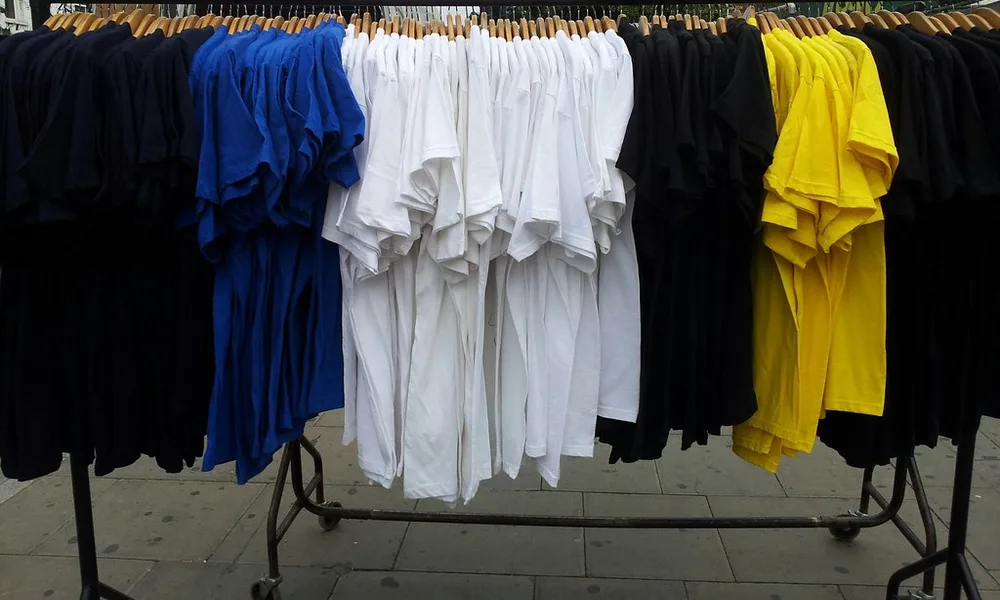
Midweight cotton, around 180 to 200 grams per square metre, is the best all-round fabric for a T-shirt that keeps its shape. It is heavy enough to hang straight and hide what is underneath, but light enough for warm weather and for layering under a jacket. Most of the best everyday tees sit in this range.
Cotton and elastane blends: the recovery experts
A small amount of elastane, usually 3 to 5 percent, changes how a T-shirt behaves after wearing. Pure cotton stretches and stays stretched; a blend springs back. That recovery keeps the waist from bagging out by the end of the day and the collar from staying stretched after you pull the shirt over your head. Blends suit slim fits, active days, and anyone who wears the same tee for twelve hours at a stretch.
Fit: the shape you buy is the shape you keep
Fit is the second half of shape retention, and it is the half most people get wrong. A T-shirt that is too tight is pulled out of shape every time you move, because the fabric is under tension at the chest, shoulders and waist. One that is too loose has nothing holding it in place, so it folds, bunches and stretches unevenly. The right fit is the one where the fabric rests on your body without pulling and without pooling.
Start with the shoulders: the seam should sit right on the point of your shoulder bone. If it droops down your arm, the shirt is too big and the sleeves will pull the body out of line; if it sits on your collarbone, the shirt is too small and the chest will strain every time you reach forward. Next check the chest: you should be able to pinch about two centimetres of fabric at the side without the shirt looking baggy.

The 5 best T-shirts that keep their shape in 2026
Every T-shirt below is still shaped like a T-shirt after months of real wear. They cover the three fabrics that matter and fits from classic to slim.
1. Best overall: the heavyweight crew neck
The heavyweight crew neck is the benchmark. At around 220 grams per square metre in ring-spun cotton, it hangs straight from the shoulder, the collar is a firm ribbed band that does not wave, and the hem stays level after dozens of washes. It is the shirt to buy first if you are rebuilding a wardrobe around tees that last.
2. Best everyday: the midweight classic
The midweight classic is the shirt you will reach for most often. It is light enough for warm days and structured enough to look smart under an open shirt.
3. Best slim fit: the cotton elastane blend
A slim fit only works in a fabric that recovers, and that means a cotton and elastane blend. At 95 percent cotton and 5 percent elastane, this tee hugs the body without straining, springs back at the waist by evening, and keeps its collar flat because the knit is always pulling gently back into place.
4. Best for layering: the long sleeve crew
A long sleeve crew neck earns its place because the sleeves add the most common failure point in a layered tee: the cuffs. Choose one with ribbed cuffs that hold their tension and a body cut slightly long, so it does not ride up under a sweater. A good one sits neatly under a hoodie without bunching at the waist, which is worth remembering when you look at the best hoodies for men in 2026 for the layer that goes over it.
5. Best for travel: the wrinkle-resistant blend
A travel tee needs to survive being folded into a bag, worn all day, and washed in a hotel sink. The best ones use a cotton blend with a little synthetic fibre for faster drying and better recovery, and a slightly relaxed fit so nothing pulls while you sit for hours. Fold it, do not roll it, and it will come out of the bag looking close to how it went in. The packing advice in the best hoodies for travel in 2026 applies just as well to tees: pack fewer, better shirts and wear each one twice.
Comparison table
| T-shirt type | Fabric | Weight | Best for | Shape retention |
|---|---|---|---|---|
| Heavyweight crew neck | Ring-spun cotton | 220 gsm | Structure, layering | Excellent |
| Midweight classic | Combed cotton | 190 gsm | Everyday wear | Very good |
| Slim fit blend | Cotton, 5% elastane | 180 gsm | Under jackets | Very good |
| Long sleeve crew | Cotton blend | 200 gsm | Cold weather | Good |
| Travel blend | Cotton synthetic mix | 170 gsm | Packing light | Good |
Washing and drying: where most T-shirts are ruined
Heat is the enemy. A hot wash shrinks cotton unevenly, which pulls a collar out of line and shortens a body by a centimetre. A tumble dryer is worse: the heat and tumbling stretch the knit while it is hot and soft, then set it in the wrong shape as it cools. The most effective habit is also the simplest: wash cold, on a gentle cycle, and hang the shirt to dry.
Turn the shirt inside out before washing, which protects the outer surface from friction and fading, and use a mesh laundry bag if you wash with jeans or anything with zips. Never hang a wet T-shirt by its shoulders on a narrow hanger: the weight of the wet fabric will stretch the shoulder points. Instead, drape it over a drying rack or lay it flat for the first hour, then hang it once it is mostly dry. If your drawer space is tight, the best closet organizers in 2026 can give folded tees a proper home instead of a crushed pile.
Checklist: buying a T-shirt that keeps its shape
- Check the fabric weight: 180 to 220 grams per square metre is the sweet spot for most people.
- Feel the collar: it should be a firm ribbed band that springs back when you stretch it gently.
- Look for taped shoulder seams and side seams that run straight from armpit to hem.
- Try the shoulder fit first: the seam should sit on your shoulder bone, not above or below it.
- Hold it to a light: if you can see clearly through it, it is too thin to last.
- Read the care label before buying: if it demands special handling, you will not do it every week.
Frequently asked questions
Why does my T-shirt collar go wavy?
The collar stretches a little every time the shirt goes over your head and every time it is washed hot or tumble dried. A ribbed collar with elastane resists this far better than a plain knit collar.
Why does my T-shirt twist to one side?
Twisting usually means the fabric was cut off-grain or the side seams were sewn with uneven tension. It is a manufacturing fault, not something you caused, and it cannot be ironed out.
Will a T-shirt shrink in the wash?
Cotton shrinks most on its first hot wash, Wash cold and skip the dryer, and a good midweight tee should lose almost no size after the first wash.
Is heavyweight cotton always better?
Not always. Heavyweight cotton holds structure best, but it is warm and can feel stiff. For hot weather or active days, a midweight cotton and elastane blend keeps its shape better in practice
How many T-shirts should I own?
Seven to ten good tees in rotation is enough for most people: three white, two black, two colours, and one or two long sleeves.
Can a stretched T-shirt be fixed?
Sometimes. Soak it in cool water with a little hair conditioner, gently reshape it on a flat surface, and let it dry flat. This can relax the fibres toward their original shape,
The bottom line
A T-shirt that keeps its shape is not a luxury; it is a fabric weight, a collar, a fit and a washing habit. Buy midweight or heavyweight cotton, check the collar and the shoulder seams, make sure it fits at the shoulder, and wash it cold and dry it flat.


