The Best Crackers for Cheese Boards and Snacking in 2026
A good cracker is easy to overlook and hard to replace. It is the crisp base under the cheese, the scoop for the dip, and the snack that fills the gap between meals without spoiling dinner. A bad cracker snaps the moment you spread on it, tastes of stale oil, or turns soft in the packet within days of opening. The best crackers in 2026 are the ones that stay crisp, taste of something real, and hold up to whatever you put on them, whether that is a soft cheese, a thick dip, or nothing at all.
This guide explains what makes a cracker good, how the main types differ, and how to choose one for a cheese board, a dip, or plain snacking.
Key takeaways
- Sturdiness is the first test: a good cracker survives spreading, scooping and a thick dip without snapping, and a thin cracker that breaks is a garnish, not a base.
- Water crackers are the most neutral and the best for a cheese board, because they let the cheese do the talking; flavoured crackers suit plain snacking better.
- Whole-grain and seeded crackers taste nuttier and keep you fuller, but check the salt, because some are saltier than a packet of crisps.
- Gluten-free crackers have improved a lot, and the best rice and chickpea crackers are crisp and sturdy, but the worst go soft or gritty within minutes.
- Buy small packets and seal them well: crackers go stale faster than almost any other pantry food, and a stale cracker cannot be rescued.
What makes a good cracker
A cracker is a simple food: flour, water, a little fat and salt, rolled thin and baked until dry. The simplicity is the point, and it is also what makes a bad cracker so obvious. A good cracker is dry all the way through, with no soft centre and no damp chew. It should snap cleanly when you break it, with a sharp, dry crack rather than a bend or a crumble. That snap is low moisture, which keeps a cracker crisp and sturdy.
Flavour is the second test. A good cracker tastes of its ingredients: wheat, rye or oats, a little salt, and the seeds or grains on top. It should taste baked, not fried, and it should finish clean, without a greasy film or a stale-oil aftertaste. The best way to judge a cracker is to eat one plain, with nothing on it, before you decide what to pair it with. Sturdiness is the third test, and the one most people forget until the board is loaded: a cracker for a cheese board needs to carry a slice of cheese and a smear of chutney without folding, and a cracker for dipping needs to carry a thick scoop without snapping in the bowl.
The main types of cracker, compared
Water crackers are the plainest and the most useful. They are made from white flour, water and salt, rolled thin and baked pale, with a clean, neutral flavour and a crisp, light bite. They are the best cracker for a cheese board, because they do not compete with the cheese. Their weakness is delicacy: a thin water cracker snaps under a thick dip.
Whole-grain crackers are made with wholemeal flour, oats or rye, and they taste nuttier, earthier and more filling than water crackers. They stand up well to cheese and spreads because they are usually thicker and denser. Seeded crackers, topped with sesame, poppy, linseed or sunflower seeds, add crunch and a toasted, nutty flavour, and they look the part on a board. Rice crackers are a different family: made from rice flour, baked or puffed until crisp, naturally gluten-free, with a light, airy crunch. Gluten-free crackers made from chickpea, corn or potato flour have improved enormously, and the best are as crisp as a wheat cracker.
| Type | Flavour | Crunch and strength | Best use |
|---|---|---|---|
| Water crackers | Neutral, clean | Light, delicate | Cheese boards, tasting cheese |
| Whole-grain | Nutty, earthy | Firm, sturdy | Everyday snacking, spreads |
| Seeded | Toasted, nutty | Crisp, crunchy | Cheese boards, dips |
| Rice crackers | Light, savoury | Airy, snappy | Dips, snacking |
| Gluten-free | Varies by flour | Crisp when fresh | Cheese boards, parties |
| Flavoured | Herb, cheese, spice | Usually sturdy | Plain snacking, soup |
The crunch test: how to judge a cracker in the shop
You cannot taste a cracker before you buy it, but you can learn a lot from the packet. Start with the weight: a packet that feels light for its size is usually full of air and thin crackers, while a packet that feels dense holds thicker, sturdier ones. The crackers should be evenly coloured and golden, with no pale centres or burnt edges.
A packet with a lot of crumbs at the bottom has been handled badly. The best-before date matters more for crackers than for most pantry foods, because crackers stale long before they go off. Buy the packet with the longest date, and buy the size you will finish within a week or two of opening. At home, break one in half and listen for a clean snap, eat one plain, then spread a thick dip on one and lift it. If it snaps, it is a cracker for cheese, not for dipping.
Pairing crackers with cheese
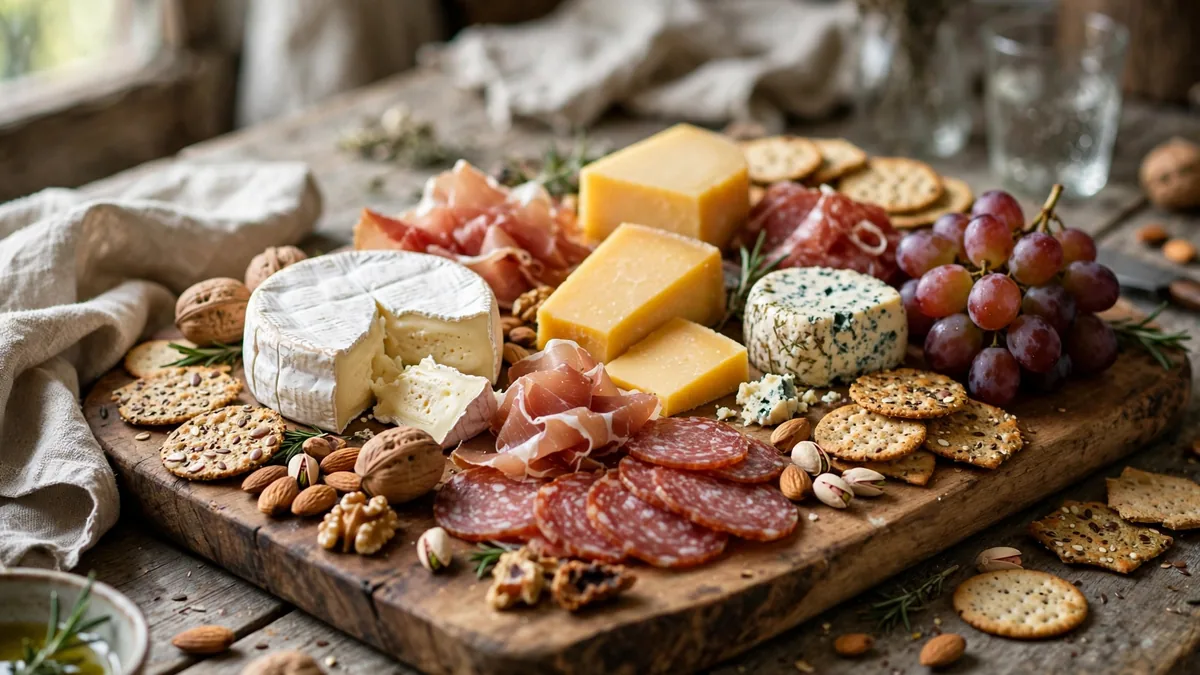
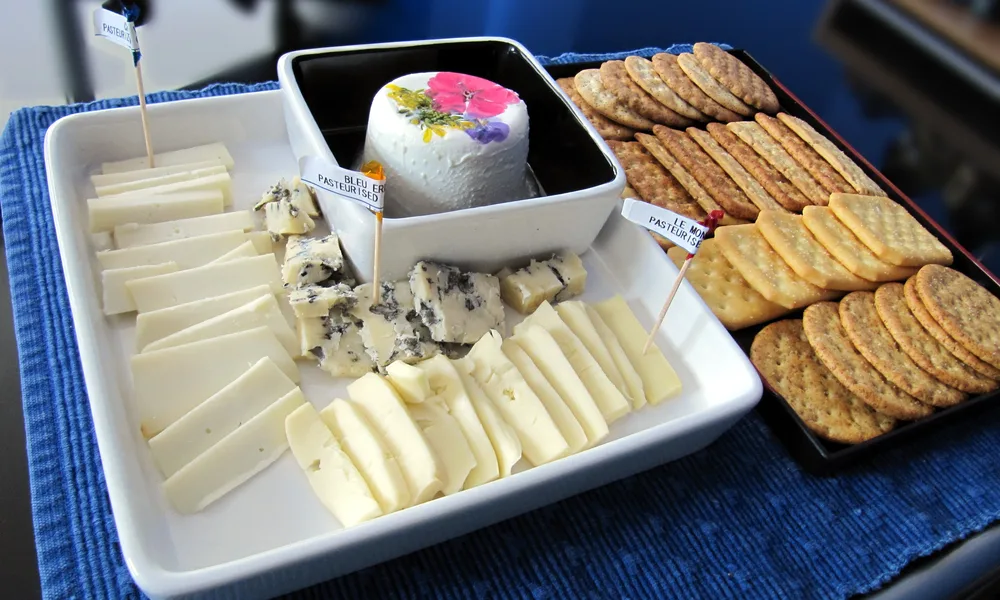
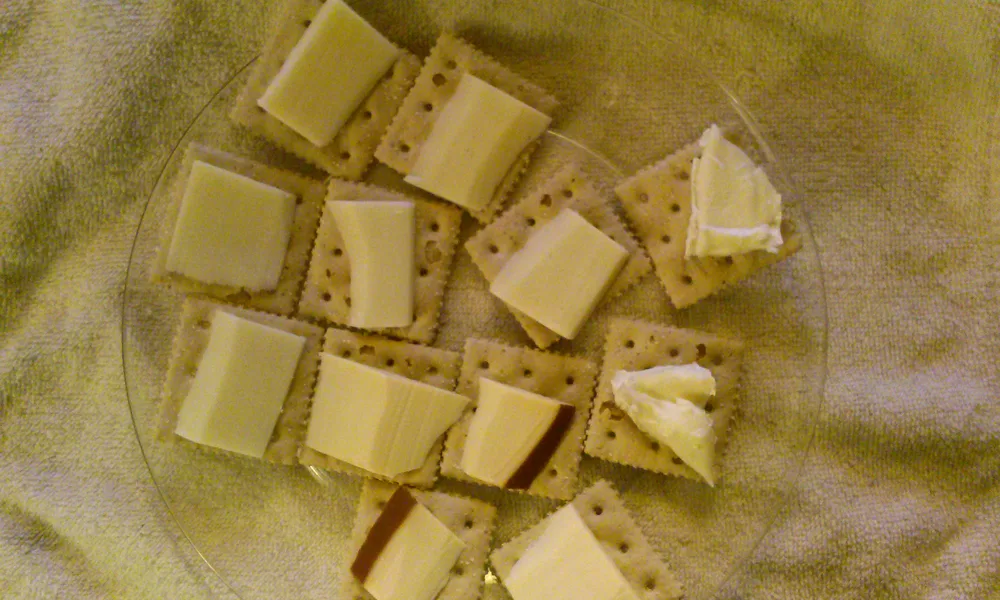
The rule for a cheese board is simple: the cracker should support the cheese, not compete with it. A mild, creamy cheese, a brie, a soft goat cheese or a young cheddar, suits a plain water cracker, because the cracker disappears and the cheese takes the stage. A strong cheese, a blue, an aged cheddar or a washed-rind cheese, suits a whole-grain or seeded cracker, because the cracker has enough flavour of its own to stand up to the cheese without being overwhelmed.
Size the cracker to the slice of cheese, so the cheese sits on it rather than hanging over the edge. A soft cheese needs a crisp cracker, because the contrast is the pleasure.
Pairing crackers with dips and spreads
Dips are where most crackers fail, because dipping is a test of strength. A thick dip like hummus needs a thick, sturdy cracker, a whole-grain or seeded one, or a thick rice cracker, and it needs a cracker big enough to scoop with. A thin water cracker will snap in the bowl and leave you fishing for pieces. A thin, smooth dip like salsa suits a thinner cracker.
Spreadable cheese is kinder to crackers than a thick dip, because you spread it on the table rather than scooping from a bowl. A cream cracker with a herbed cheese spread is one of the simplest and best snacks there is, and it needs nothing more than a crisp, plain cracker and a generous smear. For snacking without any topping, a flavoured cracker, herb, cheese or cracked pepper, should taste good on its own.
How to read the label
Start with the ingredients, which are listed by weight. A good cracker lists flour, water, oil and salt first, and the flavourings, seeds or grains after them. If sugar appears in the first few ingredients, the cracker will taste sweet, which suits a cheese board with blue cheese but not a dip. A long list of emulsifiers and flavourings means the cracker is compensating for poor flour.
Next, check the salt. Crackers vary enormously: some have less than 0.5 grams of salt per hundred grams, and some have more than 2 grams, which is saltier than many crisps. Fibre is the other number worth checking: a whole-grain cracker should have at least 3 grams of fibre per hundred grams, while a water cracker will have far less, and that is fine, because it is not trying to be a health food. Most crackers are baked with a little vegetable or olive oil; palm oil is the one to avoid, for its flat, greasy flavour.

Storage: keeping crackers crisp
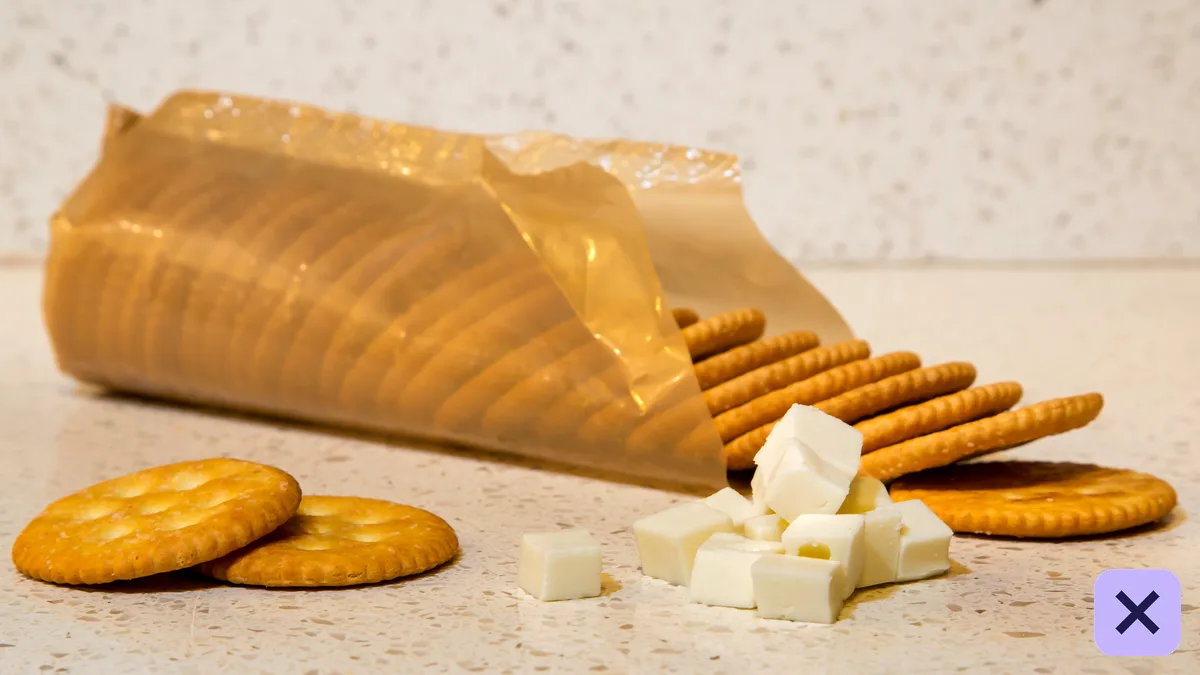
Crackers go stale faster than almost any other pantry food, because they are so dry that they absorb moisture from the air the moment the packet is open. The fix is simple: seal the packet tightly, with a clip or a peg, and keep it in a cool, dry cupboard, not in the fridge, where condensation will soften them. A sealed jar or airtight tin works even better.
Once a cracker has gone soft, there is one rescue worth trying: a few minutes in a low oven, about 150 degrees, on a baking tray, will drive the moisture out and restore the snap. It does not work for crackers that have gone stale from old oil, which taste rancid rather than soft, and those should be thrown away. Buy small packets if you eat crackers slowly: a large box open for a month tastes worse at the end than a small packet finished in a week.
Your cracker checklist
- Break one before you buy a second box: a good cracker snaps cleanly and finishes without grease.
- Match the cracker to the job: water crackers for cheese, whole-grain and seeded for the board and dipping, rice crackers for snacking.
- Offer two types on a cheese board, a plain one and a seeded one, and size the cracker to the slice of cheese.
- Check the salt and the fibre: whole-grain should have real fibre, and the saltiest crackers are not the best everyday choice.
- Buy the longest date and the size you will finish in a week or two, and seal the packet tightly after every use.
- Revive a soft cracker in a low oven, but throw away any cracker that smells of stale or rancid oil.
Frequently asked questions
What is the best cracker for a cheese board?
A plain water cracker, because it is neutral and lets the cheese lead, plus a seeded whole-grain cracker for stronger cheeses.
Are crackers healthy?
Some are, some are not. Whole-grain and seeded crackers with real fibre and modest salt are a reasonable snack with cheese or hummus. Plain water crackers are mostly refined flour and salt, so eat them as a snack, not a meal.
What is the difference between a water cracker and a cream cracker?
A water cracker is made from flour, water and salt, and is pale, light and neutral. A cream cracker is made with a little more fat, often cream or milk, and is richer, flakier and slightly sweeter. Both suit cheese, but the cream cracker is the better plain snack.
Can you eat crackers if you are gluten-free?
Yes, and the choice is much better than it used to be. Rice crackers are naturally gluten-free, and chickpea, corn and potato crackers are widely available. Quality varies a lot, so try a small packet before buying a large box.
Why do my crackers go soft?
Because they absorb moisture from the air as soon as the packet is open, especially in a humid kitchen or near a dip. Seal the packet tightly, keep it in a dry cupboard, and refresh a soft cracker for a few minutes in a low oven.
How long do crackers last once opened?
About one to two weeks if the packet is sealed well, and less in humid weather. An unopened packet keeps for months.
The bottom line
The best crackers in 2026 are the ones that do their job and get out of the way. A water cracker that lets the cheese shine, a seeded cracker that holds a thick dip without snapping, and a whole-grain cracker that tastes good on its own are worth more than a shelf of fancy flavours that go soft in the packet. Buy two types, size them to the cheese, and seal the packet after every use.
For more on the food crackers go with, see our comparison of the best and worst cheeses of 2026, our guide to the best hummus for every snack in 2026, and our guide to the best salsas for every chip in 2026.