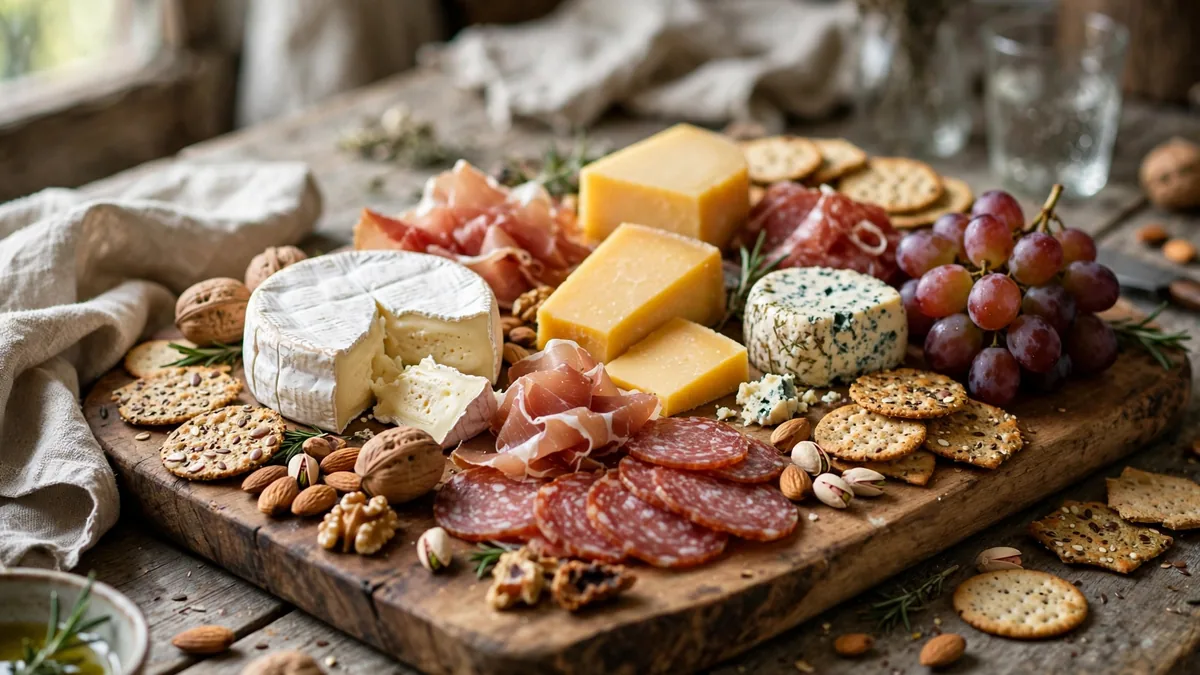
Cheese Boards That Make Entertaining Easy in 2026
A good cheese board makes entertaining easy in 2026 because it turns a handful of ordinary ingredients into a centrepiece without any cooking at all. You set out cheeses, cured meats, fruit, nuts and crackers, and guests help themselves while you enjoy your own party instead of standing over the stove. The board itself matters more than most hosts realise: its size decides how much you can serve, its material affects how easy it is to clean, and its shape decides whether the spread looks generous or cramped. This guide covers the materials, sizes and details that separate boards worth buying from the ones that end up at the back of a cupboard.
Key Takeaways
- Size matters most: a board around 18 by 12 inches serves four to six people, and larger gatherings need two boards rather than one overcrowded one.
- Hardwoods such as acacia, walnut and maple are the best all-round choice, because they are kind to knives, resist stains, and look better with age.
- Marble and slate stay cool and suit soft cheeses, but they are heavy, can chip, and will dull a knife edge if you cut directly on them.
- Bamboo is light and affordable, but harder than hardwood, so it is tougher on knife edges.
- A juice groove, a handle and a flat, stable base cover almost every situation, while built-in knife drawers are optional extras, not essentials.
Why the Board Itself Matters
It is tempting to treat the board as a plate with ambitions, but it does three jobs at once. First, it presents the food: a board with a warm wood grain or a cool marble surface makes even supermarket cheese look deliberate. Second, it organises the spread: a good board gives each cheese its own space, keeps wet and dry foods apart, and leaves room for hands and knives to move without knocking things over. Third, it protects your table: a juice groove keeps honey, soft cheese and fruit juice off the tablecloth, and small feet lift the board so it does not slide around or trap moisture underneath.
The Main Materials, Compared
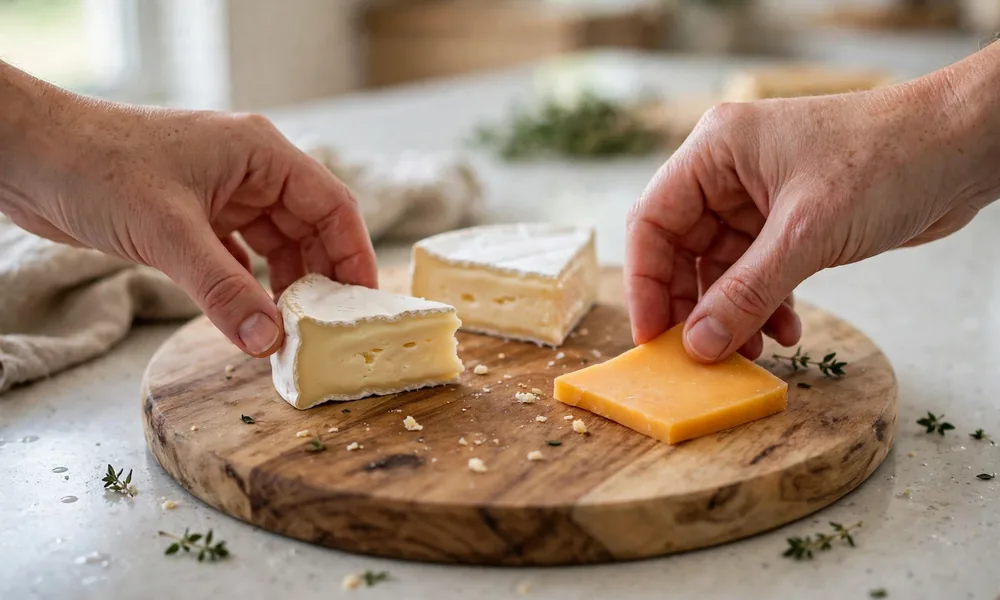
Material is the first decision, and it shapes how the board looks, cleans and lasts, and how it treats your knives. Acacia is the most common hardwood board, with a rich grain and natural stain resistance. Walnut is darker, pricier and suits a formal table. Maple is pale and understated, and the hardest of the three, so it resists knife marks better than most woods. All three need occasional oiling and none of them should go in the dishwasher.
Bamboo is the budget-friendly alternative: light, moisture-resistant and easy to clean. Its drawback is hardness, which makes it tougher on knife edges than hardwood, Marble and slate stay cool, which keeps soft cheeses firm for longer, and they look striking on a table. But they are heavy, they can chip if dropped, they stain if you leave red wine on them, and cutting directly on stone will blunt a good knife in a single evening. Cut cheese on wood first, then serve it on the stone.
| Material | Best For | Knife Friendliness | Cleaning | Weight |
|---|---|---|---|---|
| Acacia | Everyday entertaining, mixed spreads | Excellent | Hand wash, oil occasionally | Medium |
| Walnut | Formal dinners, gifting | Excellent | Hand wash, oil occasionally | Medium |
| Maple | Frequent use, knife work | Very good | Hand wash, oil occasionally | Medium |
| Bamboo | Budget buys, casual gatherings | Fair, hard on edges | Hand wash, dries fast | Light |
| Marble | Soft cheeses, warm rooms | Poor, dulls blades | Wipe clean, seal occasionally | Heavy |
| Slate | Modern tables, chalk labelling | Poor, dulls blades | Wipe clean | Heavy |
For most households, an acacia board is the safest first buy: it looks good, it is forgiving, and it costs far less than walnut. If you entertain often and want one board to last for years, walnut or maple is worth the step up. Marble is best as a second board, brought out for soft cheeses on a warm evening, rather than as your only board.
What Size Do You Actually Need?
Size is where most buyers go wrong, usually by buying too small. A board that looks generous in the shop can look cramped once you add three cheeses, a pile of crackers, a bunch of grapes and a small pot of honey. As a rough guide, a board of about 18 by 12 inches serves four to six people with three cheeses and a reasonable selection of accompaniments. A board of 12 by 9 inches works for two to four people, or as a second board for desserts or extra cheese. Anything smaller is really a snack board for one or two, not a party piece.
For larger gatherings, the answer is rarely one enormous board. A board bigger than about 24 inches across becomes heavy, hard to wash and awkward to carry through a doorway, and it is difficult to reach the middle of it from one side. Two medium boards work better: one for cheese and crackers, one for meats, fruit and dips, placed at opposite ends of the table so guests do not queue in one spot.
Shapes, Handles and the Details That Help
Rectangular boards are the most practical shape, because they fit a table, stack neatly in a cupboard, and give you straight edges to line cheeses up against. Round boards look softer and more inviting, and they work well on a round table or as a centrepiece, but they waste space at the corners. Paddle boards, with a handle at one end, are easy to carry and hang on a hook, but the handle takes up space that could hold food, so they are better as a second board than as your main one.
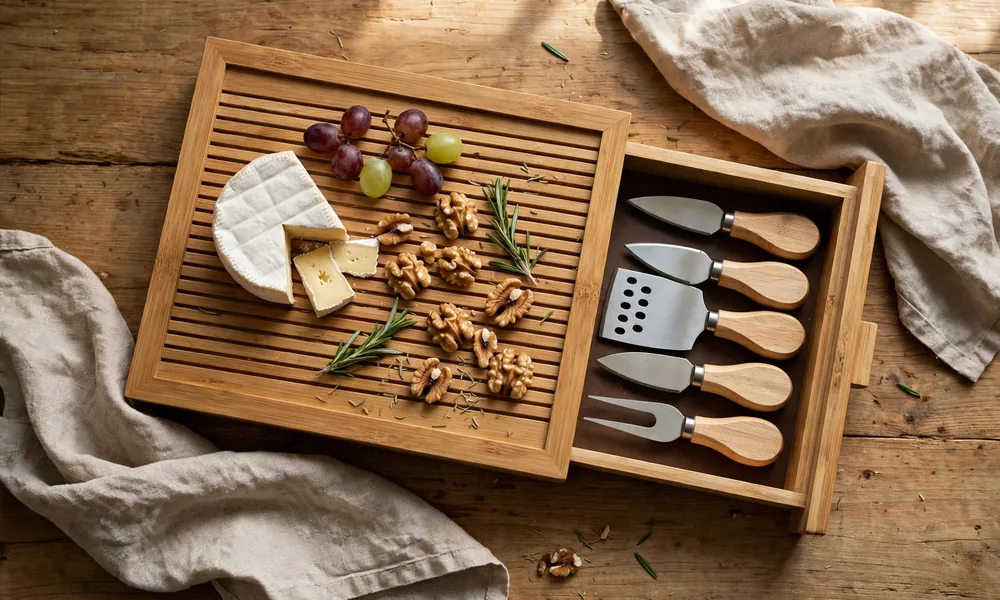
A few details are worth paying for. A juice groove around the edge catches run-off from soft cheeses, cut fruit and honey, and keeps the table clean. Small rubber feet or a slightly raised base stop the board sliding and let air circulate underneath, which matters on a damp table or a warm day. A handle makes carrying a loaded board far safer, especially outdoors. Built-in features are more mixed: a sliding drawer of cheese knives sounds clever, but the knives supplied with most sets are thin and light, and experienced hosts usually reach for their own knives anyway.
How to Build a Board That Looks Effortless
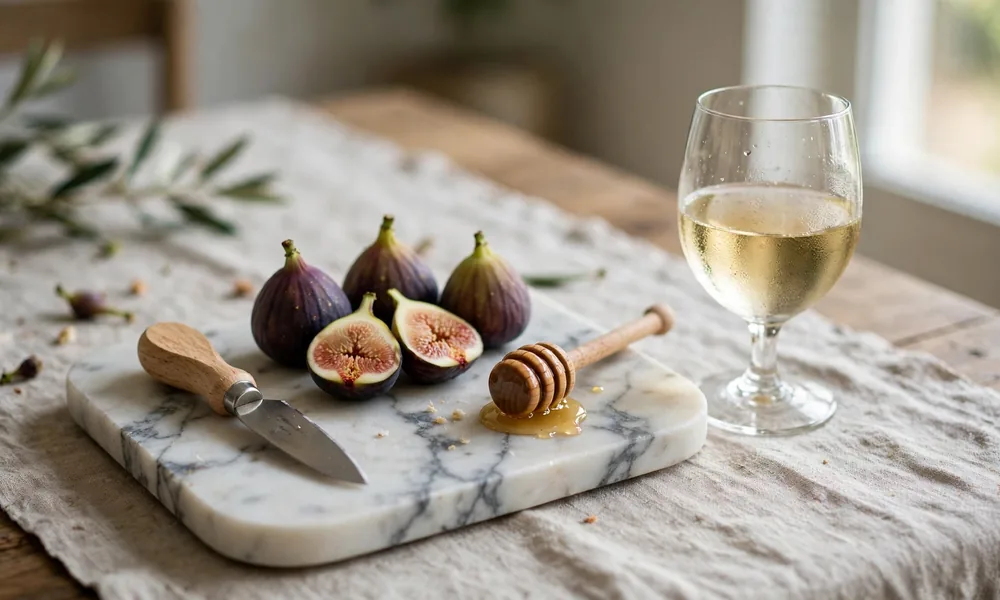
A beautiful board is built in layers, and the order matters. Start with the cheeses, because they are the anchors of the spread. Three cheeses is the right number for most boards: one soft, such as brie or camembert; one hard, such as aged cheddar or parmesan; and one with character, such as a blue or a smoked cheese. Place them in different corners of the board, with space between them, and cut a few slices from each so guests know they are meant to help themselves. A whole, untouched wedge can intimidate a guest who does not want to be the first to cut into it.
Next, add the meats, if you serve them: folded slices of salami, prosciutto or chorizo, arranged in loose rolls or fans rather than flat stacks. Then fill the gaps with colour and texture. Grapes, figs, apple slices and berries bring freshness and sweetness, while nuts add crunch. Crackers and bread go last, because they take up the most space and are the easiest to top up. The best crackers for cheese boards and snacking in 2026 are the ones that hold up under a soft cheese without crumbling, and a mix of two cracker styles, one plain and one seeded, gives guests a choice without cluttering the board. A small pot of honey and a few sprigs of rosemary finish the display, and a small bowl of good olives adds salt and colour.
Choosing Your Cheeses
The cheeses deserve as much thought as the board, and the same three-cheese rule applies whether you shop at a deli or a supermarket. A soft cheese brings creaminess, a hard cheese brings depth and salt, and a third cheese with a strong personality gives the board a talking point. Buy less than you think you need: about 100 grams of each cheese per person is plenty when crackers, fruit and meats sit alongside. Take the cheese out of the fridge at least thirty minutes before serving, because cold cheese tastes muted. If you want a deeper comparison, our guide to the best vs worst cheeses of 2026 weighs up which varieties earn their place on a board.
Care: Keeping a Board in Good Shape
A wooden board will last for years if it is looked after, and it will warp, crack or smell if it is not. Never put a wooden board in the dishwasher: the heat and prolonged soaking swell the fibres, loosen any joins, and strip the natural oils out of the wood. Wash it by hand with warm water and a little washing-up liquid, scrub gently, and dry it straight away, standing it on its edge so air reaches both faces.
Every few months, or whenever the wood starts to look dry and pale, rub in a food-safe board oil with a soft cloth, leave it overnight, and wipe off the excess in the morning. This keeps the wood sealed against moisture and stains, and restores the rich colour that makes a hardwood board so attractive.
Your Cheese Board Checklist
- Board around 18 by 12 inches for four to six people, or two medium boards for a larger gathering.
- Hardwood such as acacia, walnut or maple for the main board, with marble or slate as a second board for soft cheeses.
- Juice groove around the edge, a handle for carrying, and feet or a raised base so the board does not slide.
- Three cheeses, one soft, one hard, one with character, taken out of the fridge thirty minutes before serving.
- Crackers, fruit, nuts and olives to fill the gaps, with colour and contrast.
- Hand wash only, dry straight away on its edge, and oil the wood every few months to keep it sealed.
Frequently Asked Questions
What is the best material for a cheese board?
Hardwood is the best all-round choice, and acacia is the safest first buy because it is attractive, durable and reasonably priced.
What size cheese board do I need?
For four to six people, a board of about 18 by 12 inches with three cheeses and a good selection of accompaniments is right. For two to four people, 12 by 9 inches is enough.
How many cheeses should I put on a board?
Three is the right number: one soft, one hard, and one with a strong character such as a blue or a smoked cheese.
Can I put a wooden cheese board in the dishwasher?
No. The heat and prolonged soaking swell the wood, loosen joins, strip out the natural oils, and can warp or crack the board. Wash it by hand with warm water and a little washing-up liquid
How do I stop a cheese board sliding on the table?
Choose a board with small rubber feet or a raised base, and place it on a dry surface. A thin non-slip mat or a damp tea towel underneath will also hold it steady.
How do I get smells out of a wooden cheese board?
Rub the surface with half a lemon and a little coarse salt, leave it for ten minutes, then wash with warm soapy water and dry it straight away.
The Bottom Line
The best cheese board for most homes in 2026 is a hardwood board, ideally acacia or walnut, around 18 by 12 inches, with a juice groove, a handle and a stable base. It is big enough for a proper spread for four to six people, kind to your knives, easy to look after, and handsome enough to stay on the table all evening.


