
What Is the Best Mason Jar for Storage and Canning in 2026?
The best mason jar matches the job you actually do with it: a jar perfect for overnight oats can be wrong for pressure canning green beans. Mason jars have outgrown their preserving roots: today they store dry goods, portion lunches, hold leftovers, ferment vegetables and organise pantries, as well as sealing jams and sauces. What matters is glass thickness, mouth width, lid design and size: get those right and jars seal reliably, stack neatly and last for years.
Key Takeaways
- Wide-mouth jars are the most versatile: easier to fill, empty and clean, and they fit a hand inside for scrubbing.
- Only jars sold for home canning, with matching two-piece lids, are safe for water-bath or pressure canning.
- For dry storage, the lid matters more than the jar: an airtight seal keeps flour, rice and coffee fresh for months.
- Pint and quart jars cover most kitchens; half-gallon jars are heavy and awkward when full.
- Inspect every jar before each use: one chip on the rim can break a seal and ruin a batch of preserves.
What Makes a Mason Jar a Mason Jar
A true mason jar has a threaded neck that takes a standard two-piece lid: a flat metal disc with a sealing compound and a screw band that holds it in place during processing. Thread sizes are standardised, so lids from different brands usually fit. Regular-mouth jars open to about 7 centimetres, wide-mouth to about 8.6, and that difference shapes everything from filling to cleaning.
The glass is tempered to cope with canning heat, which is why a proper mason jar survives boiling water and a pressure canner while an ordinary supermarket jam jar may crack. They are not indestructible, though: they chip on rims and bases, crack with sudden temperature change, and can split in the freezer with too little headspace. Treat them as sturdy but not unbreakable.

Wide Mouth vs Regular Mouth
Wide-mouth jars are easier to fill, empty and clean, because your hand and a sponge fit inside. They suit chunky preserves, pickles, large fruit, meal prep and anything eaten straight from the jar, and take up no more shelf space than regular-mouth jars of the same volume.
Regular-mouth jars have one real advantage: they pour better. Sauces, dressings, drinks and smoothies flow neatly from the narrower neck, and they are the traditional choice for jellies and jams in half-pint sizes. If you mostly pour liquids, regular mouth makes sense; if you mostly spoon food out, pack produce in or wash by hand, wide mouth wins. Many households own both.
The Main Sizes and What They Suit
Mason jars come in a handful of standard sizes, and each has a natural role in the kitchen.
Half-Pint Jars (240 ml)
Half-pint jars are the jam and jelly jar. They hold a small batch of preserves, a portion of sauce or dressing, or a serving of overnight oats. They are light, stack well, and keep jam from going stale in a large open jar. They are also the best size for gifting.
Pint Jars (500 ml)
The pint is the workhorse: a single meal portion, a batch of pickles, a serving of soup or a day’s salad. For canning, pints are the most used size because they process quickly and are easy to handle when hot. If you buy only one size, buy pints.
Quart Jars (1 litre)
Quarts suit bulk storage and larger canning batches: whole tomatoes, big pickles, stock or a week’s dry goods. They are also the standard size for fermenting sauerkraut and kimchi. Filled with liquid, a quart jar is heavy.
Half-Gallon Jars (2 litres)
Half-gallon jars are for bulk dry storage: flour, rice, sugar, oats and pet food. They are not recommended for home canning, because heat cannot reliably reach the centre of such a large volume. Keep them on a low shelf.
Best Mason Jars Compared
| Jar | Best For | Mouth | Canning Safe |
|---|---|---|---|
| Half-pint, regular mouth | Jams, jellies, sauces, gifts | Regular | Yes |
| Pint, wide mouth | Meals, pickles, soup, daily use | Wide | Yes |
| Pint, regular mouth | Drinks, dressings, smoothies | Regular | Yes |
| Quart, wide mouth | Bulk canning, fermenting, stock | Wide | Yes |
| Half-gallon, wide mouth | Dry bulk storage only | Wide | No |
The pint wide-mouth jar is the best all-rounder for most kitchens in 2026: it cans safely, stores meals well, cleans easily and is light when full. Add half-pints for jams and quarts for bulk work.
Lids: The Part That Actually Seals
The jar gets the attention, but the lid does the work. A standard two-piece lid has a flat metal disc with a ring of sealing compound and a screw band. During processing, heat softens the compound, air escapes, and as the jar cools a vacuum pulls the lid down tight: the pop you hear as jars cool. Lids are single-use for canning, since the compound will not seal reliably twice, so use a fresh flat lid for each batch. Screw bands are reusable for years, though they rust if stored wet.
For storage rather than canning, the options widen. Reusable plastic screw lids are excellent for fridge and pantry: they seal tightly, do not rust and survive the dishwasher. Silicone-seal and clamp lids suit dry goods, pour-spout lids turn a jar into a shaker or drink bottle, and stainless-steel one-piece lids last well. Use a fresh two-piece metal lid for anything sealed and shelved, a reusable lid for everything else. Never use a decorative lid or cork for canning.
Using Mason Jars for Canning Safely
Canning is where getting it right matters most, because a failed seal can be unsafe, not just disappointing. Start with jars made for canning and inspect each one: run a finger around the rim for chips and nicks, and hold it up to the light for hairline cracks. Wash jars, lids and bands in hot soapy water, and keep jars hot until filling so they do not crack from thermal shock.
Follow a tested recipe, and respect its headspace, processing time and acidity guidance. Headspace, the gap between food and rim, is usually 1 centimetre for high-acid foods and more for low-acid foods, so the jar can vent air and form a vacuum. Wipe the rim clean, centre the flat lid, screw the band fingertip-tight rather than cranked down, and process for the full time. Leave jars undisturbed for 12 to 24 hours, then check each seal: the lid should be concave and not move when pressed. Any jar that did not seal goes in the fridge and gets eaten within days. Store sealed jars with bands removed in a cool, dark place.
Using Mason Jars for Storage and Meal Prep
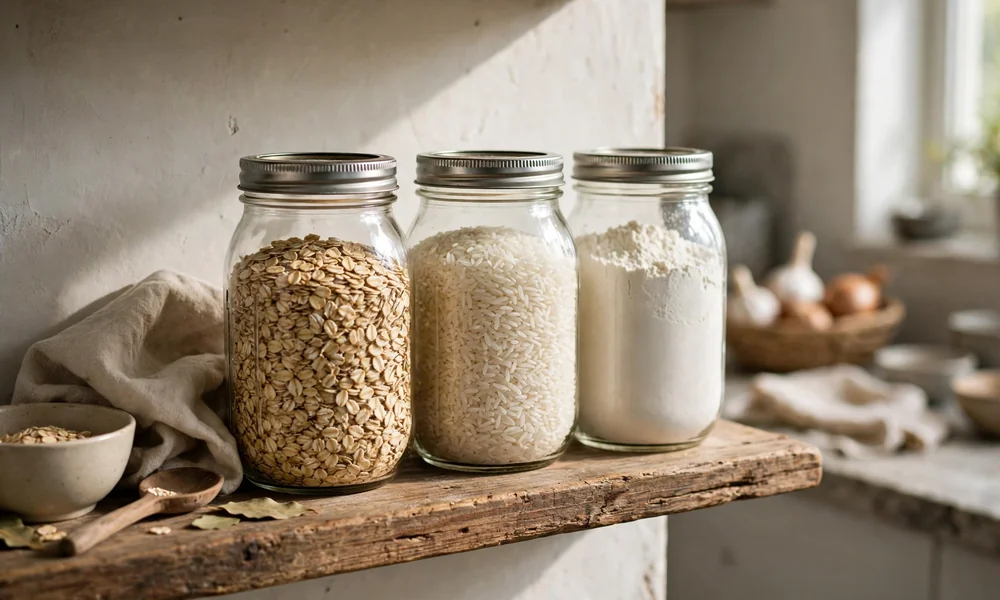
Outside canning, mason jars are the most flexible storage in the kitchen. For dry goods, they beat bags and boxes: you can see what is inside, they keep out moisture and pantry moths, and they stack neatly. Label the base or lid with contents and date, since flour and rice all look alike after a month. In the fridge they hold sauces, dressings, leftovers, overnight oats and soup, and the glass does not stain or hold odours the way plastic does.
For meal prep, the pint wide-mouth jar is hard to beat: dressing at the bottom, leaves at the top, crisp until lunch. Jars also freeze well, provided you leave 2 to 3 centimetres of headspace and use straight-sided jars, which crack less readily than shouldered ones. Never freeze a jar with a tight metal lid and no headspace, and never pour boiling liquid into a cold jar. A vacuum sealer extends the life of dry goods in jars, good freezer bags cover foods that do not suit rigid jars, and pantry organizers keep a shelf of jars tidy and within reach.
What to Look for Before You Buy
Most mason jars are good, but a few details separate a set you will use for years from one that frustrates you.
Glass Quality and Thickness
Look for thick, clear glass with even walls and no bubbles or wavy patches. Hold the jar up to the light: it should be clear enough to read through, and the base should sit flat without rocking. Thicker glass handles heat and knocks better. Avoid moulded decorations if you plan to stack them, since the raised pattern can make them wobble.
True Standard Threads
Buy jars with standard regular or wide-mouth threads, so lids, bands and accessories from any brand fit. Some decorative jars look like mason jars but use non-standard threads, locking you into one brand’s lids. Check the description for mouth type and diameter before ordering.
Straight Sides vs Shoulders
Straight-sided jars are the easiest to fill, empty and clean, and the safest for freezing. Shouldered jars look traditional and pour better, but food gets trapped at the shoulder and they crack more readily in the freezer. For everyday use, straight sides win.
Lids Included and Spares
Jars usually arrive with two-piece lids included, but check: a box without lids is a false economy once you buy them separately. Buy a box of spare flat lids at the same time, since they are single-use for canning, and keep a few reusable plastic lids for fridge and pantry duty.

Checklist: Choosing the Best Mason Jar
- Decide the main job first — canning, storage, meal prep or fermenting — and let that set size and mouth.
- Choose wide mouth for filling, emptying and cleaning, regular mouth for pouring drinks and sauces.
- Buy pint jars as the core size, with half-pints for jams and quarts for bulk work.
- Check the glass: thick, clear, even walls, a flat base, no chips on the rim.
- Confirm standard threads so lids and accessories from any brand fit.
- Stock spare flat lids for canning and reusable plastic lids for fridge and pantry.
Frequently Asked Questions
Can any glass jar be used for canning?
No. Only jars made and sold for home canning, with matching two-piece lids, should be used for water-bath or pressure canning. Ordinary jam or sauce jars may not cope with the heat and can crack, and their lids are not designed to form a reliable vacuum seal.
Can mason jars go in the freezer?
Yes, with care. Use straight-sided jars, leave 2 to 3 centimetres of headspace, cool the food first, and do not tighten the lid fully until the contents are frozen. Never freeze a jar filled to the brim or one with shoulders that trap expanding food.
How long do mason jar lids last?
Flat metal lids are single-use for canning, though they can be reused for dry storage. Screw bands last for years if dried after washing, and reusable plastic lids last for years in the fridge and pantry.
Why did my canned jars not seal?
The usual causes are a chipped rim, food on the rim, the band screwed on too tightly, or too little headspace. Check the rim by touch before filling, wipe it clean, tighten fingertip-tight only, and follow the recipe’s headspace exactly.
Are mason jars dishwasher safe?
Yes. Jars and screw bands go in the dishwasher, and most reusable plastic lids do too. Wash flat metal lids by hand, since the sealing compound can be damaged by harsh detergents and high heat.
What is the difference between regular and wide mouth?
Regular-mouth jars open to about 7 centimetres and pour well; wide-mouth jars open to about 8.6 centimetres and are easier to fill, empty and clean.
The Bottom Line
The best mason jar for most kitchens in 2026 is a pint wide-mouth jar made for canning, with a fresh two-piece lid for preserves and a reusable plastic lid for the fridge. It cans safely, stores meals and dry goods well, and cleans easily. Add half-pints for jams and quarts for bulk work, inspect every rim before use, and respect headspace and processing times. A modest shelf of glass jars will replace a drawer of mismatched containers and keep food fresher for longer.


