Which Cookie Jar Keeps Cookies Crisp in 2026?
A cookie jar keeps cookies crisp in 2026 when its seal is genuinely airtight, its body blocks moisture, and its lid is easy to open with one hand. Yet most jars fail at least one of those tests. The jar is a small storage system, and the difference between a crisp cookie on day five and a soft, stale one is usually the seal, not the recipe. This guide compares the materials, seals and sizes that matter, and shows how to pick a jar that keeps your baking fresh for days rather than hours.
Key Takeaways
- The seal matters more than the material: a jar with a silicone gasket and a clamp or screw lid keeps cookies crisp far longer than a loose-fitting decorative lid.
- Glass jars show off the cookies and let you see when they are running low, but they must be kept out of direct sunlight, which speeds up staling.
- Ceramic and stoneware jars block light and hold a steady temperature, making them the best choice for a sunny kitchen counter.
- Stainless steel jars are the toughest option, with excellent seals, but you cannot see what is inside without opening them.
- A jar of about two to three litres suits most households; an oversized jar leaves too much air inside, which dries cookies out faster.
Why Cookies Go Stale in the Jar
Cookies go stale for two reasons, and both are about air. Moisture in the air softens crisp cookies, turning a snap into a chew, while dry air pulls moisture out of soft cookies, turning them hard and crumbly. A good jar limits how much air reaches the cookies. Every time the lid comes off, fresh air rushes in, so a jar opened ten times a day will never keep cookies as fresh as one opened twice. That is why the best jars are sized to the household: one that empties in two or three days does not need to fight staling for a week.
The second enemy is light and heat. Sunlight warms the jar, speeds up the chemical changes that make fats go rancid, and dries out the cookies inside. A glass jar on a sunny windowsill is the worst place to store cookies. A ceramic jar in a shaded corner, or a glass jar kept inside a cupboard, will keep the same cookies fresh noticeably longer.

The Main Materials, Compared
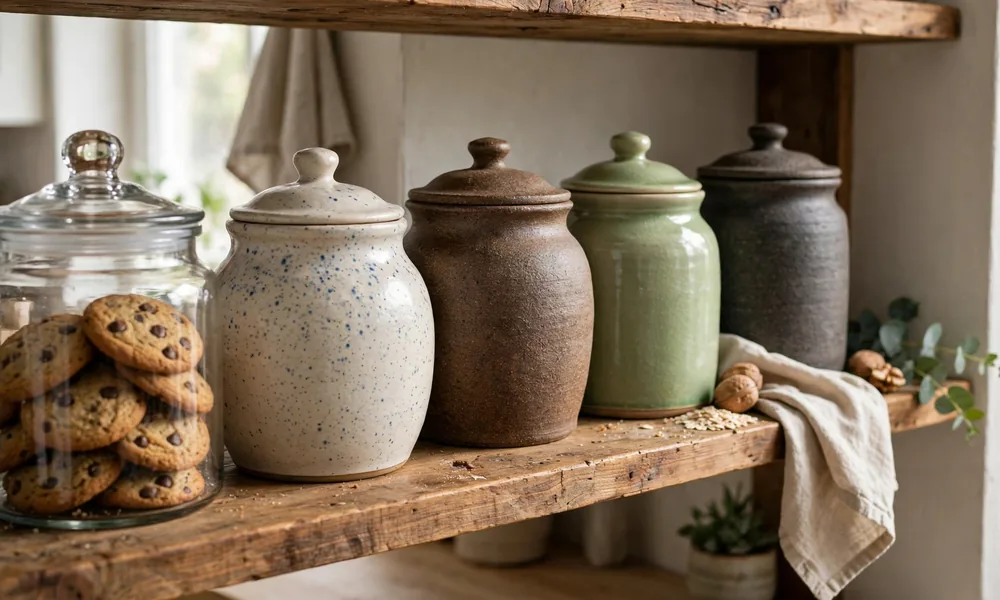
Glass is the most popular cookie jar material, and its appeal is obvious: you can see the cookies, you know when to bake more, and a full glass jar looks wonderful on a counter. Borosilicate glass is the best option, because it resists thermal shock and is less likely to crack. The weakness of glass is light, so keep it out of direct sun, and check the lid: many glass jars come with a wooden lid that looks lovely but seals poorly.
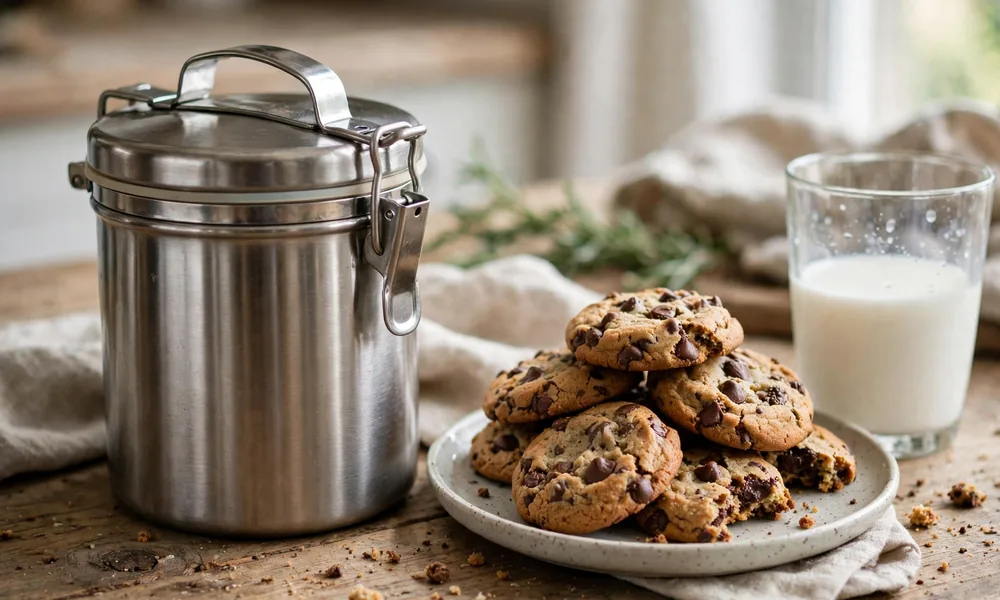
Ceramic and stoneware jars are the classic choice, and for good reason. The thick walls block light completely, hold a steady temperature, and come in every colour and style, from plain white to hand-painted designs. A well-made stoneware jar with a silicone-sealed lid is hard to beat. The drawbacks are weight and fragility: a full ceramic jar is heavy, and a chipped rim ruins the seal. Stainless steel is the practical outlier: unbreakable, light, and usually fitted with a proper clamp lid and silicone gasket, though you cannot see inside.
| Material | Best For | Seal Quality | Light Protection | Durability |
|---|---|---|---|---|
| Glass | Display, seeing contents | Good with gasket lid | Poor, keep out of sun | Fair, can crack |
| Ceramic | Classic kitchens, gift giving | Good with gasket lid | Excellent | Fair, chips at rim |
| Stoneware | Everyday use, steady temperature | Very good | Excellent | Good, heavy |
| Stainless steel | Families, durability | Excellent, clamp lids | Excellent | Excellent |
| Plastic | Budget buys, children | Variable | Good if opaque | Good, can stain |
| Wood | Rustic kitchens, decoration | Poor, rarely airtight | Excellent | Good, needs oiling |
For most kitchens, a stoneware or ceramic jar with a silicone gasket lid is the safest buy: it blocks light, holds temperature steady, and looks at home on any counter. If your kitchen gets a lot of sun, or you have children who will knock the jar over, stainless steel is the smarter choice. Glass is best when the jar lives in a cupboard or a shaded spot and you want to see the cookies at a glance.
Seals: The Detail That Decides Everything
The seal is the single most important feature of a cookie jar, and it is the one most buyers check last. There are four common types. A silicone gasket with a clamp lid is the best: the metal clamps pull the lid down evenly, the silicone compresses to fill every gap, and the seal survives years of opening and closing. A screw lid is nearly as good, though slower to open with one hand. A wooden lid with a silicone ring seals well when new, but wood swells and shrinks with humidity, so the fit loosens over time. A loose-fitting decorative lid, the kind on most novelty jars, is barely a seal at all, and cookies in such a jar go stale in a day or two.
Test the seal before you buy: close the lid and try to lift it straight off without unclamping it. A good seal will resist. The gasket should be soft, even and free of cracks, sitting snugly in its groove. If it is hard, flattened or missing, the jar will not keep cookies crisp, and replacement gaskets are rarely sold separately.
What Size Jar Do You Need?
A jar that holds about two to three litres suits most households: it fits a batch of twenty to thirty medium cookies, leaves a little room at the top, and empties in a few days, so the cookies never sit long enough to go stale. A jar smaller than one litre is really a single-person jar, or a jar for a few special cookies, and it will need refilling constantly. A jar bigger than four litres looks impressive but works against you: every time you open it, a large volume of fresh air rushes in, and the cookies at the bottom sit for days under a growing column of air.
Think about shape as well as volume. A wide-mouthed jar is easier to fill and reach into, but its wide lid is harder to seal evenly, while a narrower mouth seals better but limits which cookies fit. A jar about as tall as it is wide, with a mouth wide enough for your hand, is the practical sweet spot. If you bake in large batches, the best snack containers for school and work lunches in 2026 are worth a look for storing the overflow, since a cookie jar should hold the cookies you will eat this week, not the whole batch.
Keeping Cookies Crisp Once They Are In
The jar does most of the work, but a few habits make a real difference. Let cookies cool completely before they go in the jar: warm cookies release steam, the steam condenses on the inside of the lid, and the moisture drips back onto the cookies and softens them. Store crisp cookies and soft cookies in separate jars, because they exchange moisture and both end up worse than they started.
A sheet of baking paper between layers stops cookies sticking together. Do not overfill the jar: a jar packed to the brim crushes the cookies at the bottom. Keep the jar in the coolest, darkest part of the kitchen, and resist opening it just to look. If your cookies do go soft, ten minutes in a low oven, around 150 degrees, will usually bring back the snap. For bakers who make big batches, baking dishes that go from oven to table in 2026 are useful for the baking itself, and the same cool-before-storing rule applies to anything that comes out of them.
Style, Cleaning and Everyday Use
A cookie jar lives on the counter, so how it looks matters, but style should follow the seal, not lead it. The prettiest jar in the shop is a poor buy if its lid does not seal, and the plainest jar with a clamp lid will keep cookies crisp for days longer. Plenty of stoneware and ceramic jars now come with proper silicone gaskets in classic shapes. Novelty jars shaped like animals or houses are fun as gifts, but most have loose lids by design, so check the seal first.
Wash the jar by hand with warm soapy water, rinse well, and dry it completely before refilling, because even a little trapped moisture will soften the next batch. Most glass and ceramic jars can go in the dishwasher, but wooden lids cannot, and clamp mechanisms can rust if left wet, so dry the metal parts by hand. Check the gasket every few months, and replace the jar if it is cracked or smells stale. A jar with a wide, stable base is harder to knock over, and the best ramekins for baking and serving in 2026 make handy companions on the counter for the small extras, like a pinch of salt or a few chocolate chips, that bakers reach for while the cookies cool.
Your Cookie Jar Checklist
- Silicone gasket seal with a clamp or screw lid, tested by trying to lift the lid straight off.
- Material matched to your kitchen: stoneware or ceramic for sunny counters, glass for shaded spots, steel for durability.
- Size around two to three litres, holding a batch of twenty to thirty cookies without too much empty air.
- Wide enough mouth for your hand and your cookies, with a stable base.
- Cool, dark storage spot away from the oven, kettle and sunny windows.
- Cool cookies completely before storing, keep crisp and soft cookies apart, and wash and dry the jar fully between batches.
Frequently Asked Questions
What type of cookie jar keeps cookies crisp the longest?
A stoneware or ceramic jar with a silicone gasket and a clamp lid keeps cookies crisp the longest: it blocks light, holds a steady temperature, and seals tightly. Stainless steel with a clamp lid is equally good, though you cannot see inside.
Does a glass cookie jar keep cookies fresh?
Yes, provided the lid seals properly with a silicone gasket and the jar is kept out of direct sunlight. A glass jar on a sunny windowsill stales cookies faster than a ceramic jar in the shade.
How big should a cookie jar be?
About two to three litres suits most households, holding twenty to thirty medium cookies. Smaller jars need constant refilling, while jars over four litres let in too much fresh air each time they are opened.
Why do my cookies go soft in the jar?
Usually because the lid does not seal properly, the cookies went in while still warm, or crisp and soft cookies are stored together. Check the gasket, let cookies cool completely, and store them separately.
Can I put a cookie jar in the dishwasher?
Most glass and ceramic jars can go in the dishwasher, but wooden lids cannot, and metal clamp parts should be dried by hand. Always dry the jar completely before refilling it.
How do I revive cookies that have gone soft?
Warm them in a low oven, around 150 degrees, for about ten minutes, then let them cool on a rack. This usually brings back the snap.
The Bottom Line
The cookie jar that keeps cookies crisp in 2026 is a stoneware or ceramic jar of about two to three litres, with a silicone gasket and a clamp or screw lid, kept in a cool, dark corner of the kitchen. Stainless steel is best if durability matters most, and glass is fine if the jar lives out of the sun and the lid seals properly. Buy for the seal first and the looks second.