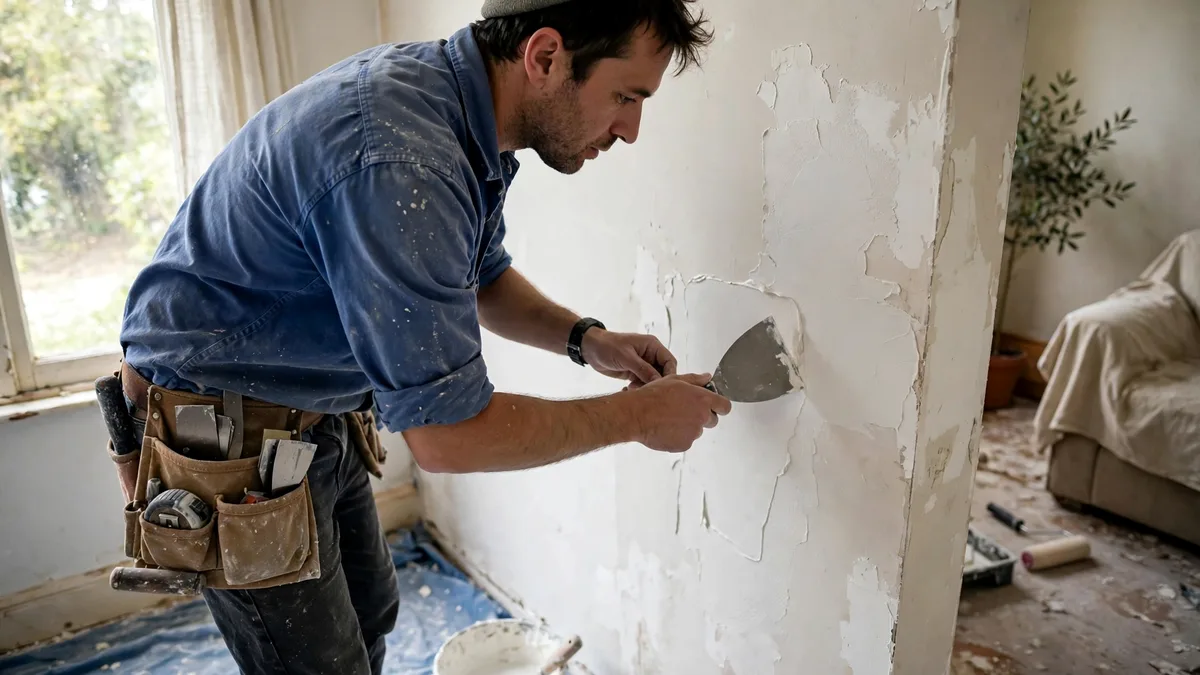
Paint Rollers That Leave a Smooth Finish in 2026
Paint rollers that leave a smooth finish are the difference between a wall that looks professionally painted and a wall that shows every pass of the tool. The best paint rollers lay down an even coat of paint, hold enough paint to cover a wide stretch without dripping, and release it smoothly so the surface dries flat, with no ridges, no roller marks and no patchy spots where the paint went on too thin.
Choosing the right paint roller is not about buying the most expensive frame on the shelf. It is about matching the roller sleeve to the surface you are painting, because smooth plaster, textured walls and rough masonry all need different nap lengths, and a sleeve that is perfect for one can leave a terrible finish on another. This guide compares the strongest paint rollers of 2026 side by side, explains what actually matters when you are buying, and helps you pick a roller that leaves every wall looking smooth.
Key Takeaways
- Nap length decides the finish: a short nap gives the smoothest result on flat walls, while a long nap is needed for textured surfaces.
- A good roller holds plenty of paint without dripping, so you can cover a wide area before reloading the tray.
- Microfibre sleeves leave fewer fibres and a smoother coat than cheap foam or loose woven sleeves.
- A sturdy frame with a comfortable handle matters as much as the sleeve, because a wobbling roller leaves lines.
- Clean your roller properly after every use, because dried paint ruins the sleeve and spoils the next finish.
How a Paint Roller Creates a Smooth Finish
A paint roller works by carrying a thin, even film of paint on its sleeve and transferring it to the wall in one smooth motion. The sleeve picks up paint from the tray, the fibres hold it in place while you move, and the pressure of the roll spreads it out in a uniform layer. When the sleeve, the paint and the technique all work together, the result is a flat, even coat that looks as though it was sprayed on.
The finish goes wrong when any part of that chain breaks down. A sleeve that is too long for a smooth wall leaves a bumpy orange-peel texture. A sleeve that sheds fibres leaves tiny hairs stuck in the wet paint. A frame that flexes under pressure leaves stripes where the roller pressed harder on one side. And paint that is too thick or too thin will not level out, however good the roller is. Understanding these causes is the first step to a smooth wall, and it is why the roller you choose matters far more than most people expect.
Preparation matters just as much as the tool. If you are still deciding how the finished wall should look, our guide to wallpaper versus paint for feature walls compares the two finishes head to head, so you can choose the look before you choose the roller.
What Makes a Great Paint Roller
Beyond the sleeve, four things decide whether a roller is great or merely good: the frame, the handle, the size and the ease of cleaning. A great frame is made of sturdy metal that does not bend or wobble, and it spins freely on its bearings so the sleeve rolls rather than drags. A cheap frame flexes, and every flex shows up as a stripe on the wall.
The handle should feel comfortable in your hand for an hour at a time, with a grip that does not slip when your hands get damp with paint. Size matters too: a nine-inch roller covers large walls quickly, while a four-inch mini roller is better for narrow spaces, doors and tight corners.
Nap Length Explained
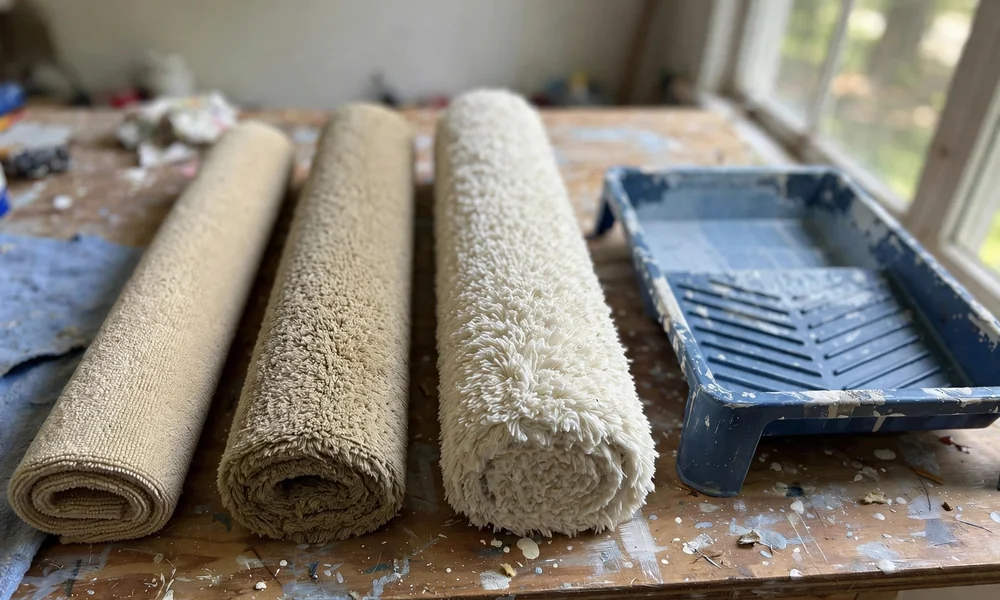
Nap length is the single most important choice you will make when buying a paint roller, and it is the one most people get wrong. The nap is the length of the fibres on the sleeve, and it decides how much paint the roller holds and how textured the finish will be. A short nap of around five millimetres is best for smooth plaster and flat walls, because it holds less paint and leaves the flattest, smoothest coat.
A medium nap of around twelve millimetres suits lightly textured walls and ceilings, where a short nap would skip over the bumps and leave bare patches. A long nap of around twenty millimetres is needed for rough surfaces such as artex, brick and rough render, where the fibres must reach into every dip and hollow. Match the nap to the wall and half the battle is won.
The Best Paint Rollers of 2026
We judged every roller on finish quality, paint capacity, shedding, frame strength and value, testing each one on smooth plaster, lightly textured walls and ceilings. The five picks below cover every surface and budget.
Best Overall: Hamilton Perfection Microfibre Roller
The Hamilton Perfection is the best paint roller for most people in 2026. Its microfibre sleeve leaves an exceptionally smooth finish on flat walls, it holds enough paint to cover a wide stretch without dripping, and it sheds almost no fibres. The sturdy frame spins freely and the handle stays comfortable through a full room.
Best Budget: Dulux Trade Vinyl Matt Roller Set
The Dulux Trade set is the strongest budget paint roller we have tested. Its woven sleeve is thicker than most budget options, the frame is solid enough not to flex, and the finish on smooth walls is impressively flat for the price.
Best for Smooth Walls: Purdy White Dove Roller
The Purdy White Dove is built for the smoothest possible finish, and it shows. Its short-nap woven sleeve lays down a thin, even coat with almost no texture, which makes it the best choice for flat plaster, newly skimmed walls and anyone chasing a spray-like finish.
Best for Textured Walls: Wooster Pro/Doo-Z FTP Roller
Textured walls need a roller that can reach into every dip, and the Wooster Pro/Doo-Z does exactly that. Its long, dense fibres hold a generous amount of paint and push it deep into rough surfaces without leaving bare patches, yet the finish stays even rather than lumpy.
Best Mini Roller: Anza Platinum Mini Roller
Large rollers cannot reach narrow spaces, and the Anza Platinum mini roller fills that gap beautifully. Its four-inch microfibre sleeve gives the same smooth finish as its full-size cousins on doors, radiators, skirting boards and tight corners, and the slim frame reaches places a nine-inch roller never could. It is the best second roller to own, and for small jobs it is often the only one you need.

Rolling Technique That Prevents Roller Marks
Even the best paint roller will leave marks if the technique is wrong, so how you roll matters as much as what you roll with. The golden rule is to keep a wet edge: work in sections about a metre wide, roll the paint on in a loose W pattern, then smooth it out with long, even strokes in one direction before the paint starts to dry. Going back over paint that has already started to dry is what creates ridges and lap marks.
Load the roller properly too. Dip it in the tray, roll it back and forth on the ribbed part until the sleeve is evenly coated but not dripping, and never press hard. Let the weight of the roller do the work, because pressing down squeezes paint out unevenly and leaves stripes. For ceilings and high walls, an extension pole gives you the same even pressure without a ladder, and our guide to the best and worst ladders of 2026 covers safe ways to reach the top of a tall wall when a pole is not enough.
Paint Rollers Compared
| Roller | Best For | Nap Length | Sleeve Material | Why It Wins |
|---|---|---|---|---|
| Hamilton Perfection | Overall | Medium | Microfibre | Smoothest all-round finish, low shedding |
| Dulux Trade Vinyl Matt | Budget | Medium | Woven | Best value, solid frame, flat finish |
| Purdy White Dove | Smooth walls | Short | Woven | Near spray-like finish on flat plaster |
| Wooster Pro/Doo-Z FTP | Textured walls | Long | Woven | Reaches into rough surfaces evenly |
| Anza Platinum Mini | Small areas | Short | Microfibre | Smooth finish in tight spaces |
How to Clean and Store Your Roller
Cleaning is easier than people think, and it is the difference between a roller that lasts for years and one that is thrown away after a single room. As soon as you finish painting, scrape the excess paint back into the tin, then rinse the sleeve under warm running water, squeezing gently until the water runs clear. For oil-based paints, use white spirit instead of water, and wash your hands well afterwards.

Once the sleeve is clean, stand it on its end to dry, never flat, so the fibres keep their shape. Store frames and handles somewhere dry, and keep spare sleeves in a sealed bag so they stay dust-free. If you paint outdoors as well as in, our guide to pressure washers that clean without damaging covers the best way to prepare exterior walls before the roller comes out.
Paint Roller Buying Checklist
- Match the nap length to your wall: short for smooth plaster, medium for light texture, long for rough surfaces.
- Choose a microfibre sleeve for the smoothest finish and the least shedding.
- Check the frame is sturdy metal that spins freely without wobbling or flexing.
- Pick a nine-inch roller for large walls and a four-inch mini roller for doors and tight spaces.
- Roll the sleeve over masking tape before first use to remove loose fibres.
- Buy spare sleeves in the same nap length, so touch-ups match the original finish.
Frequently Asked Questions
What nap length gives the smoothest finish?
A short nap of around five millimetres gives the smoothest finish on flat, smooth walls, because it holds less paint and leaves the flattest coat.
Why does my roller leave marks on the wall?
Roller marks usually come from pressing too hard, going back over paint that has started to dry, or using a frame that flexes.
Are microfibre rollers better than woven rollers?
For a smooth finish, yes. Microfibre sleeves hold paint more evenly, release it more smoothly and shed far fewer fibres than woven sleeves.
How do I stop my roller shedding fibres into the paint?
Roll a new sleeve firmly over a strip of masking tape before you start, which pulls off loose fibres, and wash a reusable sleeve before its first use.
Can I reuse a paint roller sleeve?
Yes, if you clean it properly. Rinse water-based paint out under warm water until it runs clear, then stand the sleeve on its end to dry.
Do I need an extension pole for a roller?
For ceilings and tall walls, yes. An extension pole lets you keep even pressure across the whole wall without climbing up and down a ladder, which gives a smoother finish and is far safer. Choose a pole that locks firmly and matches your roller frame.
The Bottom Line
The best paint rollers in 2026 are not the most expensive ones. They are the rollers that match your wall: the Hamilton Perfection for all-round smoothness, the Dulux Trade set for tight budgets, the Purdy White Dove for flat plaster, the Wooster Pro/Doo-Z for textured walls, and the Anza Platinum mini for small spaces. Match the nap to the surface, keep a wet edge, use light even pressure, and clean the sleeve after every job. Do those four things and every wall you paint will dry smooth.