A ladder is one of the few tools you buy that you then trust with your safety every time you use it. It holds you several metres above hard ground while you clean a gutter, paint a ceiling, or change a light, and the difference between a good one and a bad one shows up in your balance, your confidence, and sometimes in a fall. A good ladder feels solid under your feet from the first step; a bad one sways, creaks, and makes you grip the rails a little too tightly.
The gap between the best and the worst ladders in 2026 is wider than the price tags suggest. Two ladders can look almost identical in a shop, with the same height and the same shiny aluminium, yet one will still be steady and safe in ten years while the other is bent, wobbly, and waiting to fail. The difference is in the material, the joints, the feet, and the locks, and it only shows up once you are standing on it. This guide puts the two ends of the market side by side, so you can tell them apart before you climb anything.
Key Takeaways
- The best ladders use a rigid frame, deep slip-resistant rungs, and locks that click home firmly; the worst cut corners on all three.
- Buy the right type for the job you actually do: a step ladder for indoors, an extension ladder for roofs and gutters, a multi-position ladder for awkward spaces.
- Check the duty rating before you buy: your weight plus your tools and paint must stay well under the ladder’s rated load.
- Cheap locks slip, cheap feet slide, and cheap rungs bend under a heavier climber.
- A ladder that cannot be set up safely on your ground is not a bargain, whatever the price.
Pick the Right Type First
Before looking at any single ladder, decide what kind of work you will actually do with it. A step ladder stands on its own, with a hinged A-frame and a small platform at the top, and it is the sensible choice for indoor jobs such as painting a ceiling, changing a bulb, or reaching the top of a wardrobe. It needs no wall to lean on, but it is limited in height, and you should never stand on its top step or its paint shelf.
An extension ladder is a different tool altogether. It leans against a wall or a roof edge, extends in sections to reach gutters and second-storey windows, and it is the right choice for outdoor work at height. It needs a solid base and a firm wall, and it must extend at least a metre above the roof edge or gutter you are stepping onto. A multi-position ladder folds into several shapes, working as a step ladder, an extension ladder, or a scaffold plank, and it suits a home with little storage space and a wide range of jobs.
What the Best Ladders Get Right
The best ladders are not the tallest or the most expensive ones. They are the ones where every part of the design has been tested by people who actually climb, in real weather, on real ground. You can feel the difference the moment you set one up: it sits flat, nothing rattles, and the rungs feel firm under your feet.
Frames That Stay Rigid Under Load
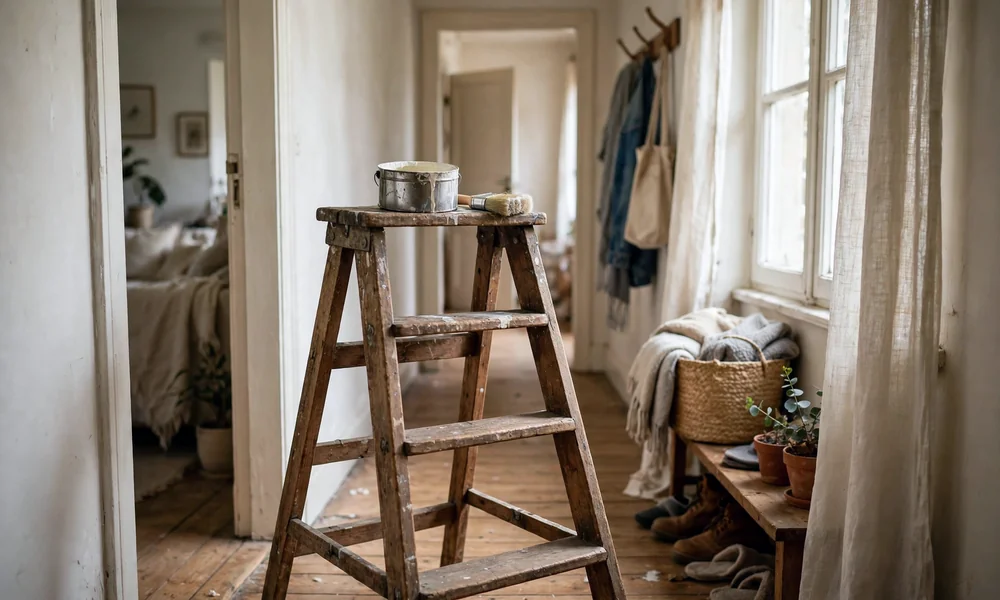
A good ladder starts with a rigid frame, and the three common materials each have a clear character. Aluminium is light, does not rust, and is the sensible default for most homes in 2026. Fibreglass is heavier and more expensive, but it does not conduct electricity, which matters if you ever work near overhead cables or live wiring. Wood is warm and traditional, and a well-made wooden step ladder can last for decades, though it is heavy and needs to be kept dry.
Rungs You Can Stand On With Confidence
Rungs are the part of a ladder you use most, and they are where good and bad ladders part company fastest. A good rung is wide, flat, and slip-resistant, with a treaded or ribbed surface that grips your shoes even when they are dusty or damp. Round rungs are common on cheap extension ladders, and they are harder on your feet and easier to slip on, especially when you stand on one rung for a long time while working.

Locks and Hinges That Click Home Firmly
Locks are the safety system on an extension or multi-position ladder, and they deserve more attention than most buyers give them. The best ladders in 2026 use spring-loaded rung locks that snap into place with a clear click, and you can see and feel that they are engaged before you climb. The hinge on a multi-position ladder should lock in each position with the same firm click, and it should not need a kick or a shove to seat properly.
Feet That Grip Instead of Sliding
Feet are the most underrated part of a ladder. A good foot is wide, angled, and made of soft, grippy rubber that holds on concrete, wood, and even slightly damp paving. Some good ladders have swivelling feet that sit flat on uneven ground, and a few have spikes for soft earth. The feet are what keep the whole ladder from sliding out from under you, which is the most common cause of ladder falls.
Height and Load: The Numbers That Matter
Height is the number most buyers look at first, and it is the one most often misunderstood. A ladder’s stated length is not its working height. An extension ladder should be set up at an angle of about seventy-five degrees, with its base one quarter of its working length away from the wall, and it must extend at least a metre above the point you are stepping onto. That means a six-metre extension ladder gives you a working height of roughly five metres, and no more.
Load rating matters just as much, and it is where cheap ladders most often mislead. The rating must cover your weight plus everything you carry: tools, paint, a bucket, and the clothes on your back. A ladder rated for one hundred kilograms is not enough for a ninety-kilogram climber carrying a ten-kilogram paint tin. If you work with tools, you will also want a drill that is light enough to carry up with one hand, and our guide to the best cordless drills for home projects covers the lightest models for that job. Buy a rating with a comfortable margin, and never trust a ladder that does not print its rating clearly on the rail.
What the Worst Ladders Get Wrong
The worst ladders share the same pattern: they are designed to look good in a shop and to survive the sale, not the climb. Everything about them is slightly too thin, slightly too loose, or slightly too vague, and the problems only appear once you are committed, several metres up, with both hands full.
Thin Frames and Joints That Work Loose
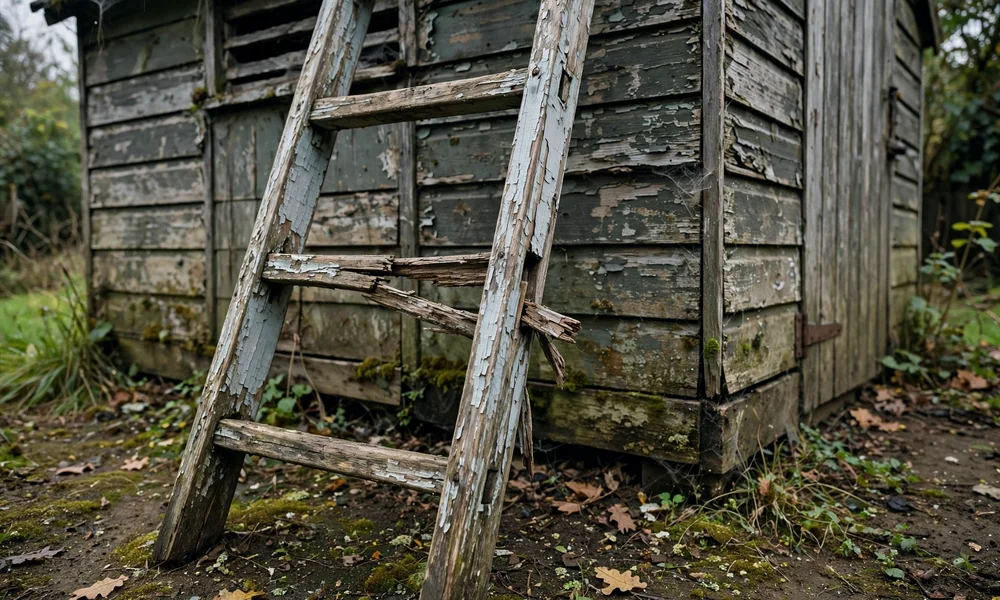
The most common failure in a bad ladder is a frame that flexes and joints that loosen. A cheap aluminium rail can bend permanently after one overload, and a rivet that was never properly set will work loose with every climb. The ladder starts to sway sideways, the rungs feel uneven, and the whole structure feels less trustworthy each time you use it.
Locks That Slip and Feet That Slide
Bad locks do not usually fail all at once. They slip under load, usually when you are at the top and shifting your weight to reach a gutter, and the section drops a rung with a jolt. They rattle, they hesitate, and they need constant checking that never quite holds. If a lock on a test setup slips even once, walk away.
Comfort That Was Never Designed In
The worst ladders ignore comfort entirely. The rungs are narrow and hard, so your feet ache within ten minutes. There is no tool tray, no paint hook, and nowhere to rest a brush, so you climb down for every small thing. Comfort on a ladder is designed into the rungs, the width, and the small details, and a ladder that was never designed for comfort cannot be made comfortable afterwards.
Before you climb, measure the job properly. A ladder that is a little too short is far more dangerous than one that is a little too long, because it tempts you to overreach. Our guide to why a good tape measure matters explains how to measure a height accurately before you choose a ladder for it.
Best vs Worst: The Head-to-Head
Put the two sides next to each other and the comparison is stark. A good ladder costs more up front, but it lasts ten to twenty years of regular use, and every climb on it is steady and predictable. A bad ladder costs less, but it often lasts one or two seasons before it bends or loosens, and every climb on it carries the risk of a slipped lock, a sliding foot, or a cracked rung. Over ten years, the cheap ladder that gets replaced four times costs more than the good ladder bought once.
The differences are practical, not cosmetic. Good ladders stand flat, lock firmly, and grip the ground. Bad ladders do none of these things reliably, and the failures compound: a wobbly base makes you rush, and rushing makes you overreach.
Who Each Side Is For
The best ladders suit anyone who climbs more than once a month, anyone who cleans their own gutters or paints their own ceilings, and anyone who has ever felt a ladder move under them. Homeowners, renters with high ceilings, and keen do-it-yourselfers all benefit from the same things: a rigid frame, firm locks, and feet that grip.
Before You Buy: A Short Checklist
Use this checklist on every ladder you consider, and do not skip a step because the price is good. First, set it up. A ladder that is hard to open in the shop will be harder to open on a wet driveway. Second, climb it. Stand on the middle rungs and shift your weight from side to side; a good ladder barely moves. Third, test every lock twice, and check the feet for grip and wear. Fourth, read the duty rating on the rail and make sure it covers you plus your tools.
Then think about the rest of the job. If you are cleaning the outside of the house, you may also need to wash the walls and the drive, and our guide to the best and worst pressure washers of 2026 compares the models that clean without damaging the surface. For the ladder itself, the rule is simple: buy the sturdiest frame and the firmest locks you can afford, in the right type and the right height.
The Verdict
The best ladders of 2026 are not the ones with the most sections or the brightest finish. They are the ones with a rigid frame, wide slip-resistant rungs, locks that click home firmly, and feet that grip the ground. The worst ladders look like a bargain and climb like a warning: thin, loose, and expensive to replace.
So buy slowly, climb before you pay, and choose the ladder for the jobs you actually do. Choose well, and it will still be standing steady, quietly and reliably, years after the bargain ladders have gone to the scrapyard.