A pressure washer is the most satisfying tool you will ever own, right up until the day it lets you down. When it works well, a grey driveway turns clean in an afternoon, a mossy patio looks new again, and the car gleams without a trip to the car wash. When it works badly, the spray is little stronger than a garden hose, the motor cuts out halfway through the job, and the fittings leak all over your shoes. The difference between the best and the worst is not subtle, and it is not mostly about price.
This comparison puts the best pressure washers of 2026 head to head against the worst, judging them the way you would actually live with them: how much cleaning power they really deliver on a dirty driveway, how they cope with a deck, a car, and a patio, how long they last, and how much faff they add to a job that should be simple. A good pressure washer earns its place in the garage by making hard cleaning easy. A bad one turns a Saturday afternoon into a repair job.
Key Takeaways
- For most homes, an electric pressure washer of around 1,800 to 2,200 PSI with a flow of about 1.4 to 1.8 gallons per minute is the sweet spot.
- PSI alone tells you almost nothing; cleaning power comes from pressure and water flow working together.
- Gas machines clean faster on large areas but are heavier, louder, and need far more maintenance.
- Cheap plastic fittings, thin hoses, and weak motors are the three flaws that kill most bad pressure washers.
- Always start with the widest nozzle and test on a hidden corner, especially on wood and painted surfaces.
What Makes a Pressure Washer Work
A pressure washer has a simple job: it takes ordinary tap water and pushes it through a narrow nozzle at high speed, so the jet lifts dirt, algae, and grime off a hard surface. The best machines of 2026 do that with a steady, even spray, a motor that does not overheat after twenty minutes, and a hose that reaches around the car without dragging the whole unit behind it. The worst machines promise the same and deliver a thin, pulsing jet that barely shifts a season of dirt.
Two numbers matter, and both are usually printed on the box. PSI, or pounds per square inch, is the pressure of the jet. GPM, or gallons per minute, is how much water the machine moves. A machine with high pressure and low flow cuts a narrow stripe and takes forever to clean a driveway. A machine with decent flow and modest pressure cleans a wide path more quickly, even if the headline number looks smaller. The best machines balance the two, and the honest ones print both numbers clearly.
Pressure, Flow, and Cleaning Power
Electric, Gas, and Battery Machines
Electric pressure washers suit most homes. They plug in, they start with a switch, they are quiet enough to use on a Sunday morning without annoying the neighbours, and they need almost no maintenance beyond draining the hose after use. Their limit is power: most top out around 2,300 PSI, which is plenty for patios, cars, decking, and garden furniture, but slow going on a very large, very dirty driveway. They also need a power socket within reach of a long extension lead, which is worth checking before you buy.
Gas machines are the heavyweights. A petrol engine can push 3,000 PSI or more with high flow, so it strips a big driveway or a long fence in half the time of an electric machine. The price is noise, weight, fumes, and maintenance: oil changes, fuel that goes stale, pull starts that refuse on a cold morning, and a machine that must be stored with care. Battery machines sit in between and suit small jobs, like cleaning a balcony or a bike, but they run for a short time and their pressure is modest. For most buyers, electric is the sensible default, gas is for very large properties, and battery is for light, occasional use.
The Best Pressure Washers of 2026
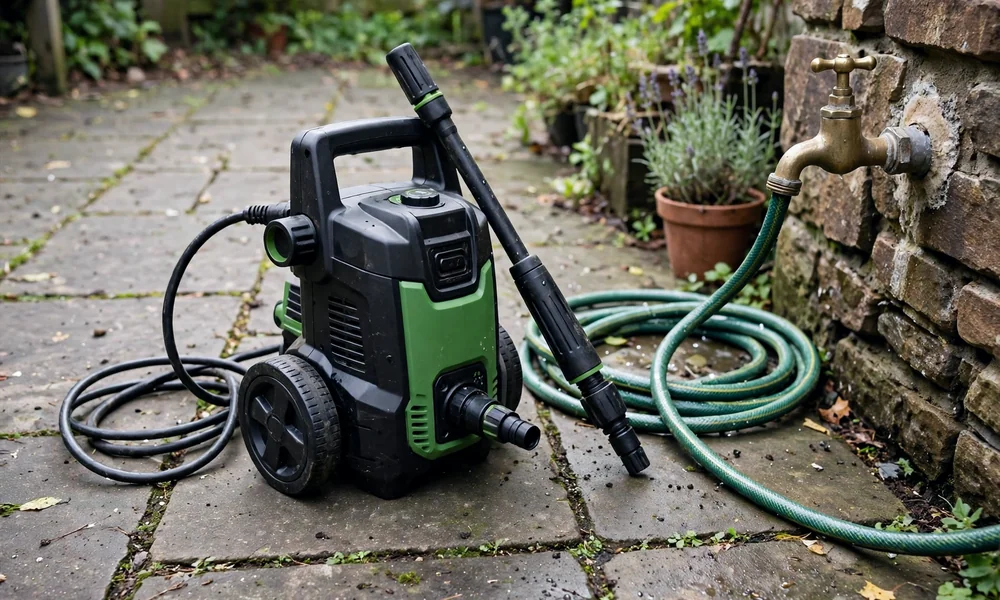
The best pressure washers share a few qualities that have nothing to do with brand names. They start every time, they hold their pressure steady for a whole job, and their fittings feel solid in the hand. The lance clicks into place with a firm snap, the hose does not kink when you pull it around a corner, and the nozzles are clearly marked so you do not have to guess which one is the gentle fan and which one is the paint stripper. These are small details, and they are exactly what separates a machine you reach for from one you dread.
What the Best Machines Get Right
The best machines are built around a pump that lasts. Brass pump heads, proper seals, and a motor with enough cooling to run for an hour without cutting out are the signs of a machine made to work for years. They also have long hoses, usually six metres or more, and a power lead that does not force you to trail an extension cable across a wet patio. Their wheels are large enough to roll over a garden path, and the whole unit balances when you carry it up a step. None of this shows up in a headline number, and all of it shows up on the second or third use.
Best for Driveways, Decks, and Cars
For a driveway, the best machine is an electric model of around 2,000 PSI with good flow and a surface cleaner, or a gas machine if the driveway is very large. The surface cleaner does the heavy lifting, and the jet nozzle finishes the edges and the corners. For a wooden deck, the best machine is a gentler electric model with a wide fan nozzle, used at a distance, because too much pressure tears the soft grain and leaves permanent marks. For a car, the best machine is a low-pressure electric model with a foam attachment: the foam loosens the dirt, the wide fan rinses it away, and the paint stays intact.
The common thread is matching the machine to the job, and the best machines make that easy with clear nozzle markings and a pressure control that actually changes something. A machine that only has one setting forces you to control everything with distance, which is a poor way to clean a car and a slow way to clean a patio. The best robot lawn mowers of 2026 show the same lesson in the garden: the right tool for the space you actually have beats the most powerful tool on the shelf.
The Worst Pressure Washers of 2026
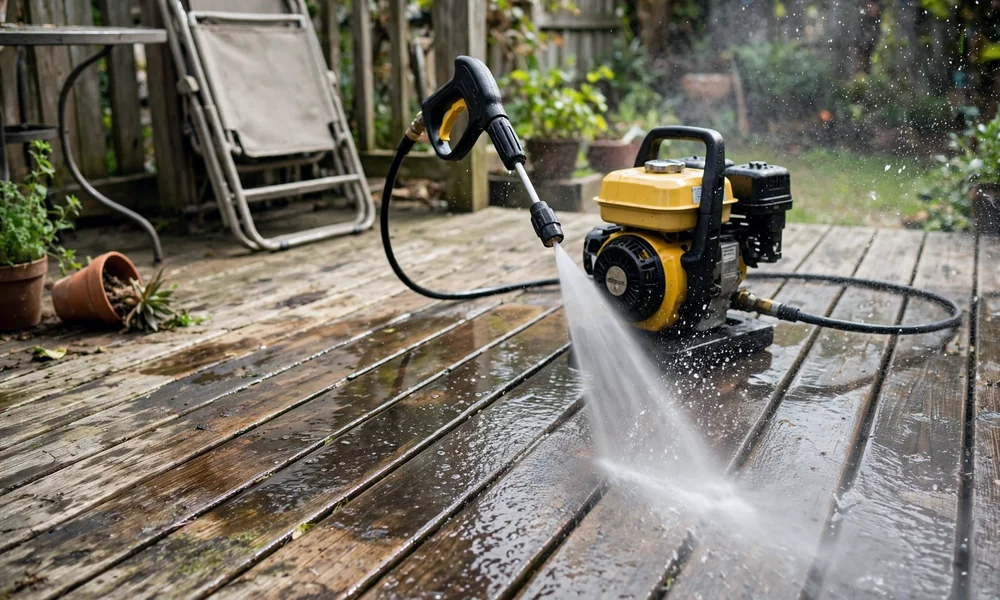
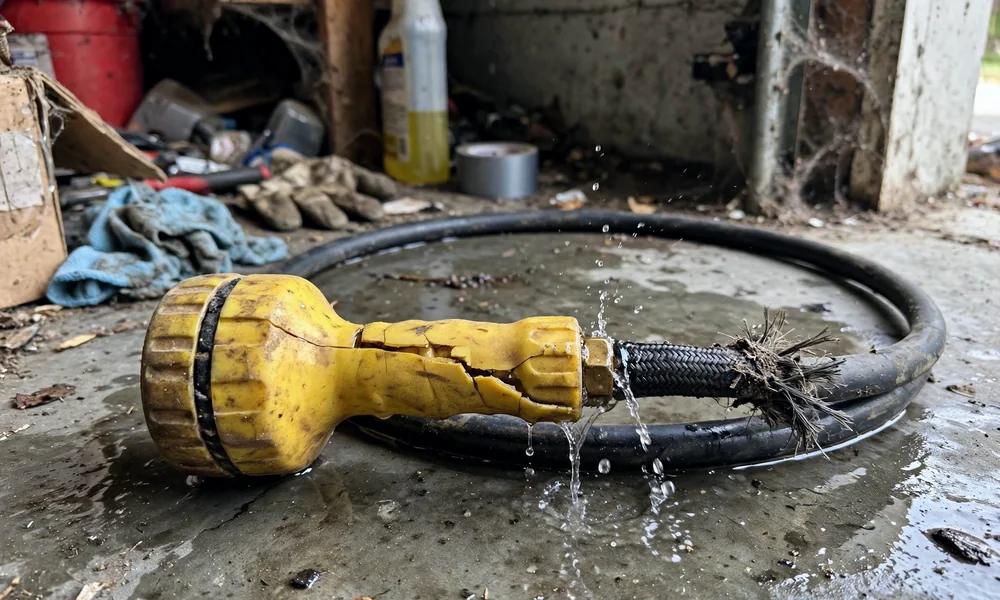
The worst pressure washers fail in ways that are depressingly predictable. The motor overheats and cuts out after fifteen minutes, just as you reach the far end of the patio. The pump loses pressure the moment the water gets warm. The hose is so short that the machine has to be dragged along behind you, and so stiff that it kinks and stops the flow every time you turn a corner. The trigger feels loose, the lance wobbles in its socket, and water weeps from every joint before you have even started.
The Flaws That Give Them Away
Three flaws give the worst machines away before you even switch them on. The first is plastic fittings where brass should be: plastic hose connectors crack, cross-thread, and leak, and once they are damaged the whole machine is hard to use. The second is a short, thin high-pressure hose that kinks at the slightest bend and has to be uncoiled like a garden hose every time. The third is a motor that sounds strained from the first pull of the trigger, with a pump that pulses instead of holding a steady jet. Any one of these is a warning. All three together mean the machine will not last the summer.
When Cheap Costs More
A cheap pressure washer costs more than a good one in the end, because you pay twice: once for the machine, and again for the machine that replaces it. You also pay in time, in the weekends spent wrestling with a pulsing jet, in the water wasted through leaking fittings, and in the surfaces damaged by a nozzle that was never marked properly. A deck gouged by a zero-degree jet costs far more to repair than the saving on the machine that did it, and a car with paint stripped from a wheel arch is a lesson nobody wants to learn twice.
The Verdict
The verdict is straightforward: buy an electric pressure washer of around 2,000 PSI with good flow, a long hose, brass fittings, and a surface cleaner if you can stretch to one, and you will have a machine that cleans a driveway, a deck, and a car without drama for years. It will not be the cheapest on the shelf, and it will not have the biggest number on the box, but it will start every time, hold its pressure, and finish the job before lunch. That is what a good pressure washer does, and the same buy-for-the-job logic applies in the garden, as the guide to choosing a lawn mower that fits your garden shows.
Skip the bargain machines that promise huge pressure for very little money, especially if they have plastic fittings, a short hose, and only one unmarked nozzle. They will cost you a second purchase, a damaged deck, or a wasted weekend, and usually all three. If you have a very large property or clean commercially, a well-made gas machine is worth the noise and the maintenance. For everyone else, electric is the answer, and the best electric machines of 2026 are better than they have ever been.
Who Should Buy Which
If you live in a flat or a small house with a car and a patio, a compact electric machine is all you need, and a battery model may even do for a balcony. If you have a family home with a driveway, a deck, and garden furniture, a mid-range electric machine with a surface cleaner is the sweet spot, and it will earn its keep every spring. If you have a large property, a long driveway, or you clean for a living, a gas machine with high flow will save you hours, provided you are happy to maintain it.
If you only wash a car, do not buy a pressure washer at all: a bucket, a sponge, and a garden hose will do the job more gently, and the best car vacuums of 2026 will do more for how your car feels day to day. And whatever you buy, learn the nozzles before you start, keep the jet moving, and never point it at people, pets, or windows. A pressure washer is a powerful tool, and the best ones are the ones that make that power easy to control.
A good pressure washer turns the least loved job in the house into the most satisfying one. You can see the clean stripe appear behind the jet, the patio comes back to life, and an afternoon of work leaves something genuinely better behind. Buy well, look after it, and it will still be doing that in five years. Buy badly, and you will be shopping for a replacement before the summer is out.