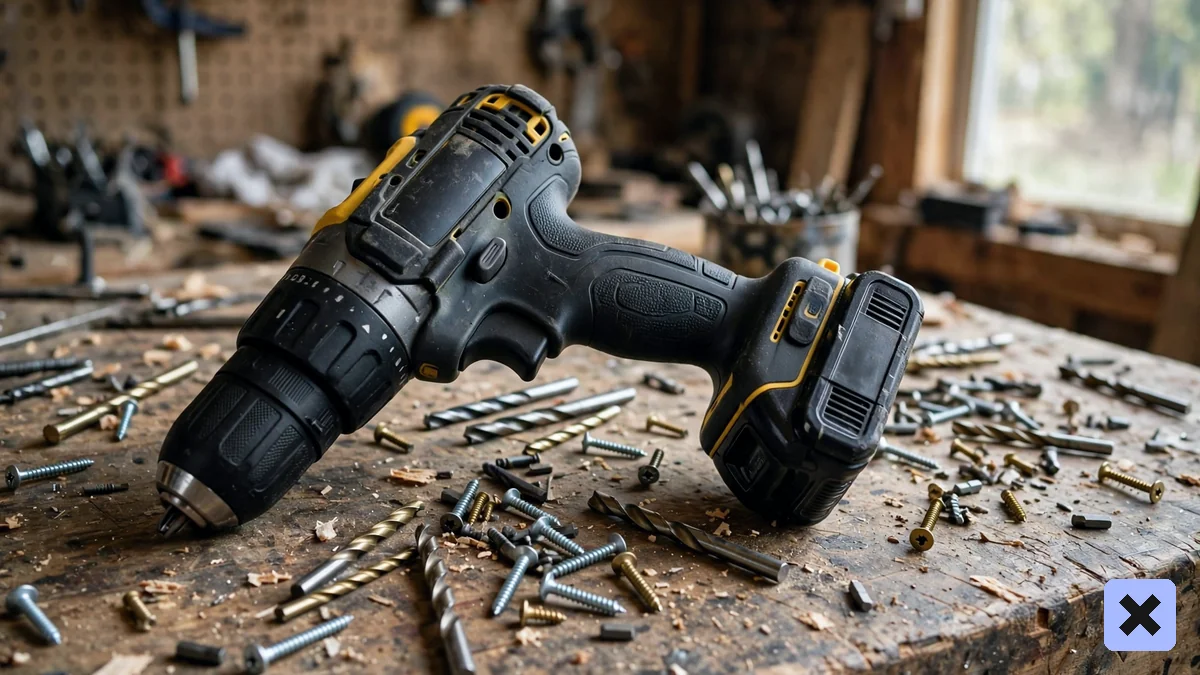
The best cordless drills for home projects in 2026 are the ones you reach for without thinking twice. Hanging a shelf, building flat-pack furniture, fixing a loose hinge, putting up a curtain rail — a good cordless drill turns all of those jobs from chores into ten-minute wins. A bad one turns them into stripped screws, aching wrists and a second trip to the hardware store.
Most homes only need one drill, and it does not need to be the most powerful or expensive model on the shelf. What matters is balance: enough torque to drive long screws into studs, a battery that lasts through a weekend project, a chuck that grips bits properly, and a grip that feels comfortable after half an hour. This guide compares the types worth buying, explains the specs that actually matter, and helps you pick the right drill for the projects you really do.
Key Takeaways
- A 12V drill handles most home jobs; step up to 18V or 20V only if you regularly drill masonry or drive long screws into hardwood.
- Brushless motors run cooler, last longer and squeeze more work from each battery charge than brushed motors.
- Two batteries beat one big battery — you can keep working while the spare charges.
- A 13mm keyless chuck, variable speed and a clutch with at least 16 settings cover nearly every home project.
- Weight matters more than maximum torque: a drill under 1.2kg with the battery fitted is far easier to use overhead.

What Makes a Cordless Drill Good for Home Projects
A drill for home projects lives a different life from one on a building site. It spends most of its time in a cupboard, comes out for a specific job, and needs to work on the first try after weeks idle. Reliability, a battery that holds charge in storage, and controls you can understand without a manual all beat raw power.
Modern lithium-ion batteries hold charge for months, deliver full power until nearly empty, and recharge in under an hour. Older nickel-cadmium batteries, still found in the cheapest drills, self-discharge in weeks and fade as they drain.
Brushless vs Brushed Motors
A brushed motor uses small carbon brushes that wear down, create friction and waste energy as heat. A brushless motor replaces them with electronics, so it runs cooler, quieter and more efficiently, driving a third more screws per charge and lasting years longer. Brushless drills cost more, but for a tool you may keep for a decade the premium pays for itself. If your budget only stretches to brushed, choose a reputable brand with a good warranty rather than a no-name brushless drill.
Voltage: 12V or 18V
A 12V drill is light and compact, strong enough for wood, plasterboard and soft brick, and for driving screws up to about 75mm. It fits into kitchen cabinets and tight corners, and it will not tire your arm on a ladder. An 18V or 20V drill — the two labels describe the same class of tool, measured differently — adds the muscle for masonry, long decking screws and repeated heavy work. It is the better single-drill choice if you own a house with brick walls or plan decking and fencing projects, and buyers who already own batteries from one brand should stay in that system, since bare tools are far cheaper.
Drill Types Compared
A standard drill-driver handles drilling and screwdriving and covers perhaps ninety percent of home jobs. A combi drill adds a hammer action that pulses the bit forward thousands of times a minute, letting it drill into brick and concrete. An impact driver delivers rotational impacts that drive long screws with almost no kickback, but it is poor at precise drilling and needs hex-shank bits. Many keen DIYers end up owning both, often sold together as a kit.
| Type | Best for | Weight | Price range |
|---|---|---|---|
| 12V drill-driver | Flat-pack, shelves, light DIY | 0.8–1.1kg | £50–£110 |
| 18V drill-driver | General home projects | 1.1–1.5kg | £70–£160 |
| 18V combi drill | Brick, concrete, heavy fixings | 1.3–1.7kg | £90–£200 |
| Impact driver | Long screws, decking, fencing | 0.9–1.4kg | £60–£150 |
| Combi kit (drill + driver) | Serious DIYers | Two tools | £150–£300 |
For most households an 18V combi drill is the sweet spot: it does everything a drill-driver does, plus masonry when you need it, for a modest weight penalty. If you live in a flat with plasterboard walls and your biggest job is assembling furniture, a 12V drill-driver will serve you better because you will enjoy picking it up.

Features That Actually Matter
Manufacturers love headline torque figures measured in ideal conditions, but a claim of 60Nm tells you little about how a drill feels driving a screw into a stud. The features below are the ones you will notice every time you use the tool.
The Chuck
The chuck grips the bit, and a good one is worth more than a few extra newton-metres. A 13mm keyless chuck accepts the full range of home bits, from tiny pilot bits to 13mm spade bits, and lets you change bits with one hand. Cheaper 10mm chucks limit you to smaller bits and are common on 12V drills. Check that the chuck runs true: spin it empty and watch the tip — any visible wobble means the bit will wander. Metal chucks last longer than plastic and grip better under load.
The Clutch and Speed Settings
The clutch is the numbered ring behind the chuck, and it stops the drill once a screw reaches a set resistance — that is what stops you burying screw heads through plasterboard or snapping small brass screws. Look for at least 16 clutch settings plus a drill mode that bypasses the clutch entirely. Two speed ranges are standard: low for driving screws, high for drilling holes. A variable-speed trigger, which lets you start slowly and build up, is essential for accurate work and for drilling tile without cracking it.
Batteries and Charging
Two small batteries beat one large one. A 2.0Ah battery keeps the drill light and is enough for most jobs, while a second charges in the meantime; larger 4.0Ah or 5.0Ah batteries run far longer but add weight. Check charge time before buying: a fast charger that fills a battery in 30 to 45 minutes is worth having, while a slow one that takes three hours will stall a weekend project. Batteries from the same brand and voltage usually fit every tool in the range, so your drill purchase is also a decision about future tools.
Comfort, Grip and Extras
Hold the drill before you buy it if you can. The grip should fill your hand without forcing your wrist into an awkward angle, the trigger should be easy to feather, and the drill should balance with the battery fitted. A bright LED work light that stays on for a few seconds after you release the trigger is genuinely useful inside cupboards and under sinks, and a belt hook is handy on a ladder.
Choosing the Right Drill for Your Projects
Start from your actual projects, not the most impressive tool in the shop. A renter who hangs pictures and assembles furniture needs a compact 12V drill; a homeowner with brick walls, a fence and a deck to maintain needs an 18V combi drill, and probably an impact driver later for decking and patio furniture repairs.
Think about your walls, because they decide whether you need hammer action. Plasterboard and timber studs need none at all. Solid brick needs hammer action for fixings, and concrete needs it even more. Tap your walls if unsure: a hollow sound means plasterboard on studs, a dull thud means solid masonry. When you do drill into masonry, a decent TV mount guide reminds you that fixings are only as strong as the wall behind them — the same rule applies to shelves, radiators and anything heavy you hang with your drill.
Flat-pack furniture is the drill’s most common job, and it rewards a light drill with a good clutch. Set the clutch low, use a Pozidriv bit that matches the screws exactly, and let the drill do the work rather than leaning on it. Over-tightening is the fastest way to ruin chipboard. The same care applies when you assemble bookshelves: a screw driven a quarter-turn too far splits the board and cannot be undone.
Common Mistakes to Avoid
The most common mistake is buying on maximum torque alone: a drill with huge torque, a poor chuck, a slow charger and one battery is worse than a modest drill with good ergonomics and two batteries. The second is using the wrong bit — a Phillips bit in a Pozidriv screw, or any worn bit, will cam out and chew the screw head. Bits are cheap; replace them often. The third is drilling without a pilot hole in hardwood or near a board’s edge, which splits the wood. A pilot hole takes ten seconds and saves the piece.
Another mistake is ignoring the battery system. A cheap drill from a brand with no other tools locks you into batteries that fit nothing else, while a brand with a wide range lets those batteries power a saw, a sander or a garden tool later. Store batteries partly charged at room temperature, never flat in a cold garage.

Your Pre-Purchase Checklist
- Decide 12V or 18V based on your walls and your heaviest regular job, not the biggest job you can imagine.
- Check the kit includes two batteries and a fast charger, or budget for a spare battery.
- Hold the drill with the battery fitted — it should balance and feel comfortable, not nose-heavy.
- Confirm a 13mm keyless chuck, at least 16 clutch settings, two speeds and a variable-speed trigger.
- Choose a brushless motor if your budget allows, and a brand with a wide battery system.
- Buy a small set of quality drill and driver bits — the bits supplied with cheap kits are often poor.
Frequently Asked Questions
Is a 12V drill enough for home projects?
For most homes, yes. A 12V drill handles furniture assembly, shelves, curtain rails and plasterboard fixings with ease. You only need 18V if you regularly drill brick or concrete or drive long screws into hardwood.
What is the difference between a drill-driver and a combi drill?
A combi drill adds a hammer action for masonry. For wood, metal and plasterboard the two are identical, but only a combi drill drills into brick and concrete effectively. If you own a brick house, buy a combi drill.
Do I need an impact driver as well?
Not at first. An impact driver excels at driving long screws quickly, especially into decking and fencing, but a combi drill handles occasional long screws fine. Buy one later if you regularly drive dozens of long screws per project.
How long do cordless drill batteries last?
A lithium-ion battery typically lasts three to five years of home use, or around 500 to 1,000 charge cycles, before capacity drops noticeably.
Are cheap cordless drills worth buying?
A cheap drill from a reputable brand can be good value for light, occasional use. A cheap drill from an unknown brand usually means a poor chuck, a slow charger and batteries that fade quickly. Spend a little more on the tool you will reach for most.
Can a cordless drill replace a corded drill?
For home projects, yes. Modern 18V cordless drills match most corded drills for drilling and screwdriving, with far more convenience. Only heavy continuous work, like drilling many large holes in concrete, still favours a corded SDS drill.
The Bottom Line
The best cordless drill for home projects in 2026 is not the most powerful one — it is the one that fits your hand, your walls and your actual jobs. For most homes that means a brushless 18V combi drill with two batteries, a 13mm chuck and a comfortable grip, or a lighter 12V drill-driver if your work is mostly furniture and plasterboard. Buy into a battery system you can grow with, and keep a set of sharp bits.