
Baking dishes that go from oven to table in 2026 are the quiet heroes of a busy kitchen. A good baking dish takes a casserole from a hot oven to the middle of the table without a second transfer, keeps the food hot while everyone serves themselves, and looks good enough that nobody thinks twice about it. A bad dish cracks under the heat, sticks the food to its base, and burns the edges while the middle stays cold. The difference is rarely the recipe. It is the material, the depth, and the weight of the dish underneath the food.

Key Takeaways
- Ceramic and stoneware are the best all-round baking dishes. They heat evenly, hold heat at the table, and go from oven to table.
- Glass lets you see browning through the sides, but it heats more slowly and needs gentler temperature changes.
- Enamelled cast iron is the best choice for long slow bakes and dishes that start on the hob. It is heavy, expensive, and nearly indestructible.
- A 9-by-13-inch rectangular dish is the most useful size for everyday cooking. Buy that size first, then add a smaller square dish for sides and desserts.
- Never put a cold dish into a very hot oven, and never put a hot dish on a cold wet surface. Sudden changes crack ceramic and shatter glass.
What Makes a Baking Dish Work Well
A baking dish has two jobs: to cook the food evenly, and to serve it well. The material is the first thing to judge, because it decides how heat reaches the food, how long the food stays hot, and how the dish survives the oven.
Ceramic and stoneware are the classic choices. They absorb heat steadily and release it slowly, so a casserole browns evenly without scorching, and the food stays hot at the table for twenty minutes. A glazed ceramic dish is also non-reactive, so tomato sauces will not pick up a metallic taste. The trade-off is fragility: ceramic chips if knocked, and can crack if it goes from a cold fridge into a hot oven.
Glass is the practical alternative. A glass baking dish lets you see exactly how brown the sides and base are, a genuine advantage for a lasagne or a crumble. Glass is also cheap, easy to clean, and does not absorb smells or stains. The downside is heat: glass heats more slowly than ceramic and is more sensitive to sudden temperature changes. Never put a glass dish under a grill, and never set a hot one on a cold worktop.
Enamelled cast iron sits at the top end. It holds heat better than anything else, so a slow-baked casserole comes out deeply browned and stays hot for a long time. It can go from the hob to the oven to the table. The trade-off is weight and price: a large one needs two hands when full, and costs several times more than a ceramic dish.
The Best Baking Dishes of 2026
The strongest baking dishes of 2026 fall into five clear groups.
Best overall: a glazed ceramic rectangular dish
A glazed ceramic rectangular dish, 9-by-13 inches, is the best baking dish for most home cooks. It is the right size for a family lasagne, a tray of roasted vegetables, or a fruit crumble, and it goes straight from the oven to the table. The ceramic heats evenly, the glaze resists staining, and the wide handles make it easy to lift out with mitts.
Best for seeing the bake: a glass dish with a lid
A glass baking dish with a lid is the best choice when you want to watch the food cook. The clear sides show you exactly how the base is browning, and the lid turns the same dish into storage for leftovers. The trade-off is care: glass needs gentler handling than ceramic, so let it cool before washing.
Best for slow cooking: enamelled cast iron
An enamelled cast iron baking dish is the best choice for long slow bakes. A daube or a gratin cooked slowly in cast iron comes out deeply flavoured and evenly browned, and the dish holds its heat at the table long after the oven is off. The enamel coating means you never season it and never worry about rust.
Best for desserts: a shallow ceramic gratin dish
A shallow ceramic gratin dish is the best baking dish for desserts and side dishes. Its wide, shallow shape gives a crumble a large surface area, so the topping crisps evenly instead of steaming. It is also the right dish for individual portions: small ramekin-style dishes bake a chocolate fondant in minutes and go straight to the table.
Best for large gatherings: a deep stoneware dish
A deep stoneware dish is the best baking dish for large gatherings. Its depth holds a double batch of casserole without spilling, and the stoneware keeps the food hot while second helpings go around. The trade-off is weight: a deep dish full of food is heavy, so check that you can lift it comfortably with oven mitts.
| Dish type | Best for | Material | Heat | Care |
|---|---|---|---|---|
| Glazed ceramic rectangular | Everyday casseroles | Ceramic | Even, holds heat well | Hand wash, avoid shocks |
| Glass with lid | Watching the bake | Borosilicate glass | Slower, even | Hand wash, cool before washing |
| Enamelled cast iron | Slow bakes | Cast iron, enamel | Excellent, holds heat longest | Hand wash, no metal scourers |
| Shallow ceramic gratin | Desserts, gratins | Ceramic | Even, crisp tops | Hand wash |
| Deep stoneware | Large gatherings | Stoneware | Even, holds heat well | Hand wash, lift with both hands |
Best vs Worst: What Separates a Great Dish From a Bad One
The difference between the best and the worst baking dishes shows up in the food itself. A great dish gives you a lasagne that is browned on top, cooked through in the middle, and easy to serve in clean portions. A bad dish gives you burnt edges, a cold centre, and a base the food has welded itself to. Most of that difference comes down to three things: the depth, the material, and the surface.

Depth is the first divide. The worst baking dishes are either too shallow, so a casserole bubbles over and burns onto the oven floor, or too deep, so the top never browns and the middle steams. A good dish is deep enough to hold the food with room for bubbling, and shallow enough that the top is close to the heat. The same practical thinking applies across your bakeware, and the best baking sheets for 2026 follow the same rule: the right depth and the right material matter more than the brand name.
Material is the second divide. A good dish spreads heat evenly and holds it, so the food cooks at the same rate from edge to centre. The worst dishes are made from thin metal or cheap unglazed earthenware, which creates hot spots that burn one corner while another stays raw. Thin metal dishes also cool fast, so the food is lukewarm by the time everyone has served themselves.
Surface is the third divide. A good glazed ceramic or enamel surface releases food cleanly with a light greasing, and washes clean with warm water. The worst dishes have a rough or damaged surface that food clings to, so every serving tears and every wash is a scrubbing session. Check before you buy: look for chips, cracks, or rough patches. A chipped glaze is not just cosmetic, and a cracked dish can fail in a hot oven.
How to Stop Food Sticking and Dishes Cracking
Even the best baking dish sticks sometimes, and the fix is usually preparation. Grease the dish lightly with butter or oil, and for dishes with cheese or egg, a thin dusting of flour or breadcrumbs works better than grease alone. For a lasagne, a thin layer of sauce on the base stops the pasta from sticking.
Timing matters as much as preparation. Let a baked dish rest for ten minutes after it leaves the oven, so the food sets and the portions hold together. Waiting too long lets the food cool and stick; serving too soon means the first portion falls apart.
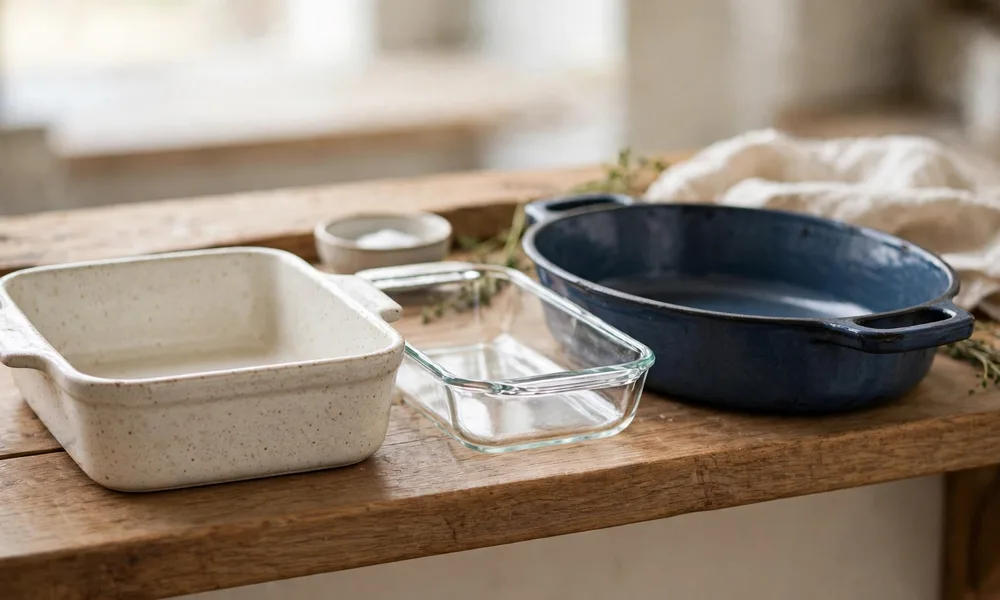
One more habit protects your dishes for years. Never put a cold dish into a very hot oven, and never put a hot dish on a cold wet surface. Sudden changes are what crack ceramic and shatter glass. Let a dish come to room temperature before it goes in the oven, and let it cool on a wooden board before washing. The same care applies to the rest of your baking kit: a good cake pan lasts for years when treated gently, and your baking dishes deserve the same respect.
How to Choose the Right Baking Dish
Choosing well takes five minutes and saves years of burnt edges and stuck food. Work through this checklist before you buy.
- Buy a 9-by-13-inch rectangular dish first. It is the most useful size for everyday cooking, from lasagne to crumbles.
- Choose glazed ceramic or stoneware for the most even baking, and glass to watch the base brown.
- Check the handles. Wide, sturdy handles you can grip with oven mitts are essential when the dish is full and hot.
- Measure your oven. A dish that does not fit with airflow around it will bake unevenly whatever it is made of.
- Inspect the surface. A smooth, unchipped glaze releases food cleanly; a rough or chipped surface sticks and is hard to clean.
- Buy one great dish before three cheap ones. A single heavy ceramic dish outperforms a cupboard full of thin ones.
Frequently Asked Questions
What is the best material for a baking dish?
Glazed ceramic and stoneware are the best all-round choices. They heat evenly and hold heat at the table. Glass is best when you want to see the base browning, and enamelled cast iron is best for long slow bakes that start on the hob.
Can I put a ceramic baking dish in a very hot oven?
Yes, if the dish is at room temperature when it goes in. Never put a cold ceramic dish straight from the fridge into a very hot oven, because the sudden change can crack it. Let it warm up on the counter first.
Why does my lasagne stick to the dish?
The most common causes are a dry base and no resting time. Grease the dish lightly, spread sauce on the base before the first pasta sheet, and let the lasagne rest for ten minutes so the portions set before you cut them.
Are glass baking dishes safe?
Yes, with care. Glass is safe in the oven at normal baking temperatures, but it is more sensitive to sudden temperature changes than ceramic. Never put it under a grill, never set a hot glass dish on a cold wet surface, and let it cool before washing.
What size baking dish should I buy first?
A 9-by-13-inch rectangular dish. Most casserole and lasagne recipes are written for that size, and it serves a family comfortably. Add a smaller square dish next for sides and desserts.
How do I clean a baked-on baking dish?
Soak it in warm soapy water for thirty minutes, then wash with a soft sponge. For stubborn baked-on food, make a paste of baking soda and water, spread it over the stain, and leave it for an hour. Never use a metal scourer on a glazed or enamelled surface.
The Bottom Line
The baking dishes that go from oven to table in 2026 are the ones made from the right material in the right size: a glazed ceramic rectangular dish for everyday casseroles, glass when you want to watch the bake, and enamelled cast iron for long slow dishes. Grease the dish lightly, let it rest for ten minutes before serving, and never shock it with a sudden change of temperature. The best muffin pans for 2026 follow the same lesson: heavy, well-made bakeware outperforms thin substitutes, and one great dish is worth more than three cheap ones.


