Cake Stands That Make Bakes Look Bakery-Worthy in 2026
A cake stand is the simplest way to make a home bake look bakery-made. The same sponge that looks plain on a flat plate suddenly looks finished when it is lifted a few inches off the table and presented at eye level. Cake stands do not change how a cake tastes, but they change how it is seen and served.
This guide explains what to look for in cake stands in 2026: the main materials, the sizes that suit real cakes, the difference between a pedestal and a flat platter, and how to care for each material so a good stand lasts for years.
Key takeaways
- Height is the whole point: a pedestal of 10 to 15 centimetres lifts a cake into view and makes slicing far easier than a flat plate ever will.
- Glass and ceramic are the most versatile materials, suiting almost any table; wood brings warmth, and metal brings drama.
- Buy the stand for the cake you actually bake: a 30-centimetre plate suits most home cakes, while tiered stands suit cupcakes and party spreads.
- A domed lid is worth having if you bake ahead or live somewhere warm, because it keeps a frosted cake fresh and dust-free.
- Stability matters more than looks: a wide, heavy base that does not wobble is the mark of a stand worth keeping.
What a cake stand actually does
A cake stand is a raised plate, usually on a pedestal foot, designed to display and serve a cake. The height puts the cake where everyone can see it, leaves room underneath for a server, and makes cutting easier because the knife works at a comfortable angle. A good stand also protects the table from crumbs and turns the cake into the centrepiece rather than one more dish among many.
The difference between a stand and a serving plate is that height. A flat platter holds a cake; a stand presents it. That is why a stand feels right at birthdays and weddings, and why cafes display their daily cakes under glass domes. The cake is the same, but the presentation tells everyone it is worth paying attention to.
The main styles, compared
Cake stands come in a handful of styles, each suiting a different kind of baking. The classic pedestal stand, a single round plate on a central foot, is the most useful all-rounder. Flat platters suit very tall or heavy cakes, tiered stands stack plates for cupcakes and small bakes, and domed stands add a cover for freshness.
| Style | Best for | Height | Watch out for |
|---|---|---|---|
| Pedestal stand | Round cakes, birthdays, afternoon tea | 10–15 cm | Top-heavy with very tall cakes |
| Flat platter | Heavy fruit cakes, large sheet cakes | 2–4 cm | Less visual drama |
| Tiered stand | Cupcakes, scones, biscuits, party food | 25–35 cm | Harder to store, wobbles if cheap |
| Domed stand | Storing frosted cakes, warm kitchens | 15–25 cm | Dome can fog and hide decoration |
| Footed cake plate | Everyday cakes, small gatherings | 5–8 cm | Smaller plates limit cake size |
Pedestal stands: the classic choice
The pedestal stand is the shape most people picture, and it remains the best starting point. A single plate on a central stem gives a cake real presence, and the open space beneath it makes the whole thing feel light on the table. Pedestal stands work best with round cakes between 20 and 30 centimetres across, which covers most home baking. Look for a slightly raised rim, which stops crumbs sliding off, and a foot wide enough that the stand does not rock when you cut the first slice.
Tiered stands: for parties and small bakes
A tiered stand is really a serving tower, and it earns its place at parties and afternoon teas, where lots of small things need to be offered at once. Cupcakes, scones, and macarons all look better arranged in tiers than crowded on a plate. The trade-off is stability: a loaded three-tier stand is top-heavy, so a solid central rod and a heavy base matter more than pretty handles. Check that yours comes apart for storage before you buy it.
Domed stands: freshness first
A dome turns a cake stand into a cake keeper. The cover keeps dust off, slows drying, and stops a buttercream finish from picking up fridge smells if the cake has to wait overnight. Domes suit bakers who frost a day ahead and anyone whose kitchen runs warm. The downside is condensation: in a humid room a glass dome can fog, and lifting a heavy dome off a tall cake takes two hands. Make sure the dome is tall enough to clear your tallest decoration.
Glass, ceramic, wood, or metal: which material wins
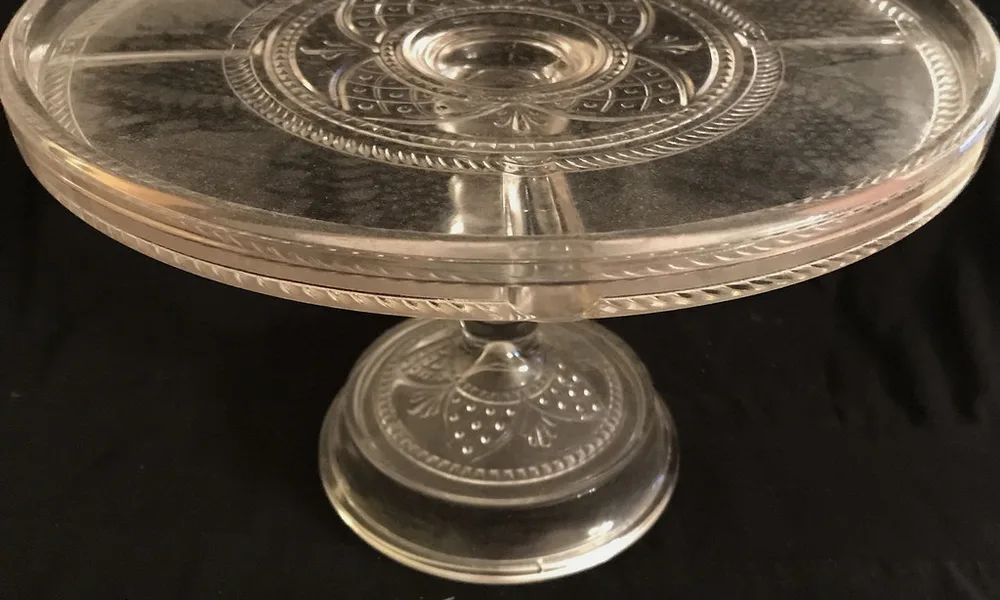
Material decides how a cake stand looks, how heavy it feels, and how you clean it. Glass shows the cake without competing with it, suits any colour scheme, and is easy to wash; pressed or cut glass adds pattern, while plain glass keeps the focus on the bake. The weakness of glass is weight and fragility — a thick glass stand can be surprisingly heavy, and a chip on the rim is hard to ignore.
Ceramic and stoneware stands bring colour and character: a white ceramic pedestal flatters any cake, while coloured stoneware suits rustic tables. Ceramic is lighter than glass and kinder to knives, but it can stain if icing sits on it for days. Wood stands, usually acacia or oak, bring warmth and suit fruit cakes and rustic bakes, though they need oiling and must never be soaked. Metal stands look dramatic and last for decades, but they show fingerprints and can feel too formal for a casual family cake.
Getting the size right
Size is where most cake stand purchases go wrong. A plate only just wider than the cake looks cramped and leaves nowhere to rest the server, while a plate far wider makes the cake look small and lost. The sweet spot is a plate 5 to 8 centimetres wider than the cake: a 25-centimetre cake sits best on a 30-centimetre stand. A pedestal of 10 to 15 centimetres is the most practical, high enough to show the cake but low enough to stay stable and fit in a car boot.
Weight matters too. A stand with a heavy base feels planted, while a light stand with a narrow foot can tip when a cake is cut from one side. Before buying, press down on one edge of the plate: if it rocks empty, it will rock worse loaded. For tall layer cakes, choose a wide plate with a low pedestal, or use a flat platter instead.
How to use a cake stand well
A cake stand works best when the cake sits in the centre and the stand is placed where everyone can see it, not pushed against a wall. Leave space around the plate for the server, and keep the knife alongside rather than on the plate, where it can mark the surface. If the cake is frosted, chill it for twenty minutes before moving it so the icing firms up. For a party, carry the cake on a board rather than directly on the stand.

Caring for your cake stand
Glass and ceramic stands can usually go in the dishwasher, though hand washing is kinder to gilding and delicate rims. Never pour boiling water into a cold glass stand, and never stack heavy stands without a cloth between them. Wooden stands should be wiped clean and oiled occasionally, and never soaked or dishwashed. For storage, take tiered stands apart and keep domes separate. A stand left on open display will be used far more often than one buried in a cupboard.
What to avoid when buying cake stands
The cheapest cake stands are often the most disappointing, and the flaws are usually the same: a narrow foot that wobbles, a plate that is not flat, a rim that chips at the first knock, or a pedestal glued on so weakly that it separates under a heavy cake. Avoid stands with no weight in the base, plates that flex when pressed, and decoration that sticks up where the cake sits. Measure your largest cake before you shop, not after.
Another common mistake is buying a stand for one occasion and never using it again. A plain white ceramic or clear glass pedestal in the 30-centimetre size will serve birthdays, Sunday baking, and dinner parties alike, while a very themed stand may only suit a single event. If you only buy one cake stand, buy the plain, sturdy one first.
Checklist: choosing cake stands in 2026
- Measure your usual cake first, then choose a plate 5 to 8 centimetres wider than it.
- Pick a pedestal height of 10 to 15 centimetres for the best balance of display and stability.
- Press the edge of the plate before buying: a stand that rocks empty will rock worse loaded.
- Choose glass or ceramic for everyday versatility, wood for rustic bakes, metal for formal occasions.
- Check the rim: a slight raised edge keeps crumbs and icing where they belong.
- Consider a dome if you bake ahead, frost in advance, or keep cakes out in a warm kitchen.

Frequently asked questions
What size cake stand do I need?
For most home baking, a 30-centimetre plate suits cakes from a 20 to 25-centimetre tin. Measure your largest cake and add 5 to 8 centimetres for serving space. A stand much bigger than the cake makes the cake look small, and one barely bigger makes serving awkward.
Are glass cake stands better than ceramic ones?
Neither is better in every way. Glass shows the cake without adding colour and is easy to clean, but it is heavy and can chip. Ceramic is lighter, comes in more colours, and is kinder to knives, but it can stain and crack. Many bakers own one of each.
Can I put a heavy fruit cake on a pedestal stand?
Yes, if the stand is sturdy, with a wide foot and a thick plate. Very heavy cakes are safer on a flat platter or a low, wide stand, because a tall pedestal with a heavy load is easier to tip. If in doubt, use the flat platter for heavy cakes.
Do I need a cake stand with a dome?
A dome is useful if you frost cakes a day ahead, keep them out in a warm kitchen, or want to display a cake without it drying out. It is not essential for a cake that will be cut within a few hours. If you buy one, check the dome clears your tallest decoration.
How do I stop a cake sliding on the stand?
Put a small smear of buttercream or a damp paper towel under the cake, or set the cake on a thin cake board. Both grip the plate and stop the cake moving when the stand is carried.
Can cake stands go in the dishwasher?
Most plain glass and ceramic stands can, but hand washing is safer for gilded or delicate stands. Wooden stands should never go in the dishwasher, and metal stands last longer with a gentle hand wash.
The bottom line
The best cake stands in 2026 are the sturdy, well-sized ones that make your baking look its best without getting in the way. A clear glass or white ceramic pedestal around 30 centimetres across, with a stable foot and a gentle rim, will handle almost any cake you bake. Add a dome if you bake ahead, keep a tiered stand for parties, and choose the material that suits your table. The cake does the hard work; the stand just makes sure everyone notices.
For more on the bakes and tools that go with a good stand, see our guide to baking dishes that go from oven to table in 2026, our comparison of the best and worst cakes of 2026, and our guide to the best stand mixers of 2026.