
Top Butter Knives for Smooth Spreading in 2026
A butter knife that spreads smoothly is a small thing that makes breakfast better every day. The right one glides through cold butter, lifts a clean curl, and lays it across toast in one even layer without tearing the bread. The wrong one skids across hard butter, gouges the toast, and leaves one corner bare and another piled high.
Butter knives look simple, but the differences between them matter. Blade width, tip shape, flexibility, and handle design all decide whether butter spreads or the toast tears. This guide explains what makes a butter knife spread smoothly, compares the main types, and sets out the checks that separate a knife you will use every morning from one that stays in the drawer.
Key Takeaways
- A wide, flat blade with a rounded tip spreads butter evenly without tearing toast or bagels.
- A slightly flexible blade follows the surface of the bread and lays down a thinner, more even layer.
- Stainless steel is the practical choice: it resists rust, washes easily, and stays smooth for years.
- A handle that fills your palm and stays secure when greasy matters more than a fancy blade finish.
- Let cold butter warm for a few minutes, or use a knife with small holes or a warmed blade, for the smoothest spread.
Why an Ordinary Knife Tears Your Toast
A dinner knife or a steak knife seems close enough to a butter knife, but it is built for a different job. Its blade is narrow, pointed, and often serrated, so it concentrates pressure on a small area and catches on soft bread. Push it across cold butter and it skips; push harder and it tears the toast. A butter knife is wide and flat, so it spreads pressure across the whole slice and slides rather than digging in.
The tip matters too. A pointed tip pierces and snags, while a rounded tip glides over the surface and tucks butter neatly to the edge of the toast. The blade of a good butter knife is also dull by design: it does not need to cut, so a blunt, smooth edge is safer around children and kinder to non-stick pans and soft bread. That is the first test of any butter knife: it should spread, not cut.

Blade Shapes: Wide, Narrow, Curved or Flat?
The classic butter knife has a wide, flat blade with a rounded tip, about as wide as a thumb. That width is what makes it work: it picks up a generous curl of butter and lays it down in one pass. Narrow blades, the kind found in cutlery sets, work but need more passes, and every extra pass risks tearing the toast.
Some butter knives have a slightly curved or angled blade, which helps the edge follow the curve of a bagel or a roll. Others have a flat blade with small holes, designed to curl cold butter into thin ribbons that soften quickly on warm toast. A few have a serrated edge on one side, which helps with hard butter but can snag soft bread. For most breakfasts, the wide flat blade is the safest choice, and the holed or curler designs are worth trying only if your butter is always fridge-hard.
Length, Width and Weight: Getting the Fit Right
Butter knives are short, usually five to seven inches overall, with a blade of about three inches. That size is deliberate: a short blade gives you control over a small, precise job, and a long blade would be clumsy on a slice of toast. A blade around three inches long and three-quarters of an inch wide is the most useful, covering most of a toast slice in one stroke.
Weight is personal but important. A knife that is too light feels flimsy and skips across hard butter; a knife that is too heavy tires your hand and presses too hard on soft bread. Most people do best with a knife that has a little weight in the handle, so the blade rests on the toast rather than being pushed into it.
What to Look For: Blade, Handle and Balance
Stainless steel is the standard for good butter knives. It resists rust, washes easily, and keeps a smooth finish for years. Cheaper plated blades can chip or stain, and their edges roughen with use, which is when a knife starts dragging instead of gliding. A single-piece steel knife, where blade and handle are one, is the easiest to clean and the hardest to break.
The handle decides how the knife feels at breakfast. Wood handles look warm and classic but need occasional oiling and should stay out of the dishwasher. Synthetic handles are tougher and easier to wash, and the best of them are shaped to fit the hand rather than moulded flat. Whatever the material, the handle should stay secure when greasy, because a butter knife is always a little greasy.
Balance is the final test. Hold the knife at the point where blade meets handle: it should feel level, with a slight weight toward the handle. That balance lets the blade rest lightly on the toast, so butter spreads in a thin, even layer instead of being pressed into the bread.
The Main Types of Butter Knife, Compared
There is no single best butter knife for every kitchen, because the right choice depends on how hard your butter is, what you spread, and who is using it. The table below compares the main types on the things that matter most.
| Type | Best For | Cold Butter | Soft Bread | Upkeep |
|---|---|---|---|---|
| Wide flat, rounded tip | Everyday toast and bagels | Good | Excellent | Low |
| Narrow, cutlery set | Table settings, light use | Fair | Good | Low |
| Holed butter curler | Fridge-hard butter | Excellent | Very good | Moderate |
| Curved or angled blade | Bagels and rolls | Good | Very good | Low |
| Single-piece steel | Daily family use | Good | Excellent | Low |
For most homes, a wide flat butter knife with a rounded tip is the safest all-round buy: it spreads butter, jam, and soft cheese cleanly and never tears toast. If your butter is always fridge-hard, a holed curler is worth adding. If you eat bagels most mornings, a curved blade follows the shape better than a flat one.
The Best Butter Knives of 2026 at a Glance
The best butter knives of 2026 share the same traits: a wide, smooth blade that picks up butter cleanly, a rounded tip that glides to the edge of the toast, a handle that stays secure when greasy, and steel that stays smooth for years. The leading wide flat knives win on everyday toast, spreading butter in one even pass. The leading curlers win on fridge-hard butter, turning a cold block into soft ribbons. The best single-piece steel knives win for families, because they survive the dishwasher and the cutlery drawer without loosening.
What you spread matters as much as the knife. A good butter knife deserves good butter, and our head-to-head guide to the best vs worst butters of 2026 compares the butters that spread smoothly against the ones that stay stubbornly hard. The same knife will also handle jam, honey, and soft spreads, and our guide to the top jams for breakfast tables in 2026 covers the jams worth spreading with it.

Spreading Technique: Smooth, Even, Edge to Edge
Technique matters as much as the knife. Start with butter that is not ice-cold: leave it out for five to ten minutes, and it will spread instead of skipping. Pick up a curl of butter on the flat of the blade, not the tip, and place it in the middle of the toast. Spread outward with long, light strokes, letting the weight of the blade do the work, and finish at the edges so the crust is covered too.
Pressing hard is the most common mistake. It tears the toast and pushes butter into the bread instead of across it. If the butter will not move, warm the blade under hot water for a few seconds and dry it, or use a curler knife to ribbon the butter first. For peanut butter and other thick spreads, a wide blade and a light hand work the same way, and our guide to the best peanut butter of 2026 covers the jars that spread most easily.
Care: Keeping the Blade Smooth and the Handle Sound
A butter knife needs little care, but the little it needs matters. Wash it with warm water and soap after use, because dried butter turns rancid and leaves a film that makes the blade drag. Dry it straight away, especially if the handle is wood, which swells and cracks if left wet. Most steel butter knives can go in the dishwasher, but wooden handles should always be hand washed.
Store butter knives with the rest of your cutlery, blade down in a tray or upright in a pot, so the flat blade stays smooth and does not get scratched by sharper knives. Check the handle every few months: if it wobbles, feels loose, or shows cracks, replace the knife before it breaks at breakfast. A butter knife is a simple tool, and a simple tool that is looked after will spread smoothly for years.
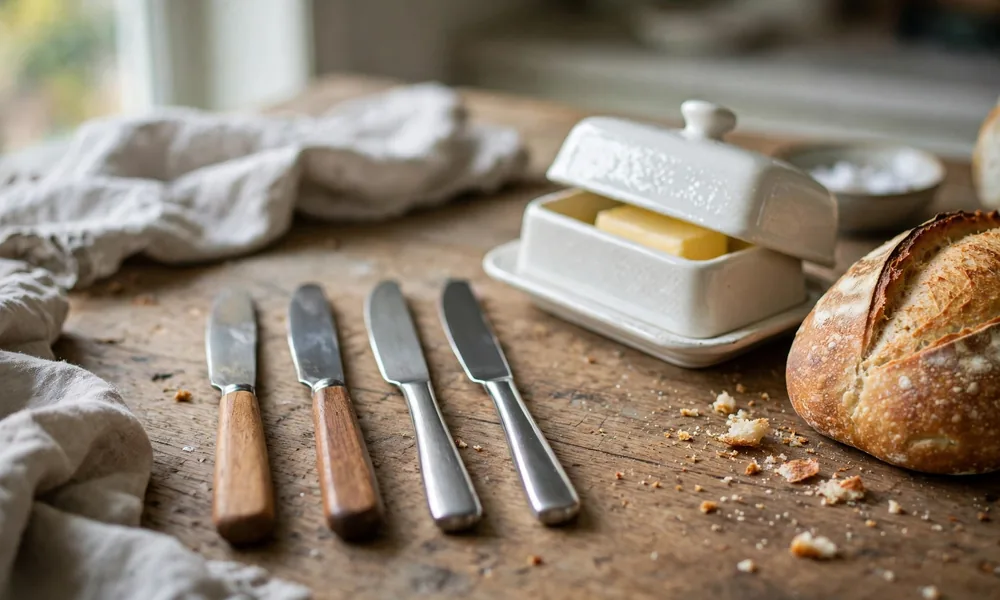
Your Butter Knife Checklist
- Wide, flat blade with a rounded tip that glides without tearing toast.
- Blade about three inches long and three-quarters of an inch wide for one-pass spreading.
- Stainless steel, single-piece or well-made, that stays smooth and resists rust.
- Handle that fills your palm and stays secure when greasy.
- Balanced weight, slightly toward the handle, so the blade rests lightly on the bread.
- Care plan: wash after use, dry straight away, hand wash wooden handles, and replace a loose handle.
Frequently Asked Questions
What is the best butter knife for cold butter?
A holed butter curler is the best choice for fridge-hard butter. Its holes curl cold butter into thin ribbons that soften quickly on warm toast. A wide flat knife also works if you let the butter warm for five to ten minutes first.
Can I use a butter knife for jam and peanut butter?
Yes. A wide flat butter knife spreads jam, honey, peanut butter, and soft cheese just as well as butter. Use long, light strokes and let the weight of the blade do the work, so thick spreads do not tear the bread.
What size should a butter knife be?
About five to seven inches overall, with a blade around three inches long and three-quarters of an inch wide. That size covers most of a toast slice in one stroke while staying easy to control.
Are butter knives dishwasher safe?
Most steel butter knives are, but wooden handles are not. Hand wash wooden handles with warm water and soap, dry them straight away, and keep them out of the dishwasher so they do not swell or crack.
Why does my butter knife tear the toast?
It is usually butter that is too cold, a blade that is too narrow or pointed, or too much pressure. Let the butter warm for a few minutes, use a wide flat blade, and spread with long, light strokes instead of pressing down.
What is the difference between a butter knife and a dinner knife?
A butter knife has a wide, flat blade with a rounded, dull tip made for spreading, while a dinner knife is narrower and pointed for cutting food on the plate. A dinner knife concentrates pressure and tears toast; a butter knife spreads it.
The Bottom Line
The best butter knife of 2026 is a wide, flat blade with a rounded tip, in stainless steel, with a handle that stays secure when greasy. Let cold butter warm for a few minutes, spread with long, light strokes, and let the blade do the work. Do that, and every slice of toast will come out smooth, even, and edge to edge.


