
A model kit is one of the few hobbies that hands you a finished object you can hold, built entirely by your own hands. You open a box of grey plastic parts on thin frames, follow a set of diagrams, and a few evenings later there is a Spitfire, a Mustang, a battleship or a robot standing on your shelf. Nothing about it is instant, and that is exactly the point. The best model kits of 2026 reward patience with detail, and they punish rushing with glue fingerprints and crooked wings. Choose well, and the build is as enjoyable as the finished model.
What Makes a Good Model Kit
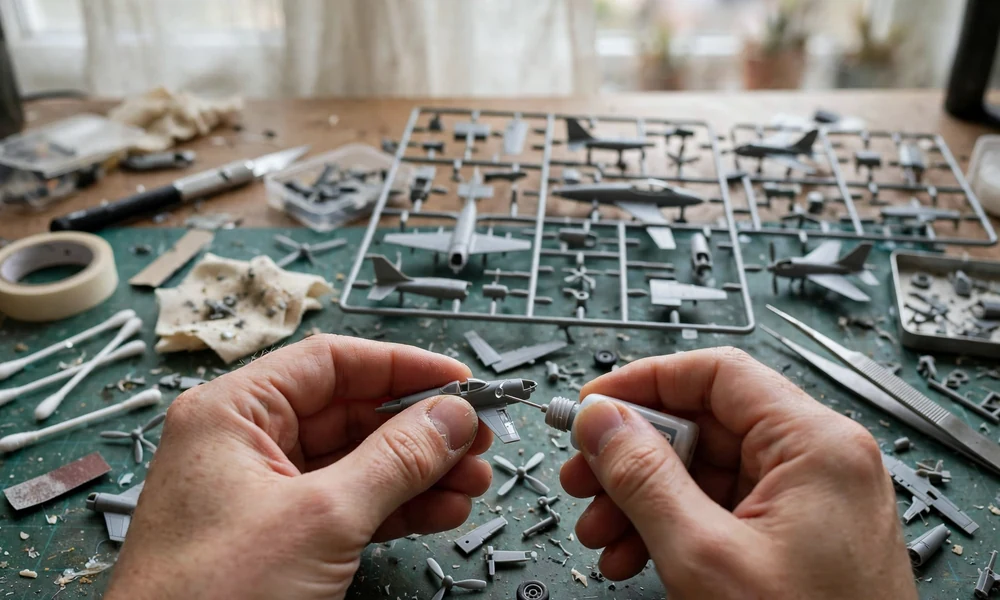
The first thing to judge is fit. In a good kit, parts meet cleanly with only a thin seam to tidy up. In a poor one, wings need filler, fuselage halves gape, and you spend more time sanding than building. Fit is where the well-known kit makers earn their reputation, and it is also why two kits of the same subject at the same scale can feel like entirely different hobbies. Reviews from builders matter more than the box art here: a kit that has been reboxed for decades may carry charming artwork and tired, warped moulds.
The second thing is the instructions. The best booklets read like a clear recipe: one step per picture, parts numbered plainly, paint colours named at the point you need them, and warnings before the steps that cannot be undone. The worst jump between sub-assemblies, hide a small part until three steps too late, or print diagrams so small that a cockpit detail becomes guesswork.
Third comes the plastic itself. Good styrene cuts cleanly, takes glue without going brittle, and holds a sharp edge on panel lines and rivets. Cheap, soft plastic bends, tears when you cut it from the frame, and refuses to hold paint. You can feel the difference the moment you snip the first part free. Surface detail matters too: fine, recessed panel lines look far better under paint than heavy raised lines, and a well-moulded cockpit or engine will reward a careful builder while a blank one will always look empty.
The Main Types of Model Kit
Model kits divide roughly by subject, and each subject has its own character. Cars are the most forgiving place to start for many adults: large, smooth body panels, few tiny parts, and a result that looks impressive on a shelf even with a simple paint job. Classic cars, rally cars and modern supercars all have strong ranges, and the best car kits include detailed engines and interiors that reward opening the bonnet. If you like visible, satisfying progress, a car kit delivers it quickly.
Aircraft kits are the heart of the hobby for many builders. A single-engine fighter in 1/72 scale can be finished in a weekend, while a 1/32 bomber is a month-long project with hundreds of parts. Aircraft demand more care with seams, because a fuselage joint runs right down the middle of the model, and they reward attention to cockpit detail and canopy masking. They also offer the widest choice of subjects, from First World War biplanes to modern jets, so there is always another era to explore.
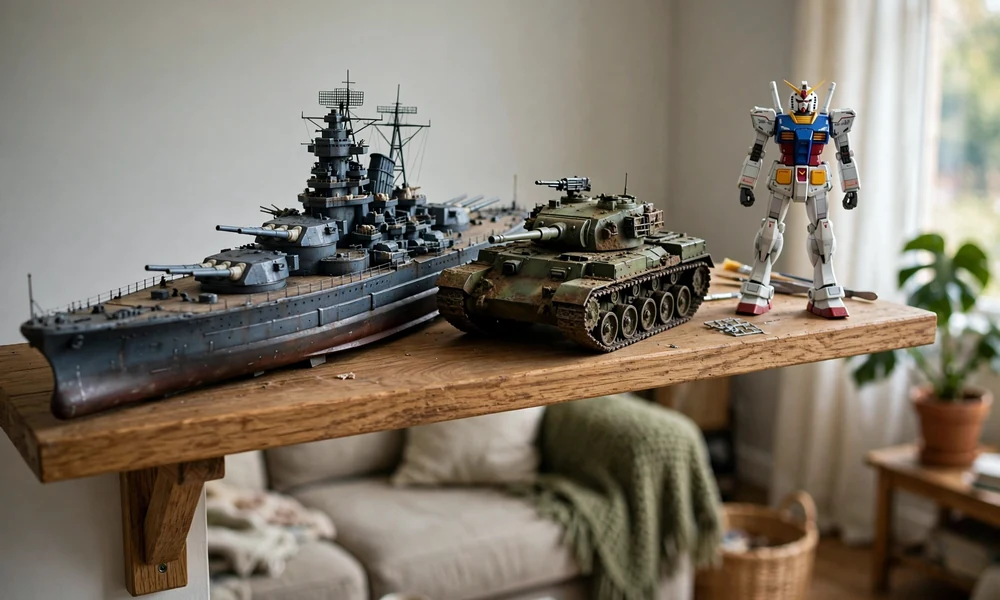
Ships and boats are the slow burn of the hobby. A warship kit has hundreds of tiny parts — railings, guns, masts, lifeboats — and the finished model is a display piece in a way few others are. Wooden ship kits are a different discipline altogether, built plank by plank over months, and they suit builders who enjoy woodwork as much as modelling. If you want a model that dominates a room, a large-scale ship is the way to get there.
Military armour — tanks, trucks, artillery — suits builders who like weathering and realism. A tank is forgiving: mud, dust and chipped paint are part of the look, so small mistakes become battle damage rather than flaws. Armour kits also tend to have excellent detail at modest prices, with tracks, stowage and figures adding life. Many builders who start with aircraft drift into armour and never come back, because a weathered tank looks real in a way a clean aeroplane sometimes does not.
Then there are the kits that break the traditional mould. Gundam and other anime robot kits snap together without glue, use coloured plastic so they look right unpainted, and are engineered with joints that actually move. They are the best entry point for younger builders and for anyone who wants a striking result without paint. The same snap-together thinking appears in beginner ranges across subjects, and in LEGO sets for builders who prefer bricks to glue. If you are buying for a child, a snap kit is almost always the right first step.
Skill Levels, Honestly Explained
Kit boxes carry skill levels from one to five, and the numbers are roughly honest if you read them properly. Level one means snap-together, no glue, no paint, and a build measured in an hour or two. Level two adds glue and a little paint, with parts that still fit easily. Level three is where the hobby proper begins: more parts, more detail, and a build that takes several evenings.
The honest advice is to buy one level below what you think you can handle for your first kit in a new subject. A confident car builder who picks a level-five aircraft will still struggle with canopy masking and fuselage seams, because the skills do not transfer perfectly. A level-two or three kit that you finish and enjoy beats a level-five kit that stalls halfway and lives in a cupboard. Confidence comes from finished models, not from ambitious boxes.
Scale: What the Numbers Actually Mean
Scale is the ratio between the model and the real thing, and it decides both size and difficulty. A 1/72 aircraft is small enough to hold in one hand; a 1/48 version of the same plane is roughly twice as long and far easier to detail. Cars are usually 1/24 or 1/25, ships 1/350 or 1/700, tanks 1/35, and figures anywhere from 1/35 to 1/16. The smaller the second number, the bigger the model.
Tools and Paint: What You Really Need
A first kit needs surprisingly little: a hobby knife, a pair of sprue cutters, plastic cement, sandpaper or a sanding stick, and tweezers. That is the whole starter list, and it will carry you through your first several kits. Cut parts from the frame with the cutters, never twist them off, because twisting leaves a scar and can crack the part. Trim the small nub left behind with the knife, then smooth it with sandpaper before gluing.
Glue deserves a word of its own. Thin liquid cement, applied with a brush, is the standard for plastic kits: it melts the joint slightly and makes a strong bond with almost no mess. Tube glue is thicker and easier to over-apply, and it leaves strings and fingerprints on visible surfaces. Use the thin cement, apply it sparingly, and hold the joint for a few seconds rather than flooding it. Superglue has its place for metal parts and figures, but it fogs clear plastic, so keep it away from canopies and windows.
Paint is where beginners overbuy. You do not need thirty colours for a first kit; you need the four or five the instructions call for, plus a primer. Primer matters more than most beginners expect: it helps paint grip, shows up flaws before the final coat, and evens out the colour of the plastic. Spray primer is quickest, brush primer is cheapest, and either beats painting straight onto bare plastic.
How to Choose Your First (or Next) Kit
Start with the subject, not the brand. The kit you finish is the one you care about, so pick a car you love, a plane from a story you know, or a tank from a film you have watched twice. Enthusiasm carries you through the fiddly middle of a build, when the novelty has worn off and the seams still need sanding. A famous, well-reviewed kit of a subject you do not care about will stall; a mediocre kit of a subject you love will get finished.
Then check the practical things. Read a builder review, not just the shop description, and look for words like fit, seams and instructions. Check the part count and the skill level, and be honest about how many evenings you will actually give it. Check the scale against your shelf space. And check what else you need: if the kit needs paint and glue you do not own, add those to the cost before you decide it is a bargain.
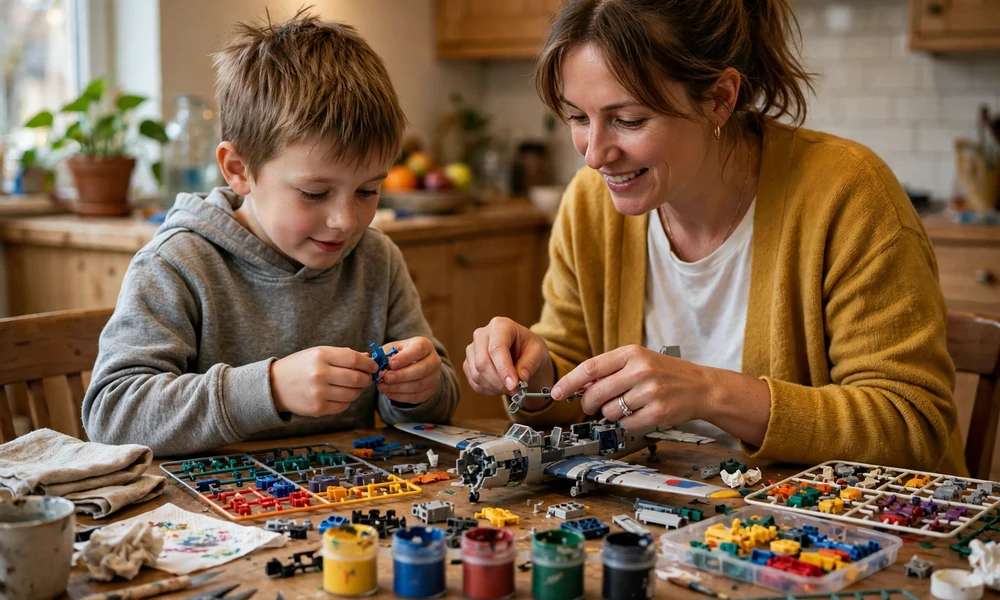
For younger builders, the choice is simpler: snap-together, big parts, a subject they already love, and a build that finishes the same day. A child who finishes a kit wants another one; a child who stalls on a fiddly adult kit decides the hobby is not for them. If you want ideas for hands-on gifts beyond modelling, the best craft kits cover the wider world of making, from painting to candle-making, and they follow the same rule: the best kit is the one that gets finished.
Mistakes That Spoil a Good Kit
Most ruined kits are ruined by the same few mistakes, and all of them are avoidable. The first is gluing before dry-fitting: always test how two parts meet before the cement comes out, because a part glued in the wrong place is very hard to move. The second is impatience with paint: thick coats hide detail and take days to dry properly, while two thin coats look better and dry in an hour. The third is skipping the wash: plastic parts carry a thin mould-release film, and a quick wash in warm soapy water before building helps both glue and paint grip.
The fourth mistake is over-ambition with the first kit: extra photo-etched parts, aftermarket decals and a complex paint scheme, all on a kit you have never built before. Learn the basics on a straightforward build, then add one new technique per kit. And the fifth is storage: a half-built kit left in sunlight warps, and a finished model left on a sunny windowsill fades. A shelf out of direct sun, dusted occasionally, keeps a model looking good for years. If you enjoy quiet, patient hobbies, you may also like the best puzzles, which reward the same kind of unhurried attention in a different form.
The Bottom Line
The best model kit is not the biggest, the dearest or the most detailed. It is the one that matches your skill, your patience and your interest closely enough that you finish it and want another. Start with a subject you love, at a scale you can handle, from a maker known for good fit and clear instructions. Buy the few tools that matter, prime before you paint, and give the glue time to set. Do that, and the box of grey plastic on your table becomes something you made — and the shelf starts to fill up, one finished model at a time.


