
A newborn is small, soft and entirely dependent on being held close, and a good baby carrier is the closest thing to being held in your arms while your hands are free. The best baby carriers for newborns in 2026 are the ones that hold a tiny baby snug against your chest, support their head and hips properly, and feel comfortable enough to wear for an hour without your shoulders aching. A bad carrier lets a newborn slump, digs into your back, or takes ten minutes of wrestling to put on, and a carrier that is hard to use is a carrier that stays in the cupboard. The right one becomes part of your daily routine, from the school run to the supermarket to a walk around the block.
What a Newborn Actually Needs from a Carrier
A newborn is not a small toddler. Their neck cannot hold their head up, their hips are still developing, and their airway is narrow, so a carrier made for a newborn has to do three jobs at once. It has to hold the baby high enough that you can kiss the top of their head without bending, keep their chin off their chest so they can breathe easily, and support their bottom and thighs so their knees sit higher than their bottom in a spread squat shape. That position, often called the M shape, keeps their hips in a natural, healthy position and spreads their weight across the carrier instead of letting it hang from their crotch.
The second thing a newborn needs is closeness. In the first weeks, a baby settles fastest when they can hear your heartbeat, feel your warmth and smell your skin, and a carrier gives them all three. That is why the softest carriers, the ones made from stretchy or woven fabric, are so popular for newborns: they mould around the baby like a hug rather than holding them in a stiff seat. A carrier that keeps a newborn close and calm is doing its most important job, and a carrier that leaves them dangling or slumped is not, however expensive it was.
The Main Types of Newborn Carrier
Stretchy wraps are long pieces of soft, stretchy fabric that you tie around yourself before popping the baby in. They are the gentlest option for a newborn, they spread the weight across your shoulders and back, and they are cheap. The trade-off is the learning curve: the first few times you tie one, it feels like a puzzle, and a wrap that is tied too loosely will sag as the baby settles. Once you have the tying down, though, a stretchy wrap is hard to beat for a sleepy newborn, and it is the carrier most parents reach for in the first three months.
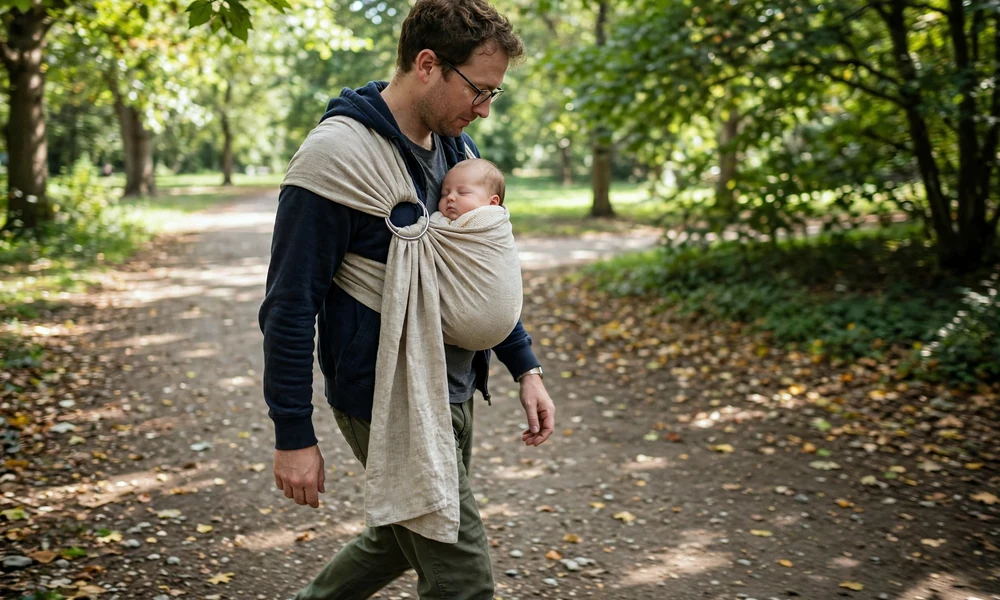
Ring slings are a single length of fabric threaded through two rings, worn over one shoulder with the baby tucked into the pouch it makes. They are fast to put on, easy to adjust, and brilliant for quick trips and for breastfeeding on the go. The trade-off is that all the weight sits on one shoulder, so a ring sling is best for short carries rather than a long walk, and it takes a little practice to get the fabric spread evenly across your shoulder and back.
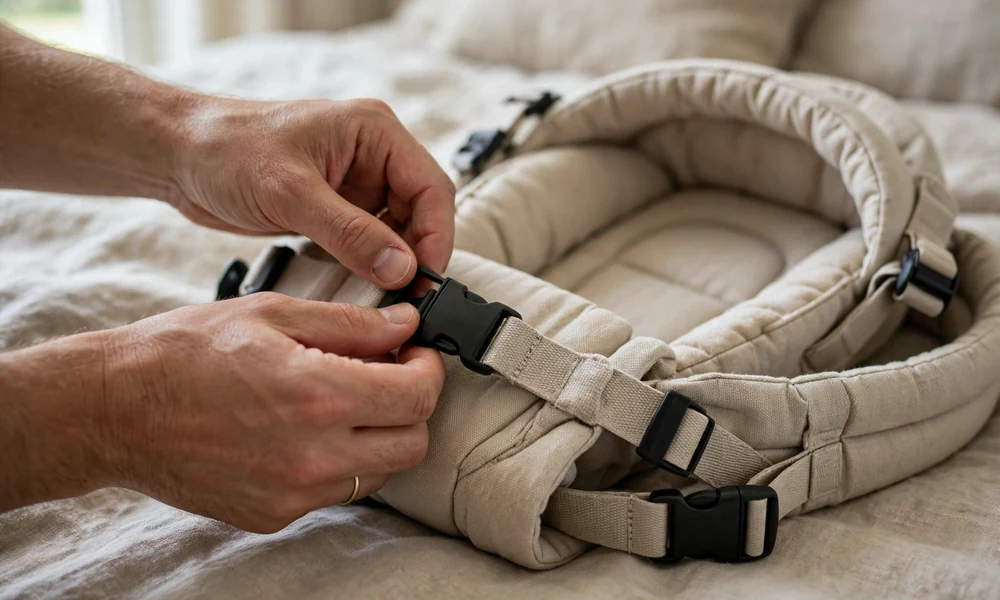
Soft structured carriers are the ones with buckles, padded shoulder straps and a waist belt, and they are the easiest to put on once you know how. For a newborn, they need an infant insert or an adjustable panel that narrows the seat, because a standard seat is too wide for tiny legs. The best ones adjust in small steps, so the carrier grows with the baby, and they are the most comfortable choice for longer outings. If you want one carrier that a partner can also pick up and use without retying anything, a soft structured carrier is the one to buy.
How to Check the Fit Is Safe
Before you leave the house, run through a quick check. The baby should be high enough to kiss, close enough that there is no gap between their body and yours, and upright with their chin off their chest. You should be able to see their face at a glance without moving fabric, and their back should be supported in its natural curve rather than flattened or arched. If you can slip a hand between the baby and your chest easily, the carrier is too loose, and if the baby is pressed so tight that their face is buried, it is too tight. A snug fit, like a firm hug, is the right one.
Check the legs and hips too. The fabric should reach from one knee to the other, supporting the thighs so the knees sit higher than the bottom, and the baby should not be dangling by the crotch. In a wrap or sling, spread the fabric wide across the baby’s bottom and across your shoulder, because bunched fabric is what causes sore shoulders and a sagging seat. In a buckle carrier, tighten the waist belt first, at your hips rather than your waist, and then the shoulder straps, so the weight sits on your hips and legs instead of your neck.
What to Look For When You Buy
Start with the weight limit and the minimum weight. Some carriers are made for newborns from birth, while others only fit once a baby reaches a certain weight, and that difference matters more than any other feature. Check whether a newborn insert is included or sold separately, because an insert that costs extra changes the real price, and check how the carrier adjusts, because a carrier with a few fixed settings will fit fewer babies well than one with a sliding panel. The best newborn carriers adjust in small steps, so you can narrow the seat for a tiny baby and widen it as they grow.
Think about fabric and washing as well. A newborn carrier will be sicked on, dribbled on and sweated in, so it should be machine washable and quick to dry, and the fabric should be soft against a baby’s cheek. Breathable cotton and linen are kind in warm weather, while a stretchy jersey wrap is cosy in the cooler months. If you plan to carry in summer, look for a mesh panel or a lighter fabric, because a thick padded carrier gets hot fast, and a hot parent is a parent who takes the carrier off. When you head out for the day, a well packed changing bag matters almost as much as the carrier, so it is worth reading our guide to the best diaper bags of 2026 before you buy, because a bag that fits your carrier routine makes outings far easier.
The Best Baby Carriers for Newborns in 2026
The best stretchy wrap for a newborn is a simple one in a soft, breathable jersey, because the fabric does the work and there is nothing to adjust once it is tied. Look for a wrap that is long enough to tie comfortably around your body, with a little stretch but not so much that it sags, and a colour you will not mind wearing every day. A good stretchy wrap costs little, washes well, and will be the carrier you reach for at home in the first weeks, when the baby wants to be held and you want your hands back.
The best ring sling for a newborn is a linen one with sturdy metal rings, because linen is strong, breathable and softens with every wash, and good rings adjust smoothly without slipping. A ring sling is the fastest carrier to put on, which makes it the best choice for popping to the shops or settling a grizzly baby quickly, and it folds small enough to live in a changing bag. The trade-off is the single shoulder, so keep it for shorter carries and save the longer walks for a two-shoulder carrier.
The best soft structured carrier for a newborn is one with an adjustable seat that narrows right down for tiny legs, a head support that folds up for a sleepy baby, and a waist belt that sits comfortably on your hips. It is the easiest carrier for a partner to share, because the straps adjust in seconds, and it is the most comfortable for a long day out. Look for one that feels light on your shoulders, because a heavy carrier with a newborn in it is tiring by the end of an afternoon.
The best budget carrier for a newborn is a simple stretchy wrap, because it costs far less than a buckle carrier and does the newborn job better than most of them. There is no need to spend a lot in the first months, when a baby is small and light and a soft wrap is all they need. Spend the money you save on the things that make carrying easier day to day, like a good changing bag and a comfortable pair of shoes, and buy a structured carrier later, when the baby is heavier and you know how you like to carry.

Mistakes New Parents Make
The most common mistake is buying a carrier made for an older baby and hoping the baby will grow into it. A carrier that is too big leaves a newborn slumped, with their chin on their chest and their legs dangling, and no amount of tightening fixes a seat that is the wrong shape. Buy for the baby you have now, not the baby you will have in six months, and check the minimum weight before you buy. If the carrier needs an insert, make sure it is included, and if it does not fit a newborn at all, choose a different carrier rather than trying to make it work.
The second mistake is wearing the carrier too loose. A loose carrier feels comfortable at first, because nothing is pressing on you, but the baby slowly sinks, your shoulders take all the weight, and by the end of the walk your back aches. A carrier should feel snug, like a firm hug, with the baby held tight against your body, and it should be tightened before you put the baby in rather than after. At home, a carrier is also handy for settling a baby while you get on with the day, and a good monitor helps you keep an eye on them once they are down, so our guide to the best baby monitors of 2026 is worth a look before you set up the nursery.
The Verdict
For most newborns, a soft stretchy wrap is the best place to start: it is gentle, cheap, and it holds a tiny baby closer than anything else. Add a ring sling for quick trips and a soft structured carrier with an adjustable seat for longer days out, and you will have every situation covered without owning a cupboard full of carriers. The carrier that fits your baby well, feels good on your body, and is easy enough that you actually use it is the best carrier for your newborn, whatever the label says. Buy for the baby you have now, check the fit every time, and keep them close. A warm layer matters on cold days too, and a soft wrap for the baby makes a carrier outing cosier, so our guide to the best baby blankets of 2026 is a useful companion to this one.


