Cheese is one of those foods people feel strongly about and rarely think hard about. A good cheese can turn a plain piece of bread, a simple salad or a quiet evening into something worth remembering. A bad one can ruin a sandwich, sit uneaten at the back of the fridge, and put you off a whole style of cheese for years. The difference between the two is rarely the price on the packet.
This comparison puts the best cheeses of 2026 head to head against the worst, judging them the way you would actually eat them: how they taste on their own, how they behave when cooked, whether they suit the meal you bought them for, and whether you would happily buy the same cheese again. The same honest testing sits behind our comparison of the best and worst cheese graters of 2026, because a cheese earns its place the same way any kitchen tool does: it has to work in a real kitchen on a real day.
Key Takeaways
- Taste the cheese before you cook with it: a cheese that tastes flat or sharp on its own will not improve in a sauce or on a pizza.
- Age is usually the difference: a cheese that has been aged properly tastes deeper and more complex than a young cheese sold in a hurry.
- Texture tells you most of what you need to know: a good cheese cuts cleanly, crumbles where it should, and melts smoothly instead of splitting into oil.
- Match the cheese to the job: a soft cheese belongs on a board, a firm cheese belongs in a grater, and a melting cheese belongs in a hot pan.
- Buy less and buy better: a small wedge of a good cheese, eaten fresh, beats a large block of a bland one that dries out in the fridge.
How Cheese Is Actually Made
Cheese begins as milk, and the whole craft is about turning that milk into something that keeps, tastes of somewhere, and changes slowly over time. The milk is warmed, a starter culture is added to begin turning its sugars into lactic acid, and then rennet is added to set it into a curd. That curd is cut, drained, salted and pressed, and from that point the cheese is left to age, sometimes for weeks and sometimes for years.
Ageing is where a cheese becomes itself. During ageing, the proteins and fats inside the cheese break down into the compounds that give it flavour: nutty, buttery, sharp, sweet, earthy or salty notes, depending on the milk, the culture and the time. A young cheddar tastes mild and a little rubbery. The same cheddar aged for eighteen months tastes deep, crumbly and savoury, with small crystals that crunch gently between your teeth.

Cheeses fall into a few broad families, and knowing them makes choosing much easier. Fresh cheeses like mozzarella and ricotta are mild, soft and meant to be eaten young. Soft-ripened cheeses like brie and camembert have a bloomy white rind and a creamy centre that ripens from the outside in. Semi-hard cheeses like cheddar, gouda and comte are the everyday workhorses, good for eating and cooking alike. Hard cheeses like parmesan and aged pecorino are dry, salty and intensely flavoured, made for grating. Blue cheeses like stilton, gorgonzola and roquefort are veined with mould and taste salty, sharp and rich.
The milk matters too, and it is worth knowing what you are buying. Cow’s milk makes most of the cheeses on a supermarket shelf, and it gives a mild, buttery base. Sheep’s milk is richer and a little sweeter, which is why manchego and pecorino taste so rounded. Goat’s milk is tangy and bright, which suits fresh cheeses and salads.
What Makes a Cheese One of the Best
The best cheeses of 2026 share one quality above all others: they taste like something. A good cheddar tastes nutty and savoury rather than merely salty. A good brie tastes buttery and mushroomy rather than bland and waxy. A good parmesan tastes deep and almost meaty, with a long finish that stays on the tongue. You do not need a trained palate to notice this; you only need to taste the cheese on its own, without crackers or chutney getting in the way.
Texture is the second mark of a good cheese. A soft cheese should be ripe all the way through, not firm in the middle and runny at the edges, which is the sign of a cheese that was chilled too hard or sold too young. A semi-hard cheese should slice cleanly without crumbling into dust or bending like rubber. A hard cheese should break into pleasing shards rather than powder. And a cheese that is meant to melt should melt smoothly, turning glossy and even, instead of splitting into a pool of oil with a rubbery lump in the middle.
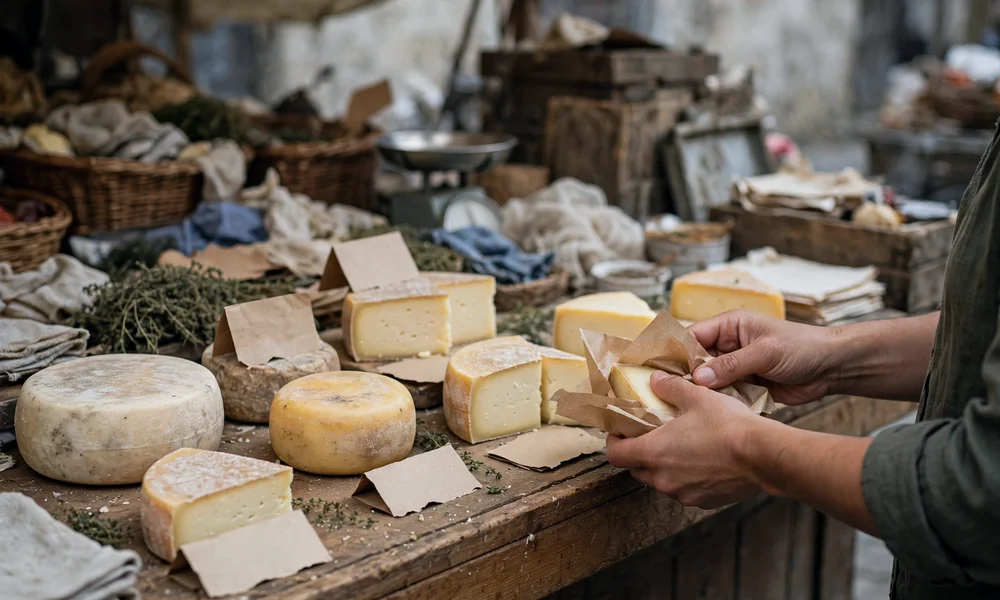
The third mark is honesty in how the cheese is sold. A good cheese is labelled with its age, its milk and where it was made, and it is cut to order or wrapped properly in waxed paper rather than sealed tight in plastic, which makes it sweat and taste of the packet. A good cheesemonger will let you taste before you buy, and will tell you honestly when a cheese is at its best and when it is past it.
Finally, a good cheese is easy to live with at home. It keeps well in the fridge for a week or two when wrapped in paper and kept in a box, it is just as good on the second day as on the first, and it works in more than one dish. A wedge of good cheddar is as happy in a sandwich as it is on a board, and a piece of good parmesan will lift a pasta, a soup or a salad. Our comparison of the best and worst olive oils of 2026 follows the same rule: the best version of a simple food is the one that tastes of itself and works everywhere.
What Makes a Cheese One of the Worst
The worst cheeses fail quietly, and you usually notice only after you have paid for them. The most common failure is blandness: a cheese that tastes of almost nothing, just salt and fat, with no depth and no finish. These are usually cheeses that were rushed, made from milk with little character, and sold young so the maker could move them quickly. They fill a sandwich and add calories, but they add no pleasure, and a meal built on them tastes flat however good the rest of the ingredients are.
Texture is where bad cheese gives itself away fastest. A soft cheese that is chalky in the middle was sold before it ripened. A cheese that sweats in the packet, with beads of moisture on its surface, was stored badly or wrapped in plastic for too long. A sliced cheese that sticks together in a plastic brick, with each slice exactly the same shape and colour, was made for a production line rather than a table, and it tastes like it.
Some bad cheeses fail in the opposite direction: they taste of the wrong thing. A cheese that tastes sour or bitter was probably stored at the wrong temperature or kept too long. A cheese that tastes of plastic or cardboard has picked up the flavour of its packaging. A cheese with a rind that smells of ammonia has gone past its best, and no amount of trimming will save it. These are not matters of taste; they are signs that the cheese was made, stored or sold carelessly.
The last sign of a bad cheese is how it behaves over time. A good cheese improves for a few days after you open it as it warms and breathes. A bad one dries out at the edges within a day, goes slimy in the packet, or develops mould that is not the kind it was made with. A cheese that has to be thrown away half-eaten was never good value, however cheap it looked on the shelf.

How to Choose a Cheese Before You Buy It
The best test is the tasting test, and it takes no equipment at all. Ask for a taste at a market or a deli counter, and eat the cheese on its own, at room temperature, with nothing else. A good cheese will taste interesting within a few seconds, and its flavour will change as you chew. A bad cheese will taste of salt and fat and nothing else, and you will be ready to move on before you have finished the piece.
The second test is the melting test, and it matters if you plan to cook with the cheese. Grate a small amount into a hot pan on its own and watch what happens. A good melting cheese turns glossy and smooth within a minute. A bad one splits into oil, clumps into rubber, or simply refuses to melt at all.
Reading the label is the third test, and it takes only a few seconds. Look for the age of the cheese, the milk it was made from, and where it was made. A label that says nothing but a brand name and a vague description is telling you that there is nothing to say. A label that names the farm, the region and the months of ageing is telling you that someone is proud of what is inside. The same honest labelling matters across the kitchen, which is why our comparison of the best and worst chocolate of 2026 starts with the same question: does the label tell you what you are actually eating.
Finally, buy the right amount, because cheese is at its best fresh. A small wedge eaten within a week will always taste better than a large block that sits in the fridge for a month. Wrap it in waxed paper rather than cling film, keep it in a box in the fridge so it does not dry out or pick up other flavours, and take it out half an hour before you eat it so it reaches room temperature. Cold cheese tastes of very little; the same cheese at room temperature tastes like itself.
The Verdict
The best cheeses of 2026 are not the most expensive ones, and they are not the ones with the fanciest packaging. They are the ones with real flavour that you can taste on their own, a texture that suits their style, honest labelling that tells you the age, the milk and the maker, and a wedge that keeps well and works in more than one dish. They make a simple meal better without any effort, and they are worth buying again. Buy one of those and your cheese board, your sandwich and your cooking all get better at once.
The worst cheeses fail quietly and keep failing: a bland, salty taste with no depth, a texture that sweats, sticks or splits, a flavour of plastic or sourness that says it was stored badly, and a block that dries out or goes slimy before you have finished it. Spend a little more on a cheese that tastes of itself, taste it before you buy it when you can, and buy a small wedge fresh rather than a large block to store. Choose the cheese that tastes interesting on its own, and the rest of the meal takes care of itself.