
A cheese grater is one of the smallest tools in the kitchen, and one of the most used. It turns a block of cheddar into a topping for pasta, a wedge of parmesan into a snowdrift over soup, and a lump of chocolate into decoration for a cake. When the grater is good, the job takes seconds and feels effortless: the teeth bite cleanly, the shreds fall evenly, and your knuckles stay a safe distance from the blades. When the grater is bad, the same job turns into a chore. The cheese clogs, the grater slides across the board, and you end up with a sticky lump, sore fingers, and a pile of uneven chunks instead of neat shreds.
This comparison puts the best cheese graters of 2026 head to head against the worst, judging them the way you would actually use them at home: how sharp the teeth stay, how steady the grater sits while you work, how easy it is to clean, and whether it still performs after a year of regular use. A grater works alongside the rest of your prep tools, and the best vs worst cutting boards decide where the cheese lands before it is grated; this guide decides what happens next.
Key Takeaways
- Judge a grater by its teeth first, because sharp, well-spaced teeth cut clean shreds while dull teeth mash cheese into a paste.
- A heavy base and a comfortable handle matter as much as the blade, since a grater that slides or wobbles is slow and dangerous.
- Stainless steel beats thin plastic, because it stays sharp longer, does not stain, and survives the dishwasher without warping.
- Four-sided box graters cover the most jobs, while a fine microplane-style grater is best for hard cheese, citrus zest, and garlic.
- The worst graters are light, dull, and hard to clean, with teeth that clog, handles that flex, and plastic that cracks.
What Makes a Great Cheese Grater
A great cheese grater starts with the teeth. The best graters use sharp, etched stainless steel teeth that are cut cleanly and spaced evenly, so each stroke slices the cheese instead of crushing it. The shreds come off in even ribbons, soft cheese does not smear across the surface, and hard cheese does not need to be forced. A grater is a cutting tool, and like the best vs worst knife sets, its edge decides everything: a sharp edge does the work for you, while a dull edge makes you push harder and risk your fingers.
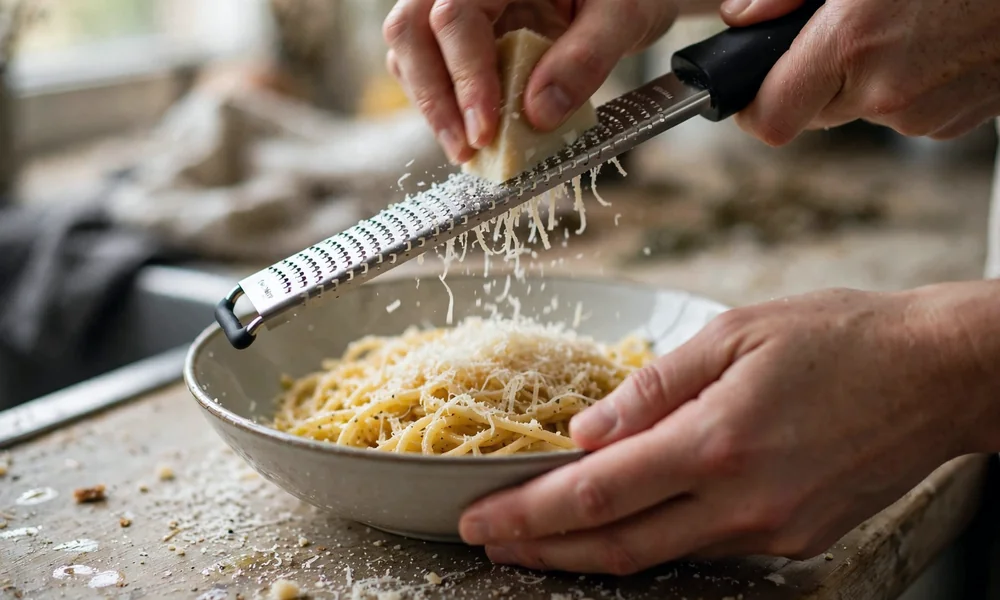
Stability is the second thing that separates the best from the worst. A good box grater has a wide, flat base, often with a rubber ring or non-slip feet, so it stays planted on the board while you work. A good handheld grater has a handle that fits your palm, with enough length to keep your knuckles clear of the teeth. Weight helps too: a heavier grater stays where you put it, while a feather-light one skitters away at the first stroke. If you have to hold the grater still with one hand and grate with the other, the design has already failed you.
The Best Cheese Graters of 2026
The best cheese graters of 2026 are the ones that disappear into the cooking. They cut quickly, they feel secure in the hand, and they wash clean in under a minute. They are not always the most expensive graters, but they are always the ones made with care: thick steel, sensible handles, and teeth that stay sharp far longer than the cheap alternatives.
Sharp Teeth That Cut Instead of Tearing
The first thing you notice about a great grater is how little effort it takes. The teeth bite into the cheese on the first stroke and produce long, even shreds with a light touch. Soft cheddar comes off in ribbons rather than a smeared paste, and hard parmesan turns into a fine, fluffy powder instead of gritty crumbs. Good teeth are etched or stamped cleanly, with no rough burrs to catch the cheese, and the holes are sized so the shreds fall through instead of packing the surface. When the teeth clog after every stroke, you are fighting the tool instead of cooking with it.
A Base and Handle That Stay Put
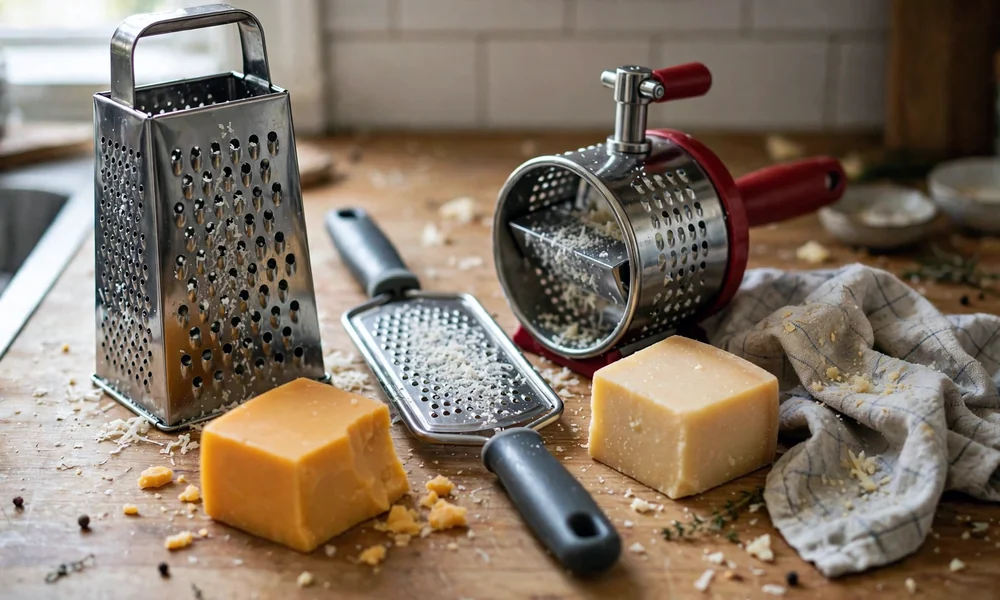
The best box graters sit flat and steady, with a rubber base that grips the board and a handle on top that lets you press down firmly without the grater tipping. The best handheld graters have a long, slightly curved handle with a soft grip, so your hand stays comfortable and your knuckles stay well above the blades. Rotary graters, the kind with a drum and a crank handle, are the safest option of all for hard cheese, because your fingers never come near the teeth. Whatever the shape, the test is simple: grate a whole block of cheese and see whether the grater moved, your hand ached, or your knuckles got close to the blade.
Four Sides, One Tool
A four-sided box grater is the most useful grater most kitchens will ever need. One side gives coarse shreds for melting over pasta and tacos, one gives fine shreds for baking, one slices thin pieces for salads, and one is a fine rasp for parmesan, nutmeg, and citrus zest. The grated cheese falls straight into the bowl underneath, and the best vs worst mixing bowls are the natural partner here, catching the shreds while you work. A box grater also stores neatly in a cupboard and costs less than buying four separate tools. The trade-off is cleaning: four sides mean four surfaces to rinse, so look for a design with smooth edges and no hidden corners where cheese can hide.
Easy to Clean, Built to Last
The best graters are easy to clean because cheese dries hard and sticks fast. Stainless steel rinses clean under a running tap, and a quick brush across the teeth removes anything left behind. The best designs are dishwasher safe and come out looking the same as the day you bought them, with no rust spots, no warped plastic, and no loose handles. A good grater should last for years: the teeth stay sharp, the handle stays firm, and the base stays flat. If a grater starts to rust, wobble, or shed its non-slip feet within a few months, it was never built to last.
The Worst Cheese Graters of 2026
The worst cheese graters of 2026 look fine in the shop and fail in the kitchen. They are light where they should be heavy, dull where they should be sharp, and made from materials that were never meant to last. Each one teaches the same lesson: a grater is a cutting tool, and a cheap cutting tool is a false economy.
Dull Teeth That Mash the Cheese
The worst graters have teeth that were never sharp to begin with. Instead of cutting, they crush the cheese into a sticky paste that clogs the holes within seconds. You have to press harder and harder, the cheese warms up and smears, and the shreds come out uneven: some thick, some thin, most of them mashed. Soft cheese is the worst victim, turning into a gluey layer across the surface that has to be scraped off by hand. A grater that needs cleaning halfway through a single block of cheese is not a tool, it is an obstacle in the middle of dinner.
Light, Slippery Bodies That Slide Away
The worst graters are so light that they slide across the board the moment you start. They have no rubber base, no grip, and no weight to hold them in place, so you end up chasing the grater with one hand while grating with the other. Handheld graters in this group have short, thin handles that force your knuckles down towards the teeth, and the body flexes under pressure, which makes the teeth bite unevenly. A grater that moves while you use it is not just annoying, it is dangerous: the moment it slips, your fingers follow it straight into the blades.
Plastic That Cracks, Stains, and Smells
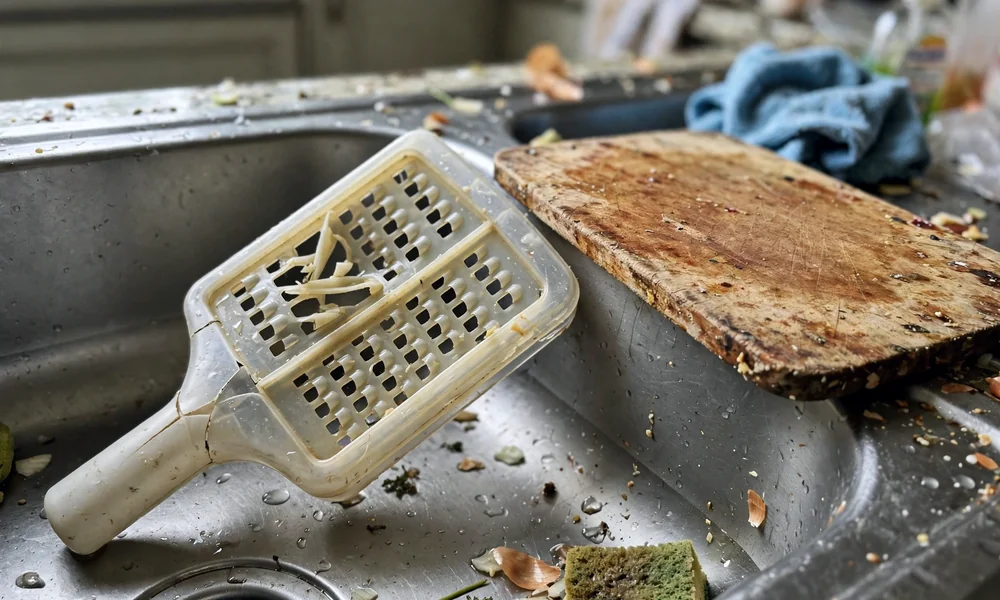
Cheap plastic graters are the worst of the lot. The teeth are moulded into the plastic rather than cut from steel, so they blunt within weeks and cannot be sharpened. The body cracks along the handle, stains orange from cheddar and turmeric, and holds the smell of old cheese no matter how many times you wash it. Hot water warps the frame, the dishwasher finishes the job, and within a year the grater is in the bin. A plastic grater might cost very little, but it costs that little several times over, because you keep replacing it.
The Verdict: Best vs Worst Side by Side
Put the two sides together and the gap is clear. The best graters cut with a light touch, stay put on the board, and clean up in under a minute. The worst clog, slide, and blunt within weeks, turning a ten-second job into a five-minute struggle. The difference is not about luxury or brand names; it is about steel, weight, and design. A mid-priced stainless steel box grater with a rubber base beats a drawer full of cheap plastic graters every single time, and it will still be working when the cheap ones have been thrown away. Spend a little more once, and you stop buying graters altogether.
Who Each Grater Is For
Daily cooks who grate cheese several times a week should buy a sturdy four-sided box grater in stainless steel, with a rubber base and a comfortable top handle. It covers every job from coarse shreds to fine zest, and it will last for years. Occasional cooks who mostly grate parmesan over pasta will be happier with a fine microplane-style grater, which is light, precise, and easy to store in a drawer. People with arthritis or weak grip should look at a rotary grater, where a crank does the work and the fingers stay far from the blades. Small kitchens benefit from a flat handheld grater that slides into a drawer. Nobody benefits from a thin plastic grater, whatever the price: it is the one type that is worse than having no grater at all.
How to Use and Care for Your Grater
Use the right side for the job: coarse for melting cheese, fine for baking, and the rasp for hard cheese and zest. Grate cold cheese straight from the fridge, since warm cheese smears and clogs the teeth. Hold the grater firmly and use long, even strokes rather than short, hard ones, and stop when the piece gets small enough to threaten your fingers; the last stub is not worth a cut. Clean the grater straight away under running water, brushing across the teeth from the back, and dry it before putting it away so the steel never rusts. Store box graters with a cover over the teeth or standing on their base, and keep handheld graters in a drawer sleeve so the teeth stay sharp and your hands stay safe.
A good cheese grater is a quiet little victory: it makes everyday cooking faster, safer, and less messy, and it asks for almost nothing in return. Choose steel over plastic, weight over lightness, and sharp teeth over a low price, and the grater you buy this year will still be grating cleanly when the next one would already be in the bin.


