
Pizza is the rare food that almost everyone loves and almost everyone argues about. A great pizza is greater than the sum of its parts: a crust that is crisp underneath and soft inside, sauce that tastes like tomatoes rather than sugar, cheese that melts into long pulls, and toppings that actually taste of something. A bad pizza is the opposite, and it is depressingly easy to find: a pale, floppy base, a thin smear of sweet sauce, rubbery cheese that goes cold in minutes, and toppings that slide off in one sad clump.
This comparison puts the best pizzas of 2026 head to head against the worst, judging them the way you would actually eat them: the first bite straight from the box, the third slice when the novelty has worn off, and the cold slice the next morning, which is the most honest test of all. The same honest testing sits behind our comparison of the best and worst olive oils of 2026, because a drizzle of good oil is often the difference between a pizza that tastes finished and one that tastes flat.
Key Takeaways
- The crust decides everything: a pizza with a great crust can survive average toppings, but no topping can rescue a bad crust.
- Heat is the secret ingredient: the best pizzas are cooked fast and very hot, which is why a proper oven matters more than a fancy topping list.
- Less sauce, better sauce: a thin layer of bright, simple tomato sauce beats a thick layer of sweet, salty paste every single time.
- Cheese should stretch, not bounce: real mozzarella pulls into strings and melts evenly, while processed cheese goes rubbery as soon as it cools.
- The cold slice test never lies: a good pizza is still good the next morning, while a bad one turns into cardboard with cheese on top.
What Makes a Pizza Great
A great pizza starts long before the toppings go on. The dough needs time, ideally a slow overnight ferment that builds flavour and makes the crust easier to digest. Flour, water, salt and yeast are the whole recipe, and that simplicity is the point: there is nowhere to hide. A dough that has been rushed tastes of nothing and bakes up pale and bready, while a dough that has had time develops a gentle sourness and blisters beautifully in a hot oven.
The bake is where most pizzas are won or lost. A proper pizza oven runs far hotter than a home oven, often above 400 degrees, and cooks a pizza in two to four minutes. That fierce heat does two things at once: it puffs the rim of the crust into an airy, charred edge and it sets the base so it stays crisp under the weight of the toppings. A pizza baked slowly at a low temperature never gets that contrast, which is why so many home and chain pizzas arrive soft all the way through, with a base that flops when you pick up a slice.

Balance is the third pillar, and it is the one most pizzerias get wrong. A great pizza is not a pile of stuff on bread. The sauce, cheese and toppings should each be visible and each be tasted, and none of them should drown the others. When a pizza arrives with cheese piled an inch thick and toppings you cannot identify, that is not generosity. That is a kitchen hiding a weak crust and a dull sauce under a mountain of melted fat.
The Best Pizzas of 2026
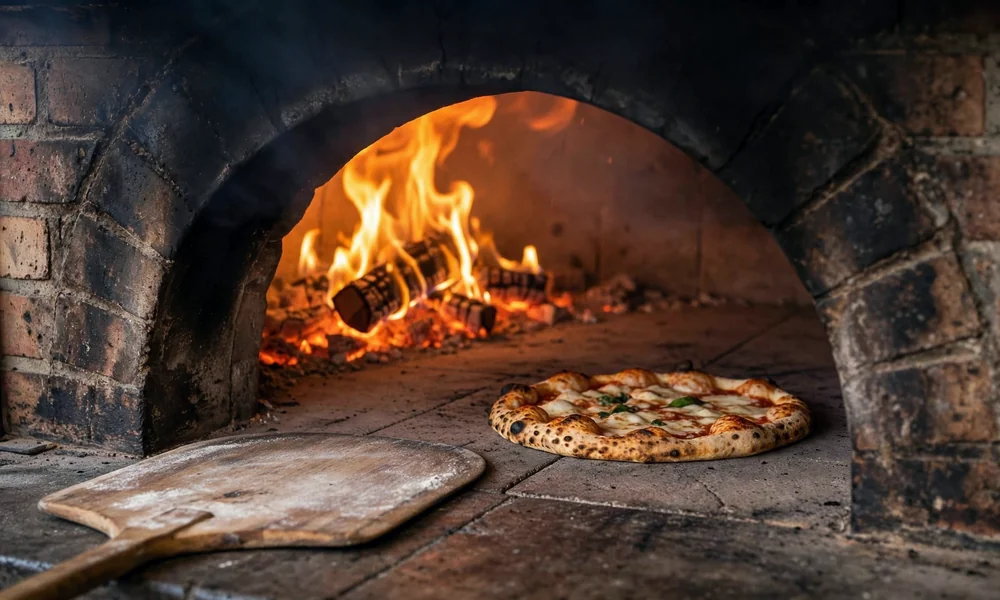
The best pizzas of 2026 share a style, even when they come from very different traditions. The Neapolitan pizza remains the benchmark: a soft, thin centre, a puffy charred rim, San Marzano-style tomatoes, fresh mozzarella and basil. Eaten within minutes of leaving the oven, it is almost impossibly light, and the crust tastes of wheat and wood smoke rather than of bread. It is not a pizza for taking home in a box and eating an hour later, and it does not pretend to be.
New York style is the great everyday rival, and it deserves its place. A thin, foldable slice with a crisp underside, a tangy tomato sauce and low-moisture mozzarella that browns in spots, it is pizza built for eating on the move. The best New York slices have a base that holds its shape when folded, a rim that snaps rather than bends, and a sauce with enough acidity to cut through the cheese. The worst imitations are greasy, floppy and drowned in oil, and they leave your hands shining after a single slice.
Detroit style has quietly become one of the best pizzas you can buy in 2026. Baked in a rectangular steel pan, it has a thick, airy crumb, a caramelised cheese edge where the cheese meets the pan, and sauce ladled on top in stripes rather than spread underneath. It is rich and filling, and it reheats better than almost any other style, which makes it the best choice for a family night when the pizza has to survive the journey home.
Wood-fired restaurant pizzas, made with real dough and a real oven, are the safest bet when you are eating out. Look for a menu that lists a small number of pizzas rather than forty, a dough that is made in house, and a kitchen that is not afraid to show a little char on the crust. Those are the signs of a place that cares about the base, and the base is where the quality lives. The same care shows up in our comparison of the best and worst chocolate of 2026, where the best makers also keep their ingredient lists short and their process slow.
The Worst Pizzas of 2026
The worst pizzas of 2026 are not hard to find, and they fail in the same few ways. The most common failure is the soggy middle: a base that was never baked hot enough, loaded with wet toppings, and served in a closed box where the steam turned it to mush. By the time it reaches your table, the centre is a damp sponge and the toppings slide off in a single sheet. No amount of chilli flakes can fix that.

Processed cheese is the third great failure. Real mozzarella stretches, browns and tastes creamy; processed cheese blends go shiny and rubbery, and they set into a plastic sheet within minutes of leaving the oven. If your pizza cheese bounces when you poke it, or peels off in one piece like a sticker, you are eating a cheese product rather than cheese, and the pizza will be cold and disappointing before you finish the second slice.
Overloading is the final sin. A pizza buried under a dozen toppings is a pizza that cannot cook properly: the toppings steam instead of roasting, the base never crisps, and every bite tastes the same muddled mess. The worst offenders pile on processed meats, canned vegetables and extra cheese in a race to look generous, and the result is a heavy, salty slab that sits in your stomach for hours. Restraint is a sign of confidence, and the best pizzerias show it.
Crust, Cheese and Sauce, Ranked
If you judge a pizza by its parts, the ranking is clear. For crust, wood-fired Neapolitan and Detroit style lead, followed by a good New York slice, with thick chain crusts and stuffed crusts trailing far behind. Stuffed crust sounds like a treat and eats like a gimmick: a ring of processed cheese wrapped in dough that distracts from a base that was never good enough on its own.
For cheese, fresh mozzarella and low-moisture whole-milk mozzarella are the best, followed by a light scattering of parmesan or pecorino for salt. Blends of processed cheese, cheese sauce and so-called pizza cheese sit at the bottom, because they are built for shelf life and melting on camera rather than for flavour. A pizza with less cheese of better quality beats a pizza drowned in the cheap stuff every time.
Frozen, Delivery and Restaurant: Which Wins
Restaurant pizza wins on quality, delivery wins on convenience, and frozen wins on price, but the gaps are smaller than they used to be. A good restaurant pizza, eaten fresh, is still the best pizza you can have, and it is worth the trip. A good delivery pizza from a place that makes its own dough is a close second, especially if you eat it within twenty minutes and reheat the leftovers in a hot oven rather than a microwave.
Frozen pizza is the category that has improved most. The best frozen pizzas now use real dough and real cheese, and they cost a fraction of delivery. The worst frozen pizzas remain the worst pizzas of all: pale, limp and joyless, with a crust that tastes of cardboard and a topping layer so thin you can see the base through it. The difference is visible before you even cook it, so read the box: short ingredient lists and real mozzarella are good signs, while long lists of stabilisers and cheese substitutes are not.
How to Spot a Great Pizza Before You Order
You can judge a pizzeria before the food arrives. A short menu is a good sign, because it means the kitchen does a few things well instead of many things badly. Dough made in house, a wood-fired or deck oven, and toppings that are prepped fresh each day are the other signs to look for. If a menu offers fifty pizzas, a stuffed crust, a barbecue base and a dessert pizza, it is a factory, not a pizzeria, and the pizza will taste like it.
Finally, trust the slice test. Pick up a slice by the crust and hold it out flat: a good slice stays firm and level, with the tip drooping only slightly. If it folds in half under its own weight, the base was underbaked. If the cheese slides off in a sheet, the cheese was poor quality. And if the underside is pale and soft, the oven was not hot enough. These are small tests, but they are honest ones, and they work on every pizza from a street slice to a fine dining pie.
Verdict
The best pizzas of 2026 are the ones that respect the basics: slow dough, fierce heat, bright sauce and real cheese, with toppings chosen for flavour rather than for show. Neapolitan for lightness, New York for the everyday slice, Detroit for comfort and reheating, and a good wood-fired restaurant pizza whenever you can get one. The worst pizzas are the ones that cut corners on the base and hide it under sugar, processed cheese and a mountain of toppings.
When you order next, choose the place with the short menu and the hot oven, eat the first slice while it is still too hot, and save one for the cold test in the morning. A great pizza earns its praise twice, and the worst ones never get a second chance. For afters, our comparison of the best and worst tea of 2026 is a good place to look, because a proper pot of tea is the quiet ending a good pizza night deserves.


