
Why the Right Olives Make Every Board Better in 2026
The right olives make every board better, and the wrong ones can spoil it. A good olive is firm, fruity and just salty enough, standing up to cheese and cured meat without overpowering them. A bad olive is soft, bland and swimming in cheap oil, or so salty it drowns everything else on the plate. The best olives of 2026 are not the most expensive: they are the ones that match the board, the salad or the pan.
This guide explains what olives are, how the main types differ, and how to choose between them: green, Kalamata, Castelvetrano and black olives, brined versus oil-cured, pitted versus whole, building a board, cooking with olives, and storing a jar so the last olive tastes as good as the first.
Key takeaways
- Castelvetrano olives are the mildest and buttery, the safest choice for a board where guests may not love strong olives.
- Kalamata olives are the most flavourful: dark, fruity and winey, for Greek salads, pasta and pizzas.
- Green olives are the firmest and saltiest, with a bright, almost citrusy bite for martinis and snacking.
- Brined olives are juicy and clean-tasting; oil-cured olives are wrinkled, intense and meaty.
- Buy whole olives when you can: they stay firmer and fresher than pitted ones, which lose flavour to the brine.
What olives actually are
Olives are the fruit of the olive tree, and one of the few fruits that cannot be eaten straight from the tree. Fresh olives are intensely bitter, full of a compound called oleuropein, and only become edible after curing: soaking in brine, dry salt or lye, then rinsing and packing in brine or oil. Curing turns a bitter fruit into the salty olive on your board, and the method shapes flavour as much as the variety does.
Colour is about ripeness, not variety. Green olives are picked unripe, while still firm and grassy. Black olives are picked fully ripe, when soft and mellow. Kalamata olives sit in between, picked as they turn from green to purple-black, which is why they are dark, plump and fruity. The same tree can produce green or black olives, depending on when the fruit is picked.
The main types, compared
Most olives on a supermarket shelf fall into four types, and they are not interchangeable. Green olives are firm and bright, Kalamata are dark and fruity, Castelvetrano are mild and buttery, and black olives are soft and gentle. Knowing which is which is the whole skill of buying olives.
| Type | Flavour | Texture | Saltiness | Best use |
|---|---|---|---|---|
| Green | Bright, grassy | Firm | High | Snacking, martinis, salads |
| Kalamata | Fruity, winey | Plump, tender | Medium | Greek salad, pasta, pizza |
| Castelvetrano | Mild, buttery | Crisp, meaty | Low | Boards, snacking, beginners |
| Black | Mellow, mild | Soft | Low-medium | Pizza, pasta, tapenade |
| Oil-cured | Intense, bitter | Wrinkled, chewy | Medium | Tapenade, pasta, cheese |
| Stuffed | Varies | Firm | High | Boards, martinis, snacking |
Green: firm and bright
Green olives are picked before they ripen, which is why they are firm, bright and sharply salty, with a grassy, almost citrusy bite. The best-known are Manzanilla from Spain, small and crisp, and the larger Gordal, meatier and milder. Green olives are the classic snacking olive and the traditional martini olive, and they hold their shape in salads and cooked dishes better than any other type.
Kalamata: dark and fruity
Kalamata olives come from Greece, and they are the most distinctive olive most people will taste: dark purple, plump and almond-shaped, with a fruity, winey flavour and a soft, tender bite. They are cured in brine with a little red wine vinegar, which gives them their characteristic tang. They are the natural choice for a Greek salad, and equally good on pizza, in pasta and in tapenade. If a recipe simply says olives, Kalamata is usually right.
Castelvetrano: mild and buttery
Castelvetrano olives come from Sicily, and they are the mildest olive on the shelf: bright green, crisp and almost buttery, with a gentle, sweet flavour and very little bitterness. They are the best olive for people who think they do not like olives, and the safest choice for a board where you do not know your guests’ tastes. They are also the prettiest olive, which is why they turn up on cheese boards. Buy them unpitted if you can: they stay crisper that way.
Black: soft and mellow
Black olives are picked fully ripe, which makes them soft, mild and almost sweet, with very little of the sharpness of green olives. The black olives in tins are usually a mild, canned style, while those in jars and at deli counters are often oil-cured or brine-cured, with far more flavour. Black olives are at their best in cooked dishes, where their softness is an advantage: on pizza, in pasta sauces, and in tapenade, where they blend into a smooth, savoury paste.
Brined versus oil-cured: which to buy
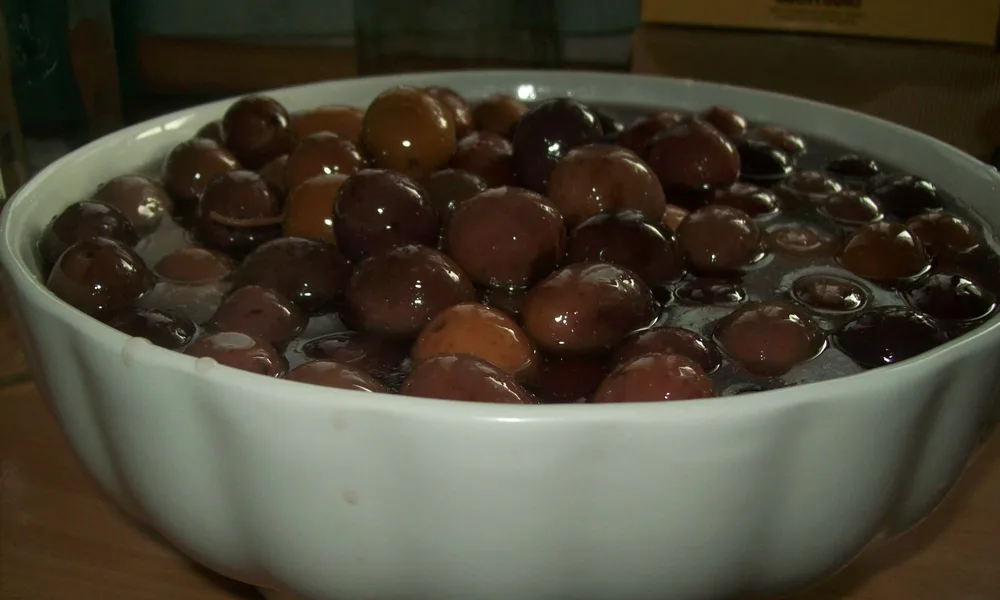
The curing method decides the character of an olive almost as much as the variety does. Brined olives are soaked in salt water, which keeps them plump, juicy and clean-tasting, with a bright saltiness and a firm bite. Most olives in jars are brined, and they are the most versatile: good for snacking, salads and cooking alike. Oil-cured olives are packed in dry salt, then rinsed and stored in oil, which makes them wrinkled, chewy and intensely flavoured, almost meaty, with a bitter edge some people love and others find too strong.
For a board, brined olives are safer, because their clean flavour suits cheese and cured meat. For cooking, either works, but oil-cured olives bring more depth to a pasta sauce or a tapenade. Whichever you buy, taste one before serving: a brine that is too salty can be rinsed off, but a soft or mushy olive cannot be saved.
Pitted versus whole: does it matter
It matters more than most people think. Whole olives stay firmer and taste fresher, because the pit protects the flesh from the brine. Pitted olives are more convenient, especially on a board or in a salad, but the hole lets brine in, which makes them softer and saltier, and they lose flavour faster once the jar is open. Stuffed olives are pitted by definition, and worth it when the stuffing adds something: garlic, almond, blue cheese or chilli.
The practical rule: buy whole olives when the olive is the point, as on a board or as a snack, and pitted when it is an ingredient, as in a salad or a pasta sauce. If you buy whole olives for a board, put a small dish out for the pits.
Olives on a board: how to build it
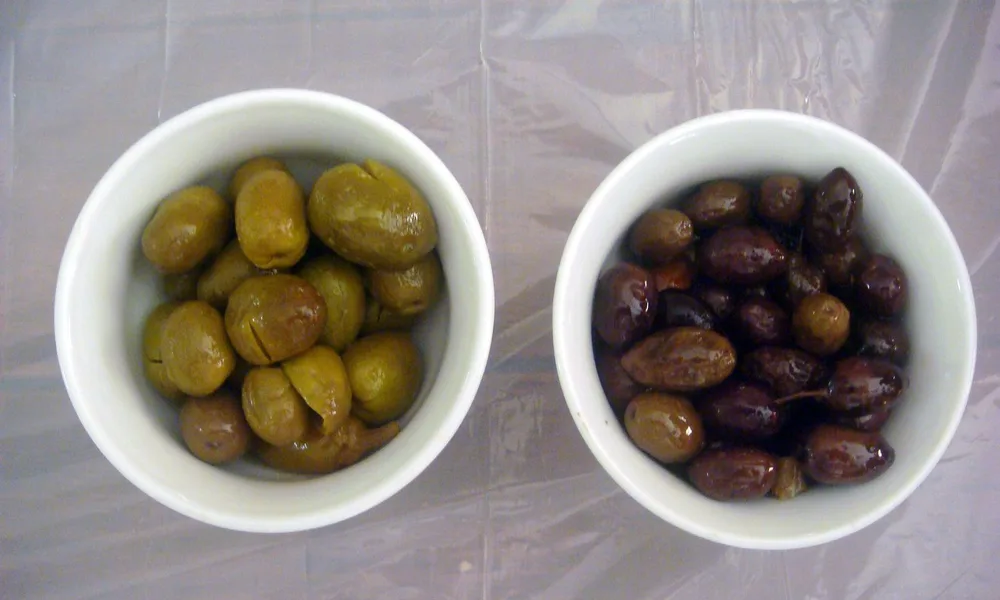
A good board needs olives that contrast with everything else on it, not olives that disappear. The safest board has two types: a mild one, usually Castelvetrano, and a strong one, usually Kalamata or an oil-cured black olive. Put each type in its own small bowl, so the brine does not run into the cheese, and give each bowl its own spoon. A single bowl of mixed olives looks generous, but the flavours blur and the mild ones taste salty by association.
Quantity matters too. A board for four needs about a cup of olives in total, not a mountain: olives are a salty accent, not a main course. Set them near the cheese rather than near the bread, because their saltiness makes cheese taste richer. Add something fresh nearby, like grapes or sliced apple, to clean the palate between olives.
Olives in salads and cooking
Olives earn their place in cooking because they bring salt, fat and a fruity bitterness no other ingredient quite matches. In a Greek salad they are essential: Kalamata olives with tomato, cucumber, red onion and feta needs nothing else. In pasta they add depth to tomato sauces and a salty counterpoint to rich ones. On pizza they are one of the few toppings that survive the heat without drying out.
Add olives late when cooking. A long simmer makes them soft and dulls their flavour, while adding them in the last few minutes keeps them firm and bright. Rinse very salty olives before cooking, and taste before adding extra salt: the olives have already seasoned the dish. For tapenade, black olives are the classic choice, blitzed with capers, garlic and olive oil into a spread that keeps for a week in the fridge.
How to store olives so they keep their flavour
Once opened, olives belong in the fridge, covered in their brine or oil. The liquid keeps them from drying out and going soft, so never drain a jar and put dry olives back in the fridge. In the fridge, an open jar keeps for about two to three weeks, though oil-cured olives last a little longer. Keep the jar sealed and use a clean spoon: crumbs and dirty fingers are what make a jar go off first.
If the brine looks cloudy or the olives smell sharp and vinegary in a bad way, they have turned: throw them out. A thin white film on the surface is usually harmless yeast, which can be skimmed off, but if unsure, do not risk it. Buy the size you will finish: a small jar finished in a fortnight always tastes better than a large one finished in two months.
Checklist: buying olives in 2026
- The type matches the job: Castelvetrano for boards, Kalamata for Greek salad and pasta, green for snacking, black for pizza and tapenade.
- The olives are firm and plump, not soft, shrivelled or mushy, and the brine is clear, not cloudy.
- Whole olives for the board, pitted olives for salads and cooking, stuffed olives only when the stuffing adds flavour.
- Brined for a clean, juicy flavour; oil-cured for an intense, meaty one.
- The jar is in date, the seal is intact, and the size matches how fast your household finishes it.
- Once opened, the jar lives in the fridge, olives covered in brine or oil, with a clean spoon.
Frequently asked questions
Are olives healthy?
Mostly yes. Olives are rich in the same monounsaturated fats as olive oil, and a small handful is a satisfying snack. The catch is salt: brined olives are salty, so a handful is enough, and rinsing cuts the salt further.
What is the difference between Kalamata and black olives?
Kalamata olives are a specific Greek variety, dark purple, plump and fruity, cured in brine with wine vinegar. Black olives are any ripe olive, and the tinned kind are much milder and softer.
Do olives need to be refrigerated after opening?
Yes. An open jar keeps for about two to three weeks in the fridge, covered in brine or oil. Unopened jars are fine in a cool cupboard for months.
Can you eat olives straight from the tree?
No. Fresh olives are intensely bitter and inedible until cured in brine, salt or lye, which removes the bitterness and makes them safe to eat.
Why are my olives too salty?
They were packed in strong brine. Rinse them under cold water and soak for ten minutes, then taste again. Low-salt or Castelvetrano olives help next time.
Which olives are best for a cheese board?
Castelvetrano for mildness and colour, plus Kalamata for flavour. Two types in separate bowls, about a cup in total for four people, set near the cheese.
The bottom line
The right olives make every board better because they bring salt, fruit and texture nothing else on the board provides. Keep Castelvetrano for guests and boards, Kalamata for Greek salad and pasta, green olives for snacking, and black olives for pizza and tapenade. Buy whole when the olive is the point, keep them covered in brine in the fridge, and finish the jar while they are firm.
For more on the food olives go with, see our guide to the best and worst salads of 2026, our comparison of the best and worst pizzas of 2026, and our guide to the best and worst cheeses of 2026.


