
Why a Good Serving Platter Makes Hosting Easier in 2026
A good serving platter is the piece of tableware that quietly does the most work at any gathering. The roast, the grilled fish, the sliced bread, the cheese and fruit — all of it needs somewhere to sit where guests can see it, reach it, and help themselves without the host carving or plating every portion. A serving platter gives food a stage: it keeps the table organised, it makes even a simple meal look considered, and it lets the host step back and enjoy the evening instead of running between the kitchen and the table.
This guide covers what to look for in serving platters in 2026: the shapes and sizes that suit real meals, the materials that hold up best, and the details that separate a platter you reach for every week from one that lives at the back of a cupboard.
Key takeaways
- One large flat platter beats several small plates: it holds a whole roast or spread in one place and keeps the table tidy.
- Buy for the food you actually serve: a 40-centimetre oval suits a roast, while a long rectangular platter suits grilled fish and sharing boards.
- Ceramic and stoneware are the most versatile materials, suiting almost any meal; wood brings warmth, and marble brings drama to cold food.
- A platter with a small rim is more useful than a dead-flat one: it keeps juices and dressings where they belong.
- Flat platters stack and store easily, so a good one earns its space — unlike single-purpose dishes that are used twice a year.
What a serving platter actually does
A serving platter is a large, flat dish designed to hold food at the centre of the table so everyone can serve themselves. The flat surface shows the food off — a roast with its vegetables arranged around it, a whole fish with lemon and herbs, a spread of cheeses and bread — while the size means the host puts the dish down once instead of carrying out plate after plate. The platter is the difference between a meal that is served and a meal that is shared.
The difference between a platter and a serving tray is what it is for. A tray carries food from one place to another; a platter stays on the table and presents it. A tray needs handles and a high rim so nothing slides off in transit, while a platter needs a generous flat surface and a low rim so guests can reach across it easily. For carrying drinks and dishes to the table, see our guide to serving trays that make hosting easier — but once the food is on the table, the platter takes over.
There is also a practical benefit that hosts notice quickly. A platter keeps the table organised by giving each dish a defined home, which means fewer bowls and plates cluttering the surface and more room for glasses and conversation. It also slows the meal down in a good way: guests serve themselves at their own pace, take seconds when they want them, and the host is not stuck in the kitchen plating.
The main shapes and sizes, compared
Serving platters come in a handful of shapes, each suiting a different kind of food. The large oval is the most useful all-rounder, because it fits roasts, whole fish, and sliced meats. Round platters suit cakes, tarts, and cheese boards. Long rectangular platters suit grilled fish, sharing boards, and buffet lines, and small platters suit side dishes and desserts.
| Shape | Best for | Typical size | Watch out for |
|---|---|---|---|
| Large oval | Roasts, whole fish, sliced meat | 40–45 cm long | Needs a big table and a big cupboard |
| Round | Cheese boards, tarts, cakes | 30–35 cm diameter | Wastes space with long food like fish |
| Long rectangular | Grilled fish, sharing boards, buffets | 45–55 cm long | Hard to store, can dominate a small table |
| Small oval or round | Side dishes, desserts, starters | 25–30 cm | Too small for a main course |
| Sectioned platter | Dips, nibbles, mixed starters | 30–40 cm | Dividers limit how food can be arranged |
Size: the decision that matters most
Size is the one thing you cannot fix after buying. A platter that is too small forces the host to pile food up or split it across two dishes, which defeats the purpose. A platter that is too big overwhelms a small table and makes a modest meal look lost in the middle of it. The rule is simple: measure the food you serve most often, then add about 5 centimetres around it for garnish and serving space.
For a family roast, a 40-centimetre oval is the sweet spot: it holds a chicken or a joint with vegetables arranged around the edge, and it fits a standard dining table with room for plates and glasses. For larger gatherings, a 45-centimetre platter or a second matching platter works better than one enormous one, because two platters can sit at opposite ends of the table so guests on both sides can reach the food. For buffet-style hosting, long rectangular platters line up neatly and let guests move along the table.
Think about the table, not just the food
Before buying, measure the table as well as the food. A platter needs its own space plus room for serving spoons and for hands reaching across, so allow at least 10 centimetres of clear table around it. If the table is small, a round platter wastes less space than a long one, and a platter with a slightly raised rim can sit closer to the table edge without anything sliding off.
Materials: what holds up best
Ceramic and stoneware are the classic choices and still the most versatile. They suit hot and cold food, they look right on almost any table, and they go from oven to table in many cases, which saves washing up. Their weakness is breakage and weight: a large stoneware platter is heavy when loaded, and a dropped one chips or cracks. Glass is similarly elegant and shows off the table underneath, but it shows fingerprints and can be slippery when wet.
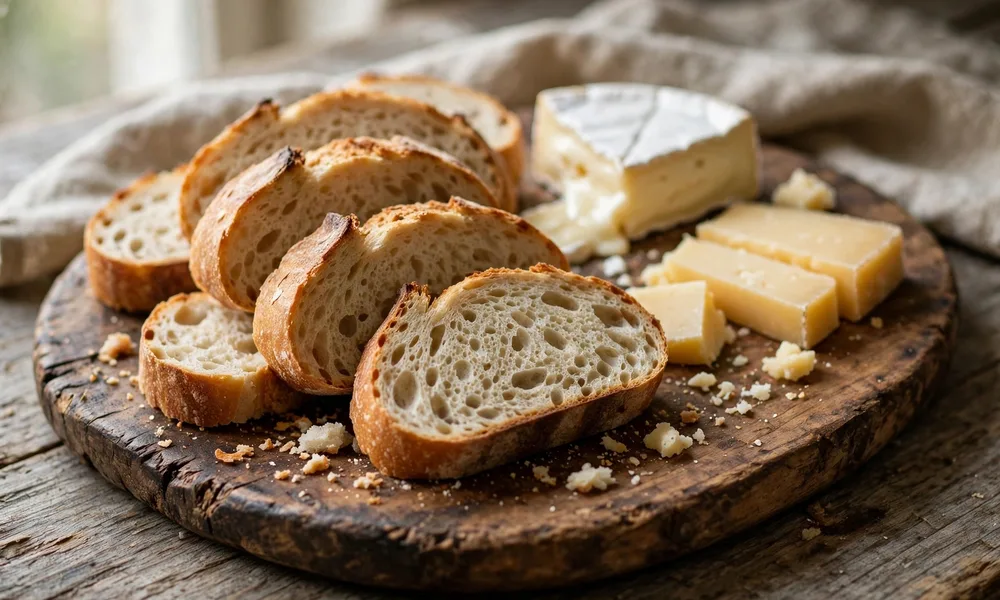
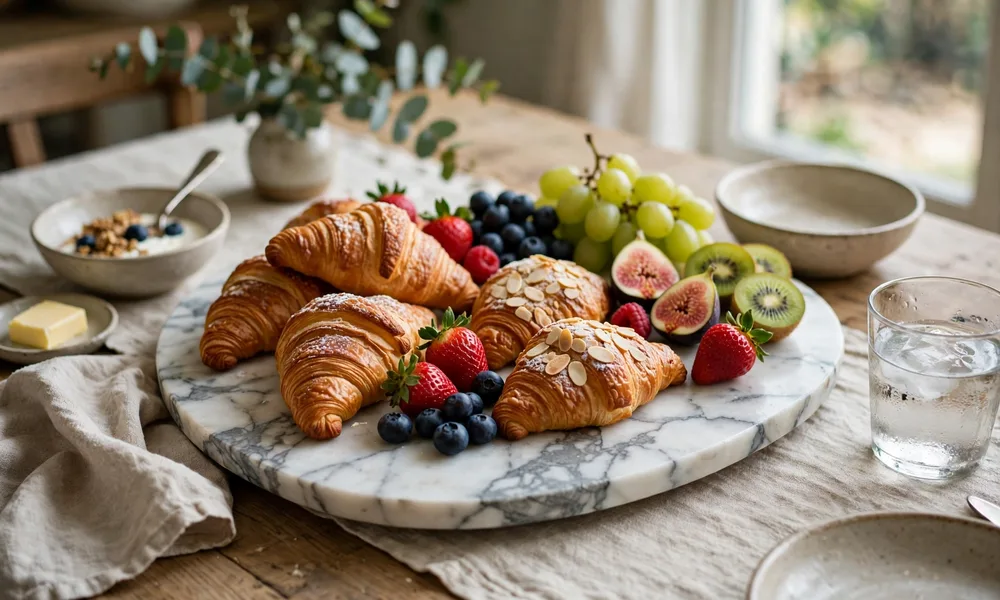
Wood brings warmth that no other material matches, and it suits bread, cheese, and charcuterie beautifully. It needs occasional oiling and should not be left soaking or used for very juicy food, because it stains. Marble and slate look dramatic and keep cold food cool, which makes them ideal for cheese, fruit, and desserts, but they are heavy, they stain with oil and wine, and they are too cold for hot food. Melamine is the practical pick for outdoor hosting: light, unbreakable, and easy to clean, even if it never looks quite as special as ceramic.
Matching the platter to the meal
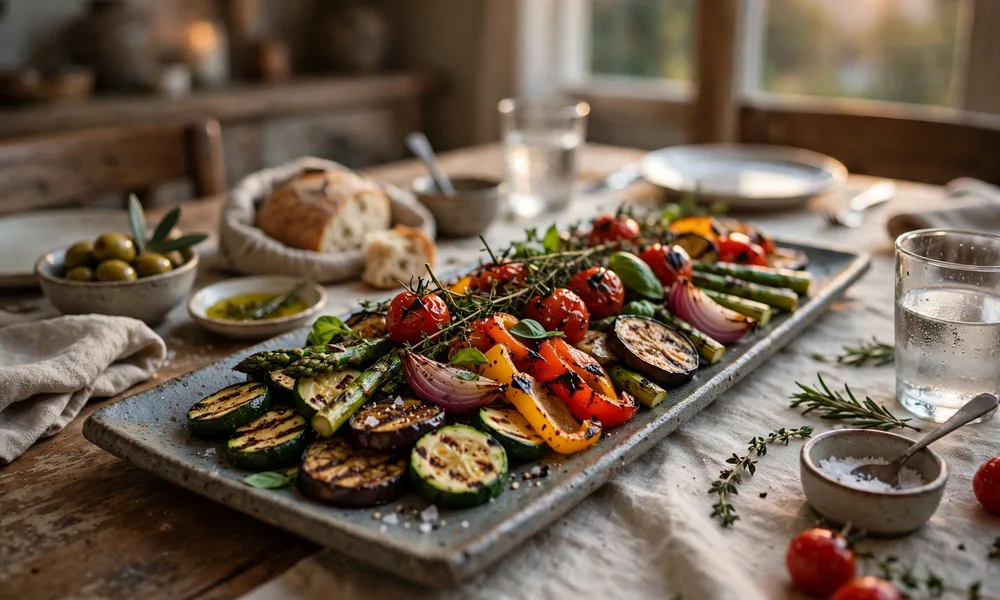
A roast dinner calls for the large oval in ceramic or stoneware, with a small rim to catch juices and enough flat space for the meat and vegetables to sit side by side rather than piled up. A summer lunch suits a long rectangular platter in wood or melamine, laid out as a sharing board with grilled vegetables, bread, and dips. A cheese course wants a round wooden or slate platter, where the cheeses can be arranged with fruit and crackers around them.
For salads and side dishes, a wide shallow bowl often works better than a flat platter, because it contains leaves and dressing — see our guide to salad bowls that serve a crowd for that job. And for family dinners where several dishes share the table, a serving bowl alongside the platter covers vegetables and sauces while the platter holds the main dish. The three pieces together — platter, bowl, and salad bowl — cover almost every meal a host will ever serve.
Care and storage
Most ceramic and stoneware platters are dishwasher safe, but hand washing is kinder to hand-painted decoration and gilded rims, which can fade in a hot dishwasher. Wooden platters should be wiped with a damp cloth and dried at once, then oiled occasionally with food-safe oil so they do not dry out and crack. Marble and slate need wiping up promptly after oil, wine, or citrus, because all three can stain the surface.
Storage is where platters earn their keep over other serving dishes: flat shapes stack neatly, so two or three platters take up little more cupboard space than one. Keep a sheet of paper or a tea towel between stacked platters so they do not scratch each other, and store the largest platter at the bottom of the stack. A platter that is easy to reach is a platter that gets used; one buried behind a pile of roasting tins will stay buried.
Checklist: before you buy a serving platter
- Measure your main dish: add 5 centimetres around it for garnish and serving space, and buy that size.
- Check the rim: a low rim of 2 to 3 centimetres catches juices without getting in the way of serving.
- Lift it loaded: a large stoneware platter gets heavy with food on it, so make sure you can carry it comfortably.
- Match the material to the meal: ceramic for roasts, wood for cheese and bread, marble for cold food, melamine for outdoors.
- Check it stacks: flat platters that stack neatly will be stored properly and used far more often.
- Think about the table: allow 10 centimetres of clear space around the platter for serving spoons and reaching hands.
Frequently asked questions
What size serving platter do I need for a roast?
A 40-centimetre oval suits most family roasts, holding a chicken or a joint with vegetables around it. For more than eight guests, use a 45-centimetre platter or two matching platters at opposite ends of the table.
What is the best material for a serving platter?
Ceramic and stoneware are the best all-rounders for hot and cold food. Wood suits cheese and bread, marble suits cold food and desserts, and melamine is the safest choice for outdoor hosting.
Can serving platters go in the oven?
Many stoneware and ceramic platters are oven safe, but always check the maker’s guidance first — and never put wood, marble, slate, or melamine in the oven.
How is a platter different from a tray?
A tray is for carrying food from place to place, with handles and a high rim. A platter stays on the table to present food, with a large flat surface and a low rim so guests can reach across it.
How do I stop food sliding off a flat platter?
Choose a platter with a low rim of 2 to 3 centimetres, arrange food with the heaviest items in the centre, and place the platter on a flat part of the table rather than on a tablecloth fold.
How should I store serving platters?
Stack them flat with a sheet of paper or a tea towel between each one to prevent scratches, largest at the bottom, somewhere easy to reach so they actually get used.
The bottom line
The best serving platter for most hosts in 2026 is a 40-centimetre oval in ceramic or stoneware, with a low rim, a flat surface, and a shape that stacks neatly in the cupboard. It holds a whole roast, it suits almost any meal, and it turns serving into sharing. Buy for the food you actually cook and the table you actually own, and the platter will make every gathering that little bit easier.


