
What Is the Best Serving Bowl for Family Dinners in 2026?
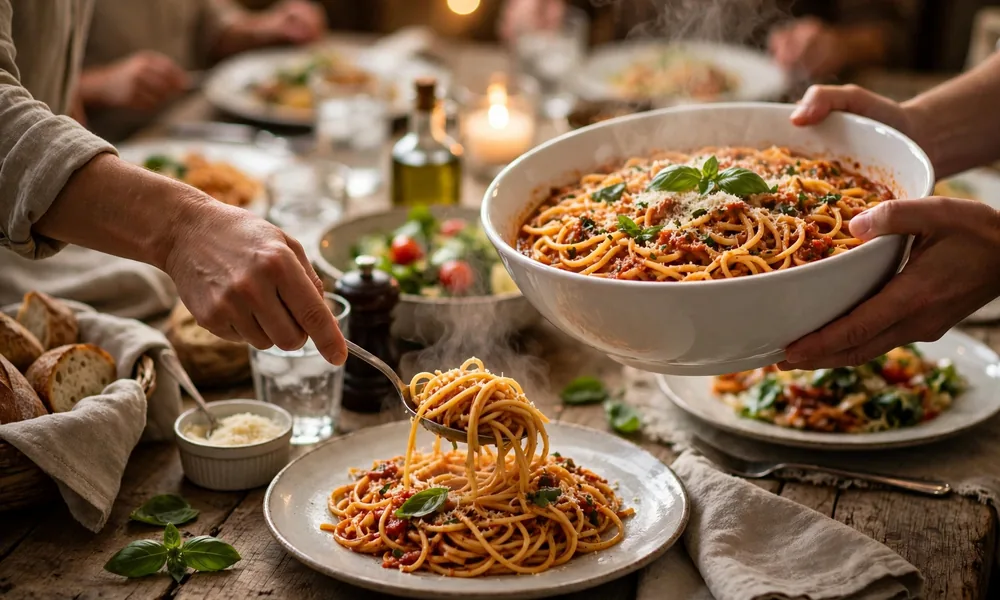
The best serving bowl for family dinners in 2026 makes passing food around the table feel easy. It should be big enough for a proper family portion, light enough to lift with one hand, wide enough to serve from without spilling, and sturdy enough to survive years of weeknights and Sunday roasts. A good bowl turns dinner into a shared moment; a bad one drips on the tablecloth, chips on the rim, or is too heavy to pass.
Serving bowls are easy to overlook because they do not cook anything — they simply hold food and look good doing it. But that simplicity hides real differences: too deep is hard to serve from, too shallow spills, a narrow base tips over, and the wrong material cracks, stains, or burns hands. Get the choice right and the bowl disappears into the meal, which is exactly what it should do.
Key takeaways
- Stoneware is the best all-round material: durable, heat-retaining, and good-looking at any table.
- A 2.5 to 3-litre bowl serves four to six people, the most common family dinner size.
- Wide, shallow bowls are easiest to serve from; deep, narrow bowls suit soups and stews.
- Look for a stable, flat base and a rim you can grip comfortably with oven gloves.
- Own two or three serving bowls in different sizes rather than one giant one.
Why the right serving bowl matters
Family dinner works best when the food is in the middle of the table and everyone serves themselves: faster than plating in the kitchen, freer for portions, and more relaxed. The serving bowl makes that possible. When it works, nobody notices it. When it does not — too small, too hot to touch, too tippy to trust — the whole meal feels awkward.
The bowl also sets the tone of the table. A generous, well-made bowl makes a simple weeknight supper feel like an occasion, while a chipped or stained one does the opposite. You do not need an expensive bowl — just the right size, the right weight, and a shape that suits the food you actually cook.
The main materials
Serving bowls come in five main materials, each changing how the bowl behaves. Stoneware and porcelain are the classics, glass and melamine the practical choices, wood the characterful one. Most families end up with a mix: stoneware for everyday meals, porcelain for occasions, something unbreakable for outdoors.
Stoneware
Stoneware is the best all-round choice for family dinners. It is thick, heavy, and durable, holds heat well so food stays warm through a long meal, and comes in every colour and style, from rustic speckled glazes to clean modern matt finishes. It survives the dishwasher and microwave, does not stain easily, and suits a weeknight table and a Sunday roast alike.
The downsides are weight and chipping: a large bowl full of stew is heavy, and the rim can chip against a tap or another dish. Buy stoneware with a thick, even glaze and a smooth, unglazed foot ring, handle it with normal ceramic care, and it will last for decades.

Porcelain
Porcelain is lighter and more refined than stoneware, with a fine white body and a smooth glaze that resists stains and smells. It is the best choice for formal dinners, because its bright white surface makes colours pop. Good porcelain is surprisingly strong, and most modern pieces are dishwasher and microwave safe.
Porcelain is more expensive and less forgiving of knocks, and a thin bowl can feel too delicate for a boisterous family table. It is best as the second bowl in your collection — the one for guests — while stoneware handles everyday work.
Glass
Glass bowls are practical and honest. You can see the food inside, they do not stain or absorb smells, they are easy to clean, and they are usually the cheapest option. Tempered glass is tougher than it looks and handles hot food well — a good choice for salads, fruit, and desserts, where seeing the layers is part of the pleasure.
The weakness is heat and weight. Glass does not hold warmth like stoneware, so hot food cools faster, and a large glass bowl is heavy and can feel slippery when full. It is the most obvious choice for the fridge: leftovers go straight in, covered, without another container.
Melamine and wood
Melamine is the outdoor and children’s-table choice: light, unbreakable, brightly coloured. It should never go in the microwave or hold very hot food, and it scratches over time, but for picnics and barbecues it is unbeatable. Wood is the opposite: warm and beautiful for salads and bread, but it needs oiling, must never be soaked or dishwashed, and is not suitable for hot, saucy dishes.
Comparison table
| Material | Heat retention | Durability | Weight | Dishwasher | Best for |
|---|---|---|---|---|---|
| Stoneware | Excellent | Very good | Heavy | Yes | Everyday family meals |
| Porcelain | Good | Good | Light | Yes | Formal dinners, presentation |
| Glass | Fair | Good | Heavy | Yes | Salads, desserts, fridge storage |
| Melamine | Poor | Excellent | Very light | Yes | Outdoors, children, picnics |
| Wood | Fair | Good with care | Light | No | Salads, bread, display |
| Enamel | Good | Very good | Light | Yes | Outdoor dining, rustic tables |
How to choose the right size
Size is the decision that matters most, and the one people get wrong most often. Too small means refilling mid-meal and food piled above the rim; too big dominates the table and leaves the food looking lost. A 2.5 to 3-litre bowl serves four to six people, covering most family dinners. A 1.5-litre bowl suits sides and smaller families, while a 4-litre bowl is for gatherings of eight or more.
Shape matters as much as volume. Wide, shallow bowls are easiest to serve from: a spoon reaches the bottom without tipping the bowl, and food spreads out instead of piling up. Deep, narrow bowls suit soups and stews, keeping liquid contained and warm. If you buy one bowl, buy a wide one of about 28 to 30 centimetres across; if you buy three, add a deep one for soups and a small one for sides.
What to look for before you buy
Before you buy, pick the bowl up. It should feel balanced, not top-heavy, and the base should sit flat without rocking. Run your thumb around the rim: smooth, with no rough spots, and thick enough to grip with oven gloves when hot. Check the foot ring — a glazed one slides and can scratch a table, while an unglazed one grips better but can mark polished surfaces, so use a mat if your table is precious.
Check the glaze for pinholes, cracks, or uneven colour — signs of a poorly made piece that will stain or craze. For everyday use, make sure it is dishwasher and microwave safe, and that it stacks with the bowls you already own. A bowl that does not stack eats a whole shelf.
Serving bowls and the rest of the table
A serving bowl never works alone. The food in it usually starts in a mixing bowl, and a good one makes prep easier: wide and stable for tossing salads, deep for batters, nesting for storage. Our guide to the best mixing bowls covers the sizes and materials that work hardest in the kitchen.
The rest of the table matters too: plates and smaller bowls should be in proportion, or a large serving bowl with tiny side plates looks wrong. If you are building a set from scratch, our guide to the best dinnerware sets will help you match everything, and a good set of soup bowls completes the picture for winter meals.
Care and cleaning
Stoneware, porcelain, and glass are the easiest to care for: dishwasher safe, stain resistant, and happy in the microwave. Hand washing is still gentler and worth doing for your best pieces, because dishwasher heat and detergent slowly dull glazes. Wooden bowls need hand washing with mild soap, drying straight away, and a monthly rub with food-safe oil. Never soak wood, and never put it in the dishwasher.
Two habits keep any serving bowl looking new. First, do not stack bowls without a cloth or paper towel between them, or rims chip and glazes scratch. Second, do not leave acidic foods like tomato sauce or citrus in a bowl overnight — they can stain even a good glaze. Rinse after the meal, even if you wash it properly later.
Common mistakes
The most common mistake is buying one enormous bowl and expecting it to do everything. A giant bowl is awkward to lift, hard to store, and wrong for small meals. Three bowls in different sizes — small, medium, and large — cover far more meals than one huge one, and they stack neatly when designed to nest.
The second mistake is choosing looks over weight. A beautiful bowl too heavy to pass around the table stays in the cupboard, while a plain, light one gets used every night. Imagine the bowl full, not empty in the shop: add the weight of the food, and ask whether you would happily carry it to the table with one hand. If not, it is the wrong bowl, however good it looks.

Checklist: buying a serving bowl
- Pick stoneware for everyday meals, porcelain for formal dinners, glass for salads and desserts.
- Choose 2.5 to 3 litres for four to six people, 1.5 for sides, 4 for gatherings.
- Prefer wide, shallow bowls for serving, deep ones for soups and stews.
- Check the base sits flat, the rim is smooth and grippable, and the bowl balances.
- Make sure it is dishwasher and microwave safe, and that it stacks with your existing bowls.
- Buy two or three sizes rather than one giant bowl, so every meal fits.
Frequently asked questions
What size serving bowl do I need for a family of four?
A 2 to 2.5-litre bowl is right for a family of four. Go to 3 litres for large portions or leftovers, and keep a smaller 1.5-litre bowl for sides.
Is stoneware or porcelain better for serving bowls?
Stoneware is better for everyday dinners: tougher, holds heat longer, shrugs off daily use. Porcelain is lighter and more elegant, better for formal meals, but less forgiving of knocks.
Can serving bowls go in the dishwasher and microwave?
Most stoneware, porcelain, glass, and melamine bowls can, but check the label first. Wooden bowls must never go in either, and even dishwasher-safe bowls last longer with occasional hand washing.
What shape serving bowl is easiest to serve from?
A wide, shallow bowl: a spoon reaches the bottom without tipping it, and food spreads out instead of piling up. Deep, narrow bowls suit soups and stews, where containing liquid matters more.
How many serving bowls should I own?
Three is the sweet spot: a large one for mains, a medium one for sides or salads, and a small one for sauces. Add a fourth if you often host eight or more.
How do I stop serving bowls from chipping?
Do not stack them directly — put a cloth or paper towel between bowls. Avoid knocking rims against taps, and store them where they cannot slide around. A bowl that chips repeatedly is better replaced.
The bottom line
The best serving bowl for family dinners in 2026 is a wide, shallow stoneware bowl of 2.5 to 3 litres, with a flat base, a smooth grippable rim, and a glaze that suits your table. Add a deep bowl for soups and a small one for sides. Buy for weight and balance as much as looks, care for the glaze, and the bowl will serve your table for years.


