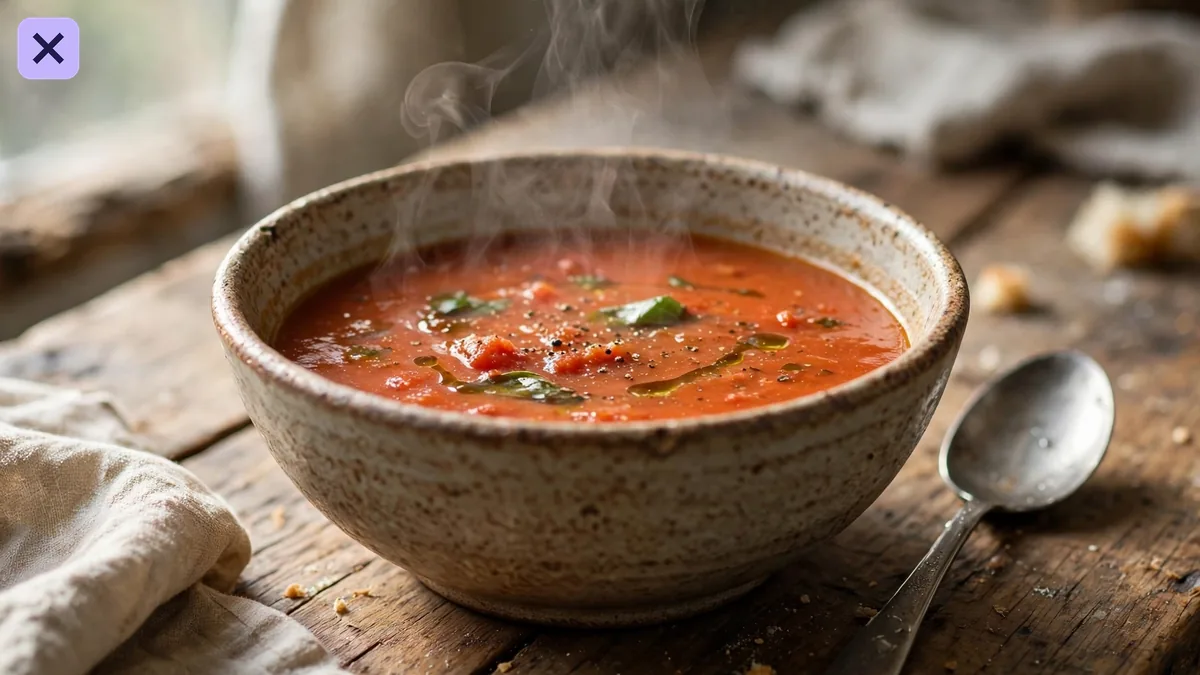
Soup Bowls That Hold the Heat and Look Good in 2026
The best soup bowls of 2026 are the ones that keep soup hot to the last spoonful and still look good on the table. A good soup bowl is sized for a serving, shaped so the soup stays warm, and made from a material that feels good in your hands. A bad one cools the soup in minutes, burns your fingers, or is so wide and shallow that the soup goes cold before you finish it.
Heat is everything when serving soup: a bowl that holds it well turns a simple tomato soup into a meal you linger over; one that does not turns the same soup into a race against the cold. This guide explains what makes a soup bowl genuinely good, how the materials compare, which sizes suit which soups, and how to choose bowls that still look good after years of daily use.
Key Takeaways
- Heat retention matters most: thick stoneware and porcelain keep soup hot far longer than thin glass or metal.
- Size matters next: 500 to 700 millilitres suits most soups, 350 for starters, larger for hearty stews.
- Shape decides how long soup stays hot: a deep bowl with a narrower opening loses heat slowly, while a wide shallow bowl cools fast.
- A bowl you can lift comfortably with both hands is one you will reach for every day.
- Check the practical details first: dishwasher and microwave safety decide whether a beautiful bowl actually gets used, or stays in the cupboard.

What Makes a Good Soup Bowl
A soup bowl does four jobs, and most buyers only think about one. The obvious job is holding soup, but the way it holds it matters. Too small means refills and cold second helpings; too large means the soup spreads thin, cools fast, and looks lost. The right size for a main course is 500 to 700 millilitres. For a starter, 350 is enough, and for a chunky stew or ramen, 800 or more gives the noodles and vegetables room.
The second job is keeping the soup hot. Heat escapes from the surface, so a deep bowl with a narrower opening loses heat far more slowly than a wide, flat one — a deep bowl keeps soup above 60 degrees for roughly twice as long as a shallow one of the same volume. Thick walls help too: heavy stoneware absorbs heat, then gives it back slowly, while a thin bowl lets it pass straight to your hands. The third job is comfort: the outside should feel warm, not hot, and the rim smooth enough to sip from. The fourth is looking good, because a soup bowl sits on the table in front of everyone.
The Five Soup Bowl Materials That Matter
Every soup bowl is made from one of a handful of materials, and the material decides how it holds heat, how it feels, and how it survives daily use. Choose the material first.
1. Stoneware
Stoneware is the most popular soup bowl material, and the easiest to live with. Thick, heavy, and slightly rustic, it holds heat well and feels substantial. The glaze comes in endless colours and hides small chips better than plain white porcelain. It is usually dishwasher and microwave safe, though cheap pieces can craze — fine cracks in the glaze — after years of use.
2. Porcelain
Porcelain is the lightest and most refined option. It is fired at a high temperature, making it dense, hard, and resistant to chipping, and it holds heat almost as well as stoneware despite being thinner. White porcelain shows off the colour of the soup beautifully, which is why restaurants use it — though a dropped one is more likely to break than stoneware is to chip.
3. Ceramic and Earthenware
Handmade ceramic and earthenware bowls are the most characterful choice. Each one is slightly different, and they make a table look collected rather than matched. They hold heat well because they are thick, but they are the most fragile and most likely to stain, and many are not microwave safe — check before you buy.
4. Glass
Glass bowls look lovely and let you see the soup, but they are the worst choice for keeping it hot. Glass is thin, conducts heat quickly to your hands, and the soup cools fast. Tempered glass is tougher and dishwasher safe, but still cools soup quickly. Glass suits cold soups, like gazpacho, far better than hot ones.
5. Metal and Enamel
Metal bowls, usually stainless steel or enamelled steel, are the practical outdoor choice: they will not break if dropped, are light to carry, and enamelled steel looks charming on a picnic table. The problem is heat: metal conducts it straight to your fingers and the soup cools quickly, so metal bowls need handles or a double wall. A double-walled bowl solves the heat problem but costs more.
Comparison Table: Soup Bowl Materials at a Glance
| Material | Heat Retention | Weight | Durability | Cleaning | Best For |
|---|---|---|---|---|---|
| Stoneware | Excellent | Heavy | Good, chips | Dishwasher safe | Everyday soup |
| Porcelain | Very good | Light | Good, breaks | Dishwasher safe | Smart dining |
| Ceramic | Very good | Heavy | Fair, stains | Hand wash often | Characterful tables |
| Glass | Poor | Light | Fair | Dishwasher safe | Cold soups |
| Metal/enamel | Poor | Light | Excellent | Dishwasher safe | Outdoors |
Size and Shape: Matching the Bowl to the Soup
Different soups need different bowls. A smooth soup like tomato or butternut squash suits a deep, round bowl with a narrower opening, because there is nothing to pick up and the priority is keeping it hot. A chunky soup or stew needs a wider bowl, with room to manoeuvre the spoon around pieces of vegetable and meat. Ramen and noodle soups need the largest bowls, with high sides so the broth does not slosh and room for chopsticks alongside a spoon.
Handles are worth thinking about. A bowl with two small handles is easier to lift when full and hot, but handles make bowls harder to stack and take up more cupboard space. A handle-free bowl stacks neatly and feels better in both hands, which is how most people hold a soup bowl — cradled, not carried by a handle. Footed bowls look elegant and keep the hot base off the table, but are less stable. A set of four to six matching bowls in the 500 to 700 millilitre range covers almost every soup.
How to Keep Soup Hot Longer
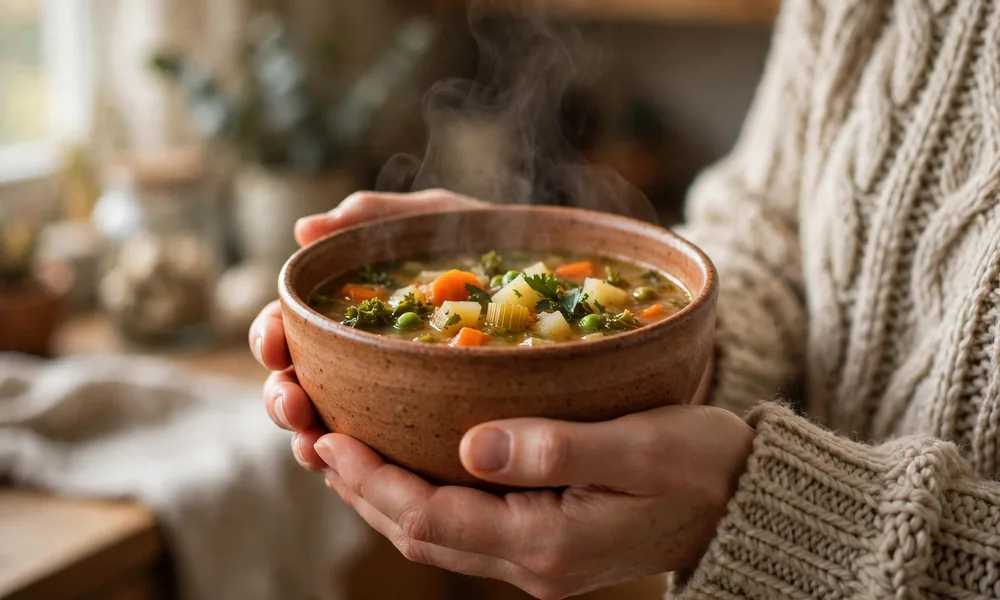
The bowl is only half the story: a few habits make as much difference as the material. The most effective is warming the bowl first — fill it with hot water for a minute while the soup heats, then empty it and serve into a warm bowl. A cold bowl steals the first ten degrees before you take a spoonful. A lid or plate over the bowl while it waits also helps, which is why restaurants cover soup before serving.
Serving temperature matters too. Soup served at a rolling boil cools to eating temperature in the bowl, spending its hottest minutes losing heat to the air. Soup served just below the boil, around 75 degrees, stays in the pleasant range for longer. And the soup itself matters: a thick, creamy soup holds heat far longer than a thin, clear broth. If your soup always goes cold, the answer may be a thicker soup and a warmer bowl, not new bowls — though a good set helps, and our guide to mixing bowls that change how you cook covers the prep side.
What to Look For When You Buy
Start with the practical checks: a beautiful bowl that cannot go in the dishwasher will spend its life in the cupboard. Check the base for dishwasher-safe and microwave-safe marks, and be suspicious of any bowl without one — the glaze or decoration usually will not survive. Run your finger around the rim: it should be smooth all the way round, with no rough spot where the glaze is thin, because that is where chips start. A bowl that feels too light for its size is usually thin-walled and cools soup fast; a reassuringly heavy one holds heat.
Colour and pattern deserve a thought too, because soup is colourful and the bowl is its frame. White and cream bowls make every soup look good, from green pea to deep red tomato, and are the easiest to match with the rest of the table. Dark bowls look dramatic with pale soups like cauliflower or leek, but hide the colour of a dark soup. A busy pattern fights with the food, and a patterned bowl that chips shows the damage more than a plain one. If you want pattern, put it outside and keep the inside plain, so the soup is the star. A matching dinnerware set is the easiest way to get bowls that sit well with your plates — check whether the set you own sells soup bowls separately first.

Checklist: Choosing Your Soup Bowls
- Pick the material first: stoneware for everyday heat retention, porcelain for smart dining, glass only for cold soups.
- Choose 500 to 700 millilitres for a main course, 350 for a starter, 800 or more for ramen and stews.
- Prefer a deep bowl with a narrower opening — it keeps soup hot roughly twice as long as a wide shallow one.
- Check dishwasher and microwave safety before you buy, not after.
- Hold the bowl in both hands: it should feel warm, not hot, and comfortable to lift when full.
- Warm the bowl with hot water before serving.
Frequently Asked Questions
What size soup bowl is best?
For most people, 500 to 700 millilitres is the best all-round size: enough for a generous main course with room for bread dipping, without being so large that the soup cools before you finish. Smaller 350 millilitre bowls suit starters, and 800 millilitre bowls suit ramen and hearty stews.
Which material keeps soup hot the longest?
Thick stoneware keeps soup hot the longest: its heavy walls absorb heat slowly and give it back slowly. Porcelain is a close second despite being thinner, because it is dense and hard-fired. Thin glass and metal are the worst, conducting heat quickly away, so the soup cools in minutes.
Are soup bowls and cereal bowls the same thing?
They are close, but not identical. A cereal bowl is wider and shallower, because cereal is eaten cold and milk needs room to spread. A soup bowl is deeper with a narrower opening, because heat retention matters. You can use one for the other, but a cereal bowl cools soup faster, and a soup bowl makes cereal look lost.
Can soup bowls go in the microwave?
Most stoneware, porcelain, and glass bowls can, if marked microwave safe — check the base before you buy. Handmade ceramic often cannot, and metal bowls must never go in a microwave. Never microwave a bowl with a metallic rim or decoration, and never heat an empty bowl.
How many soup bowls do I need?
Four covers most households, and six covers a family that entertains. A set stacks and matches, and you can replace one at a time if one breaks. If you already own a dinnerware set, check whether it sells matching soup bowls first.
What soup should I serve in a soup bowl?
Almost any soup works, from smooth tomato to chunky vegetable stew, and the bowl matters less than the soup itself. For inspiration, our comparison of the best and worst soups of 2026 covers the soups worth making and the ones better left on the shelf.
The Bottom Line
The best soup bowl in 2026 keeps your soup hot, feels good in your hands, and looks right on your table — for most households, a thick stoneware bowl of 500 to 700 millilitres, deep rather than wide, dishwasher safe, in a colour that flatters the food you cook. Warm the bowl before you serve, and a simple bowl of soup becomes a meal worth sitting down for.


