
A water shoe is a shoe made for wet ground. It grips slippery rock, it lets water drain out instead of pooling around your feet, and it dries far faster than an ordinary trainer. It sounds like a small thing, and it is, but the difference between a good water shoe and a bad one is the difference between a confident walk across a riverbed and a bruised toe, a slipped foot, or a long walk home in soggy, blistered shoes. A bad water shoe is slippery when wet, it holds water, it rubs, and it falls apart after a few trips. A good water shoe is grippy, light, quick to drain, and comfortable enough to wear all day. The best water shoes of 2026 are the ones that protect your feet without ever feeling like a burden.

What Makes a Water Shoe Good
The first thing to judge is the grip. A water shoe is only useful if it holds on wet surfaces, and the best shoes have a rubber sole with deep lugs, a sticky compound, and a tread pattern that channels water away instead of trapping it underneath. A sole that is smooth, hard, or worn flat will slide on wet rock, and a slide on wet rock is how ankles get twisted and knees get grazed. Grip is the first test, and it is easy to feel: press the sole, look at the tread, and walk on a wet surface if you can. A shoe that grips is a shoe that earns trust.
The second thing is the drainage. A water shoe will get wet, and the question is what happens next. The best shoes have mesh uppers, drainage holes, and a footbed that lets water escape with every step, so the shoe empties itself as you walk. A shoe that holds water becomes heavy, it sloshes, it rubs, and it takes hours to dry. A shoe that drains stays light, it feels dry within minutes of leaving the water, and it is ready to wear again the next morning. Drainage is what separates a real water shoe from a trainer that merely tolerates getting wet.
The third thing is the protection. Wet ground hides sharp stones, broken shells, hot sand, and rough coral, and a water shoe should shield the foot from all of them. The best shoes have a sturdy toe cap, a thick enough sole to block sharp edges, and an upper that covers the foot without squeezing it. A shoe that is too thin lets every stone through, and a shoe that is too open leaves the toes exposed. Protection is worth paying for, because it is what lets you walk without watching every step.
The fourth thing is the comfort. A water shoe is often worn for hours, on the beach, in the river, or around the pool, so a shoe that rubs, pinches, or chafes will not be worn for long. The best shoes have a soft lining, a snug fit that stops the foot sliding inside, and no rough seams where the toes or the heel sit. A shoe that fits well feels like a second skin, and a shoe that fits badly feels like a punishment. Comfort is the test that matters most over a full day, because a shoe that hurts is a shoe that stays in the bag.
The Main Types of Water Shoe
Slip-on water shoes are the classic choice. They have no laces, they pull on in seconds, and they are light, simple, and cheap. They suit the beach, the pool, and a quick paddle, and they are the best choice for most people, because they are easy to put on and take off with wet hands. They dry fast, they pack small, and they are the easiest to live with. The trade-off is the fit: a slip-on shoe can feel loose on a narrow foot, and it can slip off in strong currents or deep mud. For most people, on most days, a slip-on water shoe is the one to buy.
Lace-up water shoes are the secure option. They have laces or a cord lock that tightens the shoe around the foot, they stay put in fast water, and they are the best choice for river walking, kayaking, and rocky shores. They suit someone who needs a firm fit, and they are the most reliable option when the ground is uneven. The downside is the faff: laces take longer to adjust, and wet laces can be fiddly. For someone who wades in moving water, a lace-up water shoe is the one that works.
Water sandals are the airy option. They have open straps, they dry the fastest of all, and they are the best choice for hot days, gentle streams, and walking around a resort or a campsite. They suit someone who wants their feet to breathe, and they are the most comfortable option in the heat. The downside is the coverage: open straps let in sand and small stones, and they leave the toes exposed. For a relaxed day by the water, a water sandal is the one that feels best. If you want a fuller guide to open footwear, the best sandals of 2026 cover the wider sandal range in detail.
Closed-toe water shoes are the protective option. They cover the whole foot, they have a reinforced toe, and they are the best choice for rocky riverbeds, coral beaches, and anywhere sharp. They suit someone who wants maximum protection, and they are the safest option for children and for anyone with sensitive feet. The downside is the warmth: a closed shoe is hotter than a sandal, and it dries a little slower. For rough ground, a closed-toe water shoe is the one to choose.
How to Choose the Right Pair
Start with where you will wear them. A beach shoe needs to handle sand and salt water, a river shoe needs to grip wet rock, and a pool shoe needs to handle smooth tiles and chlorine. A shoe that is perfect for the beach can be wrong for a river, and a shoe that is perfect for a river can be overkill for a pool. Think about the ground you will walk on most, and choose the sole and the coverage to match it. The right shoe is the one that suits your water, not someone else’s.
Next, get the fit right. A water shoe should be snug, because a loose shoe fills with water and slides around, and a shoe that slides around causes blisters. Try the shoe on with wet feet if you can, walk in it, and check that the heel stays put and the toes have a little room. A shoe that is too tight will pinch when the foot swells in the heat, and a shoe that is too loose will come off in the water. Fit is the one thing that no review can settle for you, because every foot is different.

Then look at the sole. A good water shoe sole is made of rubber, it has deep lugs, and it is thick enough to block sharp stones without being so stiff that it cannot bend. A sole that is too thin is a sole that lets every stone through, and a sole that is too stiff is a sole that makes walking tiring. Bend the shoe in your hands: it should flex at the ball of the foot, and it should spring back. A sole that bends well is a sole that walks well.
Finally, think about what you will wear them with. A water shoe is not an everyday trainer, and it should not try to be one. It is a specialist shoe, and it works best when it is worn for its job and then swapped for something else. If you want a shoe that also works on dry land for long walks, the best sneakers of 2026 cover everyday trainers that handle dry ground far better. A water shoe that is asked to do everything will do nothing well.
Water Shoes for Different Activities
For the beach, the priorities are sand, salt, and heat. A beach water shoe should be light, it should let sand escape easily, and it should handle hot sand without the sole going soft. A slip-on shoe or a water sandal is usually the best choice, because both are easy to shake out and quick to dry. A shoe that traps sand will rub, and a shoe that rubs will ruin a beach day. Rinse the shoes in fresh water after a salty day, and they will last far longer.
For rivers and streams, the priorities are grip and security. A river water shoe should have a sticky, lugged sole, a firm fit, and a closed toe to guard against sharp stones. A lace-up shoe is usually the best choice, because it stays on in moving water and it holds the foot steady on uneven ground. A loose shoe in a river is a shoe that will be lost downstream, and a lost shoe is a long walk home barefoot.
For rocky shores and coral beaches, the priorities are protection above all. A rocky-shore water shoe should have a thick sole, a reinforced toe, and a closed upper that keeps small stones out. A closed-toe shoe is usually the best choice, because it guards the whole foot against sharp coral and broken shells. A thin shoe on coral is a shoe that will be cut through, and a cut shoe is a cut foot. If you spend most of your time on sand rather than rock, the best flip-flops of 2026 cover the lightest open option for warm, sandy days.
Care, Drying, and Making Them Last
Water shoes last far longer when they are rinsed after every use. Salt, sand, and chlorine all wear away at the materials, and a quick rinse in fresh water takes a minute and adds months to the life of the shoe. Shake out the sand, rinse the sole, and let the water drain before you pack them away. A shoe that is rinsed is a shoe that stays fresh, and a shoe that stays fresh is a shoe that gets worn.
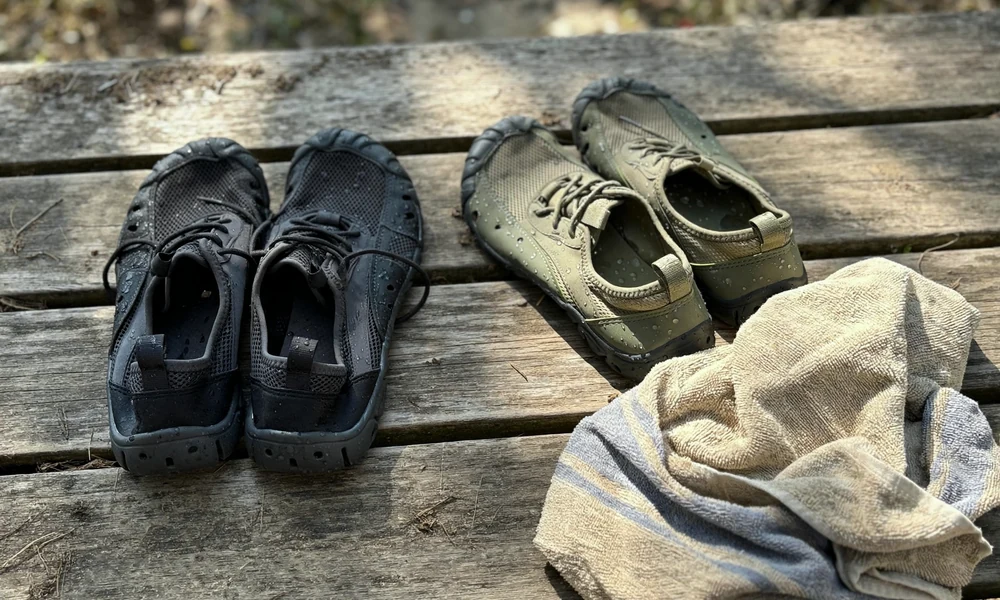
Finally, know when to replace them. A water shoe is worn out when the tread is smooth, the sole is coming away, the upper is torn, or the fit has gone loose. A worn shoe is a slippery shoe, and a slippery shoe is a dangerous shoe. Check the tread before a trip, and if the lugs are gone, the shoe is gone too. Replacing a worn pair is cheaper than a twisted ankle, and it is far more pleasant than a long walk in a shoe that no longer grips.
The Verdict
The best water shoes of 2026 are the ones that grip wet ground, drain fast, protect the foot, and feel comfortable for hours. A slip-on shoe suits most people most days, a lace-up shoe suits rivers and rocky shores, a water sandal suits hot, relaxed days, and a closed-toe shoe suits rough ground and sharp coral. Get the fit snug, check the sole, and choose the coverage to match the water you will be in. A good pair of water shoes is a small purchase that makes every wet day better, and a bad pair is a small purchase that makes every wet day worse. Choose well, rinse them after use, and they will carry you safely across every beach, river, and rocky shore you find.


