A guitar case is the thing that stands between a good guitar and a bad day. A guitar is a fragile instrument, made of thin wood, glue and strings under tension, and it does not take much to crack a top, snap a headstock or knock a guitar out of tune. A good case takes the knocks so the guitar does not have to, The best guitar cases of 2026 are the ones that protect well, carry comfortably and last for years, and this guide explains how to choose one that fits your guitar and the way you use it.
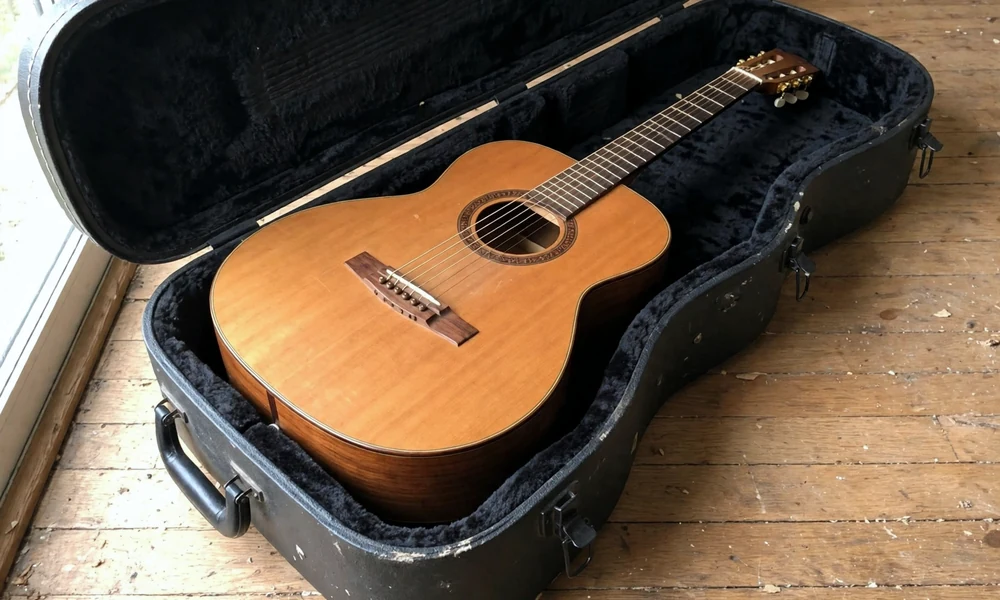
What Makes a Guitar Case Good
The first thing to judge is the protection. A case is only useful if it keeps the guitar safe, and the best cases have a rigid shell or thick padding, a snug interior that stops the guitar moving around, and a neck support that holds the headstock still. A case that is too loose lets the guitar rattle, and a case that is too tight puts pressure on the body and the bridge. The fit should be close without being forced: the guitar should slide in easily, sit flat, and stay still when the case is tipped gently from side to side.
The second thing is the build quality. A guitar case is opened and closed hundreds of times, carried by a handle, zipped and unzipped, and stacked in cars and cupboards, so weak latches, thin zips and flimsy handles fail quickly. The best cases have strong latches or smooth, heavy zips, a handle that feels solid in the hand, and hinges that do not wobble. Stitching should be even and tight, with no loose threads, and the lining should be soft enough not to scratch the finish. A case that feels cheap in the shop will feel worse after a year of use, so it is worth handling a case before buying it, opening and closing it a few times, and carrying it around the room.
The third thing is the weight. A case that protects perfectly but weighs too much is a case that stays at home, and a case that stays at home protects nothing. Hard cases are heavier than soft ones, and flight cases are heavier still, so the right weight depends on how far the case has to travel. For carrying a guitar to lessons and rehearsals, a light case that is easy to carry matters more than maximum protection. For flying or touring, protection matters more than weight, and a heavier case is worth the effort. The best case is the one that is strong enough for the journey and light enough that you actually use it.
The Main Types of Guitar Case
Hard cases are the classic choice. They have a rigid shell, usually made of wood, moulded plastic or fibreglass, with a soft plush lining inside, and they give the best protection against knocks, drops and crushing. They suit a valuable guitar, a guitar that travels in a car boot or a van, and anyone who wants the strongest protection they can buy. The trade-off is the weight and the bulk: a hard case is heavier than a soft case, it takes up more room, and it is harder to carry on a crowded bus or train. For a guitar that stays mostly at home and travels by car, a hard case is the one to buy.
Soft cases, often called gig bags, are the light and flexible option. They have thick foam padding, a soft outer shell, and usually a shoulder strap and backpack straps, and they are the best choice for carrying a guitar to lessons, rehearsals and local gigs. They are light, easy to carry, and easy to store. The trade-off is the protection: a gig bag will not protect a guitar from a hard drop, so it suits a guitar that is carried by hand and treated gently.
Flight cases are the toughest option of all. They are built for air travel, with a very rigid shell, strong corners, heavy-duty latches and thick foam inside, and they are designed to survive being loaded into an aircraft hold and handled by people who do not know what is inside. The downside is the weight, the size and the price: a flight case is heavy, bulky and expensive, and it is far more than most players need. For most people, a flight case is overkill, but for a guitar that flies regularly, nothing else will do.
Hybrid cases sit between hard and soft. They have a semi-rigid shell, often made of moulded foam with a tough outer fabric, and they give much of the protection of a hard case with much of the weight and convenience of a gig bag. The trade-off is the price: a good hybrid case costs more than a basic gig bag, and it still does not protect as well as a full hard case. For a player who travels often but never flies, a hybrid case is often the sweet spot.
How to Choose for Your Guitar
The most important rule is to buy a case that fits your guitar. Guitars come in many shapes and sizes, and a case made for a dreadnought acoustic will not fit a small parlour guitar, a classical guitar or an electric guitar properly. Before buying, check the length, the width of the lower bout and the depth of the body, and compare them with the inside measurements of the case. A case made for your exact guitar shape is always better than a case that is almost right, and many makers sell cases shaped for their own guitars. If you play an unusual shape, look for a case with adjustable padding or a moulded interior that can be shaped to fit.
Electric guitars are tougher than acoustics, but they still need a proper case. The headstock is the weak point, especially on guitars with angled headstocks, and the case should support the neck so the headstock does not take a knock. A case with a shaped interior that matches the body, whether it is a single-cut, double-cut or offset shape, keeps the guitar still and protects the finish. Many players keep their electric in a gig bag for local gigs and a hard case for longer trips, and that is a sensible split: use the light case when the guitar is in your hands, and the hard case when it is out of your sight. If you are still choosing the instrument itself, our guide to the best guitars of 2026 is a good place to start.

Fit, Padding and Storage
Padding is what absorbs the knocks, and not all padding is equal. Thick, dense foam protects better than thin, soft foam, and a case with padding on all sides, including the bottom and the lid, protects better than one with padding only on the bottom. The lining matters too: a soft plush lining protects the finish, while a rough lining can mark it over time. Check the padding by pressing it with your hand: it should feel firm and spring back, not thin and flat. A case that feels well padded is usually well padded, and a case that feels thin usually is.
Storage is the next thing to check. Most players carry more than a guitar: a tuner, a capo, spare strings, a cable, a strap, music and a phone all need somewhere to go, and a case with a good pocket keeps them together. A large front pocket is the most useful, and a smaller pocket inside the lid is handy for small items. A case with no storage at all means carrying a separate bag, which defeats the purpose of a case that is meant to make life easier.
Travelling With a Guitar Case
Travelling changes what matters in a case. For a car journey, a hard case is ideal: it can sit in the boot, it protects the guitar from other luggage, and it does not mind being stacked. For a train or bus journey, a gig bag is often better, because it is lighter, easier to carry through a station, and easier to fit into a luggage rack.
At home, a case is also the best place to store a guitar. A guitar left leaning against a wall or on a sofa is one accident away from a fall, and a guitar on a stand is safe only if nobody knocks it. A case keeps the guitar safe from dust, sunlight and knocks, and it keeps the strings and the finish in better condition. That said, a guitar that is kept in its case is a guitar that is played less, so many players keep their everyday guitar out on a stand and their best guitar in its case. A good guitar stand is the middle ground, and it works well alongside a case for travel and storage.

Care, Mistakes and What to Avoid
The most common mistake is buying a case that is too big. A case that is too big lets the guitar slide around, and a guitar that slides around gets knocked every time the case moves. The second most common mistake is buying a case that is too cheap: a very cheap case often has thin padding, weak zips and a handle that breaks, and it can cost more in repairs than the saving was worth. The third mistake is buying a case without checking the fit, especially online, where a case that looks right can be the wrong shape. Always check the inside measurements, read the returns policy, and try the guitar in the case as soon as it arrives.
It is also worth thinking about the other instruments in the house. A ukulele is smaller and lighter than a guitar, but it is just as fragile, and it needs a case of its own rather than being squeezed into a guitar case. If you play more than one instrument, our guide to the best ukuleles of 2026 covers the smaller cousin of the guitar and the cases that suit it.
How to Decide
Start with how the guitar travels. If it mostly stays at home and goes out by car, buy a hard case. If it goes to lessons and rehearsals on foot or by bus, buy a good gig bag. If it flies, buy a flight case. If it does a bit of everything, buy a hybrid case. Then check the fit: the case should match your guitar shape, hold the neck firmly, and leave the guitar still when tipped. Then check the build: strong zips or latches, a solid handle, even stitching and a soft lining. A case that passes all four tests is a case worth buying.
Price is a guide, not a rule. A very cheap case is usually a false economy, but the most expensive case is not always the best one for you. A mid-priced case from a known maker, with good padding, a solid handle and a snug fit, will protect most guitars well for most journeys. The best guitar cases of 2026 are the ones that fit your guitar, suit your journeys, and get used every time the guitar leaves the house.