
A guitar stand is a small purchase that protects a big one, and it is the piece of kit most players buy last and regret not buying first. A good stand holds the guitar steady, keeps it within reach so you actually play it, and does it without marking the finish or tipping over when the dog walks past. A bad stand wobbles, scratches the neck, or folds at the wrong moment, and a guitar that falls is a guitar that cracks. The best guitar stands of 2026 are not the most expensive ones. They are the stands that fit your guitar, fit your room, and keep the instrument safe every single day.
Why a Stand Beats a Case and a Corner
A guitar in its case is a guitar that does not get played. That is the simple truth every teacher will tell you: the instrument you see is the instrument you pick up, and the one in the cupboard waits for a special occasion that never comes. A stand puts the guitar in the room where you live, ready in five seconds, and most players find they practise more simply because the guitar is there. A corner is not a stand: a guitar leaning against a wall slides, gets knocked, and rests its weight on the neck joint, which is the worst place to load it.
A stand also protects the finish. A guitar leaning on furniture rubs against hard edges, and a guitar lying flat gets stepped on, sat on, or buried under laundry. A proper stand holds the guitar at the body and the neck, spreads the weight evenly, and keeps the instrument away from radiators, direct sun and damp. It is a small purchase that protects a purchase worth ten or fifty times as much, and it pays for itself the first time it stops a fall.
Types of Stand: A-Frame, Tripod, Wall and Rack
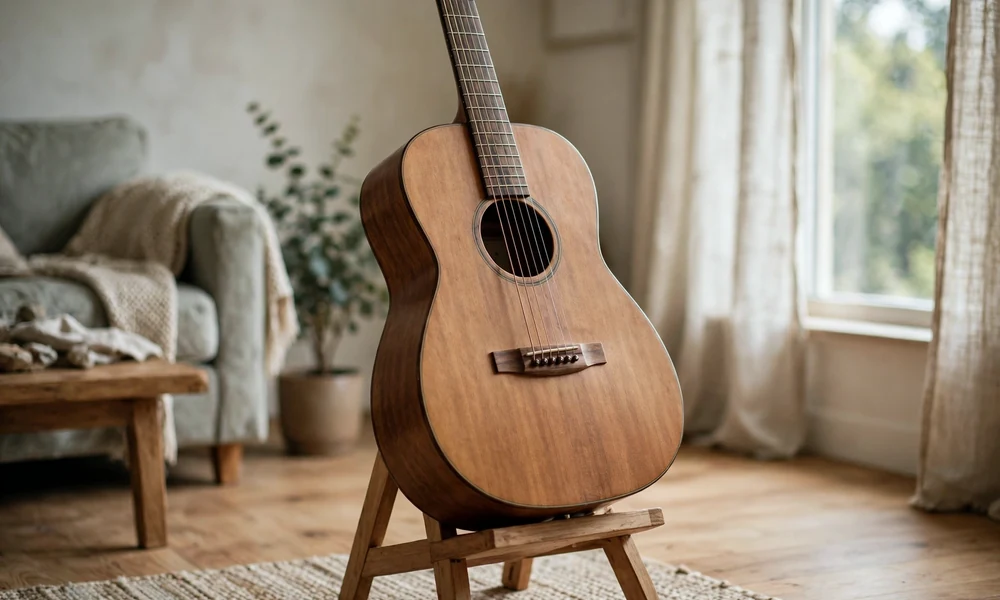
The A-frame is the simplest stand: two legs that fold flat and a cradle that holds the guitar by its body, with a padded fork for the neck. It folds small enough to fit in a gig bag pocket, it is cheap, and it suits a single guitar at home or on stage. Its weakness is stability: on a thick carpet it can rock, and a heavy guitar can tip it if it is knocked from the side. For a light acoustic or a single electric at home, it is usually enough.
The tripod stand has three legs that spread wide and a taller neck support, which makes it the most stable freestanding option. It holds the guitar higher and more upright, it handles heavy electrics and basses well, and it is the stand most players choose for a studio or a living room where the guitar stays out all the time. It takes up more floor space and it does not fold as small, but for a guitar that lives on display, it is the safer choice. Wall hangers and multi-guitar racks suit collections: a wall hanger keeps the guitar off the floor entirely, and a rack holds several guitars in the space of one, but both need a solid wall or a flat floor and a household that will not bump them.
The right type depends on the guitar and the room. A single acoustic in a bedroom suits an A-frame. A heavy electric in a studio suits a tripod. A collection of five suits a rack, and a guitar in a small flat suits a wall hanger. Measure the floor space before you buy, because a tripod in a narrow gap is a trip hazard, and check the weight rating, because a stand rated for a light acoustic will not hold a bass. Our guide to the best guitars of 2026 covers the instruments these stands are built to protect, from light acoustics to heavy electrics.
Setting Up the Stand and the Room
Where you put the stand matters as much as which stand you buy. Keep it away from radiators, fireplaces and sunny windows, because heat and direct sun dry out wood and can crack a finish, and keep it away from damp exterior walls for the same reason. A stable room temperature and moderate humidity are what a guitar wants, and a stand in a bad spot will not save an instrument from a bad room. If the room is dry in winter, a small humidifier near the guitar is worth more than any accessory.
Check the floor as well. A tripod on a thick rug can rock, because the legs sink unevenly, and a rack on an uneven floor will lean. Put a thin board under the stand if the floor is soft, and test the stand by pushing it gently from every side before you trust it with the guitar. Teach the household the rule too: the stand is not a coat hook, not a place to hang a bag, and not something to lean on. Most guitar falls happen because someone treated the stand like furniture, and a guitar is not furniture.
The Best Guitar Stands of 2026 at a Glance
Six stands stood out in 2026. The best overall is a tripod stand with a wide base, padded contact points and a neck cradle that locks, built to hold any guitar from a parlour acoustic to a solid-body electric. The best budget pick is an A-frame that costs little, folds flat and holds a standard guitar securely. The best for multiple guitars is a five-guitar rack with padded dividers and a small footprint.
The best wall hanger is a hardwood mount with a locking fork that keeps the guitar safe even if it is bumped. The best portable pick is a folding A-frame that fits in a gig bag and sets up in seconds at a rehearsal or a gig. The best premium pick is a wooden tripod stand that looks like furniture and holds the guitar like a display piece. A stand is part of a practice setup, and a good microphone helps you hear your playing properly: our guide to the best microphones of 2026 covers the mics that record acoustic guitars honestly.
Best Overall: The Locking Tripod
The best overall guitar stand of 2026 is a tripod with a wide, stable base and a neck cradle that closes around the guitar. Its legs spread far enough that a knock from the side moves it rather than toppling it, and the padding on every contact point is thick, soft and safe for nitrocellulose finishes, which some cheaper foams can damage. The height adjusts to suit a small parlour guitar or a full-size dreadnought, and the whole stand folds down for transport without tools.
What sets it apart is the lock. A simple mechanism closes the neck fork once the guitar is in place, so the guitar cannot bounce out if the stand is bumped, and it opens with one hand when you want to play. That single feature is the difference between a stand and a hope, and it is worth the small premium over the basic tripods. It is not the cheapest stand, and it is not the prettiest, but it is the one we would trust with a guitar we could not afford to replace.
Best Budget and Best for Several Guitars
The best budget guitar stand is a folding A-frame that does the basics properly. Its cradle is padded, its legs are wide enough for a standard guitar, and it folds flat enough to slip into a gig bag pocket. The compromises are honest: it is less stable on thick carpet than a tripod, and it has no lock, so it suits a quiet room rather than a busy hallway. For a first guitar, a practice room or a second stand for a gig, it is the sensible buy, and it costs less than a set of strings.
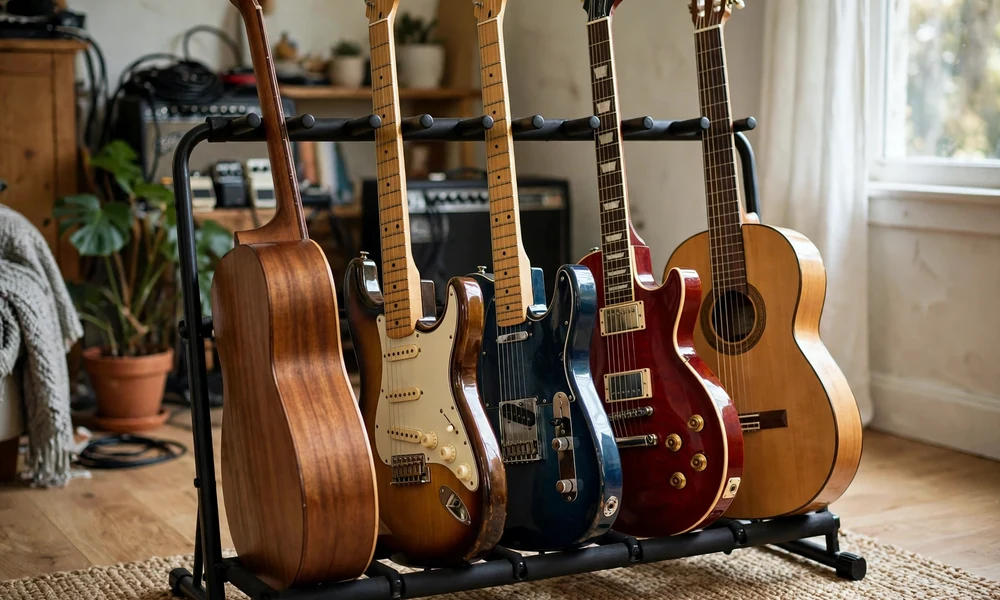
The best multi-guitar rack holds five guitars in the footprint of one, with padded dividers that keep the instruments from touching each other and a base that stays put on wood or carpet. It suits a household or a studio with several guitars, and it turns a pile of cases into a display you can actually use. The only requirement is floor space and a flat surface, because a rack on a slope will lean, and leaning racks and guitars do not mix. If you listen back to your playing through headphones, our guide to the best headphones of 2026 covers the pairs that let you hear every note clearly.
Best Wall Hanger and Best Portable
The best wall hanger is a hardwood mount with a locking fork that holds the guitar by its headstock and keeps it off the floor entirely. It suits a small flat where floor space is precious, and it turns the guitar into a display piece that is still ready to play in seconds. Fitting it properly matters: it must go into a stud or a solid wall plug, because a hanger in plasterboard alone will pull out, and the guitar will follow it. Fitted right, it is the safest place a guitar can live outside a case.
The best portable stand is a folding A-frame that weighs almost nothing, sets up in seconds, and fits in the front pocket of a gig bag. It suits rehearsals, gigs and lessons, where the guitar needs a safe place between songs and the stand needs to disappear into a bag afterwards. It is not as stable as a tripod, and it is not the stand for a guitar that lives out at home, but for a working musician it is the stand that is always there when it is needed, and that is the whole point of it.
Finish Safety and What to Avoid
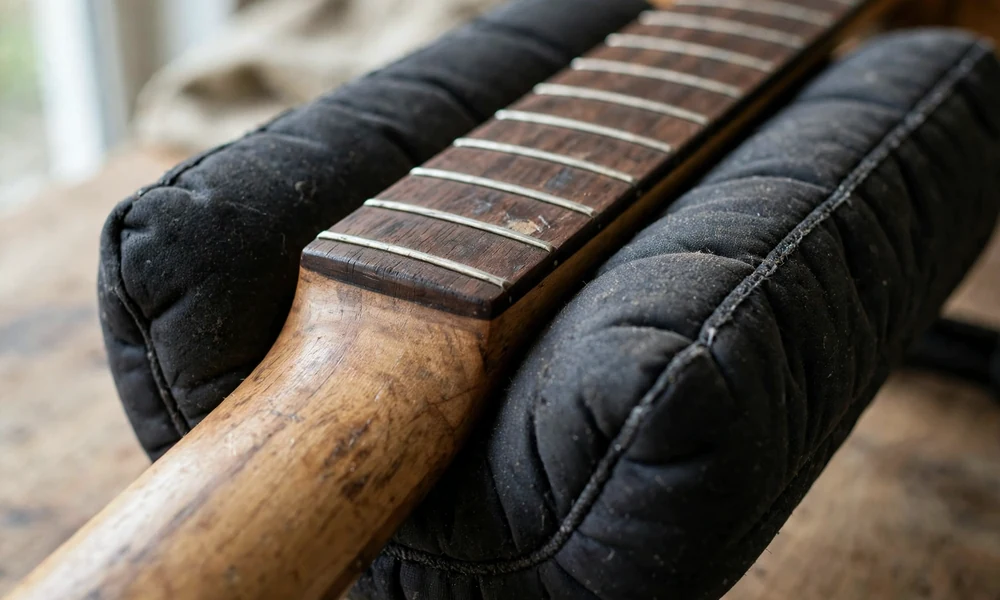
The most important check on any stand is what touches the guitar. Cheap foam and rubber can react with nitrocellulose lacquer, the finish used on many quality guitars, and leave permanent marks where the guitar rested. Look for stands that state they are safe for nitro finishes, or that use surgical tubing or cork at the contact points, and if in doubt, wrap the contact points in cotton cloth. A stand that damages the finish is worse than no stand at all.
The most common mistake is buying a stand that does not fit the guitar. A classical guitar with a wide body needs a wider cradle than a slim electric, and a bass needs a taller, heavier stand than either. Check the body depth and the weight rating before you buy, and test the guitar in the stand before the return window closes. A second mistake is putting the stand where it will be knocked: in a doorway, beside a dog’s bed, or where children run. The safest stand in the world cannot help a guitar that lives in a traffic lane.
The Verdict
For most players, the locking tripod is the right buy: stable, safe for the finish, and built to hold any guitar you are likely to own. A single guitar in a quiet room suits the budget A-frame, and a collection belongs on a rack or on the wall. Whichever you choose, check the padding, check the weight rating, and put the stand where it will not be knocked. A guitar stand is a small purchase, but it is the one that keeps the big purchase safe.


