
The best headphones of 2026 are not the ones with the longest specification sheet. They are the ones you reach for every single day without thinking about it, the pair that sounds good on a crowded train, stays comfortable through a long work call, and still has charge left when you want music on the way home. With so many shapes, prices, and promises on the shelves, the real skill is knowing which trade-offs matter for the way you actually listen.
This guide to the best headphones 2026 has to offer sorts the market into the choices that suit real routines: commuting, working from home, exercising, travelling, and sitting down to enjoy an album. Every recommendation below was judged on sound, comfort, battery life, call quality, and how well the pair holds up after months of daily use.
By the end, you will know which style fits your life, which features are worth paying for, and which ones are marketing noise.
Key Takeaways
- The best headphones for most people in 2026 are comfortable over-ear wireless pairs with at least 30 hours of battery and a clear microphone.
- Over-ear designs sound fuller and feel better over long sessions, while earbuds win for exercise, travel, and carrying in a pocket.
- Noise cancellation is worth paying for if you commute or fly, but it matters far less in a quiet home.
- Comfort decides daily use more than sound quality does, so weight, clamping force, and earcup depth deserve a proper test.
- Buy the pair that fits your noisiest, longest listening session, not the one with the flashiest feature list.
The Four Types of Headphones
Every pair on the market falls into one of four families, and the family matters more than the brand. Over-ear headphones put large cups around the whole ear. They give the fullest sound, the best passive isolation, and the most room for big batteries. The trade-off is size: they need a bag, not a pocket, and they can feel warm in summer.
On-ear headphones rest on the ear rather than around it. They are lighter and fold smaller, a good middle ground for people who find over-ears bulky but dislike earbuds. The catch is pressure: the cups press directly on the ear, so they can ache after an hour or two, and they leak more sound to those around you.
Wireless Earbuds
Earbuds have become the default for a huge number of listeners, and it is easy to see why. They vanish into a pocket, survive a workout, and pair instantly with a phone. Modern pairs sound far better than the tinny buds of a few years ago, and the best ones now offer useful noise cancellation too. If you want a deeper look at the smallest options, our roundup of the best wireless earbuds of 2026 covers the strongest picks in detail.
Open-Back Headphones
Open-back headphones are the odd one out, and they are worth knowing about even if you never buy a pair. Their earcups are vented, so sound escapes and the outside world leaks in. That sounds like a flaw, but for quiet listening at home it creates a wide, natural soundstage that closed pairs struggle to match. They are strictly an indoor, solo-listening choice. Think of them as the armchair-and-vinyl option rather than the everyday carry.
What Actually Matters When You Choose
Sound quality is the first thing people ask about and the hardest thing to judge in a shop. Ignore the frequency-range figures on the box; they tell you almost nothing about how a pair actually sounds. What matters is balance: clear voices, firm bass without booming, and detail at low volume, because a well-fitting pair means you never need to crank it up.
Comfort is the feature that decides whether an expensive pair ends up in a drawer. Weight is the simplest guide: under about 260 grams, most over-ear pairs stay pleasant for hours. Clamping force matters just as much, and it is personal: a snug fit seals in bass and blocks noise, but too much pressure hurts, especially for glasses wearers. Deep earcups help, because ears that touch the driver cover tire quickly.
Battery life has settled into a comfortable range. Thirty hours with noise cancellation switched on is the practical baseline for an over-ear pair, and many now manage 40 or more. Just as useful is fast charging: ten minutes on a cable buys several hours of listening. Earbuds give five to eight hours per charge and top up from the case, so total case battery is the figure to check.
Call quality is easy to overlook until the first important meeting. A pair with several microphones and a bit of wind handling makes you sound clear, while a weak microphone makes every conversation an apology. Multipoint pairing, which keeps a pair connected to a laptop and a phone at once, is the other everyday feature worth having.

The Top Picks at a Glance
The table below summarises the six picks in this guide. Use it to narrow the field to two or three candidates, then read the full notes to find the one that matches your routine.
| Pick | Best for | Battery | Weight | Standout strength |
|---|---|---|---|---|
| The All-Rounder | Most people | About 35 hours | About 250 g | Balanced sound and easy comfort |
| The Travel Pick | Flights and trains | About 40 hours | About 240 g | Deepest quiet, folds flat |
| The Work Pick | Calls and offices | About 30 hours | About 255 g | Clearest microphone |
| The Gym Pick | Workouts and running | About 8 hours per charge | About 5 g per bud | Secure fit, sweat resistant |
| The Sound-First Pick | Music lovers | About 30 hours | About 260 g | Richest, most detailed sound |
| The Value Pick | Tight budgets | About 30 hours | About 250 g | Strong all-round performance for the price |
The Picks in Detail
The All-Rounder
This is the pair to buy if you only want to buy one pair. The sound is balanced, the fit is gentle enough for a full working day, and the battery comfortably outlasts a week of commuting. Noise cancellation is strong enough for a train and a busy office, and the microphone handles calls well. If your listening is a mix of music, podcasts, and calls, start here and stop looking.
The Travel Pick
For anyone who flies or takes long trains, cancellation quality moves to the top of the list. The travel pick is built around the deepest, most consistent quiet it can manage, especially against the low drone of engines, and it folds flat into a slim case that fits a carry-on. Battery stretches past a long-haul flight with hours to spare. For a closer look at the cancellation side, see our guide to the best noise-cancelling headphones of 2026, which compares the strongest options for travel and work.
The Work Pick
The work pick is chosen for the hours most people actually wear headphones: video calls, shared offices, and long stretches of focus music. Its microphone is the clearest of the group, keeping your voice forward and the room behind you. Multipoint pairing is standard, so a call on the laptop hands over cleanly to a call on the phone, and transparency mode lets a colleague’s question through without taking the pair off.
The Gym Pick
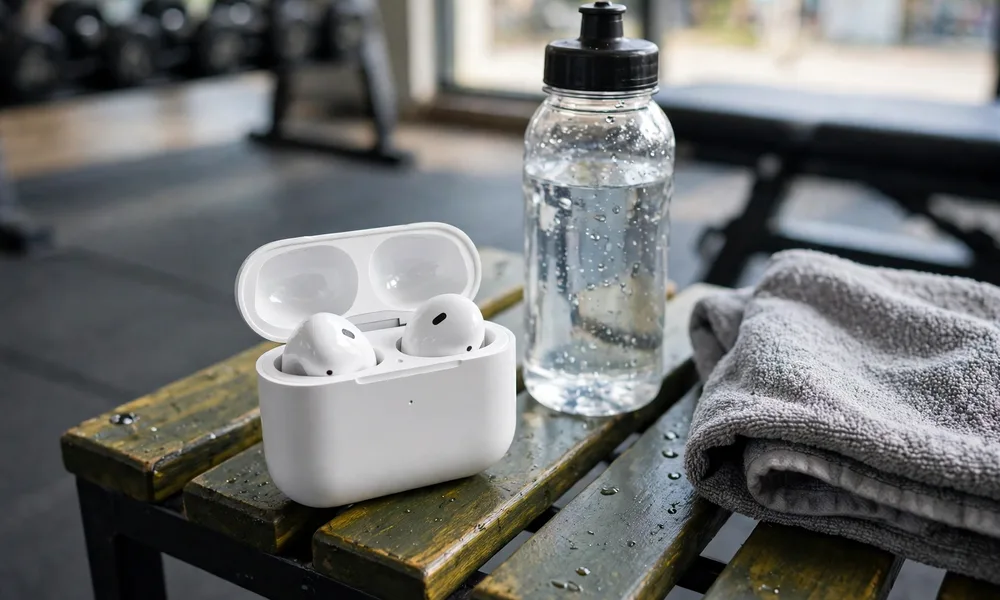
Over-ear pairs do not belong in the gym, and this pick knows it. These are wireless earbuds with a secure fit that stays put through a run, a sweat-resistant build, and a case small enough to disappear into a pocket. Sound is tuned for energy, with firm bass that keeps pace with a workout, and the case adds several full recharges.
The Sound-First Pick
If music is the point and everything else is secondary, this is the pair. It trades a little battery life and a little lightness for larger drivers and a more careful tuning, and the difference shows in the details: the texture of a guitar string, the space around a voice, the low notes that stay distinct instead of blurring together. It is happiest at home, with a good recording and nowhere to be.
The Value Pick
The value pick is the reminder that good sound no longer costs a fortune. It borrows the essentials from the expensive pairs, solid noise cancellation, a balanced sound, a comfortable fit, and a 30-hour battery, and skips the luxuries, such as premium materials and the very best microphones. For most listeners, the gap to the all-rounder is smaller than the gap in price, which makes it the smartest buy in the guide.
Headphones at Home
Not every listening session happens on the move. At home, headphones compete with a different option entirely: a good pair of speakers, which fills a room in a way no pair of cups can match. Our roundup of the best speakers of 2026 covers the strongest options for home listening, and for many people the right answer is both: speakers for the room, headphones for everything else.
Buying Checklist
Run through this list before you pay, and you will avoid the most common regrets.
- Try the fit for at least twenty minutes, with glasses on if you wear them, and check for pressure on the top of the head.
- Test the sound at the volume you actually listen at, not at maximum, and listen to a voice as well as music.
- Check the battery figure with noise cancellation switched on, since that is how you will really use the pair.
- Make a test call and ask the other person how you sound, especially if you will use the pair for work.
- Confirm multipoint pairing if you switch between a laptop and a phone during the day.
- Keep the receipt and use the return window: a pair that hurts after three hours will not improve by next month.

Frequently Asked Questions
Are expensive headphones really worth it?
Up to a point, yes. The jump from a very cheap pair to a solid mid-range one is large: better sound, better comfort, and a battery that lasts the week. Beyond that, you pay for small improvements in cancellation, materials, and microphones.
Do I need noise cancellation?
It depends on where you listen. On planes, trains, and in busy offices, it transforms the experience. In a quiet home, it adds little, and a pair without it can sound just as good for less money. If you commute daily, treat it as essential.
Are earbuds or over-ear headphones better?
Neither is better in general. Over-ears sound fuller, isolate more, and stay comfortable longer, while earbuds are smaller, lighter, and better for exercise. Many people end up with both, using earbuds out and about and over-ears at a desk.
How long should headphones last?
A well-made pair should last several years of daily use. The battery is usually the first thing to fade, typically after two or three years, while ear cushions wear sooner and can often be replaced.
Can headphones damage your hearing?
Volume and duration are what matter, not the type of headphone. Keeping the volume at a level where you can still hear someone speaking nearby, and taking short breaks during long sessions, protects your hearing far more than any feature.
Should I buy wired or wireless headphones?
Wireless is the right choice for almost everyone in 2026, thanks to long battery life and reliable Bluetooth. Wired pairs still make sense for serious home listening and for anyone who wants zero latency or no battery to think about, but for daily life, wireless wins on convenience.
The Bottom Line
The best headphones of 2026 are the ones that fit your life, not the ones with the longest feature list. For most people, that means a comfortable over-ear wireless pair with strong battery life, clear calls, and noise cancellation good enough for the commute. Add earbuds if you exercise, and consider a sound-first pair if music is your main hobby. Buy for your longest, noisiest listening session, test the fit properly, and the right pair will simply disappear, leaving only the music.


