
A pool cue is a long, tapered stick used to strike the cue ball in a game of pool, and it is the one piece of equipment that touches every single shot. A good pool cue changes the game completely: the ball goes where it is aimed, the cue ball stops or spins exactly as planned, and the shot feels smooth rather than forced. A bad pool cue is warped, too heavy, too light, or tipped with hard, worn leather, while a good one is straight, balanced and comfortable. The best pool cues of 2026 are the ones that make the game easier without ever getting in the way.
What Makes a Pool Cue Good
The first thing to judge is whether the cue is straight. A pool cue is only useful if it rolls true, and the best cues are made from well-seasoned maple or another stable hardwood, turned carefully so that the shaft has no bend, no wobble and no soft spot. A cue that is warped will never shoot straight, however good the player is. Straightness is the first test, and it is easy to check: roll the cue slowly across the table and watch the tip. A cue that rolls smoothly, without hopping or lifting, earns trust.
The second thing is the balance. A pool cue is held for hours at a time, often through a long evening of games, so a cue that is too heavy at the back, too light at the front, or awkward to hold will tire the arm and spoil the aim. The best cues are balanced near the middle, with a weight that suits the player, usually between eighteen and twenty-one ounces, and a grip that feels natural rather than slippery or sticky. Balance is worth paying for, because it is what makes the shot feel right.
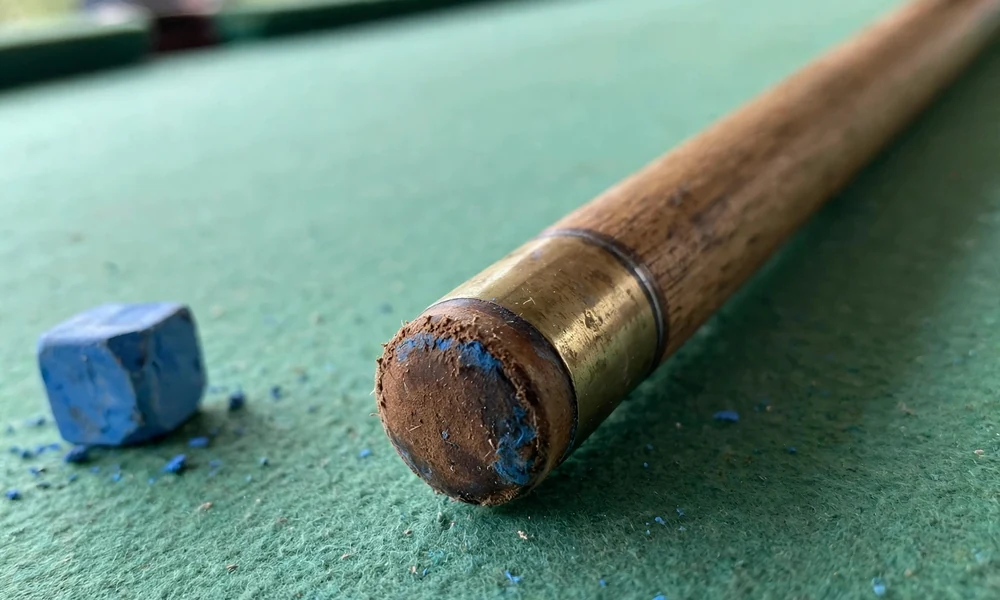
The third thing is the tip. The tip is the small piece of leather at the end of the shaft, and it is the only part of the cue that ever touches the ball. A good tip is slightly rounded, like the curve of a coin, and it holds chalk well, so that it grips the ball instead of sliding off it. A tip that is flat, hard, glazed or worn down will miscue, which is the sharp click of a shot that has gone wrong. The best cues come with a good leather tip fitted properly, and it is easy to shape and replace when it wears out.
The Main Types of Pool Cue
One-piece pool cues are the classic choice. They are a single length of wood from butt to tip, they are simple, solid and cheap, and they are the best choice for a home table, because they never come apart and there is no joint to loosen. They suit a player who keeps the cue at home, and they are the easiest to look after. The trade-off is the size: a one-piece cue is nearly one and a half metres long, so it does not fit in a car boot or a cue case easily.
Two-piece pool cues are the practical choice. They unscrew in the middle, so they pack into a case and travel easily, and they are the best choice for someone who plays in a club, a bar or a friend’s house. They suit a player who takes the cue out, and they are the most popular option. The downside is the joint: a cheap two-piece cue will wobble at the join, and a good one costs more. For a player who travels to play, a two-piece cue is the one that works.
Break cues are the specialist option. They are heavier and stiffer than a playing cue, with a hard tip that transfers power into the cue ball, and they are the best choice for the opening break, when the balls need to be scattered hard. They suit a serious player. The trade-off is the feel: a break cue is too stiff and too heavy for delicate shots, so it is a second cue, not the only cue.
Jump cues are the trick-shot option. They are short, light and very stiff, designed to lift the cue ball over another ball that is in the way, and they are the best choice for a player who wants to learn jump shots. They suit an experienced player. The downside is the use: a jump cue is useless for normal play, and it is only worth buying once the rest of the game is solid.
Fibreglass and carbon fibre pool cues are the modern option. They are made from man-made materials instead of wood, they resist warping in damp or hot rooms, and they are the best choice for a cue that is used in a bar, a garage or a room where the temperature changes. They suit a player who wants a cue that stays straight. The trade-off is the feel: a fibreglass cue can feel dead or plasticky compared with maple, and a good carbon fibre cue costs a lot.
How to Choose the Right Pool Cue
Start with the player, not the cue. A beginner needs a straight, medium-weight cue that is easy to hold, while a taller player needs a longer cue, and a player with small hands needs a thinner butt. A cue that does not match the player will not be used, however good it is. Buying the prettiest cue available and hoping it fits is the fastest way to end up with a cue that is ignored.
Then check the practical details. Hold the cue before buying, because a cue that feels wrong in the hand will feel wrong on every shot. Check the weight: it needs to feel comfortable, not heavy, with the balance near the middle. Check the shaft: it should be smooth, with no rough patches. And check the tip: it should be rounded, hold chalk, and not be cracked or loose.
The Best Pool Cues of 2026
The best two-piece pool cue for most people this year is a maple cue with a straight shaft, a comfortable weight, and a good leather tip, built to travel in a case and play well every night. It fits in a cue case, it is easy to carry, and it is the cue for a club player. It is the one that never wobbles at the joint, and it is still shooting straight after a year of use.
The best one-piece pool cue of 2026 is a solid maple cue with a smooth shaft, a balanced feel, and a tip that holds chalk well, built for a home table. It suits someone who plays at home, and it is the one that makes a home table feel like a proper table. It will not travel, but at home it is all that is needed.
The best break cue is a heavier, stiffer cue with a hard tip, built to scatter the balls with power on the opening shot. It costs more than a playing cue, but the break is worth it. It is the cue for a serious player, and it is the one that makes the break feel powerful.
The best budget pool cue of 2026 is a simple two-piece maple cue, at a price that is less than a night out. It is straight, it is easy to hold, and it is genuinely useful. It will not have a fancy inlay or a carbon fibre shaft, but for a first pool cue, or for a player who is still learning, it is all that is needed. Cheap does not have to mean useless, and this cue proves it.
What Else You Need
A pool cue works best with a little help. A good set of board games will keep the whole game room busy between frames, and a foosball table beside the pool table will give everyone something to play while they wait for their turn. And an air hockey table in the same room will keep the evening lively, so the pool table is never the only game in the house. The cue is the tool; the other games are what make the game room a place people want to be. A small box of chalk and a cue case are worth adding too: chalk keeps the tip gripping the ball, and a case keeps the cue straight on the way to the club, so the cue arrives in the same shape it left home in.
Common Mistakes to Avoid
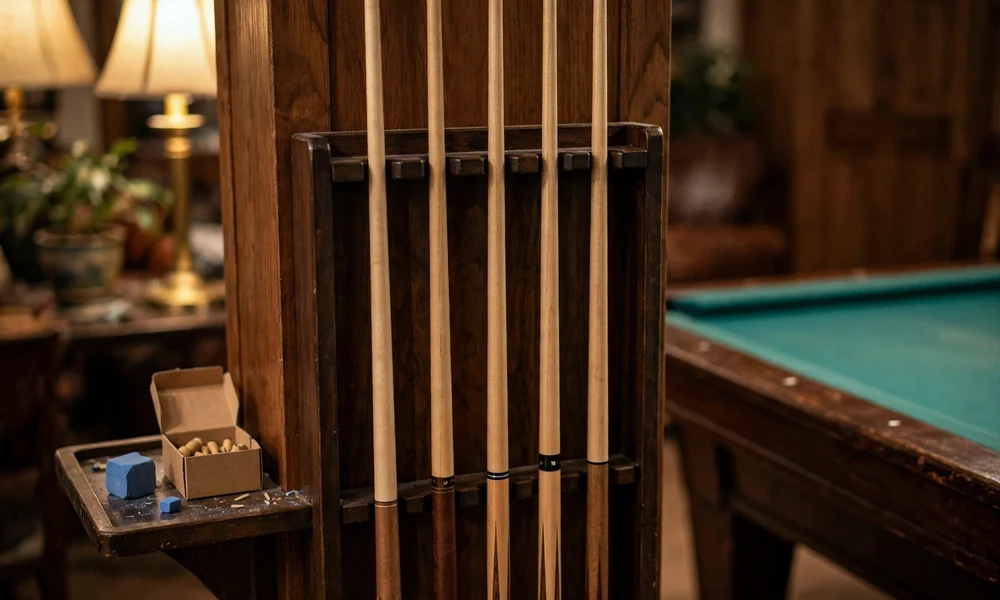
The biggest mistake is buying a pool cue that is too heavy. A cue that is too heavy will tire the arm, and a tired arm will miss, however good the aim is. Check the weight before buying, and buy a cue that feels comfortable after a few practice strokes, not just after one. The second mistake is never chalking the tip: a tip that is never chalked will slip off the ball. The third mistake is leaving the cue leaning against a wall: a cue that leans will bend. Store the cue flat, or upright in a rack, and it will last for years.
Another common mistake is choosing a cue for its looks rather than its straightness. A pretty cue that is warped is a useless cue, however nice the inlay looks. Choose the cue for its straightness first, and let the looks follow. And do not forget the table: a cue that is too long for the room will hit the wall on every shot.
How Pool Cues Fit a Good Game Room
A pool cue is the simplest way to make a game room feel like a proper game room. It gives every player a tool of their own, and it stops the arguments over the bent house cue. A game room with good pool cues is a game room where the game is a pleasure rather than a struggle. The cue is not exciting, but it is essential, and a good one is only noticed when it is missing.
The habit also pairs naturally with a little routine. A quick check of the tip before each game, a wipe of the shaft once a week, and a check of the straightness once a month will keep the cue working and the game enjoyable. It is a small amount of work for a large amount of pleasure, and it is the kind of routine that, once started, is hard to give up. A spare tip and a little shaping tool in the case will also save a night out: a tip that chips or flattens can be shaped in a minute, and the game can carry on without a trip to the shop.
The Verdict
The best pool cue of 2026 is the one that matches the player. For most people that means a straight two-piece maple cue with a comfortable weight and a good leather tip. For a home player, a one-piece maple cue is the better choice. For a serious player, a break cue is the one that matters. Whatever the choice, roll the cue first, check the weight, and test the tip before the cue is bought. A cue chosen this way will not just sit in the rack; it will make the game smoother, the player more confident, and the game room a better place.


