
A travel bottle is the bottle that goes everywhere with you, from the airport security queue to a long train ride, a hot beach, a cold mountain path and the back seat of a car. On a trip a bad bottle leaks into a bag, tastes of plastic, sweats all over a passport or runs dry an hour from the next refill. A good travel bottle does none of those things. It keeps water cold or hot for hours, it seals properly, it fits a cup holder and a bag side pocket, and it is easy to fill, drink from and clean in a hotel sink. The best travel bottles of 2026 are the ones that make staying hydrated the easiest part of the trip, not another thing to worry about.
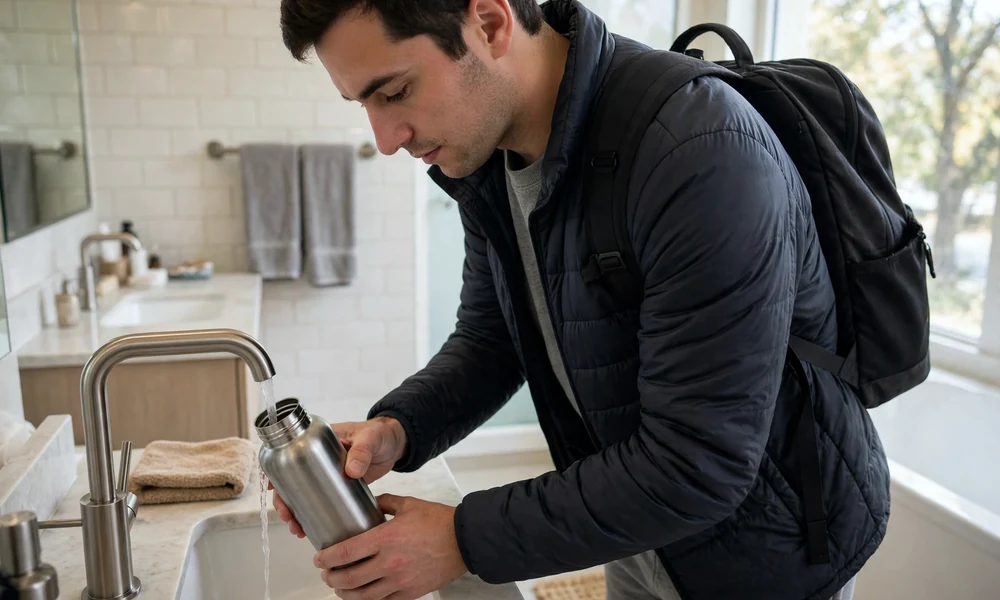
What Makes a Travel Bottle Good
The first thing to judge is the seal. A travel bottle spends its life lying on its side in a bag, squeezed between clothes, books and electronics, so a lid that leaks even a little is a lid that ruins a trip. The best travel bottles have a tight screw cap or a locking flip lid, a rubber seal that stays in place, and a thread that closes smoothly every time. Test the seal before the trip, not during it.
The second thing is the insulation. A bottle that keeps cold water cold on a hot day and hot tea hot on a cold morning is worth its weight, and the best travel bottles use double-wall vacuum insulation to do it. A single-wall bottle is lighter and cheaper, and it suits a short day out, but it will not keep a drink cold through a long afternoon in the sun. A well-insulated bottle also does not sweat, so it stays dry outside. Cold inside, dry outside, is the test.
The Main Types of Travel Bottle
Insulated stainless steel bottles are the classic choice for travel. They are tough, they keep drinks cold for a day and hot for hours, they do not hold flavours, and they survive being dropped on a station platform. They suit most travellers, because they handle long flights, hot days and rough handling well. The trade-off is weight: steel is heavier than plastic, and a full litre is noticeable in a day bag. For most people, an insulated steel bottle in the 500 to 750 millilitre size is the one to buy, and it is the closest thing to a bottle for every trip. The wider world of bottles is covered in our guide to the best water bottles of 2026, which compares the everyday options side by side.
Collapsible bottles are the light option. They roll or fold flat when empty, they weigh almost nothing, and they are the best choice for a traveller who wants a bottle for the flight and the hotel but does not want to carry a heavy bottle all day. They suit a hand-luggage-only trip. The downside is the feel: a soft bottle is harder to drink from one-handed and does not keep drinks cold. For a traveller who packs light and refills often, a collapsible bottle is the one that works.
Filtered bottles are the practical option for places where the tap water is uncertain. They have a built-in filter that removes sediment and improves taste, they let a traveller refill from almost any tap, and they are the best choice for a long trip through places with different water. They suit a careful traveller. The downside is upkeep: filters need replacing and slow the flow of water. For a trip where clean water cannot be taken for granted, a filtered bottle is the one that matters.
Wide-mouth bottles are the easy option. They have a large opening that makes them simple to fill from a tap, easy to add ice to, and much easier to clean properly, which matters when a bottle is used every day for weeks. They suit a traveller who values clean water, and they are the best choice for hot drinks and ice. The trade-off is the drinking: a wide mouth is harder to sip from on a moving bus or train without spilling, so many wide-mouth bottles come with a narrower drinking cap. For a long trip, a wide-mouth bottle with a good drinking cap is the one to choose.
How to Choose the Right Travel Bottle
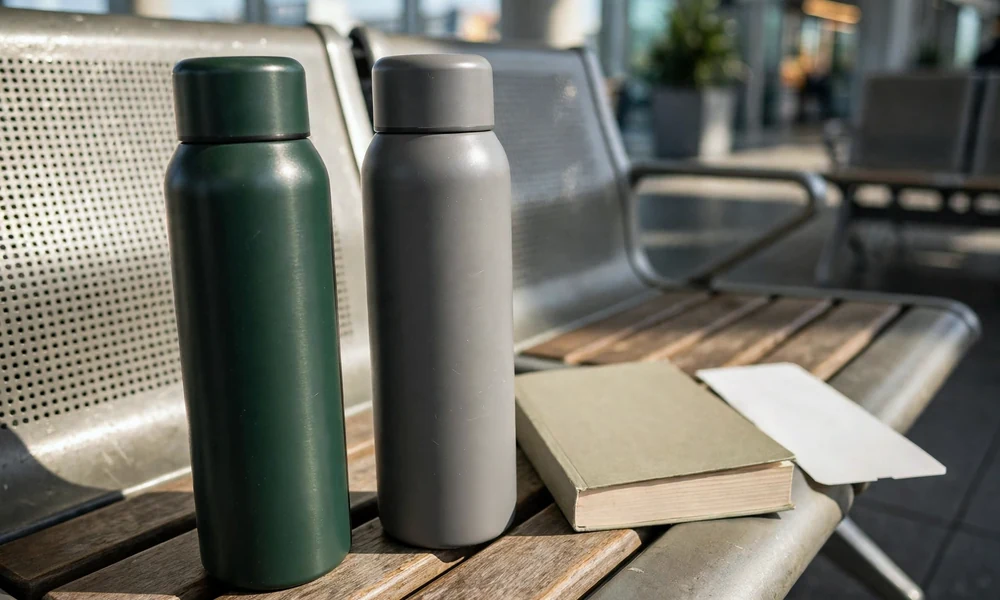
Start with the size. A bottle that is too big is heavy and will not fit a cup holder or a bag pocket, and a bottle that is too small will run dry before the next refill. For a day of sightseeing, 500 to 750 millilitres suits most people, while a litre suits a long hike or a hot day. Check the diameter as well as the volume: a slim bottle fits a car cup holder and a plane seat pocket, while a wide bottle may fit neither. Measure the pocket it will live in before buying, and buy a bottle that fits it with room to spare.
Then look at the lid and the material. A screw cap seals best and leaks least, a flip lid is fastest to drink from, and a straw lid suits a car journey but is harder to clean. Stainless steel is tough and keeps drinks cold, glass tastes clean but is heavy and breakable, and hard plastic is light but can hold flavours and scratches. A bottle that will be dropped and squeezed needs steel. The lid is the part that fails first, so choose a bottle whose lid feels solid, closes with a clear click or a firm twist, and can be taken apart for cleaning. For hot drinks on the move, a lidded mug can be the better tool, so compare the options in our guide to the best travel mugs of 2026 before deciding which one earns the bag space.
Then think about the rules of the trip. A bottle must be empty at airport security, so a bottle that is easy to empty, easy to open and easy to refill at a water fountain is a better airport bottle than one with a fiddly lid. A bottle for a cold climate needs insulation against freezing, while one for a hot climate needs to keep water cold. A bottle for a family trip needs to be tough for children, while one for a solo hike needs to be light and to clip to a pack. The best travel bottle is the one that fits the trip, not the one with the longest list of features.
The Best Travel Bottles of 2026
For most travellers, the best travel bottle of 2026 is a mid-size insulated steel bottle with a screw cap and a drinking lid, in the 500 to 750 millilitre range. It keeps water cold through a hot afternoon, it does not leak in a bag, it fits most cup holders, and it is tough enough to survive a trip. It is not the lightest or cheapest bottle, but it does the most jobs well. Buy one in a colour that is easy to spot in a bag, and keep it filled whenever water is available.
For a long trip, a larger insulated bottle with a wide mouth is the better choice. A litre of cold water lasts through a long morning, the wide mouth makes it easy to fill and clean in a hotel sink, and the insulation means the last sip is still cold hours later. It is heavier and may not fit every cup holder, so it suits a backpack or a car. For a traveller who walks all day in the heat, the extra weight is worth it, because the alternative is buying bottled water all day. On a hike or a long day outdoors, a hands-free option can be even better, so look at our guide to the best hydration packs of 2026 if the bottle will spend most of its time on your back.
For a light trip, a collapsible bottle or a small steel bottle is the one to pack. A collapsible bottle weighs almost nothing when empty and rolls flat in a bag, while a small steel bottle is tough, keeps a drink cold for a few hours and fits any pocket. Either suits a city break or a weekend away. The choice comes down to the trip: a collapsible bottle for a traveller who refills often and packs light, a small steel bottle for a traveller who wants cold water and a bottle that can take a knock. Both are better than no bottle at all.
Common Mistakes to Avoid
The most common mistake is buying the biggest bottle and then leaving it behind because it is too heavy. A litre bottle that stays in the hotel is worse than a 500 millilitre bottle that is carried all day and refilled twice. Buy the size that will actually be carried. Another common mistake is choosing a bottle for its looks rather than its seal. A pretty bottle that leaks is a bad bottle, so test the seal first.
Another mistake is forgetting to clean the bottle. A bottle that is used every day builds up a taste, and a lid with a straw or a flip spout builds up more, so clean the bottle and the lid every night on a trip, and let them dry fully before closing. Fill it whenever water is available, at a hotel, a cafe or a fountain, and never walk past a refill point with an empty bottle.
How Travel Bottles Fit a Better Trip
A travel bottle is the simplest way to make a trip better. It saves money on bottled water, it cuts plastic waste, it keeps water cold on a hot day, and it does it without anyone thinking about it. A trip with a good travel bottle is a trip where water is always there, with fewer stops and fewer worries. The bottle is not exciting, but it is essential, and a good one is the kind of thing that is only noticed when it is missing.
The Verdict
The best travel bottle of 2026 is the one that matches the trip, the bag it will live in, and the way you drink on the move. For most people that means a mid-size insulated steel bottle with a tight seal and a drinking lid, carried every day and refilled whenever the chance comes. For a long hot day, a larger wide-mouth bottle is the better choice. For a light trip, a collapsible bottle is the one that packs best. Whatever the choice, check the seal, measure the bag pocket, and test the bottle before the trip. A bottle chosen this way will not just sit in a bag; it will keep water cold, save money, and make every day of the trip a little easier. Clean it every night, dry it with the lid off, and check the seal now and then, and it will last for years. A small routine keeps the bottle tasting fresh and the lid sealing well, which is all the care a good bottle needs. And that is worth more than any bottle on a shelf.


