Flip-Flops Worth Wearing Beyond the Beach in 2026
Flip-flops are the most underestimated shoes most of us own. They are also the most misjudged: bought for a few pounds at a beach shop, worn until the toe post snaps, and then blamed for sore feet that were really caused by a flat, flimsy sole. The best flip-flops in 2026 are a different thing entirely. They have a contoured footbed that supports your arch, a toe post that does not rub, and a sole thick enough to keep hot pavements and sharp stones at bay. Worn well, they work far beyond the beach: for holidays, hot days at home, the pool, the garden, and even a relaxed lunch by the sea.
This guide is about one specific shoe: the thong flip-flop, with a single post between the big toe and the second toe, and a V-shaped strap over the foot. It is not about strappy walking sandals or leather slides, and it is not about the flat foam pairs that cost less than a sandwich. Every style was judged on comfort over a long day, arch support, grip on wet surfaces, durability, and how smart the pair looks away from the sand.
Key takeaways
- A contoured footbed with real arch support is the single biggest difference between a good flip-flop and a cheap one.
- The toe post should be soft and flexible; a stiff or rough post will rub a blister within an hour.
- A sole at least 15 millimetres thick protects your feet from hot pavements and stones.
- Leather flip-flops look smarter and last longer than foam, but they need keeping dry and cost more.
- Flip-flops are not all-day walking shoes: save them for holidays, warm days and short trips.
How we judged the best flip-flops
Every pair was judged on comfort first, because a flip-flop that hurts is worse than no flip-flop at all. We looked for a footbed that cups the heel and supports the arch, rather than a flat slab that lets your foot slide. The toe post came next: it should be soft, smooth and set at an angle that does not pull. Third was grip on wet tiles and pool decks. Fourth was durability, and fifth was looks away from the beach.
The best flip-flops at a glance
| Flip-flop | Best for | Material | Footbed | Approx. price |
|---|---|---|---|---|
| Classic rubber flip-flop | Beach and pool days | Rubber | Contoured | $25–$50 |
| Leather flip-flop | Smart days and evenings | Leather upper, rubber sole | Contoured leather | $60–$120 |
| Arch-support flip-flop | Long warm days | EVA and rubber | Deep arch, heel cup | $50–$90 |
| Thick-soled flip-flop | Hot pavements and rough ground | Rubber and EVA | Cushioned, thick | $40–$80 |
| Woven-strap flip-flop | Everyday summer wear | Fabric strap, rubber sole | Contoured | $35–$70 |
| Water-friendly flip-flop | Boats, pools and showers | Quick-dry rubber | Textured, draining | $30–$60 |
| Lightweight travel flip-flop | Packing light | Thin EVA and rubber | Lightly contoured | $20–$45 |
Classic rubber flip-flop
The classic rubber flip-flop is the one most people picture, and the best versions are far better than the cheap pairs sold at beach kiosks. Look for a sole with a textured tread, a footbed that is slightly cupped rather than dead flat, and a strap that is soft where it meets the skin. A good classic pair costs $25 to $50, lasts a whole summer, and can be rinsed clean after the beach.
Leather flip-flop
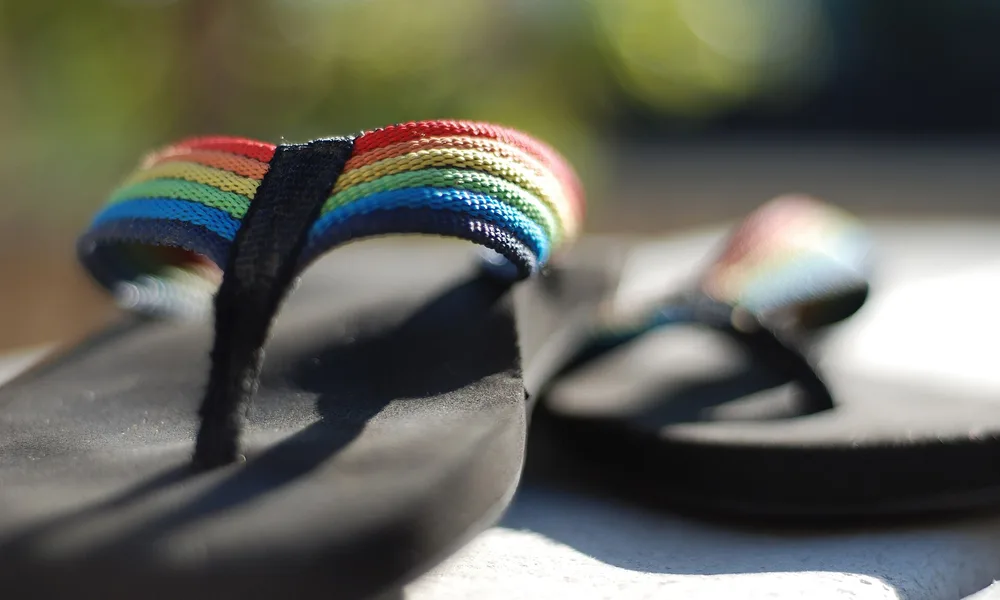
Leather flip-flops are the smartest pair on this list, and the ones that work best away from the beach. A leather strap over a contoured leather footbed looks more like a sandal than a beach shoe, which is why it passes at a seaside restaurant or a relaxed evening out. The leather softens with wear and moulds to your foot, but it needs care: keep it dry, because soaked leather stiffens and cracks. Expect to pay $60 to $120, and expect it to last several summers if you look after it.
Arch-support flip-flop
If you have ever ended a day in flip-flops with aching arches, this is the pair to look at. Arch-support flip-flops have a footbed that rises under the middle of your foot, with a deep heel cup that stops your heel sliding around. They feel strange for the first ten minutes, and then noticeably better by the end of the day. They are the best choice for anyone with flat feet, and for holidays where you will be on your feet for hours in the heat. The sole is thicker, so the pair looks chunkier, but your feet will not mind.
Thick-soled flip-flop
A thick sole does two jobs that a thin one cannot: it keeps heat out and stones out. On a hot pavement in July, a thin flip-flop lets the heat straight through to your feet, while a sole of 20 millimetres or more gives you a real buffer. The same thickness protects you on rocky beaches and gravel paths. Look for a sole that is thick but not heavy, with a textured tread for grip. These are the pairs to pack for a beach with pebbles or a campsite.
Woven-strap flip-flop
Woven fabric straps are the most comfortable straps you can buy, because the fabric is soft from the first wear and does not rub the way stiff rubber or plastic can. A woven strap in a bright colour also looks better with everyday summer clothes than a plain rubber pair, which is why these are the flip-flops most likely to be worn beyond the beach. The weakness is water: fabric straps take longer to dry and can smell if they stay damp, so keep woven pairs for dry days and save rubber for the pool.

Water-friendly flip-flop
Some flip-flops are built to live in water, and they are worth having if your summer involves boats, pools, or shared showers. The best water-friendly pairs use a quick-dry rubber that does not soak up water, a footbed with grooves that let water drain away, and a strap that stays grippy when wet. They are also the easiest to clean: a rinse under a tap and they are done. Avoid smooth soles, which turn a wet pool deck into a skating rink. These are not the smartest-looking flip-flops, but they are the safest where water is involved.
Lightweight travel flip-flop
Travel flip-flops have one job: to weigh almost nothing and take up almost no space, while still being comfortable enough to wear all evening. The best of them fold or roll flat, weigh less than 200 grams a pair, and still have a lightly contoured footbed and a grippy sole. The compromise is durability: a very light pair will not survive a whole summer of daily wear, so treat it as a travel companion rather than your only pair.
What makes a flip-flop comfortable
Comfort in a flip-flop comes from the footbed, not the strap. A good footbed is contoured: it rises under the arch, cups the heel, and has a slight ridge under the toes that stops your foot sliding forward. A flat footbed forces your toes to grip with every step, which is what makes cheap flip-flops so tiring. The toe post matters too: it should be soft and flexible, and sit at an angle that follows the shape of your foot. If the post is hard plastic set straight up, it will rub between your toes within an hour.
Fit still matters. Your heel should sit inside the back of the sole, not hanging over the edge, and your toes should not reach the front edge. If the strap is loose, your foot will slide and your toes will grip, which is tiring. Most flip-flops come in whole sizes only, so if you are between sizes, size up.
Where flip-flops work, and where they do not
Flip-flops earn their place on the beach, by the pool, in the garden, and on warm evenings out, when the day is relaxed and the ground is flat. They are the right shoe for a seaside lunch, a market stroll, or a walk to the corner shop in the heat. They are the wrong shoe for a full day of sightseeing or a hike, because they offer no ankle support and no protection for your toes. For days when you need more support, our guide to sandals that actually support your feet covers strappy styles with adjustable straps and deeper footbeds, and for packing them well, our beach holiday packing lists help you fit a pair into a small bag without wasting space. At home, a good pair of slippers that actually last takes over the job flip-flops do outdoors, with a proper sole and a closed back.
Signs a flip-flop is not worth buying
Cheap flip-flops fail in the same few places, and the signs are easy to spot before you pay. A sole thinner than a centimetre will let heat and stones through, and it will wear flat within weeks. A hard plastic toe post will rub, and a strap that is glued rather than plugged through the sole will pull out at the worst moment. If the footbed is dead flat and the sole bends in the middle when you twist it, the pair has no support at all. A good flip-flop feels solid in the hand and bends at the ball of the foot.
Checklist: buying flip-flops in 2026
- Choose a contoured footbed with arch support, not a flat slab of foam.
- Check the toe post: it should be soft, smooth and flexible, with no rough edges.
- Look for a sole at least 15 millimetres thick, with a textured tread for wet grip.
- Make sure your heel sits inside the sole and your toes do not reach the front edge.
- Pick leather for smart days, rubber for water, and woven straps for dry days.
- Break a new pair in with short walks before a holiday, and retire any pair with a loose strap.
Frequently asked questions
Are flip-flops bad for your feet?
Flat, thin flip-flops can be, because they offer no arch support and force your toes to grip. A contoured pair with a thick sole and a soft toe post is far kinder.
How do I stop flip-flops rubbing between my toes?
Choose a soft fabric or leather toe post, break the pair in with short walks, and keep the skin between your toes dry. If a pair still rubs after a week, the post is the wrong shape for your foot.
Can you wear flip-flops to a restaurant?
At a beach cafe or a relaxed seaside restaurant, a smart leather pair is fine. At a formal restaurant, no: the open toe and casual strap are the wrong level of dress, and a closed shoe is the better choice.
How long should a good pair of flip-flops last?
A well-made rubber or leather pair should last two to three summers of regular wear. A cheap foam pair usually lasts one summer at most, and often fails at the toe post long before the sole wears out.
Are leather flip-flops worth the extra money?
Yes, if you want a pair that works away from the beach. Leather looks smarter, moulds to your foot, and lasts longer than foam, but it needs keeping dry.
What is the difference between flip-flops and sandals?
Flip-flops have a single thong post between the toes and a V-shaped strap, with no ankle or heel strap. Sandals use two or more straps, often adjustable, and usually offer more support and a more secure fit for long walks.
The bottom line
The best flip-flops in 2026 are the ones with a contoured footbed, a soft toe post, and a sole thick enough for the ground you will actually walk on. Buy leather for smart days, rubber for water, and a pair with real arch support if you will be on your feet for hours. Wear them where they belong, and leave the long walks to a shoe with more support.