
The best sandals in 2026 are the ones you forget you are wearing. They are light on your feet, kind to your arches, and steady on pavements, sand and wet tiles alike. A good pair carries you through a long day of walking, a beach afternoon and a warm evening out without a single blister. Choosing well matters because sandals are the warm-weather shoes most of us live in for months, and the wrong pair can turn a holiday into a week of sore feet.
This guide compares the strongest sandal styles of 2026, from leather slides to cushioned walking sandals, and explains how to match the sandal to your feet and your plans. We judged every style on comfort over long days, arch support, grip, strap security, weight and durability. The best sandals of 2026 are not the cheapest pair in the shop, and they are not the most fashionable either. They are the pair that fits your foot shape, supports the way you walk, and holds up after a summer of daily use.
Key Takeaways
- Fit comes first: a sandal that matches your foot shape and arch height beats a famous name that pinches or slips.
- Look for a contoured footbed with real arch support; flat sandals feel fine for an hour and punish your feet by the end of the day.
- Two or more adjustable straps hold your foot far more securely than a single loose strap, especially on uneven ground.
- Rubber outsoles with a textured tread grip wet tiles and pavements; smooth soles slip dangerously when they get wet.
- Buy sandals for the walking you actually do: beach, city and all-day walking sandals are built for different jobs.
What Makes a Great Sandal
A great sandal balances four things that pull in different directions: comfort, support, grip and weight. A sandal that is too soft lets your foot slide around and your toes grip the footbed with every step, which is tiring and causes blisters. A sandal that is too stiff feels like walking on a board. The best sandals of 2026 get this balance right for their intended use, so match the sandal to your day rather than chasing a single overall winner. A beach sandal can be light and simple; a walking sandal needs a structured footbed, secure straps and a grippy sole because it carries you for hours on hard ground.
Fit and Footbed
Fit is the single most important factor, and it is also the most personal. Your heel should sit inside the heel cup without hanging over the edge, and your toes should have room to spread without reaching the front of the sole. Leave roughly a thumb’s width of space ahead of your longest toe. If your heel hangs over the back edge, the sandal is too short, however comfortable it feels in the shop. If your foot slides sideways on the footbed, the sandal is too wide for you, and no amount of tightening will fix it.
The footbed is where comfort is made or lost. A contoured footbed with a raised arch and a deep heel cup cradles your foot and spreads your weight evenly, which is why cork and moulded EVA footbeds are so popular for all-day wear. Flat footbeds offer nothing to stop your arch collapsing on a long walk, and tired feet and sore knees usually follow. Try sandals on at the end of the day, when your feet are slightly swollen, and walk around the shop for several minutes. A sandal that feels good after five minutes of walking is a much better bet than one that only feels good standing still.
Straps and Security
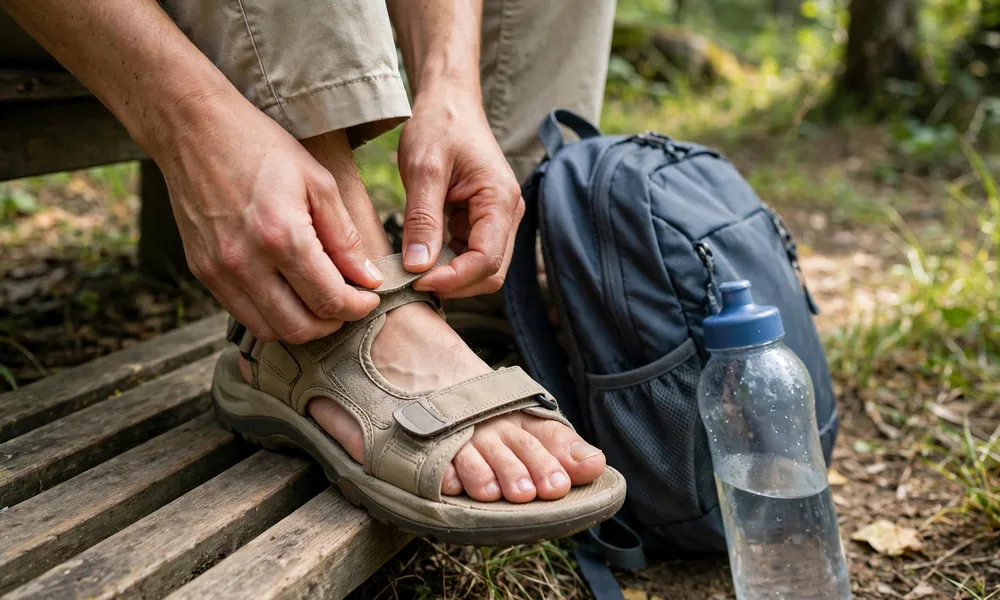
Straps decide whether a sandal stays with your foot or fights it. Two adjustable straps, one across the forefoot and one around the ankle or heel, hold the foot far more securely than a single strap, and they let you adjust the fit as your feet swell in the heat. Hook-and-loop fastenings are quick to adjust and suit swollen feet, while buckles give a more precise fit and a smarter look. Leather straps soften and mould to your foot over the first week, while fabric straps stay soft from the first wear but can take longer to dry after a soaking.
Watch for straps that cross a bony part of your foot, because those are the places blisters start. Our guide to the best travel shoes for walking all day covers the same fit principles for closed shoes, and the lessons transfer directly to sandals.
Best Sandals 2026 Compared
The table below compares the main sandal styles of 2026 so you can see the trade-offs at a glance.
| Sandal Style | Best For | Support | Weight | Typical Price |
|---|---|---|---|---|
| Leather slide | Evenings, short walks, smart-casual days | Moderate | Light | $60–$150 |
| Cork footbed sandal | All-day walking, standing work | High | Medium | $80–$180 |
| Adjustable walking sandal | Long walks, sightseeing, uneven paths | High | Medium | $70–$160 |
| Waterproof rubber sandal | Beach, pools, boats, wet days | Low to moderate | Light | $25–$70 |
| Sport sandal | Active days, light trails, water crossings | High | Medium | $60–$140 |
| Espadrille sandal | Holidays, relaxed evenings, light walking | Low | Light | $40–$120 |
Price is a rough guide, not a rule. Some excellent everyday sandals cost under sixty dollars, while some expensive designer pairs offer little more than a logo. Judge by the footbed, the straps and the sole, not the label. A sandal that costs eighty dollars and lasts three summers is far cheaper per wear than a thirty-dollar pair that falls apart fast.
Leather Slides and Cork Footbed Sandals
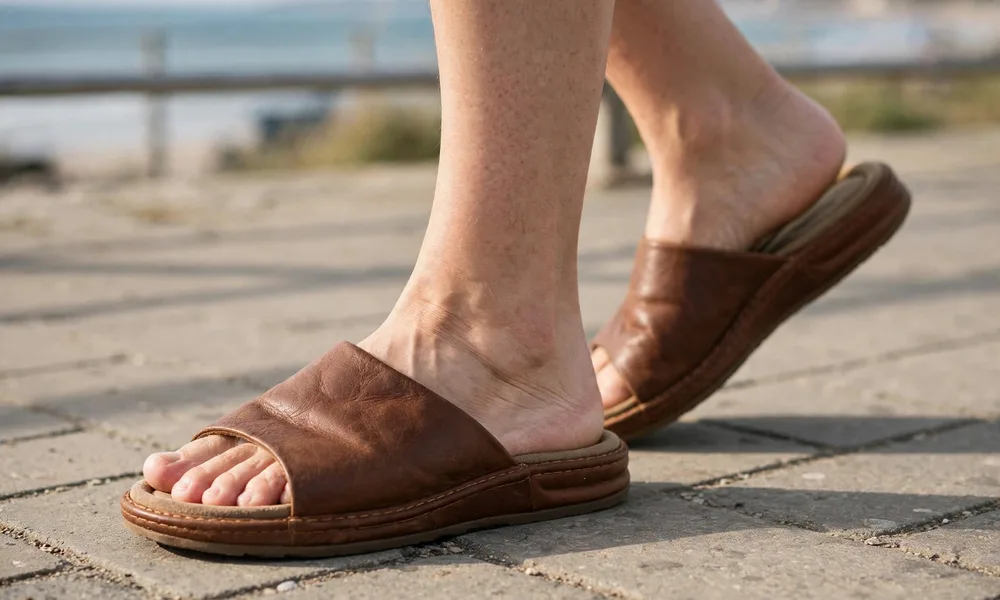
Leather slides are the simplest sandals of all, and often the most elegant. A single wide strap over the foot, a leather-lined footbed and a slim sole make them easy to slip on and smart enough for most warm-weather occasions. The best leather slides use full-grain leather that softens with wear and a footbed with at least a gentle arch, because a completely flat slide will tire your feet on a long day. They suit dry weather and paved surfaces best, and they are not a good choice for rain, because wet leather stretches and takes a long time to dry.
Cork footbed sandals are the workhorses of the sandal world. The cork and latex footbed moulds itself to your foot over the first weeks of wear, giving a custom fit that no flat sandal can match, and the deep heel cup and raised arch support your foot through long days. They are heavier than slides and they look less sleek, but for all-day comfort they are hard to beat. If you stand all day at work or walk for hours on holiday, a cork footbed sandal is usually the best investment you can make in your feet.
Walking Sandals and Sport Sandals
Walking sandals are built for distance. They have two or three adjustable straps, a cushioned midsole and a textured rubber outsole, and they are designed to keep your foot secure on slopes, cobbles and dusty paths. The best walking sandals of 2026 weigh little more than a pair of trainers, yet they grip far better than a fashion sandal on uneven ground. They are the right choice for sightseeing days, walking holidays and anyone who covers serious miles in warm weather. Sport sandals take the same idea further, with quick-dry straps and rugged lugs for river crossings and muddy paths.
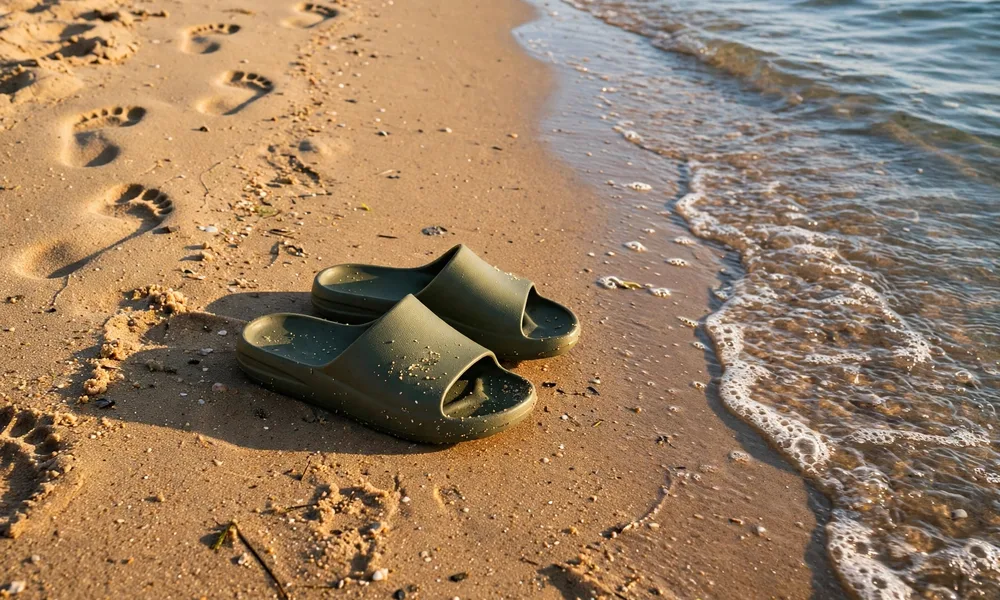
If your plans are more trail than town, our guide to the best hiking sandals of 2026 compares the toughest open footwear for rough ground, which is a different job from the everyday walking sandals covered here. Waterproof rubber sandals, meanwhile, earn their place on beach and pool days: moulded rubber and EVA dry in minutes, rinse clean under a tap, and shrug off sand, salt water and chlorine. Their weakness is support, so they are best for short stretches rather than all-day walking. Look for a textured sole you can feel with your thumb, because wet tiles and smooth rock are among the slipperiest surfaces you will ever walk on.
How to Choose the Best Sandals in 2026
Start with your feet, not the shop window. High arches need a contoured footbed with real arch support. Flat feet need a deep heel cup and a firm midsole. Feet that swell in the heat need adjustable straps, and wide feet need brands that offer wide fittings.
Next, think about your surfaces. Cobbles need a flexible sole that bends with your foot. Sand needs a sandal that does not trap grit under the footbed. Wet tiles need a grippy tread. A sandal that handles all four is a rare find, so prioritise the surfaces you will actually walk on most. If you are packing for a beach holiday, our guide to the best packing lists for beach holidays helps you decide which pairs are worth the space in your bag. Finally, break new sandals in over a week of short walks before a long day: leather straps soften, cork footbeds mould to your feet, and any hot spots will show up early, when you can still fix them.
Common Mistakes When Buying Sandals
The first mistake is buying by looks alone: a beautiful sandal with a flat footbed and a smooth sole will hurt you by lunchtime. The second is buying the wrong size, with your heel hanging over the edge or your toes gripping to keep the sandal on. The third is ignoring the sole, when grip is what keeps you upright on wet ground. Many buyers also choose one pair for everything, when a smart leather pair and a comfortable walking pair would serve them far better.
Sandals Buying Checklist
- Check your heel sits inside the heel cup and your toes have a thumb’s width of space ahead of them.
- Choose a contoured footbed with arch support if you will walk for more than an hour at a time.
- Pick two or more adjustable straps so you can adjust the fit as your feet swell in the heat.
- Feel the outsole tread with your thumb; it should grip, not slide, on a smooth surface.
- Match the sandal to your day: beach, city, walking and smart occasions need different pairs.
- Break new sandals in over a week of short walks before a long day or a holiday.
Frequently Asked Questions
What are the most comfortable sandals for all-day walking?
Cork footbed sandals and adjustable walking sandals are the most comfortable for all-day wear, because they combine a contoured footbed, real arch support and secure straps.
Should sandals have arch support?
Yes, for more than an hour on your feet. Arch support spreads your weight evenly and stops your foot tiring.
Are leather sandals good for wet weather?
No. Wet leather stretches, loses its shape and takes a long time to dry, and it can stain your feet. For rain, beach and pool days, choose a moulded rubber or EVA sandal that dries in minutes.
How should sandals fit?
Your heel should sit inside the heel cup, your toes should have about a thumb’s width of space ahead of them, and the straps should hold your foot without pinching.
Can you wear sandals for hiking?
You can wear sport and hiking sandals on easy, dry trails, but ordinary fashion sandals are not safe on rough ground. Trail sandals have deep lugs, secure straps and toe protection.
How long should a good pair of sandals last?
A well-made pair of sandals should last two to three summers of regular wear, and often longer if you rotate them with other shoes. Replace sandals when the footbed is flattened or the tread is smooth.
The Bottom Line
The best sandals in 2026 are the pair that fits your feet, supports the way you walk, and suits the days you will actually spend in them. Choose a contoured footbed with arch support, two or more adjustable straps, and a grippy rubber sole. Buy for your feet first and your wardrobe second, and your sandals will carry you happily through the warm season.


