The best travel shoes for walking all day in 2026 are the ones you forget you are wearing. On a good day you can cover twenty thousand steps without thinking about your feet, moving from a morning market to a museum, across a park, and up a hill to a viewpoint. On a bad day, the wrong shoes turn every step into a negotiation.
That difference rarely comes down to price or brand. It comes down to fit, cushioning, weight, and grip after six or eight hours on pavements, cobblestones, and wet tiles. A shoe that feels wonderful for ten minutes in a shop can become a problem by hour four, when your feet swell.
This guide explains what to look for, compares the main types of travel walking shoes, and shows how to choose, break in, and pack the right pair for your next trip.
Key takeaways
- Comfort after eight hours matters far more than comfort in the first ten minutes, so judge a travel shoe by its cushioning, fit, and support over a full day.
- Lightweight, breathable shoes with a grippy sole and a roomy toe box are the safest all-round choice for city travel.
- Always break in travel shoes with at least three long walks at home before you pack them for a trip.
- One versatile pair beats three specialised pairs when you are travelling light, so choose a shoe that works for streets, parks, and smart dinners alike.
- Good socks, a proper fit with room for swelling, and a spare pair of insoles can matter as much as the shoe itself.
What Makes a Great Travel Shoe for Walking All Day
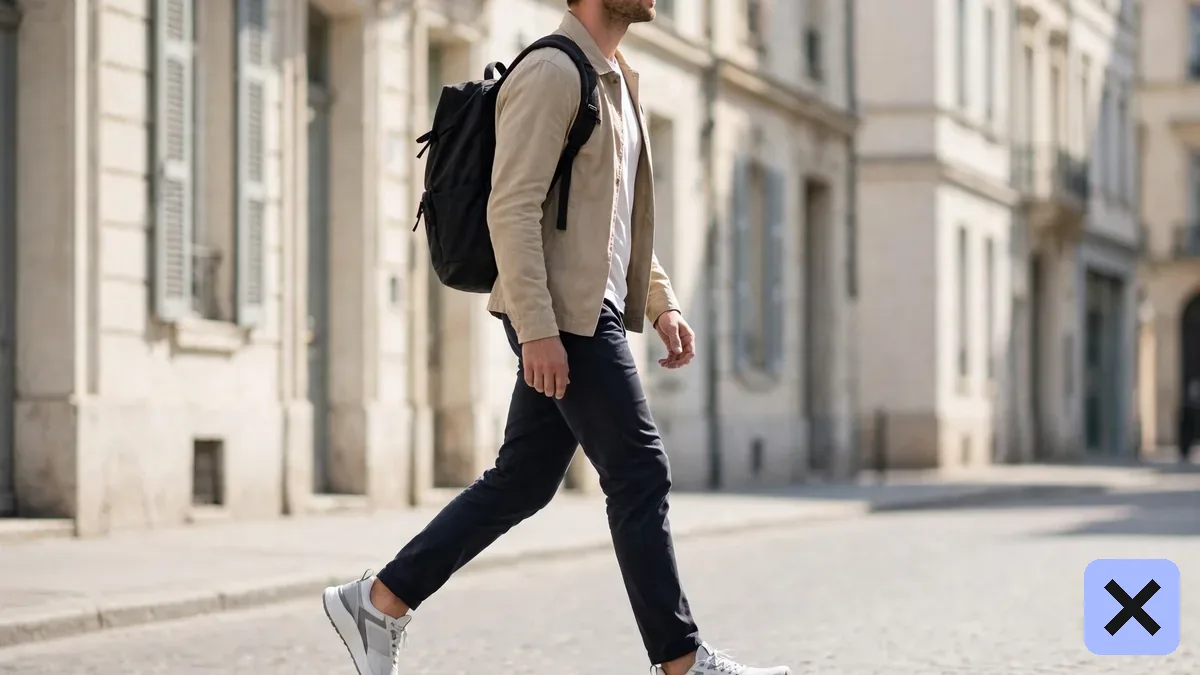
A great travel shoe is a compromise done well: comfortable for a full day on your feet, light enough to pack, smart enough for a restaurant, and tough enough for uneven ground. The best ones get the fundamentals right: fit, cushioning, support, grip, and breathability.
Fit comes first. Your feet swell as the day goes on, so a shoe that fits snugly in the morning can feel tight by the afternoon. Look for a thumb’s width of space at the toes and a toe box wide enough for your toes to spread. Try shoes on in the afternoon, when your feet are at their largest.
Cushioning protects your joints over a long day. A thick, soft midsole absorbs the shock of every step on hard pavements, while a firmer heel cup keeps your foot stable. Press the midsole with your thumb: it should give a little and bounce back. Very soft shoes can feel lovely at first but become tiring with no support, so look for a balance of softness and structure. A removable insole is useful too, because it lets you swap in your own orthotic. If you know a particular style suits you, that knowledge is worth more than any review, and our guide to the best walking shoes for travel compares the styles travellers rate most highly.
Cushioning, Weight, and Support
Heel strikers need good heel cushioning, while people who walk on the balls of their feet need forefoot cushioning. Most travellers do a bit of both, so even cushioning from heel to toe is safest. Weight adds up quietly too: a shoe two hundred grams heavier per foot makes a real difference over twenty thousand steps.
Grip, Breathability, and Weather
Grip is easy to overlook until you need it. Smooth soles slip on wet stone, polished marble, and metal grates, all common in old towns and stations, so look for a rubber outsole with a clear tread. Breathability keeps feet dry: mesh uppers let air flow and help sweat escape, reducing blisters. Leather and waterproof membranes keep rain out but can make feet hot, so they suit cooler climates.
The Best Travel Shoes for Walking All Day in 2026
There is no single best shoe for every traveller, because feet, trips, and tastes differ. The table below compares the main types of travel walking shoes, so you can see at a glance which style suits your kind of trip.
| Shoe type | Best for | Comfort | Weight | Style |
|---|---|---|---|---|
| Lightweight walking trainers | City breaks and all-day sightseeing | Excellent | Very light | Casual and smart |
| Walking sandals | Hot climates and beach towns | Very good | Light | Casual |
| Leather walking shoes | Smart travel and cooler weather | Good | Medium | Smart |
| Trail shoes | Mixed terrain and countryside walks | Very good | Medium | Sporty |
| Slip-on travel shoes | Airports and easy days | Good | Light | Smart casual |
| Waterproof walking shoes | Rainy destinations and winter trips | Good | Medium to heavy | Practical |
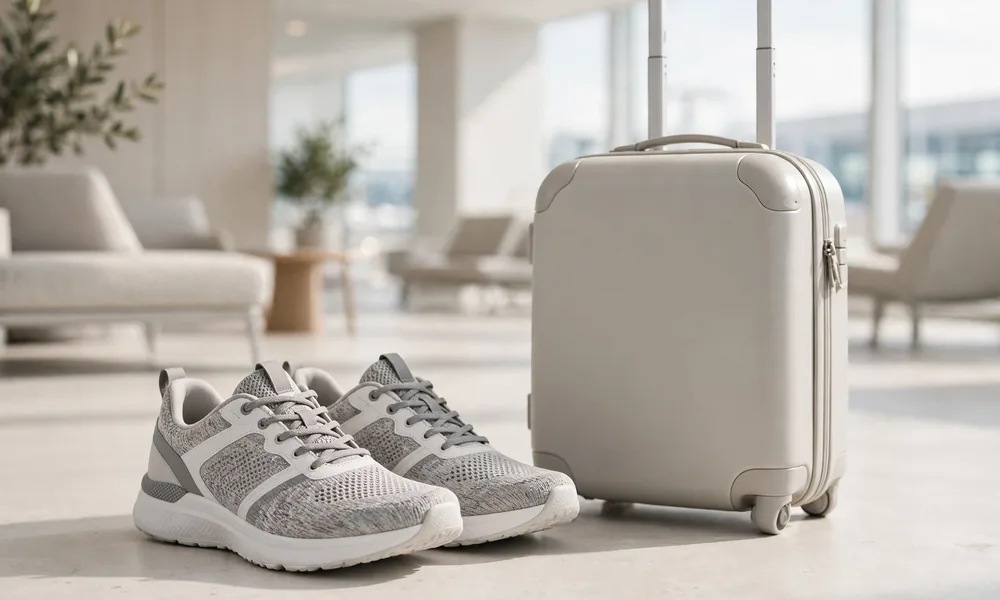
Lightweight walking trainers are the default choice for most travellers, combining a cushioned sole, a breathable upper, and a flexible fit in a shoe that goes with almost everything you pack. Choose a neutral colour, such as white, grey, navy, or black, and one pair can carry you through an entire trip.
Walking sandals are the best option in genuinely hot weather, where closed shoes become sweaty. A good sandal has a contoured footbed, adjustable straps, and a grippy sole. They suit beach towns and warm cities better than rough paths, so pack closed shoes too if you plan any hiking.
Leather Walking Shoes and Trail Shoes
Leather walking shoes are the smartest option here, suiting travellers who want one pair for a morning walk and a smart dinner. Good leather moulds to your foot over time, and a cushioned leather shoe can be surprisingly comfortable. The trade-off is weight and warmth, so leather suits spring, autumn, and winter better than a hot summer break.
Trail shoes sit between trainers and hiking boots, with a tougher sole, a more protective toe, and better grip on loose ground. They suit trips that mix city walking with countryside paths or uneven old streets. For serious mountain walking, proper hiking footwear is still better, and our round-up of the best hiking boots explains what to look for on steep, rough terrain.
Slip-On Shoes and Waterproof Options
Slip-on travel shoes are the easiest to live with at airports, where you take your shoes off at security. The best slip-ons have a proper heel counter and a cushioned insole, so they still support your foot. They are not ideal for very long days, because they can slip at the heel, but as a second pair they are hard to beat. Waterproof shoes are worth packing when rain is a near certainty, though a water-resistant trainer is the better compromise for most trips.
How to Choose the Right Pair for Your Trip
Start with your itinerary, not a shoe catalogue. A week in a flat city calls for a different shoe than a week mixing a city with hill towns and coastal paths. Note the surfaces, the weather, and how smart you need to look in the evenings, then choose the shoe that covers most of that list.
Next, think about how you pack. With hand luggage only, you can take two pairs at most, so versatility is the most valuable quality in a travel shoe. Wide feet need a wide fit or a stretchy upper, narrow feet need a secure heel, and if you have had blisters before, choose with that in mind.
Fit, Socks, and Breaking In
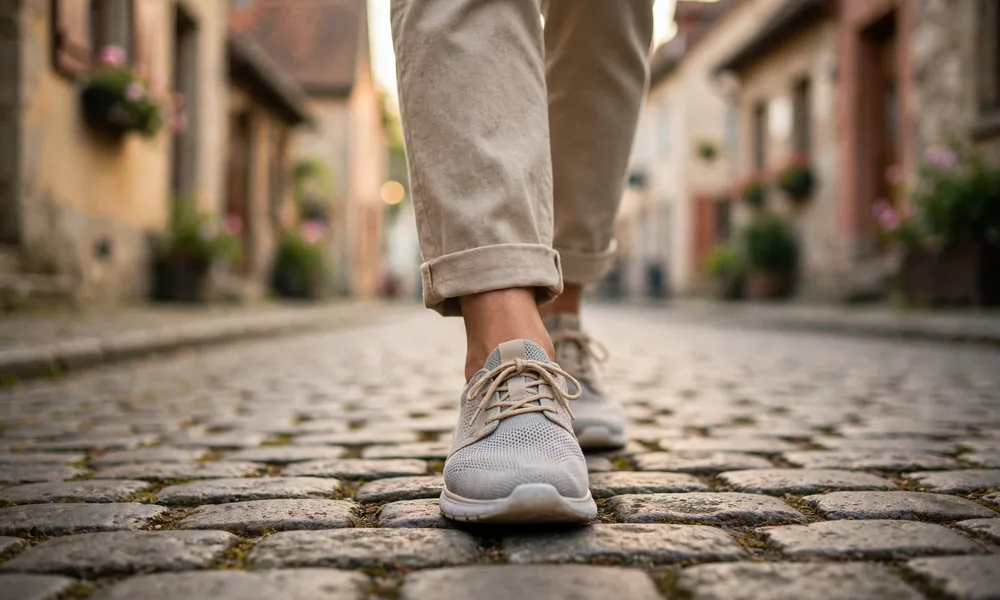
When you try a shoe on, wear the socks you will travel in and walk on a hard floor. Check that your toes can wiggle, your heel does not lift, and nothing rubs. A walking sock made from merino wool or a moisture-wicking blend reduces friction and keeps feet drier than cotton, which holds sweat and makes blisters more likely. Pack at least three pairs.
Breaking in is non-negotiable. Never take a brand-new pair on a trip. Wear them for short walks first, then for a full day at home, including stairs and hills. Three long walks before you travel is a sensible minimum. If a shoe rubs during those walks, it will do the same on holiday, only worse.
Packing, Care, and Making Shoes Last on the Road
Packing shoes well protects both the shoes and the rest of your luggage. Stuff each shoe with socks or soft clothing to help it keep its shape, and put shoes in a shoe bag so they do not mark your clothes. Place them at the bottom of your bag, soles facing outwards. If you pack two pairs, wear the heavier pair on the plane and pack the lighter one.
On the road, air your shoes out overnight rather than leaving them in a closed bag, and stuff them with newspaper if they get wet. Rotate between two pairs when you can, because a shoe that gets a day to dry will last longer. Never dry walking shoes on a radiator, because heat can warp the sole and damage the glue. A few blister plasters and spare insoles weigh almost nothing and can save a day of walking. Shoes are often the bulkiest thing in a bag, so one versatile pair frees up space, and our guide to the best travel backpacks can help you pick a bag that fits your shoes and your day kit.
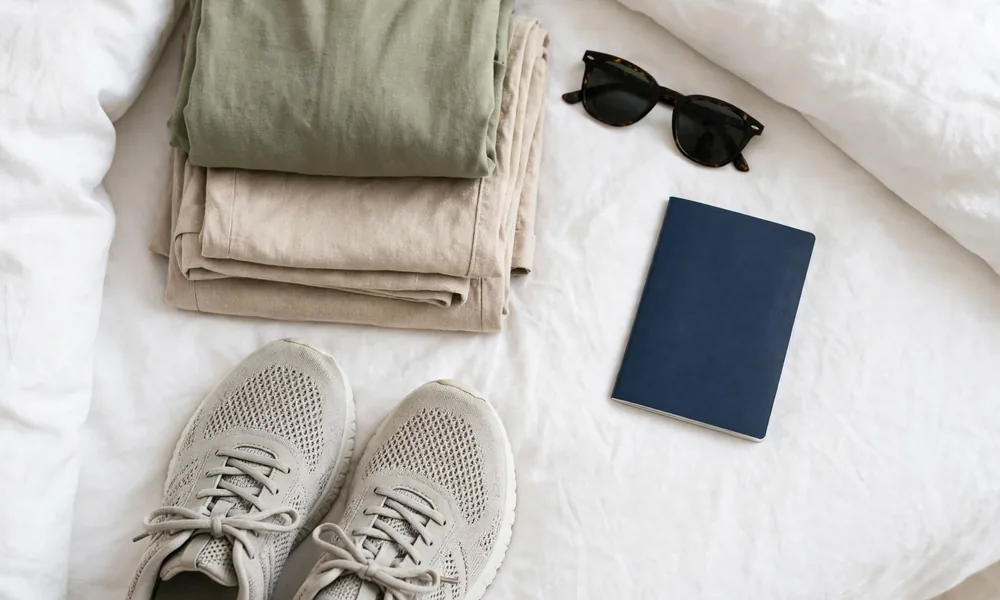
Travel Shoe Checklist
Tick every item before you buy and again before you pack.
- Fit checked in the afternoon with travel socks on, with a thumb’s width of space at the toes and no heel slip.
- Cushioning that stays springy after a long walk, with enough arch support for your feet.
- A grippy rubber sole with a clear tread that holds on wet stone and smooth floors.
- Breathable uppers for warm weather, or a waterproof option if heavy rain is likely.
- Broken in with at least three long walks at home, with no rubbing or pinching.
- Packed with good walking socks, blister plasters, and a spare pair of insoles.
Frequently Asked Questions
How many pairs of shoes should I pack for a walking trip?
Two pairs is the sweet spot: one versatile walking shoe for full days, and a lighter second pair for evenings and rest days. One pair is enough for a short city break, but two let you rotate and cope if one pair gets wet.
Are running shoes good for walking all day?
Running shoes can work well because they are light and cushioned, but they are designed for a different stride, and walking shoes usually have a firmer heel. If your feet feel good after a long walk in your running shoes, they are a fine choice.
Should travel shoes be waterproof?
Waterproof shoes are worth it when rain is likely and you will be outdoors for hours, but they are hotter and heavier than breathable shoes. For most trips, a water-resistant trainer is enough. Choose waterproof shoes for winter and rainy destinations, and breathable shoes for warm, dry ones.
How do I stop blisters when walking all day?
Wear well-fitted, broken-in shoes with moisture-wicking socks, and cover any spot that feels hot before it becomes a blister. Keep your feet dry, change socks halfway through a long day, and carry blister plasters.
What is the best colour for travel walking shoes?
Neutral colours such as black, navy, grey, or white are the most versatile, because they go with everything you pack and look smart enough for restaurants. Dark colours hide dirt better on long trips, while light colours look fresher in hot weather.
Can I wear the same shoes for walking and for dinner?
Yes, if you choose a clean, neutral walking shoe with a smart design. Many modern walking trainers look like ordinary smart casual shoes, and a leather walking shoe looks at home in most restaurants. Very sporty or muddy trail shoes are the exception.
The Bottom Line
The best travel shoes for walking all day in 2026 are light, cushioned, grippy, and broken in before you leave home. Choose a versatile pair that suits your itinerary, your feet, and your packing style, wear it on three long walks first, and pair it with good socks and a little daily care.