Cooler Boxes vs Cooler Bags in 2026: Which Keeps Food Cold Longer?
Cooler boxes are the hard, rigid chests that hold ice for days, while cooler bags are the soft, folding carriers that hold it for hours. Choosing between them is choosing how long your food must stay cold and how far you must carry it. The best cooler boxes of 2026 keep ice for three to five days, survive being dragged over gravel and sat on, and still seal tight after a season.
This guide is about the box itself, from a small 20-litre day box to a 100-litre wheeled chest: how it keeps things cold, how it differs from a bag, and how to pick the right size. Our guide to the best cooler bags of 2026 covers the soft side; this guide covers the hard side.
Key Takeaways
- A hard box holds ice for three to five days, while a soft bag manages four to twelve hours: thick walls and a gasket seal beat foam and a zip.
- Rotomoulded boxes are the toughest, injection-moulded boxes lighter and cheaper, and both beat a thin supermarket box by days.
- Buy for the trip you take: 25 litres suits a couple, 45 to 65 litres a family of four.
- Ice packs do the real cooling work: pack frozen blocks, not just cubes.
- Latches, hinges, and a drain plug matter more than the ice claim: a lid that will not seal wastes ice fastest.
What a Cooler Box Actually Is
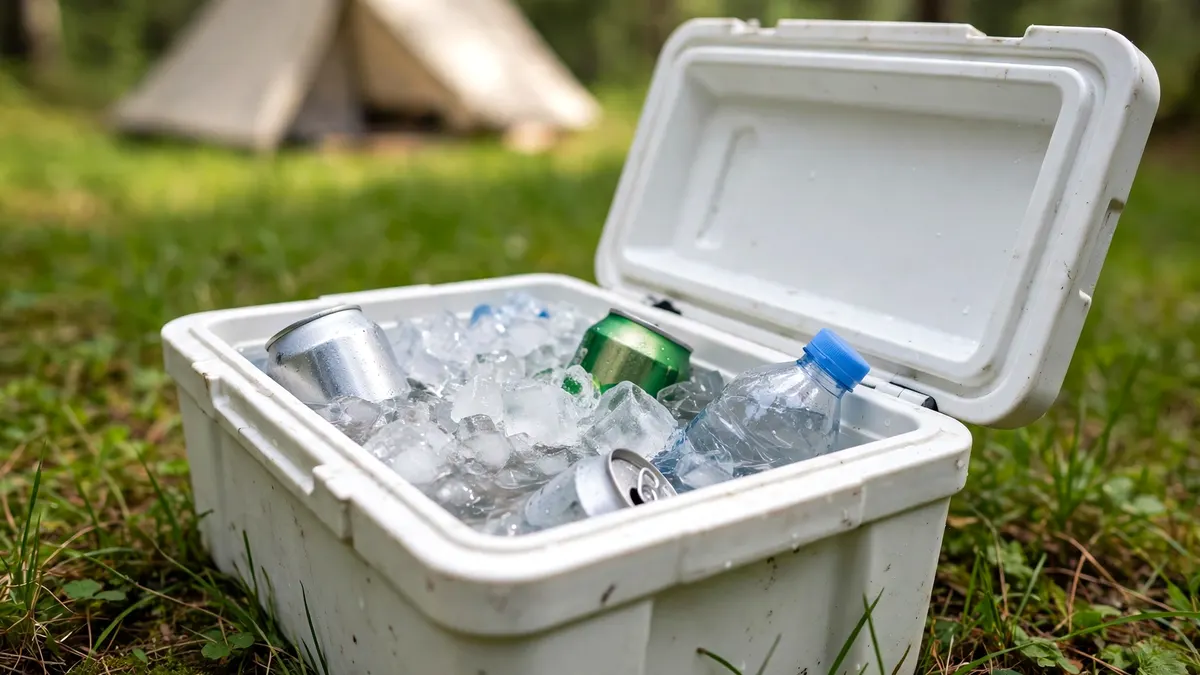
A cooler box is a rigid, hard-sided chest with a hinged lid, thick foam-filled walls, and a seal that closes tight. It does not make anything cold. It slows the heat trying to get in, through the walls, the lid, and the trapped air.
The box works three ways at once. The foam slows heat through the plastic. The rubber gasket stops warm air leaking in at the join, where most cheap boxes fail. The latches pull the lid tight every time. Get any of the three wrong and the box warms up fast, whatever the label claims.
Cooler Boxes vs Cooler Bags: The Real Differences
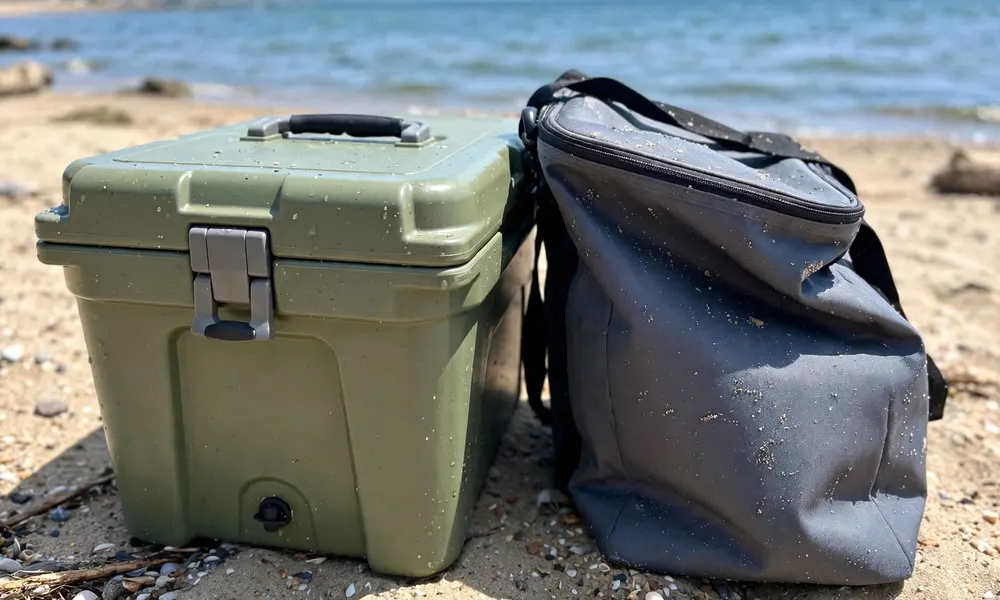
The box and the bag look like two versions of the same thing, but they are built for different jobs.
Insulation and Ice Retention
Insulation is where the box wins outright. A hard box has walls 25 to 50 millimetres thick, filled with dense foam, and a gasket-sealed lid. A soft bag has a few millimetres of foam in a fabric shell, closed by a zip that leaves a gap. A good box holds ice for three to five days, the best five to seven when pre-chilled and packed with block ice. A good bag holds ice for four to eight hours. The bag is a day-trip tool. The box is a multi-day tool.
Durability
Durability is the box’s second clear win. A rotomoulded box survives drops, gravel, and use as a seat, and comes back without a crack. A bag survives being carried and folded, but its fabric tears, its zip fails, and its base wears through within a few seasons.
Portability
Portability is where the bag wins. A soft bag folds flat when empty, weighs almost nothing, and squeezes into a packed car. A hard box weighs 10 to 15 kilograms empty in the larger sizes, twice that when full. Wheeled boxes close the gap on flat ground.
Capacity and Packing
Capacity carries the same trap on both: the stated litres include the ice, so the usable food space is roughly two-thirds of the headline number. A box protects fragile food better, because rigid walls stop bottles crushing sandwiches. For a picnic, the bag is often better, and our guide to the best picnic coolers of 2026 explains why a day-trip cooler needs compartments and a dry pocket more than five days of ice.
| Cooler box (hard) | Cooler bag (soft) | |
|---|---|---|
| Ice retention | 3 to 5 days, up to 7 | 4 to 12 hours |
| Insulation | Thick foam walls, gasket seal | Thin foam, zip closure |
| Durability | Survives drops, seats, gravel | Fabric tears, zips fail |
| Portability | Heavy, never folds flat | Light, folds flat, easy carry |
| Best for | Camping, fishing, boats, multi-day | Beach, park, day trips, drinks |

How to Choose a Cooler Box
Choosing a cooler box means matching the box to the trip.
Size: Match the Trip, Not the Fantasy
Size is where most buyers go wrong, and the mistake usually runs one way: too big. An oversized box warms up faster, because cold air escapes every time the lid opens. A 20 to 25 litre box suits one or two people for a weekend, a 35 to 45 litre box covers a family of four for three or four days, and 60 litres or more is for groups and long trips.
Build: Rotomoulded, Injection-Moulded, or Metal
Rotomoulded boxes are the toughest, with a seamless body, thick walls, and heavy-duty latches. They cost and weigh the most, and they are worth it if you camp often or need ice for four days or more. Injection-moulded boxes are lighter, cheaper, and good enough for most families. Metal boxes are the most durable and easiest to clean, but heavy and expensive.
Latches, Hinges, and the Seal
The latches and seal decide whether the box keeps its cold. In the shop, the lid should press shut firmly, the gasket should look even all the way round, and the latches should pull tight with cold hands. Check the hinges for cracks and that the latches can be replaced. Insist on a freezer-grade rubber gasket.
Drain Plug, Wheels, and Handles
A good drain plug sits low, opens easily, and seals properly, so you can empty meltwater without tipping a heavy box upside down. Wheels are worth the extra weight when your pitch is a long walk from the car, and wide wheels roll over gravel and sand better than small ones.
The Best Cooler Boxes of 2026
The strongest cooler boxes of 2026 fall into clear groups. Start with the group that matches how you use a cooler.
Best Overall: A Mid-Size Rotomoulded Box
The best cooler box for most people in 2026 is a mid-size rotomoulded box in the 45 to 55 litre range, with thick walls, a freezer-grade gasket, and sturdy latches. It holds a weekend of food for four, fits in most car boots, and two adults can carry it. Three to five days of ice is realistic.
Best for Long Trips: A Large Rotomoulded Chest
For a week away, a group of six, or a fishing trip, step up to a 70-litre or larger rotomoulded chest. It holds a week of food, keeps ice for five to seven days when pre-chilled, and survives a boat deck. It needs two people to lift when full.
Best Wheeled Box: The All-Terrain Hauler
The best wheeled cooler box of 2026 is a rugged hard box on large, chunky wheels with a telescopic handle that locks at two heights. It suits a long walk from the car, or rough, sandy, muddy ground. Wide wheels roll over gravel instead of sinking.
Best for Fishing and Boating: A Metal or Heavy-Duty Box
Fishing and boating punish a cooler harder than camping does. Salt water, fish, and a wet deck demand a box that cleans easily and does not stain or smell. A stainless steel box or a heavy-duty rotomoulded box with a drain plug is the right pick, and a pale colour stays cooler in the sun.
Best Small Box: A 20-Litre Day Chest
Not every trip needs a giant chest. A 20 to 25 litre hard box suits a couple for a weekend, a beach day, or a work site where lunch must stay cold until noon. It is light enough for one person to carry and holds ice all day and into the next.
Best Budget Pick: An Injection-Moulded Box
If the budget is tight, an injection-moulded box is the best compromise. It costs far less than a rotomoulded chest, is lighter, and still holds ice for two to three days with good packing, which covers most weekends. Avoid the thin-walled supermarket box: its walls are barely thicker than a storage box and its lid has no gasket, so on a warm day the ice melts within hours.

Packing a Cooler Box So Food Stays Cold
Packing matters as much as the box, and the biggest improvement costs nothing: pre-chill it the night before you leave, so the insulation starts cold instead of stealing cold from your first bag of ice.
Ice packs do the real cooling work, and the box only slows the warming. Our guide to the best ice packs of 2026 covers the gel packs, hard blocks, and soft wraps that freeze solid and stay cold. Block ice melts far more slowly than cubes, and two medium packs cool more evenly than one big one. Freeze what you can, chill food and drinks overnight, and layer block ice at the bottom, food in the middle, and the items you need first on top.
Caring for Your Cooler Box
Clean the box after every trip, even if it looks clean. Wash it with warm water and mild soap, rinse well, and leave the lid open until fully dry: a box stored damp grows mould. Store it with the lid slightly open out of direct sun, which warps the lid. A clean rotomoulded box stored open lasts a decade or more.
Cooler Box Checklist
- Choose the size for the trip you take: 25 litres for a couple, 45 to 65 litres for a family of four.
- Pick the build: rotomoulded for toughness and long ice life, injection-moulded for lighter weekends.
- Check the seal in the shop: an even gasket, a firm lid, and latches that pull tight.
- Make sure the drain plug sits low, opens easily, and reseals.
- Pre-chill the box overnight and pack it with block ice, not just cubes.
- Clean it after every trip and store it with the lid slightly open.
Frequently Asked Questions
How long will a cooler box keep ice?
A good hard box keeps ice for three to five days, and the best reach five to seven days when pre-chilled and filled with block ice.
Are expensive rotomoulded cooler boxes worth the money?
They are worth it if you camp often, camp in hot weather, or need ice for four days or more. If you camp a few weekends a year, a mid-range injection-moulded box serves you well for a fraction of the price.
Should I choose a cooler box or a cooler bag?
Choose a box for multi-day trips, camping, fishing, and boats. Choose a bag for day trips, picnics, and the beach, where light weight and folding flat matter more.
What size cooler box do I need for a family?
For a family of four on a long weekend, a 35 to 45 litre box is the sweet spot, and 45 to 65 litres covers a full week. The stated capacity includes the ice, so the usable space is roughly two-thirds of the headline number.
Is block ice really better than cubed ice?
Yes. Block ice melts much more slowly than cubes because it has less surface area. Use block ice or frozen water bottles as the base layer.
Can I use a cooler box as a seat?
Most hard boxes can be used as a seat. Check the weight rating first, and avoid standing on the lid, which can crack the hinges or warp the seal.
The Bottom Line
The best cooler box of 2026 is the one that matches your trip, your group, and how far you carry it. For most people that means a mid-size rotomoulded box in the 45 to 55 litre range, with thick walls, a proper gasket, and sturdy latches, plus a soft bag for drinks and day trips. Buy the size you actually use, pre-chill it, and pack it with block ice. The bag is for the afternoon. The box is for the trip.