The Swim Snorkels That Breathe Easy in 2026
Swim snorkels are the simplest piece of snorkelling kit and the one that decides whether an hour over a reef feels effortless or turns into a coughing, jaw-aching struggle. The best swim snorkels of 2026 let you breathe calmly while your face stays down, watching fish, and keep the sea out when a wave rolls over. A bad one floods at the first ripple and leaves your jaw sore within twenty minutes.
A snorkel breathes, a mask sees, and fins propel. This guide is about the breathing tube alone. Our guide to the best snorkel masks of 2026 covers the part that seals against your face: a great mask with a flooding snorkel still ruins the swim.
Key Takeaways
- A dry-top valve is the single most useful feature: it shuts when a wave washes over the tube and keeps the water out.
- A small, soft mouthpiece matters more than the brand: a bulky one aches the jaw within an hour and slips when you relax.
- Classic, semi-dry, and dry-top snorkels are genuinely different: simple and cheap, splash-guarded, and fully sealed at the top.
- A purge valve lets one sharp breath clear the water that gets in, instead of a long coughing blast.
- Try the mouthpiece in the shop for a full minute: one that feels bulky on land feels worse after an hour in the water.
What a Swim Snorkel Actually Is
A swim snorkel is a curved breathing tube, usually 35 to 45 centimetres long, with a mouthpiece at one end and an opening at the other that sits above the surface while you float face down. You breathe in and out through your mouth, and a clip holds the tube against your mask strap.
A snorkel is not a pool aid, where goggles are the right kit. Our guide to the best swim goggles of 2026 covers the small, tight cups made for laps, with no nose pocket and no breathing tube. A snorkel belongs in the sea, a lake, or a lagoon, where the point is looking down for a long time.
The Three Types of Swim Snorkel
Every swim snorkel falls into one of three families. The difference is what happens at the top of the tube when water arrives.
Classic Snorkels
The classic snorkel is a plain tube with an open top and no valve. It is the cheapest, lightest, and easiest to clear. It is also the wettest: any wave or duck-dive sends water straight down the tube, and you clear it with a sharp blast of breath. Strong swimmers and divers often prefer it because it is simple, never jams, and dries fast. Beginners usually do not, because the first mouthful of salt water is the moment many first-timers give up on snorkelling.
Semi-Dry Snorkels
A semi-dry snorkel adds a splash guard at the top, a small deflector that keeps spray and small waves out while leaving the tube open to the air. It is a good middle ground for calm water and confident swimmers, and it costs less than a dry-top model. A proper wave still gets in, though, and ducking below the surface floods the tube at once.
Dry-Top Snorkels
A dry-top snorkel has a valve at the top that floats shut when water covers it, sealing the tube. A wave washes over, the valve closes, and you keep breathing the air already in the tube. Buy this type for a first snorkel, for choppy water, and for boat swims. The valve adds a little weight and cost and needs a rinse after every swim, but for most holiday snorkellers it is the difference between a good swim and a miserable one.
| Type | Top of tube | Best for | Water in the tube |
|---|---|---|---|
| Classic | Open, no valve | Strong swimmers, divers | Often, cleared by blasting |
| Semi-dry | Splash guard | Calm water, confident swimmers | Sometimes, in waves |
| Dry-top | Valve that seals shut | Beginners, choppy water, boats | Rarely, valve keeps it out |

How to Choose a Swim Snorkel
Choosing a swim snorkel takes five minutes in a shop and saves an hour of frustration in the sea.
The Mouthpiece Comes First
The mouthpiece is the part most people get wrong. It should be small, soft, and shaped to sit between your teeth without forcing your jaw open. Bite down gently on it in the shop and breathe through it for a full minute. If it feels bulky or hard on land, it will feel worse after an hour in the water, because a tired jaw clenches and a clenched jaw aches. Silicone is softer and more comfortable than hard rubber, and it lasts longer without stiffening.
Bore and Length
The bore is the width of the tube, and it decides how easy each breath feels. A narrow bore makes breathing feel thin, especially when kicking hard. A very wide bore holds more air to move and is harder to clear. Most good snorkels sit in the middle, around 20 millimetres. Too short and every ripple washes in; too long and the dead air makes each breath stale. The standard 35 to 45 centimetres suits almost everyone.
The Purge Valve
A purge valve is a small one-way valve at the bottom of the tube, just above the mouthpiece. When water gets in, one sharp breath pushes it out through the valve instead of all the way up and out of the top. It turns clearing the tube from a long coughing blast into a single puff. A purge valve is almost standard on dry-top and semi-dry snorkels now, and it is the feature to insist on if you buy a classic tube, where water gets in more often.
Flex, Clip, and Fit
Many snorkels have a flexible corrugated section near the bottom, which lets the mouthpiece drop away when not in use and stops the tube pulling at your mask. A rigid tube is cheaper but transmits every tug to the strap and can break the seal. The clip should grip firmly and slide easily. Try the snorkel with your mask on and turn your head both ways: the tube should stay put.
The Best Swim Snorkels of 2026
The strongest swim snorkels of 2026 fall into clear groups. Start with the group that matches how you swim, and judge each one on the mouthpiece, the valve, and the fit.
Best Overall: A Dry-Top Snorkel With a Purge Valve
The best swim snorkel for most people in 2026 is a dry-top model with a purge valve, a soft silicone mouthpiece, and a flexible lower section. It keeps waves out, clears with one puff, and sits comfortably for an hour. Look for a sturdy clip and a valve that moves freely.
Best for Beginners: A Soft, Short Dry-Top Snorkel
Beginners need the kindest snorkel, not the cheapest. A short dry-top tube with a small, soft mouthpiece and a purge valve removes the two things that put first-timers off: water in the mouth and a sore jaw. Choose a bright colour, easier to spot in the water, and pair it with a mask that passes the suction test.
Best for Diving Down: A Low-Volume Classic Snorkel
Confident swimmers who duck below the surface should look at a classic snorkel with a slim, low-volume tube. No valve traps air or jams, the tube clears with one blast on the way up, and the slim shape creates less drag. It is also the cheapest of the three families.
Best for Travel: A Foldable Snorkel
A foldable snorkel rolls into a small pouch, which matters when the kit has to fit in a carry-on bag. The best folding models keep a proper dry-top valve and a soft mouthpiece, so the convenience costs nothing that matters. Check the joints seal firmly when assembled: a leaking joint is worse than a tube that does not fold.
Best for Children: A Short Tube With a Small Mouthpiece
Children need a snorkel made for them, not a cut-down adult one. A short tube keeps the top above the water without a long column of dead air, and a small mouthpiece fits a child’s jaw. Buy it in their size and test it in a pool first.
Best Budget Pick: A Semi-Dry Snorkel
If the budget is tight, a semi-dry snorkel is the best compromise. The splash guard keeps most spray out, the price stays low, and there is little to go wrong. It suits calm bays and lagoons, and it beats the cheapest open tube, which costs you a mouthful of sea water every time a boat goes past.

Using a Swim Snorkel Well
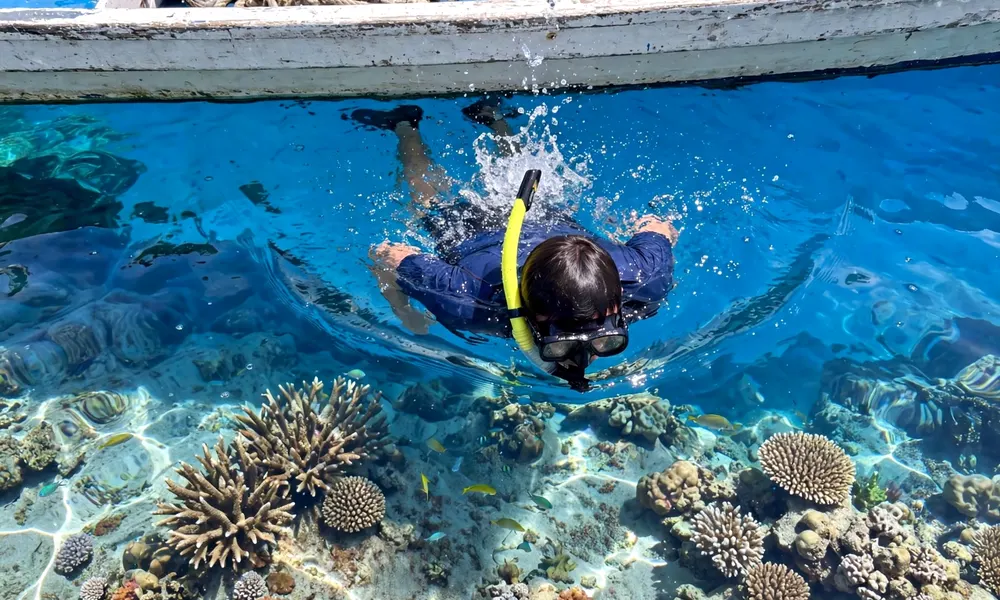
Good technique costs nothing. Breathe slowly through your mouth, not your nose, which fogs the mask and breaks the seal. Keep your head down and your body flat, and kick gently from the hips rather than thrashing from the knees.
Practise clearing the tube in shallow water before you need it. If water gets in, give one sharp breath out, like blowing out a candle, and the water leaves through the purge valve or the top. Tilt your head back slightly as you blast.
If you film your swims, the tube stays out of the frame when clipped properly. Our guide to the best action cameras of 2026 covers the tough, waterproof models that survive salt water and a knock against a rock.
Caring for Your Snorkel
A snorkel lasts for years if rinsed and stored properly, and for one season if not. Rinse it in fresh water after every swim and dry it in the shade: salt makes the valve stick and sun stiffens the silicone. Store it flat or hanging.
Swim Snorkel Checklist
- Pick the type first: dry-top for beginners and chop, semi-dry for calm bays, classic for diving down.
- Choose a small, soft silicone mouthpiece and breathe through it for a minute in the shop.
- Insist on a purge valve, so one sharp breath clears the water that gets in.
- Check the bore and length: around 20 millimetres wide and 35 to 45 centimetres long.
- Try it clipped to your mask and turn your head both ways: the tube should stay put.
- Rinse in fresh water after every swim and dry it in the shade before packing it away.
Frequently Asked Questions
Do I need a dry-top snorkel as a beginner?
Yes, in most cases. A dry-top valve keeps waves out, which removes the commonest reason beginners panic. It costs a little more, but the confidence is worth far more than the difference.
How do I clear water from my snorkel?
Give one sharp breath out, like blowing out a candle. The water leaves through the purge valve or the top. Tilt your head back slightly as you blast.
Can I use a snorkel with a full-face mask?
Full-face masks have the tube built in, so a separate snorkel is not needed. A separate snorkel pairs with a classic two-window mask, which has a strap the tube can clip to.
What size snorkel do I need?
Most adults suit a tube 35 to 45 centimetres long with a bore around 20 millimetres. Children need a shorter tube with a smaller mouthpiece.
Why does my jaw ache when I snorkel?
The mouthpiece is usually too large or too hard. Switch to a small, soft silicone mouthpiece, and check the tube is not pulling at the mask.
How long does a swim snorkel last?
Years, with a rinse in fresh water after every swim and storage flat or hanging. Salt makes the valve stick and sun stiffens the silicone.
The Bottom Line
The best swim snorkel of 2026 is the one that lets you forget you are breathing through a tube at all. For most swimmers that means a dry-top snorkel with a purge valve, a small soft mouthpiece, and a flexible lower section. Strong swimmers will prefer a slim classic tube, travellers a folding model. Try the mouthpiece in the shop, clip it to your mask, and rinse it after every swim.