A Guide to Buying the Best Profiteroles in 2026
The best profiteroles in 2026 are small, round, and easy to underestimate. Each one is a puff of choux pastry, crisp outside and hollow inside, filled with cream or ice cream and usually finished with chocolate sauce. They look simple, and that is exactly why they are hard to buy well: a profiterole has nowhere to hide a soft shell, a thin filling, or a sauce poured on too early. This guide covers what to look for in the puff, the filling, and the sauce, and which types are worth your money, whether you are buying a box for dinner or a tower for a celebration.
Key takeaways
- Judge the puff first: it should be crisp, golden, and hollow, with a dry interior that holds its shape.
- The filling should be generous and flavourful, whether pastry cream, whipped cream, or ice cream.
- Chocolate sauce should be poured at serving time, not hours earlier, or the puffs go soft.
- Buy profiteroles the day they are made and keep them cold.
- A profiterole is round; an eclair is long and oblong. Same choux, different shape.
How the best profiteroles were chosen
Every profiterole type below was judged on five measures, with the puff first. Shell quality decides everything: a puff baked until dry and golden stays crisp under cream and sauce, while a pale or under-baked puff collapses into a damp ball. Filling is second, judged on flavour, amount, and whether every puff in the box is filled, not just the ones on top. Sauce is third: real chocolate, warm and glossy, added at the last moment. Freshness is fourth, because profiteroles fade faster than almost any other pastry once the filling meets the shell. Value is fifth: the price should match the size of the box, the quality of the filling, and the care in the baking, not just the height of the pile.
Two distinctions matter before the list. First, a profiterole is not an eclair. Both are made from choux pastry, but a profiterole is a small round puff, while an eclair is a long oblong finger. Profiteroles are usually served in a pile, often with ice cream inside and chocolate sauce over the top, while eclairs are served singly, filled with pastry cream and topped with glaze. Second, profiteroles are a serving pastry as much as a single one: a box that looks generous can still disappoint if the bottom layer is crushed or empty. The guide below ranks types by what is inside the puff and how they hold up on the plate, not by how impressive the stack looks.

Comparison table: the best profiteroles in 2026
| Rank | Profiterole type | Best for | Watch out for |
|---|---|---|---|
| 1 | Classic cream-filled | The everyday benchmark | Empty puffs at the bottom of the box |
| 2 | Ice cream-filled | Summer desserts | Melting before you serve them |
| 3 | Chocolate sauce | Dinner parties | Sauce poured on too early |
| 4 | Coffee cream | Adults, after dinner | Bitter sauce over sweet cream |
| 5 | Caramel drizzle | A sweeter, richer plate | Sticky sauce that soaks the puffs |
| 6 | Croque-en-bouche tower | Celebrations | Dry puffs glued with hard caramel |
The best profiteroles in 2026
1. Classic cream-filled: the benchmark every bakery should pass
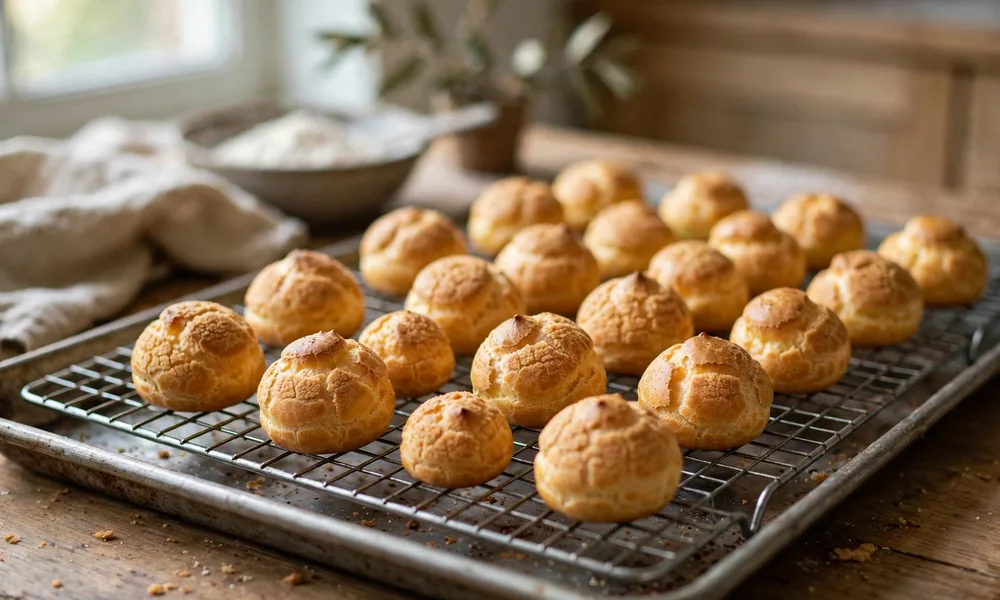
The classic cream-filled profiterole is the test every bakery should pass, because there is nothing to distract you from the basics. The puff must be crisp and golden, the cream thick and sweet, and the whole thing should be eaten in two bites without falling apart. A good one is light in the hand and cool inside, with the shell shattering gently and the cream arriving at once. A bad one is usually obvious: a soft puff, a hollow puff with almost no cream, or cream that tastes of nothing but sugar. Buy this type first at any new bakery, and open a puff from the bottom of the box, not the top — that is where the empty or crushed ones hide.
2. Ice cream-filled: the summer profiterole
Ice cream-filled profiteroles are the summer version, and they are at their best when the contrast is sharp: a crisp shell against a cold scoop of vanilla ice cream. The puff should be baked a little firmer than a cream-filled one, because it has to survive the cold filling without going soft, and the ice cream should be real vanilla. These need to be kept frozen until just before serving, and eaten quickly once plated — ten minutes on a warm table is enough for the ice cream to melt through the shell. Served properly, with warm chocolate sauce poured over at the table, they are the best hot-and-cold dessert on this list.
3. Chocolate sauce: the dinner-party profiterole
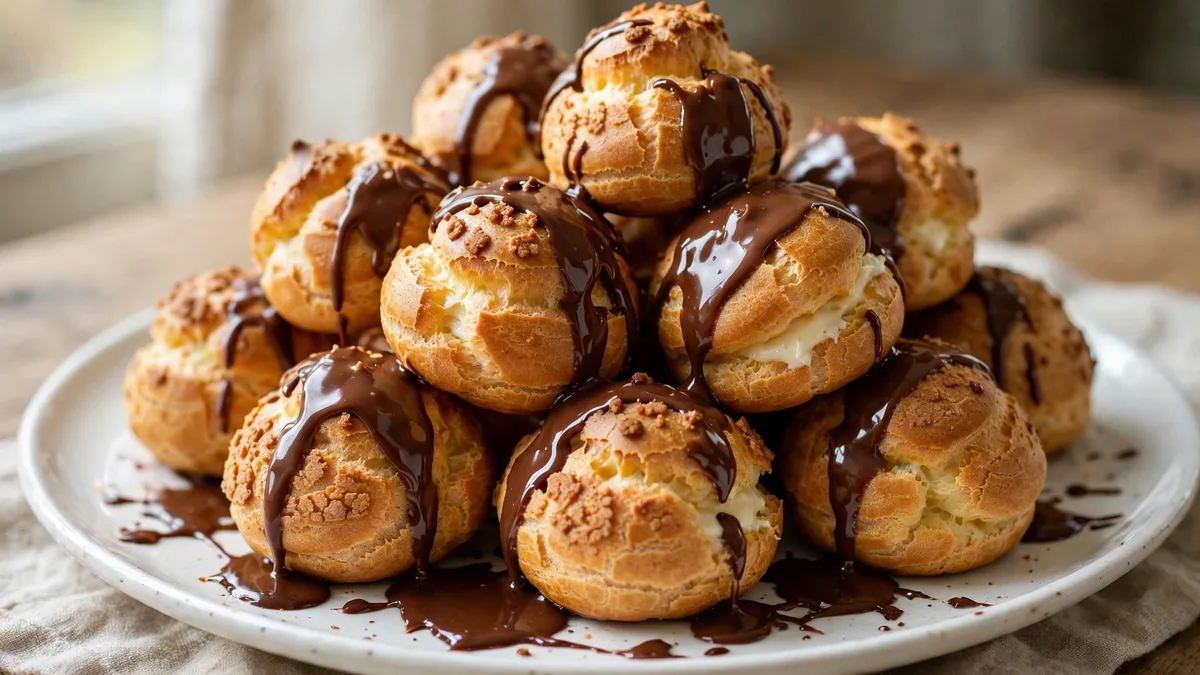
Chocolate sauce profiteroles are the classic dinner-party dessert: a pile of cream-filled puffs, with warm chocolate sauce poured over them at the table. The sauce should be real chocolate, melted with a little cream, glossy and warm, not a cold syrup from a bottle. The timing matters more than the recipe — sauce poured at serving time coats the puffs and stays on the surface, while sauce poured an hour earlier soaks in and turns the pile soft. The best versions keep the sauce in a separate jug, so each person can pour their own. Watch out for boxes sold ready-sauced: they look generous in the shop and taste tired at home.
4. Coffee cream: the grown-up profiterole
Coffee cream profiteroles suit people who find the classic too sweet. The filling is a coffee pastry cream or coffee-flavoured whipped cream, made with real brewed coffee, and the sauce is usually a darker chocolate that does not fight the coffee. The balance is the hard part: too little coffee and it tastes like a plain profiterole with a brown filling, too much and the bitterness takes over. A good coffee profiterole keeps the cream sweet enough to soften the coffee, and the puff crisp enough to hold a slightly wetter filling. Avoid any coffee profiterole where the filling is plain cream and only the sauce tastes of coffee — that is a shortcut, and it shows in the first bite.
5. Caramel drizzle: rich, sweet, and easy to overdo
Caramel drizzle profiteroles are the richest on this list, and the easiest to overdo. The puffs are filled with cream, then drizzled with warm salted caramel and sometimes chopped nuts. When it works, the salt cuts the sweetness and the caramel adds a deep, almost burnt-sugar flavour. When it fails, the caramel is too wet, soaks into the puffs, and the whole plate turns sticky and soft. The best versions use a thick caramel that sits on the surface, a light hand with the drizzle, and puffs baked firm enough to take it. Eat these the same day, keep them cold until serving, and do not buy them for a long journey.
6. Croque-en-bouche tower: the celebration centrepiece
A croque-en-bouche is a tower of profiteroles held together with caramel, built for weddings and big celebrations. It is the most impressive profiterole on this list and the hardest to get right. Each puff should be filled with cream, crisp, and the same size, and the caramel holding the tower together should be thin and glassy, not a thick glue that makes the puffs impossible to pull apart. A good tower is eaten by pulling one puff at a time from the top, and each one should still be crisp when it comes away. The warning signs are uneven puffs, dry shells that have been sitting out for hours, and caramel so hard it cracks a tooth. Order a tower only from a bakery that makes them regularly, ask when it will be assembled, and serve it within a few hours.

What to avoid when buying profiteroles
The most common profiterole mistake is buying a pile that looks generous and finding the bottom half empty or crushed. Always check the bottom layer, either by lifting a puff from the base or by asking the bakery to pack the box in a single layer. Look at the shells: they should be golden and crisp, not pale, flat, or damp. Fresh choux smells buttery, while stale puffs smell of nothing. The same care with tools helps at home, and our guide to piping bags that make decorating easy covers the bags and nozzles that make filling small puffs far less messy. Avoid profiteroles sitting under hot lights, profiteroles with sauce already poured on, and any box where the puffs vary wildly in size — that usually means they were baked in a hurry.
Checklist: buying the best profiteroles
- Check a puff from the bottom of the box, not just the top, for filling.
- Look for crisp, golden shells that feel light and firm, not soft or damp.
- Buy the sauce separately and pour it warm at serving time, never hours earlier.
- Keep profiteroles cold, eat them the same day, and serve ice cream-filled ones from the freezer.
- Taste the classic cream-filled profiterole first at a new bakery.
- Skip boxes with uneven puffs, runny cream, or soaked-through sauce.
Frequently asked questions
Why do profiteroles go soft so quickly?
Choux pastry is mostly steam and egg, so it starts absorbing moisture from the cream, the sauce, and the air as soon as it is filled. A well-baked puff resists this for hours because it is dry inside, but an under-baked puff softens within minutes. Keeping profiteroles cold slows the process, but it never stops it entirely.
What is the difference between a profiterole and an eclair?
Both are made from choux pastry, but a profiterole is a small round puff, while an eclair is a long oblong finger. Profiteroles are usually filled with cream or ice cream and served in a pile with chocolate sauce, while eclairs are filled with pastry cream and topped with glaze.
Should profiteroles be kept in the fridge or the freezer?
Cream-filled profiteroles belong in the fridge and should be eaten the same day. Ice cream-filled profiteroles belong in the freezer until just before serving. Take cream-filled ones out about ten minutes before serving so the cream softens slightly.
Can I make profiteroles at home?
Yes, and the choux itself is straightforward: water, butter, flour, and egg, cooked on the stove, piped in small rounds, and baked hot until puffed and dry. The hard parts are piping even puffs and not opening the oven too early. Fill them only when completely cool, and add the sauce at serving time.
What filling is best in a profiterole?
It depends on the occasion. Pastry cream is the richest and most traditional, whipped cream is the lightest, and ice cream is the best for summer. A good bakery fills generously with whichever it chooses, and the filling should taste of something — vanilla, coffee, or chocolate — not just of sugar. Cream cheese in a sweet filling works the same way: it should add flavour, as in our guide to cream cheese that spreads smooth every time, not just bulk.
How many profiteroles should I buy per person?
For a dessert after a meal, four to six small profiteroles per person is usually enough, with sauce on the side. For a party where profiteroles are the main dessert, allow six to eight per person. A croque-en-bouche tower is usually planned at about five puffs per guest.
Bottom line
The best profiteroles in 2026 are decided by the puff, and everything else follows from it. A crisp, dry, golden shell, a generous and flavourful filling, and sauce poured warm at serving time are the three things that matter, and no pile, however tall, can replace any of them. Check a puff from the bottom of the box, buy them the day they were made, and keep the sauce separate until the last moment. For a lighter pastry to serve alongside them, the palmiers that shatter just right make a crisp contrast to the soft, cream-filled puffs.