
Cream cheese that spreads smooth every time is a small kitchen pleasure that makes an ordinary morning feel properly looked after. A good tub opens to a pale, glossy surface, and the knife glides through it without tearing the bread underneath. The best cream cheese tastes of fresh milk with a gentle tang, and holds its shape on a bagel while feeling soft on the tongue. In 2026 the chilled aisle is fuller than ever, and the differences between blocks, tubs and flavoured spreads matter more than most shoppers realise.
This guide explains what makes a cream cheese worth buying, which types suit spreading, baking and cooking, and how to tell a good one from a tub that only looks the part. We look at ingredients, texture, flavour and how each type behaves in real kitchens, from a quick bagel to a slow-baked cheesecake.
Key Takeaways
- The best cream cheese lists milk and cream first, with cultures and salt, and nothing unpronounceable.
- Full-fat blocks give the smoothest spread and the most reliable baking results; whipped tubs are best eaten straight from the fridge.
- Let cream cheese soften for twenty minutes before spreading or beating it, and it will never tear bread or go lumpy.
- Buy flavoured cream cheese only when the flavour comes from real herbs, fruit or fish, not flavourings.
- Store it sealed in the coldest part of the fridge, use a clean knife every time, and throw it out if it smells sharp or tastes bitter.
What Good Cream Cheese Actually Is
Cream cheese is a fresh, soft cheese made by curdling milk and cream with lactic acid cultures, then draining the whey until the curd is thick and spreadable. It is never ripened, so it tastes mild and milky rather than sharp. The best versions have a clean, slightly tangy flavour and a texture dense enough to hold a shape but soft enough to spread.
The ingredient list is the fastest way to judge a tub. Milk and cream should come first, followed by cultures and salt. A little guar gum or carrageenan is fine. A list running to a dozen items, including modified starch and whey powder, usually means the cheese itself is thin and the additives are doing the work.
Blocks, Tubs and Whipped: What Is the Difference?
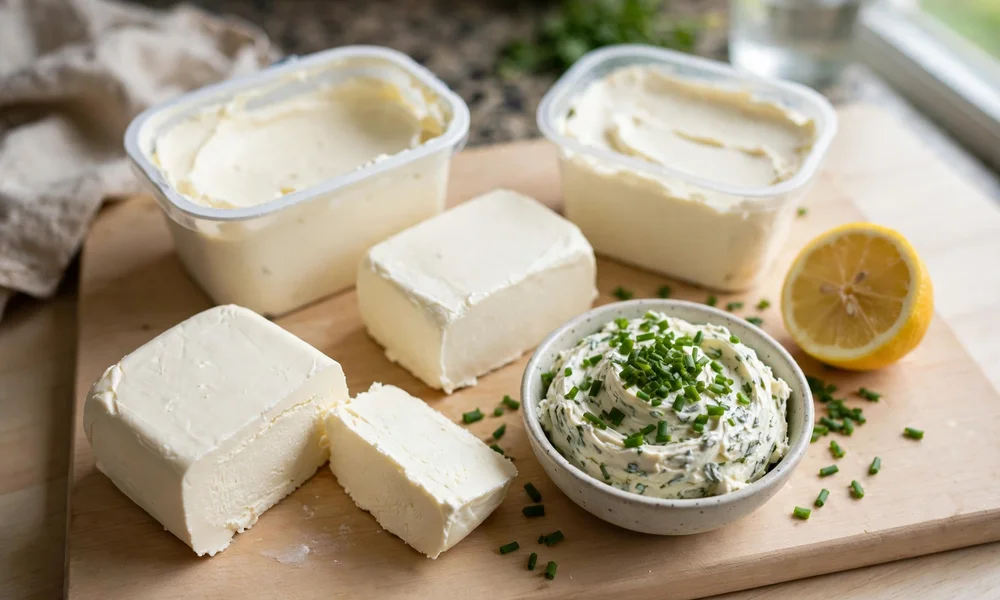
Blocks are the firmest form. Pressed into a foil-wrapped rectangle, they hold their shape when sliced and contain the least air and water, which makes them the first choice for baking: they beat into a smooth batter without adding extra moisture. Tubs are softer straight from the fridge, because they contain a little more water. Whipped tubs go further still, with air beaten in to make them light and fluffy, which feels lovely on toast but makes them a poor choice for recipes that depend on weight and structure.
The right choice depends on the job. For a bagel or a cracker, a tub is the most convenient. For cheesecake, frosting or a stuffed chicken breast, a block is the only sensible option, because a tub makes the mixture too soft and too wet. For a sauce or a soup, either works, though a block melts more predictably.
How to Judge Cream Cheese Before You Buy It
Start with the packet. A good tub feels firm when pressed gently, and the foil seal underneath the lid should be flat and unbroken. If the seal is puffed up, leave it on the shelf. Check the date and choose the longest life. Price is a useful clue but not a perfect one: the cheapest tubs often have the longest ingredient lists and the thinnest flavour.
The spread test matters most at breakfast. Take a spoonful straight from the fridge and spread it on soft bread. A good one yields to the knife and lays down in an even layer without tearing the crumb. A poor one drags and pulls holes in the bread, which usually means it is too cold or made with too much stabiliser and not enough fat. The fix is simple: let the tub sit on the counter for twenty minutes. Never microwave a whole block, because the edges melt while the middle stays cold.
Plain, Flavoured and Low-Fat: Which Should You Buy?
Plain cream cheese is the most versatile thing in the chilled aisle. It works on a bagel, in a cheesecake, stirred into pasta, spread on a sandwich, or whipped into a dip. If you only buy one kind, make it plain and full-fat. Its flavour is mild and milky, with just enough tang, and it pairs happily with jam and honey as well as smoked salmon and herbs.
Flavoured cream cheeses can be wonderful, but quality varies most here. A good herb and garlic tub should taste of actual herbs and garlic, with visible flecks of green. A good smoked salmon version should contain real pieces of fish. Avoid tubs where the flavour comes from a powder or a syrup. If the flavouring is listed before the real ingredient, put the tub back.
Low-fat cream cheeses are a compromise. To keep the texture smooth with less fat, manufacturers add more water and stabilisers, and the result tastes thinner. They are fine on toast, but a poor choice for baking, because the extra water makes cheesecakes weep and frostings slide. A whipped full-fat tub is often a better trade: the air makes it feel lighter without changing the flavour.
Cream Cheese in Baking
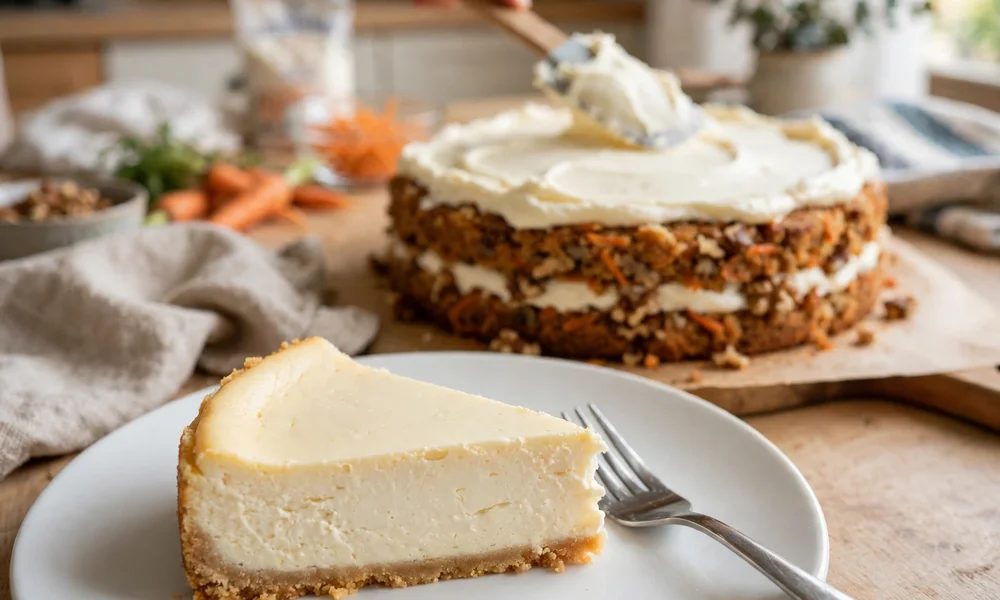
Cream cheese is the backbone of some of the best home baking. A proper cheesecake depends on it entirely, and the difference between a smooth, creamy slice and a grainy, cracked one usually comes down to handling. Start with a full-fat block at room temperature, beat it on its own until completely smooth, and only then add the sugar and eggs. Beating it cold leaves lumps that no later mixing will remove.
Cream cheese frosting follows the same rules. The butter and the cream cheese must both be at room temperature, beaten together until pale and fluffy before any icing sugar goes in. Add the sugar gradually and taste as you go. Our guide to brownies shows how a swirl of cream cheese through chocolate batter can lift an ordinary tray bake. Full-fat wins in the oven because low-fat versions contain far more water, which is why light cheesecakes often crack or weep.
Cream Cheese Beyond the Bagel
Cream cheese is far more useful than its breakfast reputation suggests. Stirred into pasta with a splash of the cooking water, it melts into a silky sauce without any cream at all. Beaten with herbs and lemon zest, it makes a dip better than anything from a jar. A spoonful in mashed potatoes makes them richer, and a dollop on hot soup melts into a creamy swirl.
How to Store Cream Cheese Properly
Cream cheese is a fresh product. Keep it in the coldest part of the fridge, usually the back of a middle shelf rather than the door. Once opened, press foil or cling film directly onto the surface before replacing the lid. Always use a clean knife: one that has touched jam or butter carries crumbs and bacteria into the tub. If it smells sharp or tastes bitter, throw it out.
You can freeze cream cheese, but know what you are giving up. Freezing changes the texture: the water forms crystals that break the smooth structure, and thawed cream cheese is grainy rather than silky. It is still fine for cooking, where it will be melted into a sauce or a baked dish, but it will never spread nicely on a bagel again. Freeze it unopened and use it within two months.
Cream Cheese Compared: Blocks, Tubs and Whipped
| Type | Best for | Texture | Baking? | Price per 100g |
|---|---|---|---|---|
| Full-fat block | Cheesecake, frosting, cooking | Dense, firm, smooth | Excellent | Mid-range |
| Plain tub | Spreading, sandwiches, dips | Soft, creamy, easy | Good, with care | Mid-range |
| Whipped tub | Toast, bagels, light spreading | Light, airy, fluffy | Poor | Higher |
| Flavoured tub | Bagels, crackers, quick snacks | Soft, flecked | No | Higher |
| Low-fat tub | Everyday spreading | Thin, soft, mild | Poor | Mid-range |
The trade-offs are plain: blocks are the workhorses, tubs are the everyday convenience, whipped tubs are the luxury, and low-fat tubs are the compromise. Most households do best with a block for cooking and a tub for breakfast.
What to Serve With Cream Cheese
Cream cheese is at its best with something to play against. On a bagel, the classic pairing is smoked salmon, with capers, red onion and lemon cutting through the richness. Our guide to bagels explains how to choose a bagel with the right chew. On crackers, the best partners are sharp and fresh: radish, cucumber, cherry tomatoes, or a drizzle of hot honey. On a cheese board it is the soft counterpoint to stronger cheeses, and our guide to cheddar covers the firm end.
Common Cream Cheese Mistakes
The most common mistake is using cream cheese straight from the fridge and blaming the cheese when it tears the bread. Give it twenty minutes on the counter and the problem disappears. The second is buying a whipped tub for a cheesecake and wondering why the filling never sets, because whipped cream cheese is mostly air. The third is overbeating: beaten too long, it turns from smooth to runny and will not firm up again.
Shopping Checklist: Picking the Right Tub
- Choose full-fat for baking, and a plain or whipped tub for spreading.
- Pick the shortest ingredient list, with milk and cream first.
- Check the foil seal is flat and unbroken, and pick the longest date.
- Buy flavoured tubs only when the flavour comes from real ingredients.
- Let the cheese soften for twenty minutes before spreading or beating it.
- Use a clean knife, seal the tub well, and keep it at the back of the fridge.
Frequently Asked Questions
Is cream cheese the same as mascarpone?
No. Mascarpone is richer, softer and sweeter, made from cream alone, with almost no tang. Cream cheese is firmer, tangier and lower in fat, and holds its shape better in baking. They can be swapped in a dessert, but the result will taste different.
How long does opened cream cheese last in the fridge?
An opened tub usually keeps for five to seven days if it is sealed well, kept cold, and you always use a clean knife. A foil-wrapped block lasts up to ten days. If it smells sharp, tastes bitter or has mould, throw it out, even if it is within the date.
Can I use low-fat cream cheese in a cheesecake?
You can, but the result will be softer, wetter and more likely to crack or weep. Full-fat blocks give the firm, creamy texture a cheesecake needs. If you do use low-fat, add an extra egg yolk and bake in a water bath.
Why does my cream cheese frosting go runny?
Runny frosting usually means the cream cheese or the butter was too warm, or the mixture was beaten for too long. Both should be at cool room temperature and beaten just until smooth. If it has gone slack, chill the bowl for twenty minutes.
Is cream cheese gluten free?
Plain cream cheese is naturally gluten free, because it contains only milk, cream, cultures and salt. Flavoured versions can contain additives, so check the label and look for a gluten-free claim.
What is the best way to soften cream cheese quickly?
Cut the block into cubes on a plate at room temperature, and it will soften in about fifteen minutes. A tub can be stirred vigorously with a spoon. Avoid the microwave: it melts the edges while the centre stays firm.
The Bottom Line
The best cream cheese is the one that matches the job: a full-fat block for baking, a plain tub for breakfast, and a flavoured tub only when the flavour is real. Buy the shortest ingredient list, let the cheese reach room temperature, and keep it cold.


