
How to Choose Vinegar for Cooking and Cleaning in 2026
Learning how to choose vinegar is one of the cheapest upgrades a kitchen can get. One bottle brightens a salad dressing, another makes pickles crisp and safe, a third cuts through limescale on a tap, and the wrong bottle in the wrong job tastes harsh or simply does nothing at all. Vinegar looks simple on the shelf, yet the differences between the bottles are real: the plant or grain it started from, its acidity, and whether it was made for food or for cleaning. This guide compares the main types side by side, explains which vinegar suits cooking, which suits cleaning, and which can do both, and shows how to read a label so you never pickle with a weak vinegar or dress a salad with a cleaning product.
Key takeaways
- Acidity is the number that matters: cooking vinegar is usually 5 percent, while cleaning vinegar is stronger and is not food.
- Match the vinegar to the dish: mild rice vinegar for delicate food, red wine vinegar for dressings, balsamic for sweetness.
- White vinegar is the only bottle that truly does double duty, and only the food-grade kind belongs in cooking.
- Never mix vinegar with bleach, and never use a flavoured vinegar where a neutral one is needed.
- Store vinegar cool, dark and capped, and it will keep for years without losing its strength.
What vinegar actually is
Vinegar is what happens when alcohol meets acetic acid bacteria and air. Wine becomes wine vinegar, cider becomes apple cider vinegar, grain alcohol becomes distilled white vinegar, and each starting liquid leaves its own flavour behind. The result is a sour liquid whose strength is measured as acidity, usually shown as a percentage on the label. Most cooking vinegars sit at 5 percent acidity, which is strong enough to pickle safely and brighten a dish without overwhelming it. Cleaning vinegars are usually 6 to 10 percent, and some industrial kinds are stronger still, which is why they are labelled not for food and should never go near a salad. That is why a sherry vinegar tastes nutty and deep while white vinegar tastes clean and sharp, even though both are sour.
The vinegars, side by side
Here is how the main vinegars compare on flavour, acidity and the job they do best. Use the table to narrow the choice, then read the sections below for cooking and for cleaning.
| Vinegar | Flavour | Acidity | Best for |
|---|---|---|---|
| Distilled white vinegar | Clean, sharp, neutral | 5% food grade | Pickling, dressings, cleaning |
| Apple cider vinegar | Fruity, mild, slightly sweet | 5% | Dressings, marinades, slaws |
| Red wine vinegar | Bold, fruity, tannic | 5–6% | Dressings, sauces, braises |
| White wine vinegar | Light, delicate, crisp | 5–6% | Delicate sauces, fish, dressings |
| Rice vinegar | Mild, sweet, gentle | 4–5% | Sushi rice, Asian dressings |
| Balsamic vinegar | Sweet, syrupy, rich | 6% | Finishing, glazes, salads |
| Sherry vinegar | Nutty, woody, complex | 7% | Vinaigrettes, soups, beans |
| Malt vinegar | Malty, robust, sharp | 5% | Chips, pickling, chutneys |
| Cleaning vinegar | Harsh, plain | 6–10% | Cleaning only, never food |
The table shows the two questions to ask of any bottle: how strong is it, and what flavour does it bring?
Vinegar for cooking: dressings and salads
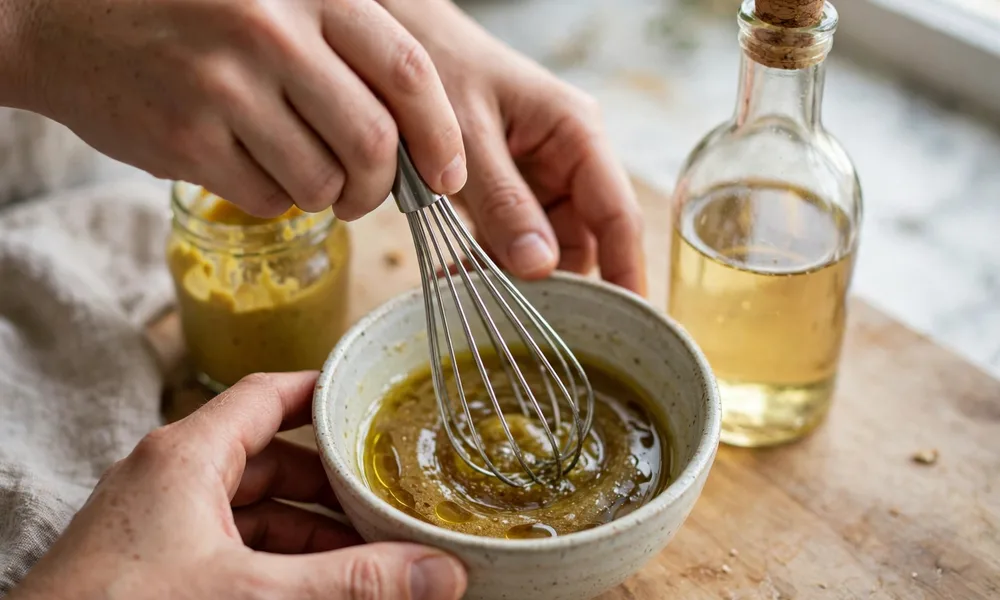
Dressings are where vinegar earns its keep, and the choice changes the whole salad. Red wine vinegar is the classic dressing vinegar, bold and fruity enough to stand up to olive oil, garlic and mustard in a vinaigrette that can dress bitter leaves and grilled vegetables alike. White wine vinegar is its gentler sibling, better for delicate leaves, fish and cream-based dressings, where a heavy vinegar would dominate. Apple cider vinegar sits in the middle, fruity and mild, and suits slaws, grain salads and marinades, while rice vinegar is the softest of all, made for sushi rice and Asian-style dressings where the vinegar should whisper rather than shout. The usual ratio is three parts oil to one part vinegar, whisked with a little mustard, salt and pepper, but taste as you go: a strong vinegar needs less, a mild one needs more.
Vinegar for cooking: pickling, sauces and marinades
Pickling is the one cooking job where the wrong vinegar is not just a flavour mistake but a safety one. White vinegar is the pickling standard, because it is food grade at 5 percent acidity, clear so it does not cloud the brine, and neutral so the spices and vegetables carry the flavour. A vinegar below 5 percent may not pickle safely, so always read the label and never substitute a mild rice vinegar or a seasoned vinegar in a pickling recipe without checking the acidity first. In sauces, a splash of vinegar at the end of cooking brightens a stew, a braise or a pan sauce that tastes flat, in the same way a squeeze of lemon does, and a little sherry vinegar stirred into a bean soup or a lentil dish adds a depth that salt alone cannot. For marinades, vinegar tenderises and carries flavour into meat and vegetables, but do not leave fish or chicken in a strong vinegar marinade for hours: the acid starts to cook the surface and turns the texture chalky.
Finishing vinegars: balsamic, sherry and the sweet end
Some vinegars are less ingredients than finishing touches, and they deserve a different shelf in your mind. Balsamic vinegar is sweet, syrupy and rich, and a few drops over strawberries, tomatoes or a grilled steak do more than a spoonful mixed into a sauce ever could. A true aged balsamic is expensive and should be used by the drop, while an everyday balsamic is fine for dressings and glazes, where its sweetness balances the acid. Sherry vinegar is the cook’s secret at this end of the shelf: nutty, woody and complex from its time in oak barrels, it lifts a vinaigrette, a gazpacho or a plate of beans with a depth no other vinegar can imitate, and a little goes a long way. The rule for finishing vinegars is to use less than you think and taste before adding more, because their flavour is concentrated and a heavy hand turns a bright dish into a sour one.

Vinegar for cleaning: where it works and where it does not
White vinegar is a genuine cleaning helper, and it is the only cooking vinegar that also belongs under the sink, provided you keep the food-grade and cleaning bottles separate. A half-and-half mix of cleaning vinegar and water cuts limescale on taps and shower heads, dissolves soap scum on tiles, and leaves glass streak-free when wiped with a dry cloth. But vinegar is not a disinfectant in the way bleach or a proper antibacterial cleaner is, and it does not kill every germ, so do not rely on it where hygiene matters most, such as a chopping board used for raw meat. Never mix vinegar with bleach, because the combination releases toxic chlorine gas, and never mix it with baking soda in a sealed container, because the fizz is just carbon dioxide and the mixture quickly becomes salty water. Avoid vinegar on natural stone such as marble and granite, where the acid etches the surface, and on waxed wood, where it strips the finish. For everything else hard and shiny, it is cheap, simple and effective.
How to read the label before you buy
The label tells you nearly everything, if you know where to look. Start with the acidity, printed as a percentage: 5 percent is the cooking standard, and anything lower is too weak for safe pickling, while anything labelled cleaning vinegar or not for food use belongs nowhere near a recipe. Check whether the vinegar is seasoned, which usually means sugar and salt have been added, as with seasoned rice vinegar, and adjust the recipe accordingly or buy the unseasoned kind for a cleaner result. Look for the words distilled, wine or cider, which tell you what the vinegar started from, and be wary of a bottle that calls itself vinegar without saying more, since it may be diluted acetic acid with flavouring. Buy a size you will use within a year or two, because although vinegar keeps for years, a bottle that sits open beside the cooker collects cooking smells and loses its clean edge.
Storing vinegar so it stays sharp
Vinegar is one of the longest-lived bottles in the kitchen, and it asks for very little in return. Keep it in a cool, dark cupboard with the cap on, away from the hob and the window, and it will keep for years without losing its strength. Vinegar does not need the fridge, and chilling it only makes it cloudy for a while, so the cupboard is the right home. Keep the cleaning bottle and the cooking bottle in different places if you can, or at least label them clearly, because the two look identical and the mistake is easy to make in a hurry. A vinegar that smells flat or musty has probably been left open too long or stored badly, and while it is unlikely to be unsafe, it will not lift a dish the way a fresh bottle does, so replace it.
Checklist: choosing the right vinegar
- Check the acidity first: 5 percent for cooking and pickling, stronger only for cleaning.
- Keep food-grade and cleaning vinegar in separate bottles, clearly labelled.
- Match the flavour to the dish: mild for delicate food, bold for robust food.
- Use finishing vinegars by the drop and taste before adding more.
- Never mix vinegar with bleach, and never use it on marble or granite.
- Store bottles cool, dark and capped, and replace any that smell flat or musty.
Frequently asked questions
Can I use cleaning vinegar for cooking?
No. Cleaning vinegar is stronger than food-grade vinegar and is not made or labelled for food, so it should never go in a recipe, a dressing or a pickle. Keep a separate food-grade white vinegar for cooking and use the cleaning bottle only for chores.
What is the best vinegar for salad dressing?
Red wine vinegar is the best all-rounder for dressings, bold enough to balance olive oil and mustard. For delicate leaves, white wine vinegar or rice vinegar is gentler, and for a sweet finish, a few drops of balsamic work well.
Does vinegar go off?
Vinegar keeps for years when stored cool, dark and capped, and it rarely goes unsafe. It can lose its clean edge if left open or stored badly, and a flat or musty smell is the sign to replace the bottle.
Can vinegar replace lemon juice in a recipe?
Often, yes, in small amounts: a splash of white wine vinegar or rice vinegar can brighten a dish the way lemon juice does. Use half as much to start and taste, because vinegar is sharper than lemon juice and its flavour is different.
Is apple cider vinegar better than white vinegar?
Neither is better in general: apple cider vinegar is fruitier and milder, so it suits dressings, slaws and marinades, while white vinegar is neutral and stronger, so it suits pickling and cleaning. Choose by the job, not by the bottle.
Can I clean with any vinegar?
White vinegar is the best cleaning vinegar because it is clear, cheap and neutral, and it will not stain. Avoid coloured or flavoured vinegars for cleaning, since they can leave marks, and never use vinegar on natural stone.
The bottom line
The right vinegar is the one that matches the job: a mild vinegar for delicate cooking, a bold one for dressings and braises, a sweet finishing vinegar by the drop, and a plain white vinegar for pickling and for cleaning. Keep the food-grade and cleaning bottles separate, check the acidity before you buy, and a shelf of two or three bottles will cover the whole kitchen and the house.


