Sherry vinegar is the quiet luxury of the Spanish kitchen: a dark, nutty, complex vinegar aged in oak barrels in Jerez, in the same solera system that makes sherry itself. It is sharper than balsamic, deeper than red wine vinegar, and it carries a flavour of toasted nuts, dried fruit and wood that no other vinegar can imitate. A spoonful in a dressing does not just add acidity; it adds a whole background note, the way a good stock adds depth to a soup.
This guide to how to use sherry vinegar like a Spanish cook in 2026 explains what makes it different, how to read its label, and the dishes where it earns its price. It is for home cooks who already own a decent olive oil and want the vinegar that belongs beside it.
Key Takeaways
- Real sherry vinegar comes from Jerez in southern Spain and is aged in oak barrels through the solera system.
- Look for the Vinagre de Jerez seal: it guarantees origin, ageing and a minimum of six months in barrel.
- Its nutty, woody acidity is made for vinaigrettes, gazpacho, beans and grilled vegetables.
- Use less than you would of red wine vinegar: it is more concentrated in flavour, so a teaspoon often does the work of a tablespoon.
- Aged reserva bottles are for finishing and dressing; younger bottles are fine for cooking and marinades.
What Sherry Vinegar Actually Is
Sherry vinegar begins as sherry wine, made from palomino grapes grown around Jerez de la Frontera in Andalusia. The wine is turned into vinegar by acetic bacteria, then aged in American oak barrels stacked in a solera: a system of rows where younger vinegar is used to top up older barrels, so every bottle contains a blend of many vintages. The vinegar spends at least six months in wood, and often far longer, picking up colour, nuttiness and complexity as it goes.
The result is a vinegar with real depth. It is dark amber to mahogany, usually around 7 percent acidity, with a flavour that runs from bright and sharp in young bottles to rounded, almost sweet and woody in aged ones. Taste it against red wine vinegar: the red wine vinegar tastes of wine, clean and fruity, while the sherry vinegar tastes of the barrel too, with notes of hazelnut, raisin and toasted oak.
That barrel character is why Spanish cooks treat sherry vinegar as a seasoning rather than a souring agent. It goes into food the way a spice does, in small amounts, to add a background note that makes everything else taste more like itself: in a proper gazpacho, in a salmorejo, in a lentil stew, and in the vinaigrette that dresses a tomato salad in August.
Sherry Vinegar Types Compared
Sherry vinegar is graded by age, and the grades are worth knowing because the price rises steeply with them. The table below sets out what you will meet on the shelf.
| Type | Ageing | Flavour | Best for |
|---|---|---|---|
| Vinagre de Jerez | At least 6 months in barrel | Bright, nutty, clean | Everyday dressings, cooking, marinades |
| Vinagre de Jerez Reserva | At least 2 years in barrel | Rounder, woodier, more complex | Finishing, tomato salads, good vinaigrettes |
| Vinagre de Jerez Gran Reserva | At least 10 years in barrel | Deep, sweet, almost syrupy | Drops over cheese, strawberries, grilled meat |
| Pedro Ximenez vinegar | Aged, from sweet PX grapes | Sweet, raisiny, rich | Desserts, glazes, cheese boards |
For most kitchens, the standard Vinagre de Jerez is the right buy: it has the nutty character at a fair price, and it is the bottle Spanish cooks reach for daily. Reserva is worth the step up if you make a lot of salads and dressings. Gran Reserva is a treat, used by the drop, and Pedro Ximenez vinegar is sweeter and raisiny, wonderful drizzled over blue cheese or vanilla ice cream.
Reading the Label Before You Buy
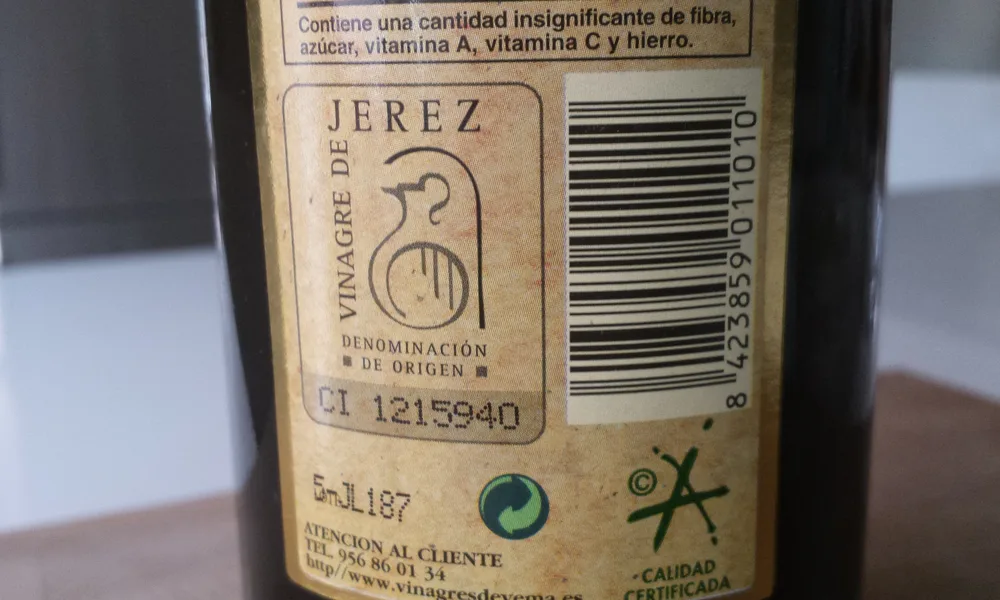
The label is your guarantee, and it is worth reading properly. Genuine sherry vinegar carries the words Vinagre de Jerez and the seal of the Denominacion de Origen, the protected designation that covers Jerez. The seal means the vinegar was made and aged in the Jerez area, from sherry wine, in oak barrels, for the minimum time for its grade.
The Spanish Vinaigrette: The Ratio That Matters
Almost everything a Spanish cook does with sherry vinegar starts with a vinaigrette, and the ratio is the whole lesson. The classic Spanish proportion is one part vinegar to three parts olive oil, with salt, and that is all. No mustard, no honey, no shallot unless the dish asks for it. The vinegar is strong enough and flavourful enough to carry the dressing on its own, and the oil should be a good, fruity extra virgin olive oil that can stand up to it.
Whisk the salt into the vinegar first, so it dissolves, then whisk in the oil slowly until the dressing turns slightly cloudy and thick. Taste it on a piece of bread, not from the spoon: a vinaigrette always tastes sharper on its own than on food. If it bites too much, add oil, not water.
This is the dressing for a tomato salad in summer, for white asparagus, for grilled vegetables, and for any plate of sliced oranges with olives. It is also the base for the lentil and bean salads below. If you want to compare oils, our guide to olive oils for cooking covers which bottles hold up best in a dressing like this.
Gazpacho and Salmorejo: Sherry Vinegar at Its Best
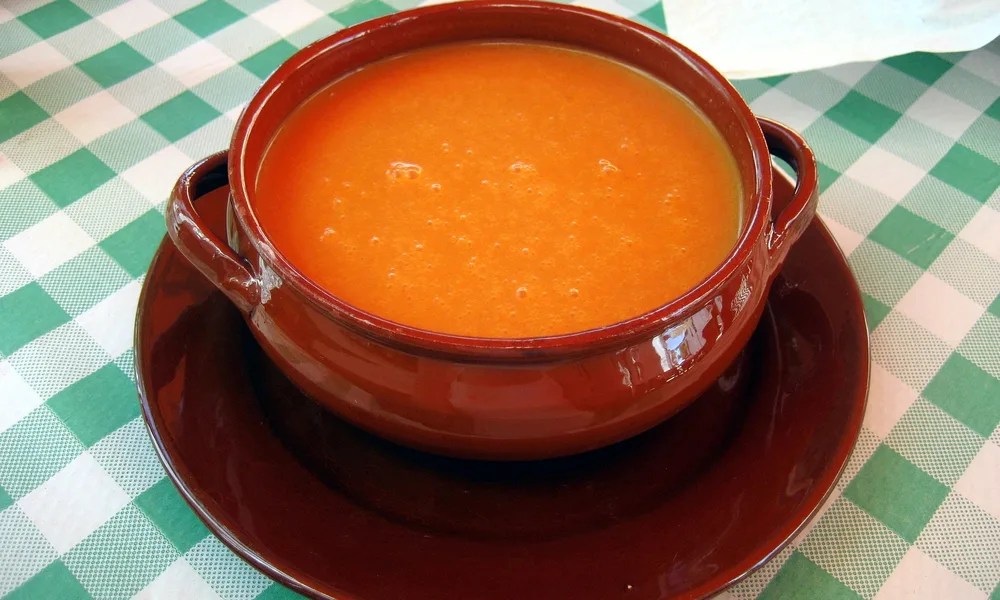
Gazpacho is the dish that shows what sherry vinegar does that no other vinegar can. A cold soup of tomatoes, cucumber, pepper, bread and olive oil needs acidity to stay bright, and sherry vinegar gives it brightness with a nutty background that lemon or white wine vinegar cannot match. Add it a spoonful at a time and taste as you go.
Salmorejo, the thicker Cordoban cousin made with tomatoes, bread, oil and garlic, uses the same trick in a richer form: the vinegar balances the creaminess of the bread and oil, and a good reserva makes a noticeable difference. Both soups are better the next day, once the vinegar has settled in.
Beans, Lentils and Vegetables
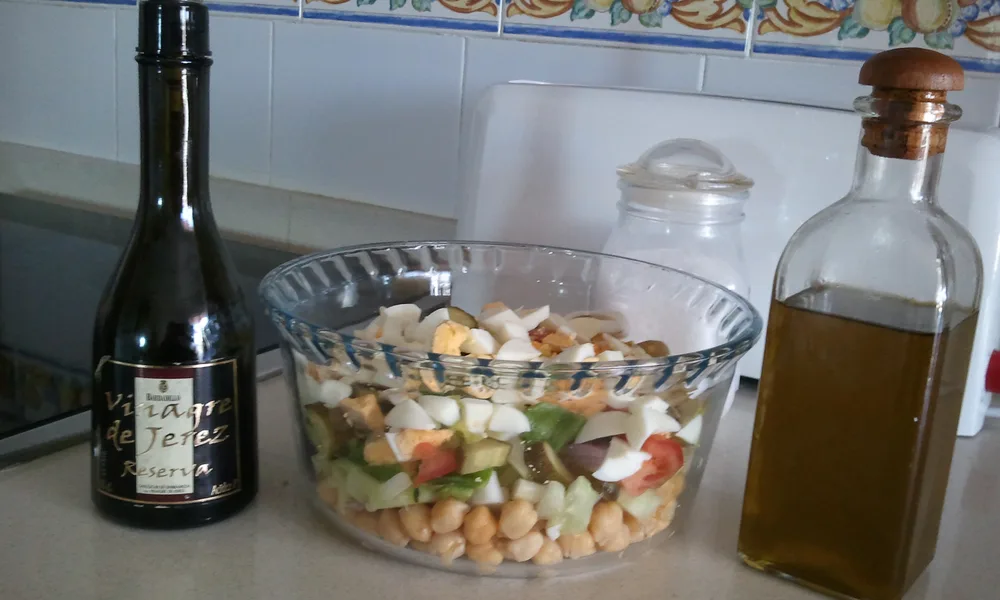
Sherry vinegar is the natural partner for pulses. A spoonful stirred into lentils at the end of cooking lifts the whole dish without making it taste acidic, and it does the same for chickpeas, white beans and black-eyed peas. The classic Spanish chickpea salad, with hard-boiled egg, tomato, onion and tuna, is dressed with sherry vinegar and olive oil, and the vinegar is what ties it together. Add it at the end, off the heat, so its aroma survives.
Grilled and roasted vegetables take it well too. Roasted red peppers, aubergines and courgettes dressed warm with sherry vinegar, oil and garlic absorb the dressing as they cool, and mushrooms sauteed with garlic and finished with a splash of sherry vinegar are a tapas-bar staple. A few drops over jamon or grilled fish do the work of a squeeze of lemon with more depth.
For dressings beyond the Spanish style, it helps to know how sherry vinegar compares with its neighbours. Against red wine vinegar, it is nuttier, woodier and a little stronger, so it suits richer food. A good everyday vinaigrette can be built on either, but the sherry version tastes more complex with no extra effort.
Meat, Fish and Marinades
In marinades, sherry vinegar is strong enough that time matters. Thirty minutes is plenty for fish or chicken; longer and the acid starts to cook the surface. For pork and lamb, a few hours with oil, garlic and a spoonful of sherry vinegar adds flavour without toughening the meat. Use it in a pan sauce too: deglaze with a splash, let it bubble, then add stock or cream.
Storing Sherry Vinegar So It Stays Good
Sherry vinegar keeps for years, but it keeps best in a cool, dark cupboard, tightly capped and standing upright. Light is its enemy: a bottle left on a sunny windowsill will lose its brightness within months. There is no need to refrigerate it, and cold mutes its aroma, so keep it at room temperature and use it at room temperature.
Once open, a bottle lasts indefinitely in practical terms, though the flavour slowly softens after a year or two. A reserva or gran reserva deserves a little more care: cap it promptly, keep it away from the cooker, and use it within a year of opening so you taste what you paid for.
Common Mistakes When Cooking With Sherry Vinegar
The most common mistake is using too much. Sherry vinegar is more concentrated in flavour than red wine vinegar, and a tablespoon where a teaspoon would do overwhelms a dressing. Start small, taste on food rather than from the spoon, and add more only if the dish still tastes flat.
The second mistake is cooking it hard. Sherry vinegar added at the start of a long simmer loses its aroma and leaves only acidity behind, so add it near the end of cooking, or off the heat entirely. The third mistake is pairing it with a weak oil: a bland oil lets the vinegar dominate, while a fruity extra virgin oil stands up to it and rounds it out.
Sherry Vinegar Buying Checklist
- The label says Vinagre de Jerez and carries the Denominacion de Origen seal.
- Age matches the price: standard for cooking, reserva for dressings, gran reserva as a treat.
- Acidity is around 7 percent, and the vinegar is a clear, dark amber with no cloudiness.
- The bottle is glass, well sealed, and has been stored away from light on the shelf.
- The size matches your use: a 250-millilitre bottle lasts most kitchens several months.
- The oil beside it is a fruity extra virgin olive oil, not a bland cooking oil.
Frequently Asked Questions
What is the difference between sherry vinegar and red wine vinegar?
Both are wine vinegars, but sherry vinegar is made from sherry wine and aged in oak barrels through the solera system, which gives it a nutty, woody depth. Red wine vinegar is younger, fruitier and cleaner, and sherry vinegar is stronger in flavour, so you need less of it.
Can I substitute red wine vinegar for sherry vinegar?
You can in most recipes, and the dish will still work, but it will taste simpler: red wine vinegar gives acidity without the nutty, barrel-aged note. If the vinegar is the star, as in a gazpacho or a tomato salad, the substitution is noticeable.
Does sherry vinegar contain alcohol?
Almost none. The acetic bacteria convert the alcohol in the sherry into acetic acid, and the finished vinegar contains only trace amounts, typically well under 0.5 percent. It is generally considered alcohol-free for cooking purposes, though anyone avoiding alcohol entirely should check the label.
How long does sherry vinegar last after opening?
Years, if it is stored cool, dark and tightly capped. The flavour slowly softens after a year or two, so a reserva or gran reserva is best used within a year of opening.
Is sherry vinegar gluten-free?
Yes. Sherry vinegar is made from grapes, not grain, and it contains no gluten. It is a safe choice for gluten-free cooking, and it is often used in place of malt vinegar for that reason.
What dishes is sherry vinegar best in?
It is at its best in gazpacho and salmorejo, in vinaigrettes for tomato and bean salads, in lentil and chickpea dishes, over grilled vegetables and fish, and as a finishing drop over cheese or strawberries. Anywhere you want acidity with a nutty, woody background, it earns its place.
The Bottom Line
Sherry vinegar is the bottle that makes a Spanish kitchen taste Spanish. Buy a genuine Vinagre de Jerez, use it by the teaspoon in dressings and at the end of cooking, and let its nutty depth do the work.