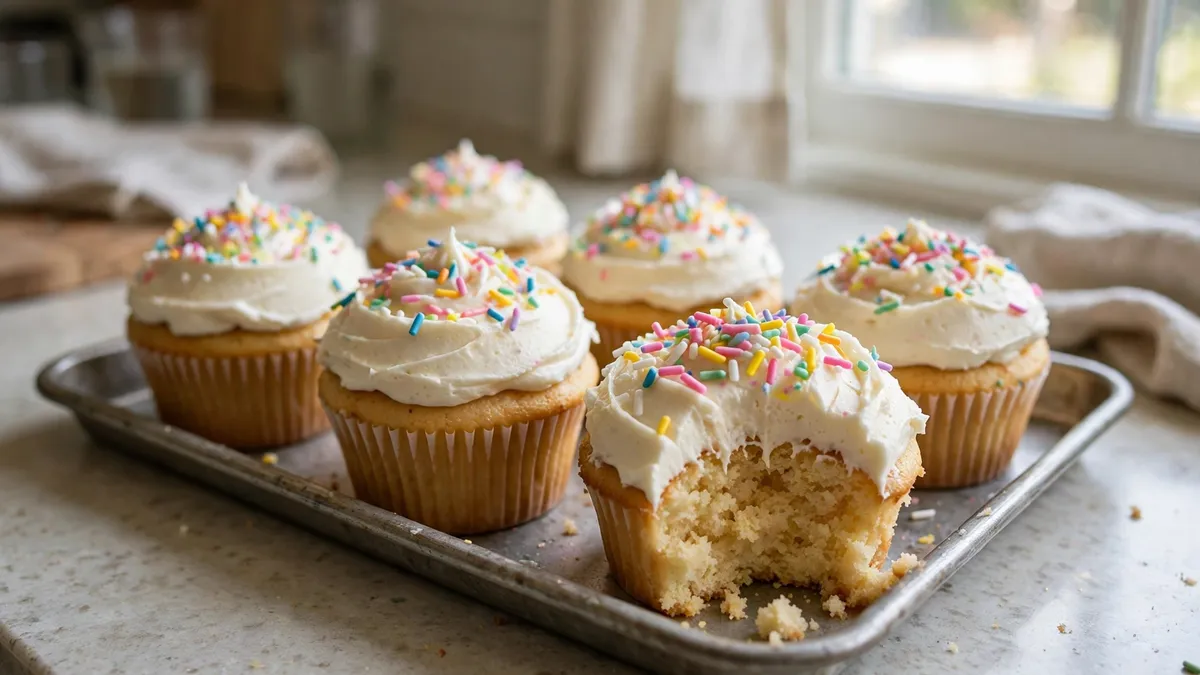
Cupcakes that stay moist for days are not a matter of luck or a secret ingredient. They are the result of a few small decisions made in the right order: the right balance of fat and liquid in the batter, gentle mixing, the correct oven temperature, and storage that keeps moisture in rather than letting it escape. A cupcake baked well on Sunday can still taste soft and tender on Wednesday, while a cupcake baked carelessly can turn dry before it has even cooled. This guide covers what keeps the crumb soft, which ingredients help and which hurt, how to frost without drying the cake out, and how to store a batch so nothing goes to waste.
The difference between a moist cupcake and a dry one is usually decided before the batter ever reaches the oven. Overmixing develops the gluten in the flour and turns a tender crumb tough and dry. Overbaking drives out moisture that no frosting can put back. And storing cupcakes uncovered, even for a few hours, lets the crumb dry from the outside in. Get those three things right and the rest is detail.
Key Takeaways
- Mix the batter gently and stop as soon as the flour disappears, because overmixing is the fastest way to a dry, tough cupcake.
- Use oil or a mix of oil and butter, plus yoghurt or sour cream, since fat and acid keep the crumb soft far longer than butter alone.
- Take cupcakes out of the oven when a skewer comes out with a few moist crumbs, not when it comes out completely clean.
- Cool cupcakes in the tin for five minutes, then move them to a rack, and store them in an airtight container once fully cool.
- Frost only when the cupcakes are completely cool, and use a frosting that seals the top rather than one that dries and cracks.
What Actually Makes a Cupcake Moist
Moisture in a cupcake comes from three places: fat, liquid and sugar. Fat coats the flour and stops it absorbing too much water, which keeps the crumb tender. Liquid turns to steam in the oven and opens up the crumb, and some of it stays behind as moisture. Sugar holds on to water and slows down the staling that dries baked goods out over days. A recipe short on any of the three will bake a cupcake that tastes fine warm and turns dry by the next morning.
Oil is the single most effective ingredient for a moist cupcake. Unlike butter, which is solid at room temperature and firms up as a cake cools, oil stays liquid, so the crumb feels moist even days later. That is why many bakery cupcakes, and most box mixes, are built around oil. Butter still has a place: it adds flavour that oil cannot match, and the best recipes often use both, with oil for moisture and butter for taste. A spoonful of yoghurt, sour cream or buttermilk adds a second advantage. The acid in these ingredients tenderises the crumb and reacts with raising agents to give a lighter rise, and the extra liquid keeps the cake soft.
Sugar matters more than most bakers realise. It is not just there for sweetness; it attracts and holds moisture, which is why a very low-sugar cupcake dries out faster than a standard one. Brown sugar holds moisture slightly better than white because of its molasses content, and a tablespoon of honey or golden syrup can extend softness by another day. Cutting sugar drastically has a cost, so if you reduce it, expect a drier cupcake and plan to eat the batch sooner.
Cupcakes vs Muffins: Why the Difference Matters
Cupcakes and muffins look similar, but they are built differently, and the difference decides how you should mix, bake and store them. A cupcake starts with butter and sugar creamed together until light, then eggs beaten in one at a time, then flour folded in gently. That method gives a fine, even crumb and a flat top made for frosting. A muffin starts with wet ingredients in one bowl and dry in another, combined with a few strokes of a spoon, giving a coarser crumb and a domed top. Cupcakes are celebration food, sweet through and through, with frosting on top. Muffins are everyday baking, meant to be eaten warm the same day.
The distinction matters because the tricks that keep a muffin moist do not all transfer to cupcakes. Muffins rely on oil and a wet batter and are forgiving of rough handling. Cupcakes rely on the creaming method and a careful balance, and they punish overmixing far more severely. If your cupcake batter looks smooth and glossy, you have probably mixed it too much, and the cupcakes will come out tough and tunnelled inside. Treat cupcakes as small cakes, not as muffins with frosting, and the results improve immediately. For a fuller look at the other side of the pair, our guide to homemade muffins covers domed tops and same-day eating in detail.
Mixing and Baking for a Soft Crumb
The mixing stage is where most cupcakes are won or lost. Start with ingredients at room temperature, because cold eggs and milk do not blend smoothly into creamed butter, and lumps in the batter lead to overmixing later. Cream the butter and sugar until pale and fluffy, which takes two or three minutes with an electric mixer. Beat in the eggs one at a time, then add the dry and wet ingredients in alternating batches, starting and ending with the dry ingredients. Mix on the lowest speed, and stop the moment the last streak of flour disappears. A few small lumps are fine; they will bake out.

Oven temperature is the second half of the battle. Most cupcakes bake best at around 175 degrees, in the centre of the oven, for eighteen to twenty-two minutes depending on size. An oven that runs hot sets the outside before the inside has risen, giving a peaked, dry cupcake. If your cupcakes often come out uneven, an oven thermometer is a cheap fix that pays for itself in a single batch. Test for doneness a minute or two before the recipe says they are ready: a skewer should come out with a few moist crumbs attached, not wet batter and not completely clean. A spotless skewer means the cupcake is already overbaked.
Fill the cases two-thirds full, no more. Overfilled cases spill over the edges and bake into flat, dry discs, while underfilled ones bake too fast and dry out. A standard ice cream scoop gives a consistent fill across the whole batch, so every cupcake bakes in the same time. Leave the cupcakes in the tin for five minutes after baking, then move them to a wire rack. Leaving them in the tin longer steams the cases and makes them peel away from the cake.
Frosting That Keeps Cupcakes Soft
Frosting does more than decorate a cupcake: it seals the top and slows down moisture loss. A cupcake with a good layer of buttercream will stay soft a full day longer than an unfrosted one left on the counter. The trick is to frost only when the cupcakes are completely cool. Frosting a warm cupcake melts the buttercream into a greasy slide, and the steam escaping from the warm cake condenses under the frosting and makes it weep.
Buttercream is the most reliable choice for keeping cupcakes moist, because its fat content forms a barrier against the air. A simple buttercream of soft butter, icing sugar, a splash of milk and a pinch of salt whips up in minutes and pipes into neat swirls. Cream cheese frosting tastes wonderful but is softer and needs refrigeration, which can dry the cake underneath if the cupcakes sit uncovered in the fridge. Whipped cream frosting is the lightest option but also the least protective, and it should only be used on cupcakes that will be eaten the same day.
Storing Cupcakes So They Stay Moist for Days
Storage is where a good cupcake either keeps its softness or loses it. Once the cupcakes are fully cool and frosted, put them in an airtight container with the lid on properly. A container that does not seal is barely better than leaving them on a plate. At room temperature, frosted cupcakes stay soft for two to three days, and unfrosted ones for a day less, because the frosting does part of the sealing work. Keep the container away from heat and sunlight, and do not refrigerate cupcakes unless the frosting demands it, because fridge cold firms up the crumb and dries it out faster.
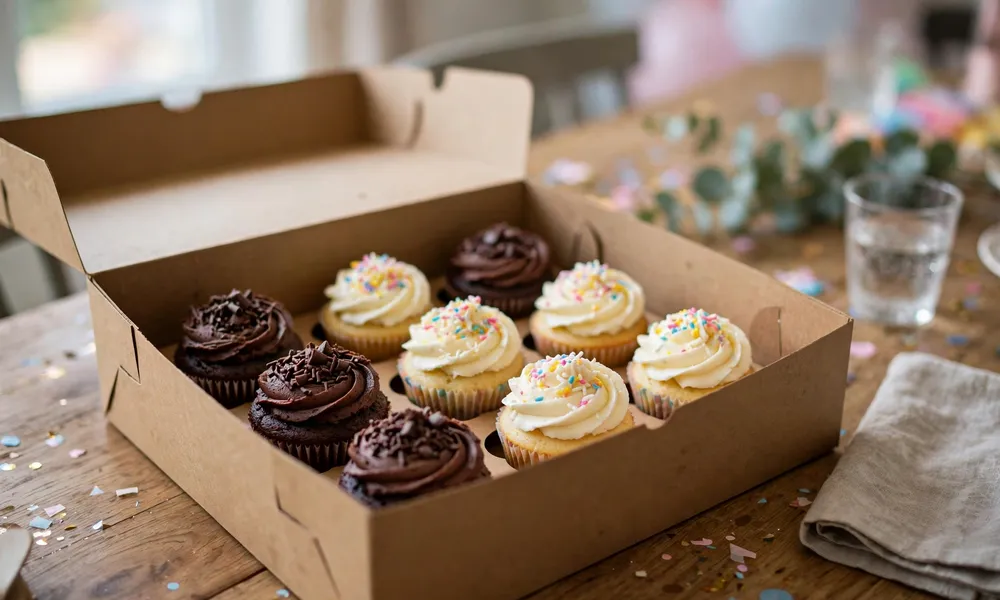
If the frosting does need refrigeration, let the cupcakes come back to room temperature for at least thirty minutes before serving, and keep them covered while they warm up. Cupcakes also freeze very well: freeze them unfrosted in a single layer, then bag them once solid, and they keep for a month. Thaw them in their container at room temperature, then frost fresh. A cupcake frozen on the day it was baked will taste nearly fresh when thawed.
Your Cupcake Checklist
- Use room-temperature ingredients and cream the butter and sugar until pale and fluffy.
- Mix gently and stop as soon as the flour disappears, even if a few lumps remain.
- Fill cases two-thirds full and bake at 175 degrees, testing a minute early.
- Cool in the tin for five minutes, then move to a rack until completely cool.
- Frost only when fully cool, spreading frosting to the edges to seal the crumb.
- Store in a sealed airtight container at room temperature, and freeze what you cannot finish in three days.
Frequently Asked Questions
Why do my cupcakes go dry the next day?
The usual causes are overbaking, overmixing, or uncovered storage. Take them out when a skewer shows a few moist crumbs, mix only until the flour disappears, and store them sealed once cool. Adding oil or yoghurt to the batter also helps them stay soft longer.
Is oil or butter better for moist cupcakes?
Oil keeps cupcakes moist for longer because it stays liquid as the cake cools, while butter firms up. Butter adds flavour that oil cannot match, so many of the best recipes use both. If you must choose one, oil wins for softness and butter wins for taste.
Should I refrigerate frosted cupcakes?
Only if the frosting needs it, such as cream cheese frosting. Buttercream cupcakes keep better at room temperature in a sealed container. If you do refrigerate them, let them return to room temperature for thirty minutes before serving, keeping them covered.
How do I stop cupcake cases peeling away?
Move cupcakes from the tin to a rack after five minutes, and do not leave them steaming in the tin. Good-quality cases help, as does filling them two-thirds full. Cases also peel when cupcakes are stored somewhere damp, so keep the container dry and sealed.
Can I freeze cupcakes?
Yes, and they freeze very well. Freeze them unfrosted in a single layer, then bag them once solid. They keep for about a month. Thaw them in their container at room temperature, then frost fresh.
What is the best frosting for keeping cupcakes moist?
Buttercream is the best choice because its fat seals the top of the cake and slows moisture loss. Spread or pipe it to the edges so no crumb is exposed. Cream cheese frosting tastes wonderful but needs refrigeration, and whipped cream should only be used on same-day cupcakes.
Bottom Line
Cupcakes that stay moist for days come down to gentle mixing, the right balance of oil and butter, pulling them from the oven at the right moment, and storing them sealed once cool. None of these steps is difficult, and together they turn a cupcake that dries out overnight into one that is still soft on day three. For more baking help, see our guides to piping bags and cake stands.


