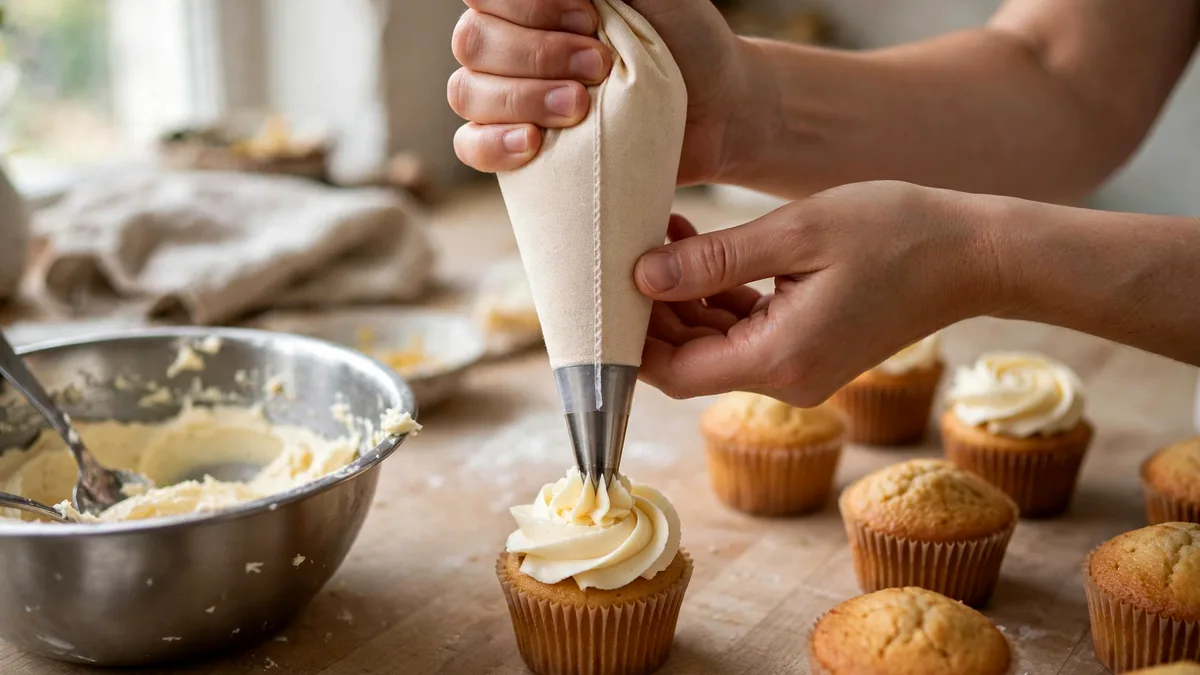
Piping bags make decorating easy in 2026 because they turn a job that looks skilled into a job that is mostly squeezing. A bag of buttercream, a nozzle on the end, and a steady hand are all it takes to pipe rosettes onto cupcakes, write a name on a birthday cake, or fill eclairs without a mess. The bag does the shaping; you only guide it.
That simplicity is also why so many first attempts go wrong. A bag that splits at the seam, a nozzle that pops off mid-squeeze, or frosting too stiff to pipe can turn a fun afternoon into a sticky frustration. The fixes are small and cheap: the right bag, the right nozzle, frosting at the right consistency, and a filling method that keeps air out.
Piping is the finishing step, so it pays to get the earlier steps right too: a level, cool cake takes frosting far better than a warm, domed one. If your bakes need work first, our guide to top baking sheets covers the trays that brown evenly, and good mixing bowls make the frosting smoother before it ever reaches the bag.
Key Takeaways
- Start with disposable bags: cheap, hygienic, and you can cut the tip to fit any nozzle.
- Match the nozzle to the job: a large star tip pipes rosettes, a round tip writes, and a petal tip makes ruffles.
- Frosting consistency decides everything: it should hold a soft peak, pipe smoothly, and keep its shape once it lands.
- Fill the bag only two-thirds full and twist the top closed, or frosting escapes from the wrong end.
- Practise on baking paper first: ten minutes of test swirls saves a cake.
What Makes a Piping Bag Easy to Use
A good piping bag is three things working together: a bag that holds its shape under pressure, a nozzle that shapes the frosting, and a seal that keeps frosting in. Disposable plastic bags are the easiest start: strong, smooth inside, and you throw them away when done. Reusable canvas and silicone bags last for years, but they need thorough washing and drying, and a damp canvas bag can stain the next frosting.
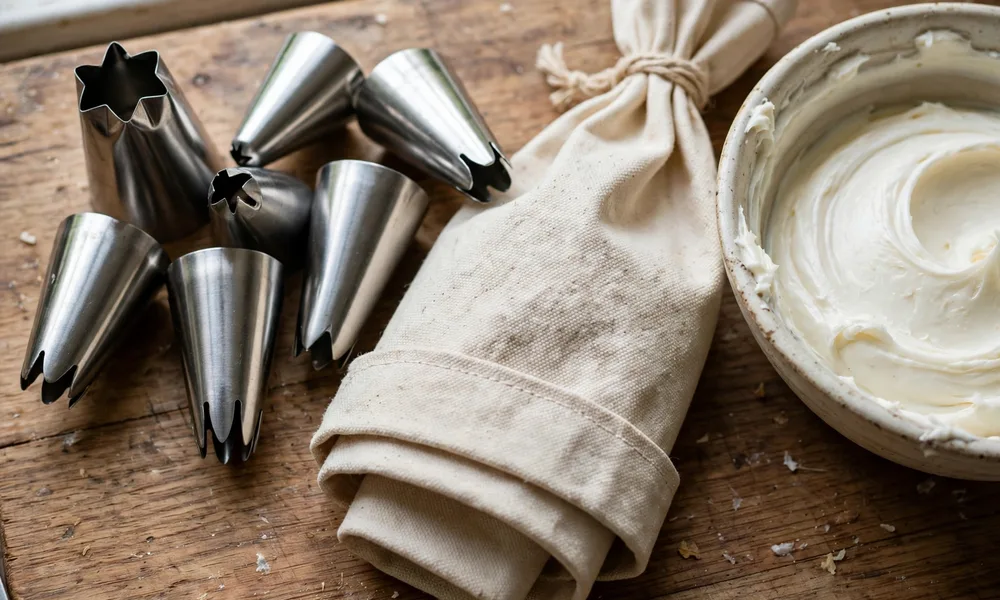
The nozzle matters more than the bag. A wide star tip pipes the classic cupcake rosette in one swirl, while a small round tip is for writing, dots, and outlines. A coupler is a plastic ring that lets you swap nozzles on the same filled bag, so one bag of frosting can pipe rosettes, borders, and writing without refilling. Buy a set with a coupler included, and check the nozzle fits before you fill the bag, because one a fraction too small will pop off under pressure.
The Piping Bags That Make Decorating Easy in 2026
These six cover every decorator, from a first birthday cake to a weekly habit: start with how often you bake, then choose the material.
1. Best Overall: Disposable Bags with a Star Nozzle Set
The disposable set is the strongest all-rounder because it removes every barrier to starting: no washing, no drying, no stale frosting lurking in a seam. Thick plastic bags take firm pressure without splitting, and a set of star nozzles in two or three sizes covers rosettes, shells, and borders. The only running cost is the bags themselves, and a box of a hundred costs less than a single cake from a bakery.
2. Best Reusable: Canvas Bag with Stainless Nozzles
Regular bakers should buy canvas. A well-made canvas bag feels better in the hand than plastic, grips the frosting without slipping, and lasts for years if it is washed in warm soapy water and dried fully between uses. Pair it with stainless steel nozzles, which keep their shape and wipe clean in seconds. The weakness is drying: a canvas bag put away damp will smell musty, so hang it open until it is completely dry.
3. Best for Beginners: Silicone Bag with a Coupler
Silicone is the friendliest material for a first attempt because it is soft, grippy, and almost impossible to split. The bag flexes with your hand rather than fighting it, and a coupler lets you change nozzles without emptying the bag, which is exactly what a beginner needs while learning which tip does what. Silicone bags wash easily, dry quickly, and do not absorb colours from the frosting. The trade-off is size: most are smaller than disposable bags, so you refill more often on a big cake.
4. Best for Cakes: Large 16-Inch Bag with a Wide Star Tip
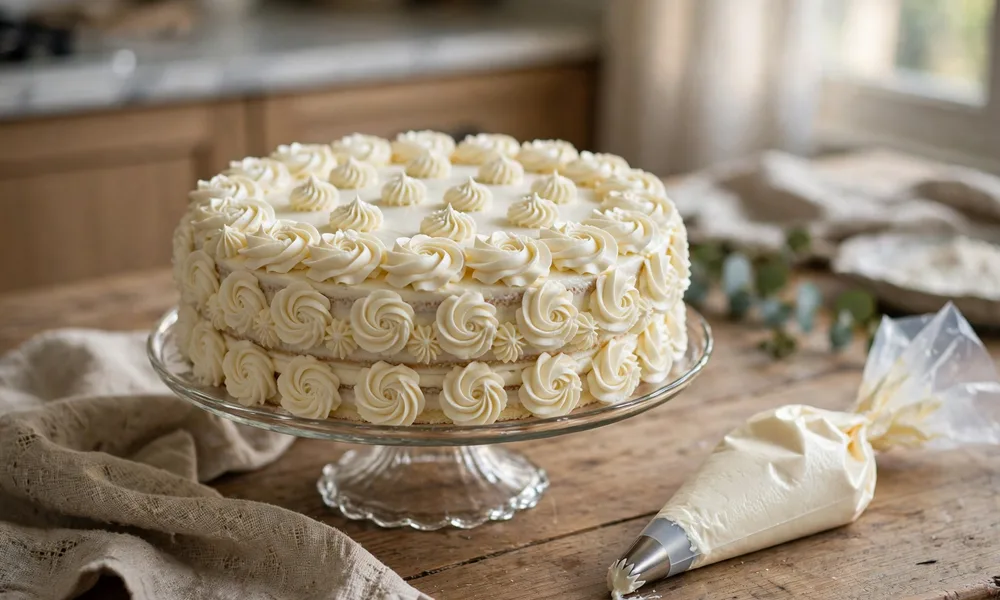
A big cake needs a big bag. A sixteen-inch bag holds enough frosting to pipe a whole border or a full set of rosettes without stopping to refill, and a wide star tip lays down generous swirls that look professional with very little effort. Fill it only two-thirds full, twist the top firmly, and use both hands, one to squeeze and one to guide. Filled to the top it is heavy, hard to control, and will burst at the seam.
5. Best for Detail Work: Small Bags with Fine Round Tips
Writing a name, piping dots, or outlining a biscuit needs a small bag and a fine tip, not a big one. A twelve-inch bag filled with a spoonful of frosting gives you the control of a pen, and a round tip in the smallest sizes draws lines as thin as a pencil. These bags are also the right tool for filling: a round tip slips neatly into a profiterole or a jam doughnut without tearing it. Keep one small bag aside for each colour when you decorate with several icings.
6. Best Budget: Plain Disposable Bags, No Frills
You do not need a set at all to start piping. A roll of plain disposable bags costs very little, and with the corner snipped off, a bag with no nozzle pipes dots, lines, and simple swirls perfectly well. Cut the hole small and test on paper first: you can always cut it bigger, never smaller. Spend the money you save on a decent nozzle set later, and on something to show the results off with, like the cupcake stands that make home-piped cupcakes look like a party centrepiece.
Piping Bag Comparison at a Glance
| Bag | Best for | Typical size | Material | Key strength |
|---|---|---|---|---|
| Disposable set | Most bakers | 12 in | Thick plastic | No washing, star nozzles |
| Canvas reusable | Regular baking | 14 in | Canvas, steel nozzles | Lasts for years |
| Silicone with coupler | Beginners | 12 in | Silicone | Swap nozzles easily |
| Large 16-inch | Big cakes | 16 in | Plastic or canvas | Fewer refills |
| Small detail bags | Writing, filling | 10 in | Plastic | Pen-like control |
| Plain disposable | First try | 12 in | Thin plastic | Cheapest start |

Choosing Nozzles Without Buying a Drawer Full
You need far fewer nozzles than the shops suggest: a large star tip, a small star tip, a round tip, and a petal tip cover almost everything a home baker will pipe. Everything else is a variation on those four shapes.
Size matters more than shape when you are learning: a tip too small clogs and forces you to squeeze so hard the bag splits, while one too large makes every swirl look heavy. Start with middle sizes and test each new tip on baking paper. The test teaches your hand the pressure each tip needs: steady pressure makes neat piping, bursts make lumpy piping.
Filling a Piping Bag Without the Mess
Filling is where most of the mess happens, and a jug solves it: stand the bag upright in a tall jug, fold the top edge over the rim, and spoon the frosting in. The jug holds the bag steady and both hands stay free. Fill it only two-thirds full, twist the top closed, and push the frosting down to force out the air pockets. Air in the bag makes the frosting spurt and breaks the swirl.
Your strong hand squeezes from the twisted top, and your other hand guides the nozzle from just above the tip. Keep the pressure steady, let the frosting flow, and stop squeezing before you lift the nozzle away, or the swirl will pull into a peak. If the frosting is too stiff, beat in a teaspoon of milk; if too soft, beat in a spoonful of icing sugar. Either fix takes a minute and saves the cake.
Cleaning and Storing Piping Bags
Disposable bags go in the bin, but nozzles and reusable bags need care. Rinse nozzles in warm water straight after use, before frosting dries into the teeth of a star tip, and dry them fully. Canvas bags need warm soapy water inside and out, a good rinse, and a full air-dry hung open; a bag folded away damp will smell and stain. Silicone bags can go in the dishwasher.
Store nozzles together in a small box, sorted by shape, so you can find the one you want without tipping a drawer onto the floor. Keep disposable bags away from heat, because a bag gone soft and sticky in a warm cupboard will split the first time you squeeze it. A tidy kit is the difference between decorating on a whim and putting it off because finding the right tip feels like a chore.
Before You Buy: A Quick Checklist
- Decide how often you bake: disposable for occasional cakes, canvas or silicone if you pipe every week.
- Buy a set with a coupler, so one filled bag can swap nozzles.
- Cover the four essential tips: large star, small star, round, and petal.
- Check the nozzle fits the bag snugly before you fill it, or it will pop off under pressure.
- Pick the right size: twelve inches for cupcakes, sixteen inches for a big cake, ten inches for detail work.
- Get the frosting right: it should hold a soft peak, pipe smoothly, and keep its shape once it lands.
Frequently Asked Questions
Why does my piping bag keep splitting?
Usually the bag is overfilled or the frosting is too stiff. Fill it only two-thirds full, twist the top closed, and squeeze steadily rather than in bursts. If the frosting will not flow, beat in a teaspoon of milk.
Do I need a nozzle, or can I just cut the bag?
You can start without one: a snipped corner pipes dots, lines, and simple swirls well. A nozzle earns its place for shaped results like rosettes, shells, or ruffles, which a plain cut cannot make.
How do I stop frosting coming out of the top of the bag?
Twist the top firmly closed after filling, and hold the twist in your squeezing hand while you pipe. Filling past two-thirds full is the usual cause, because there is no room left to twist.
Are reusable piping bags worth it?
Yes, if you bake regularly: a canvas or silicone bag lasts for years and feels better in the hand. If you bake only a few times a year, disposable bags are cheaper, with no washing to remember.
What frosting works best in a piping bag?
American buttercream is the easiest start: it pipes smoothly and holds its shape at room temperature. It should hold a soft peak: too stiff and it will not flow, too soft and the swirls slump.
How do I clean a reusable piping bag properly?
Turn a canvas bag inside out, wash it in warm soapy water, rinse well, and hang it open until completely dry. Silicone bags can go in the dishwasher. Never put a damp bag away, or it will smell and stain the next batch.
The Bottom Line
Piping bags make decorating easy when the bag, the nozzle, and the frosting all suit the job. For most home bakers, a box of disposable bags with a star nozzle set and a coupler is the right buy: cheap, hygienic, and capable of rosettes, borders, and writing from one bag of frosting. Fill it two-thirds full, practise a few swirls on paper, and the cake you were nervous about becomes the one everyone photographs.