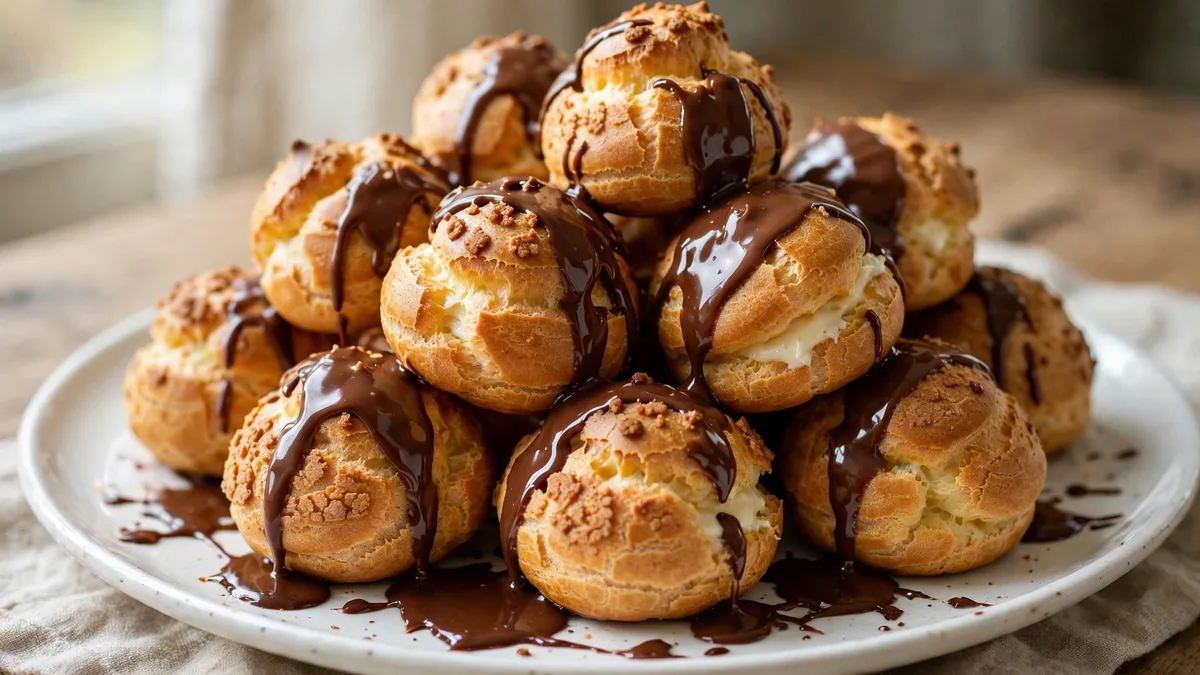
The Mille-Feuilles Worth the Layers in 2026
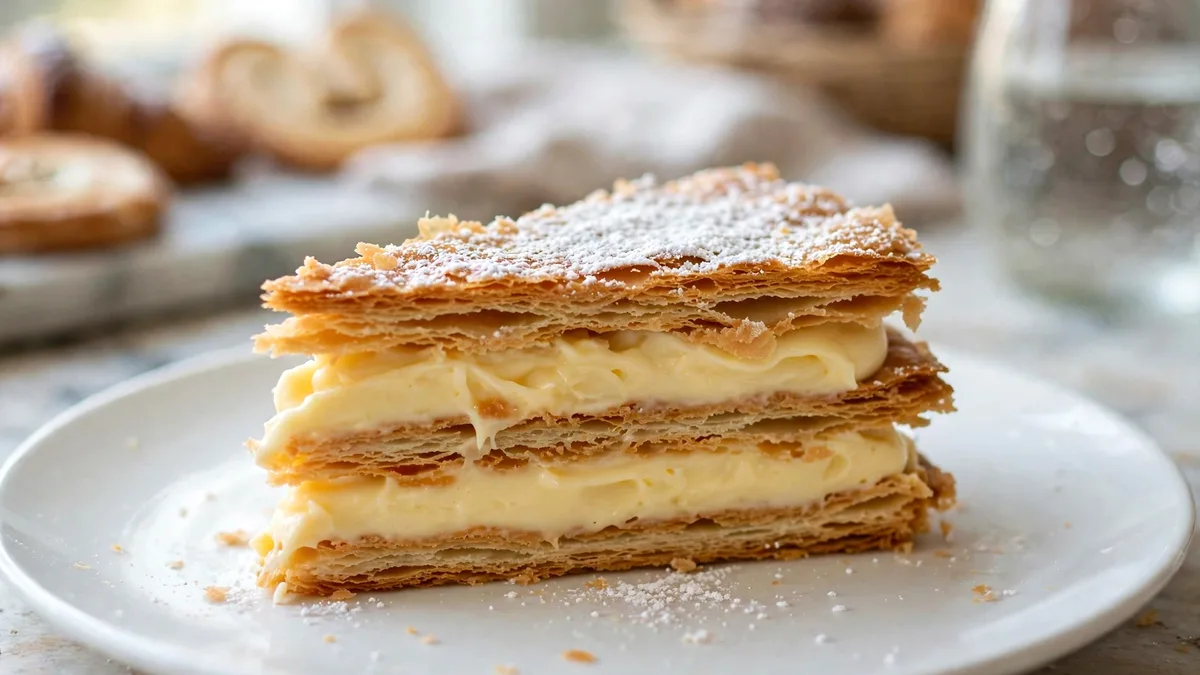
The best mille-feuille in 2026 is a small test of patience, and most of the ones on sale fail it. A mille-feuille should shatter when the fork goes in, then give way to cool vanilla custard that tastes of real vanilla, not of a flavouring bottle. The pastry should be crisp enough to hear, the cream should hold its shape, and the whole slice should stay standing on the plate instead of sliding apart. When those three things line up, a mille-feuille is one of the finest pastries a bakery can make. This guide ranks the mille-feuilles worth the layers in 2026 so you can tell the real thing from the pretty imitation before you pay.
Key takeaways
- The pastry must shatter and stay crisp: if the layers bend instead of breaking, the mille-feuille was baked too soft or filled too early.
- Real vanilla custard is the test of quality: it should taste of vanilla bean and butter, hold a clean edge, and never taste of artificial flavouring.
- Three layers of pastry and two of cream is the classic build; more layers look impressive but often collapse and go soggy faster.
- A mille-feuille is at its best within a few hours of assembly, so buy from a bakery that fills to order or in small morning batches.
- Press a fork straight down through the layers, or cut with a serrated knife; sideways pressure is what makes the stack slide apart.
What makes a mille-feuille worth the layers
A mille-feuille, which means a thousand leaves, is built from puff pastry, and the pastry is where the judgement starts. Good puff pastry is made by folding butter into dough again and again until hundreds of thin layers form, then baking it hot so the water in the butter turns to steam and lifts each layer apart. The result should be golden, dry and fragile, with visible flaking at the edges and a sound you can hear when you break a corner. If the pastry is pale, soft or chewy, the baker either rushed the lamination or baked at too low a temperature, and no amount of good custard can rescue it.
The custard matters just as much, and it is where cheap mille-feuilles give themselves away. A proper crème pâtissière is made from milk, egg yolks, sugar, cornflour and a vanilla pod, cooked until it thickens and cooled quickly so it sets firm. It should taste rich and gently sweet, with vanilla first and butter second, and sit in a clean band between the pastry layers without oozing out at the sides. Freshness is the third measure, because a mille-feuille is a race against moisture: custard is wet, pastry is dry, and every hour together makes the pastry softer. The same attention to freshness separates the best layered pastries generally, and our guide to the best palmiers of 2026 makes the same point about puff pastry: the crispness is the whole point, and it fades fast once the pastry leaves the oven.

Comparison table: the best mille-feuilles of 2026
| Rank | Mille-feuille style | Best for | Watch out for |
|---|---|---|---|
| 1 | Classic vanilla, filled to order | The real thing, eaten at once | Needs eating within hours |
| 2 | Caramelised top, vanilla custard | Extra crunch, special occasions | Caramel softens in humidity |
| 3 | Fresh fruit and vanilla cream | Summer, lighter eating | Fruit weeps and softens pastry |
| 4 | Chocolate and hazelnut | Chocolate lovers, gifting | Can overpower the pastry |
| 5 | Mini mille-feuilles | Parties, tasting portions | Easy to overfill, fiddly to eat |
| 6 | Salted caramel and cream | Rich, grown-up flavour | Sweetness can run away with it |
| 7 | Bakery counter classic | Everyday treat, good value | Quality varies by the day |
The best mille-feuilles of 2026
1. Classic vanilla, filled to order: the best overall
The classic is still the best mille-feuille you can buy, and the one every other version is judged against. Three sheets of golden puff pastry, two bands of vanilla crème pâtissière, and a top dusted with icing sugar or finished with a thin layer of fondant feathered in chocolate. Nothing else is needed, and nothing else should be allowed to get in the way. The pastry shatters, the custard is cool and smooth, and the vanilla runs through every bite. The best versions are filled while you wait, or at most an hour or two before you buy.
2. Caramelised top, vanilla custard: the best for crunch
Some bakers finish the top sheet with a thin layer of sugar caramelised under heat until it turns to a crisp amber glass, and the extra crunch is worth seeking out. The caramel adds a faint bitterness that balances the sweet custard underneath, and it keeps the top layer drier for longer, which buys you an extra hour of crispness. The trick is in the thickness: too much caramel and the top becomes a hard sheet that shatters into shards; too little and it is just a sticky glaze.
3. Fresh fruit and vanilla cream: the best for summer
A mille-feuille layered with fresh berries or sliced strawberries and a lighter vanilla cream is the summer version, and when the fruit is ripe it is superb. The sharpness of the berries cuts through the richness of the custard, and the colour makes it the prettiest mille-feuille on the counter. The risk is moisture: fruit releases juice, and juice is the enemy of crisp pastry. The best fruit mille-feuilles are assembled at the last minute, use firm fruit rather than overripe, and keep the fruit on top or in a single layer.

4. Chocolate and hazelnut: the best for chocolate lovers
Chocolate mille-feuille replaces some or all of the vanilla custard with a chocolate pastry cream, sometimes with a layer of hazelnut praline for crunch. Done well, it is a different dessert rather than a worse one: the chocolate is dark enough to stay grown-up, the hazelnut adds texture, and the pastry still does the crisp work. Done badly, it is a chocolate bar in pastry form, too sweet and too heavy, with the pastry reduced to a wrapper.
5. Mini mille-feuilles: the best for parties
Mini mille-feuilles, cut into two-bite squares, are the best way to serve this pastry to a group, because they solve the famous problem of eating a mille-feuille without making a mess. Each piece has the same three layers in miniature, and because they are small they are usually filled just before serving, which means the pastry is at its crispest. The danger is overfilling: a mini with too much cream squirts out at the sides and collapses in the hand, and one with too little is dry.
6. Salted caramel and cream: the best rich flavour
Salted caramel is the most fashionable mille-feuille filling of recent years, and the best versions earn the attention. A thin ribbon of salted caramel folded through the vanilla custard gives a buttery, slightly salty depth that makes the pastry taste more buttery too, and the salt sharpens the vanilla instead of fighting it. The risk is sweetness: caramel on top of sweet custard on top of sugared pastry can become cloying in two bites.
7. Bakery counter classic: the best everyday choice
Not every good mille-feuille comes from a famous patisserie. A solid neighbourhood bakery that bakes its puff pastry fresh and fills its mille-feuilles in small morning batches can beat a celebrated shop that fills a whole tray at dawn and sells it all day. The counter classic is usually the plainest version: icing sugar on top, vanilla custard inside, no fondant feathers or fruit. Judge it by the pastry, which should still crack when you press it, and by the custard, which should taste of vanilla rather than of sugar.
What to avoid when buying a mille-feuille
The most common disappointment is a mille-feuille that has been filled too long before it is sold. You can spot it before you buy: the pastry looks pale and soft at the edges instead of golden and flaky, the custard has started to seep out at the sides, and the top has sunk slightly into the cream below. Avoid any mille-feuille sold in a sealed plastic box with condensation inside, because the trapped moisture has already done its work on the pastry. The same freshness test applies to every layered pastry, and our guide to the best baklava of 2026 makes the same point about syrup and crispness: a layered pastry that has gone soft has lost the thing that made it worth buying.
Watch the custard too. If the filling is pure white and tastes only of sugar, it is probably a whipped topping rather than a real crème pâtissière, and it will melt quickly and leave the pastry greasy. If the filling is yellow but tastes of artificial vanilla, the baker has used flavouring instead of a pod, and the flavour will be flat and one-note. And beware the giant mille-feuille: a stack of five or six layers looks spectacular in a window, but the middle layers go soft first, the slice is almost impossible to cut cleanly, and the top slides off before you have finished the first bite. Three layers of pastry is the classic for a reason.
Checklist: buying a mille-feuille worth the layers
- Press a corner gently: the pastry should crack and flake, not bend or feel soft.
- Ask when it was filled, and buy from a bakery that fills in small batches or to order.
- Taste for real vanilla in the custard, not just sweetness or artificial flavouring.
- Check the slice stands straight, with clean bands of cream and no seepage at the sides.
- Buy it in the morning and eat it the same day; never keep a mille-feuille overnight.
- Cut it with a serrated knife or press a fork straight down, never sideways.
Frequently asked questions
How long does a mille-feuille stay crisp?
A mille-feuille is at its best within two to four hours of being filled, and it starts to soften noticeably after that. Buy it as close to eating time as you can, keep it cool but not sealed in plastic, and eat it the same day.
Why does my mille-feuille fall apart when I cut it?
Because the pastry is meant to shatter, and sideways pressure pushes the layers apart. Use a serrated knife and saw gently straight down, or press a fork vertically through all the layers and lift the bite up.
What is the difference between a mille-feuille and a Napoleon?
Very little: a Napoleon is the name often used for the same pastry outside France, sometimes with almond paste or a slightly different filling. A mille-feuille is the French original, built from puff pastry and vanilla crème pâtissière.
Can I make a mille-feuille at home?
Yes, and shop-bought puff pastry makes it very achievable: bake the sheets flat under a second tray, cool them completely, then layer with crème pâtissière made the same day. Assemble it no more than two hours before serving, and chill it briefly so the custard sets.
Should a mille-feuille have fondant on top?
A fondant top is traditional, but not essential. A simple dusting of icing sugar is just as correct and lets the pastry flavour come through more clearly.
What should I drink with a mille-feuille?
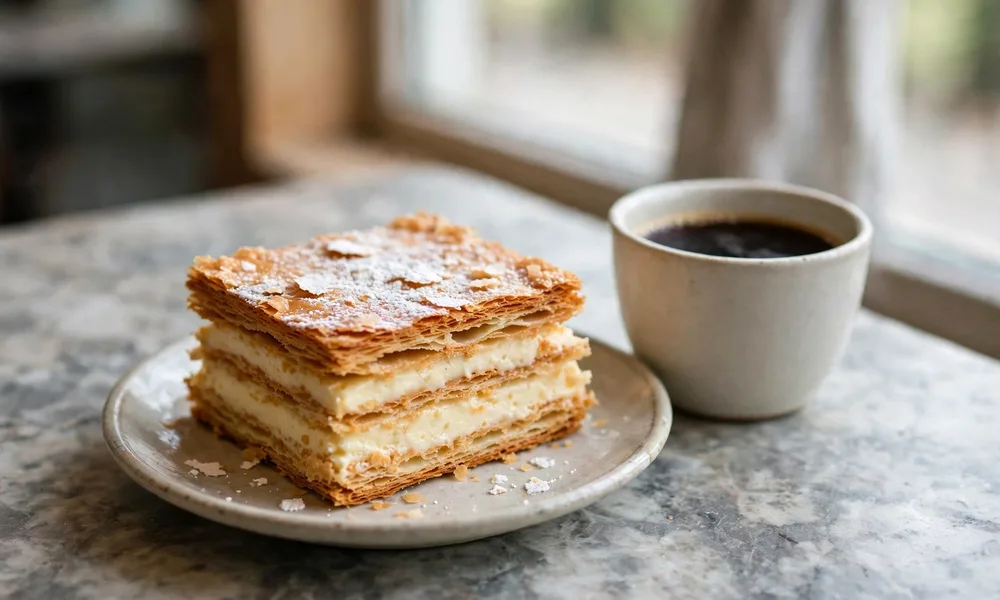
Black coffee is the classic partner, because its bitterness balances the sweet custard, and a small cup of espresso works beautifully with a single slice. For more on layered French pastries, see our guide to the best kouign-amann of 2026, another butter-layered classic that rewards the same attention to crispness.
Bottom line
The mille-feuilles worth the layers in 2026 are the ones that respect the pastry: crisp, golden and filled at the last possible moment, with real vanilla custard and nothing to hide. Buy the classic from a bakery that bakes its own puff pastry, eat it within hours of it being filled,