Kouign-Amann: The Pastry Worth the Butter in 2026
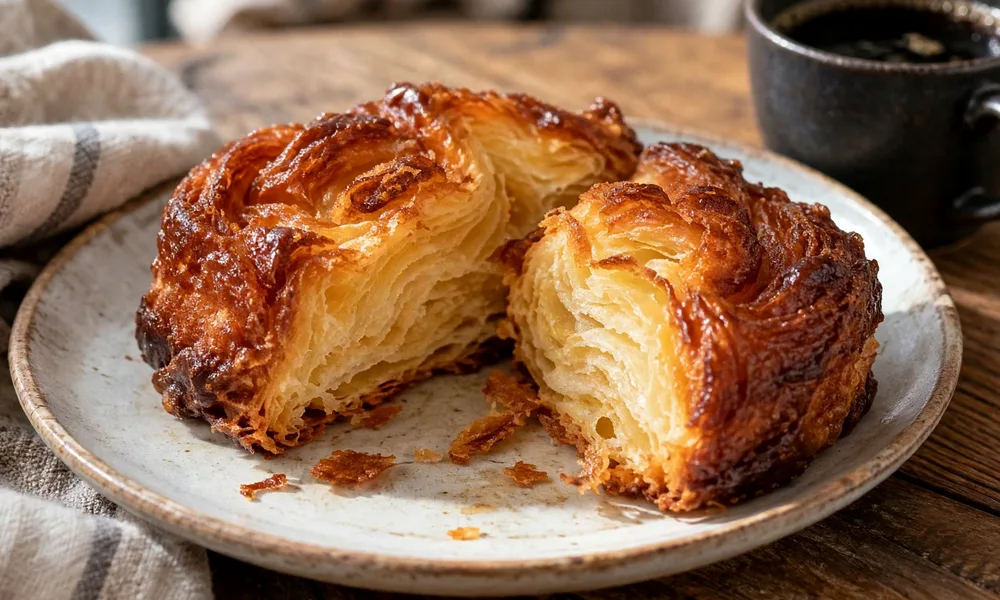
Kouign-amann is the pastry worth the butter in 2026, and it is the most delicious thing most people have never tried. It comes from Brittany, where the name means butter cake in Breton, and it is exactly that: laminated dough layered with salted butter and sugar, folded, rolled and baked in a round tin until the sugar caramelises into a crisp, amber crust and the inside stays soft, flaky and buttery. The first bite is a crackle of burnt sugar, then layer after layer of tender pastry, then a buttery finish with a whisper of salt. This guide explains what to look for, which types are worth your money, and how to tell a great kouign-amann from a greasy, burnt copy before you pay for it.
Key takeaways
- A great kouign-amann crackles when you bite it, with a caramelised sugar crust outside and soft, flaky, buttery layers inside.
- Salted butter is the flavour: the salt sharpens the caramel and keeps the sweetness from turning cloying.
- It is not a croissant: the sugar is folded into the dough itself, so the pastry caramelises from the inside out.
- Buy kouign-amann the morning it is baked, eat it the same day, and reheat leftovers briefly in a hot oven, never in a microwave.
- A bakery that laminates its own dough beats a factory pastry almost every time, whatever the packaging promises.
How the best kouign-amann was chosen
Every type below was scored on five measures. Caramelisation comes first: does the crust crackle and taste of dark caramel, or is it pale and soft, or burnt and bitter? Flakiness is second, judged on whether the layers pull apart in ribbons or collapse into a dense, doughy centre. Butter flavour is third, because a kouign-amann made with real salted butter tastes rich and clean, while one made with shortening tastes flat and leaves a greasy film. Our guide to the best butter for baking explains why real butter matters, and the same test applies here. Freshness is fourth, since a kouign-amann is at its best within a few hours of baking and fades fast after that. Value is fifth: the real cost once you compare a bakery piece with a supermarket one.
Comparison table: the best kouign-amann in 2026
| Rank | Kouign-amann type | Best for | Watch out for |
|---|---|---|---|
| 1 | Classic Breton kouign-amann | The real thing, eaten warm | Hard to find, sells out early |
| 2 | Individual muffin-tin kouign-amann | Freshness, crisp edges | Dry centre, too small |
| 3 | Salted caramel kouign-amann | Sweet tooth, dessert | Too sweet, sticky filling |
| 4 | Mini kouign-amann | Sharing, parties, tasting | Overbaked, all crust |
| 5 | Chocolate kouign-amann | Chocolate lovers, dessert | Chocolate that masks the butter |
| 6 | Apple kouign-amann | Fruit lovers, autumn | Soggy fruit, pale pastry |
| 7 | Supermarket kouign-amann | Budget, easy to find | Greasy, pale, doughy centre |
The best kouign-amann in 2026
1. Classic Breton kouign-amann: the best overall
The classic Breton kouign-amann is the benchmark, and the best of it still comes from the small bakeries of Douarnenez and Quimper, where the recipe was born. It is baked as one large round cake, cut into wedges, with a deep amber crust that crackles under the knife and an interior of soft, buttery layers that pull apart in ribbons. The sugar has caramelised all the way through, not just on the surface, so every layer carries a little of that dark, toffee flavour, and the salted butter keeps it from turning cloying. A good classic is heavy in the hand for its size, because the butter is real and generous, and it smells of caramel and warm butter before you even taste it.
It is also the hardest type to find outside Brittany, because it does not travel well and it sells out early.
2. Individual muffin-tin kouign-amann: the best for freshness
The individual muffin-tin kouign-amann is the version most bakeries outside France actually sell, and it is often the best one to buy. Each pastry is baked in its own cup, so the edges caramelise all the way round and the top puffs into a crisp, sugary dome. The ratio of crust to centre is higher than in the large round, which means more crackle in every bite, and the individual size means it is baked fresh in small batches through the morning rather than once a day.

3. Salted caramel kouign-amann: the best for a sweet tooth
Salted caramel kouign-amann takes the pastry’s own caramel flavour and leans into it, usually with a spoonful of salted caramel sauce folded into the centre or drizzled over the top. When it is done well, it is a proper dessert rather than a gimmick: the caramel inside melts into the layers, the salt sharpens the sweetness, and the pastry itself is still the star. The closest relative is the croissant, and our guide to the best croissants explains the shatter and the honeycombed crumb that define that pastry, which is the same lamination skill with no sugar in the dough.
The trap is a salted caramel version that is really a sugar bomb: a thick layer of sweet sauce, a thin pastry, and no salt to be found. A good one tastes of butter first, caramel second, and salt last.
4. Mini kouign-amann: the best for sharing
Mini kouign-amann are the best choice when you are buying for a group, because a box of small pastries gives everyone a taste and nobody has to commit to a whole one. The best minis are baked in small cups so they still get crisp edges, and they are eaten the same morning, because their size means they dry out faster than a full pastry. They are also the best way to learn what you like, because you can compare a plain mini with a caramel or chocolate one side by side in one sitting. A good mini is not just a small version of the big one: the baker has adjusted the sugar so the small pastry caramelises without burning, which is harder than it looks.
Walk away from minis that are dark brown all the way through, because at that size the sugar burns before the centre bakes.
5. Chocolate kouign-amann: the best filled version
Chocolate kouign-amann is the newest of the filled types, and when it is done well it is a proper dessert rather than a gimmick. The chocolate should be dark, at least 55 percent cocoa, folded into the centre so that it melts into the layers rather than sitting on top like a bar. The best versions keep the chocolate modest, because the pastry already brings caramel sweetness, and the butter flavour should still lead. The same lamination skill shows up in the danish, and our guide to the best danishes explains how a filled laminated pastry should hold its filling without going soggy.
The trap is a chocolate version that is really a chocolate bar with pastry attached: a thick layer of sweet milk chocolate, a thin layer of dough, and caramel on top of that. A good one tastes of butter first, chocolate second, and caramel last.
6. Apple kouign-amann: the best fruit version
Apple kouign-amann is the best fruit version, and it works because the tartness of the apple cuts through the richness of the butter and sugar. The best versions use a firm, tart apple, diced small and folded into the centre, so it softens in the bake without turning to mush or leaking juice into the pastry. The apple should be an accent, not the main event: if the pastry is soggy in the middle, the apple was too wet or too much.
Check the base before you buy. If the bottom is pale and soft, the apple juice has soaked through, and the pastry will never crisp.
7. Supermarket kouign-amann: the best budget buy
Supermarket kouign-amann is the cheapest way to try the pastry, and the best of it is perfectly serviceable if you know what to expect. The pastry is usually made on a line, the butter is often a blend rather than pure salted butter, and the caramelisation is lighter than a bakery version. Even so, a fresh supermarket kouign-amann, eaten the day you buy it and warmed briefly in a hot oven, can be enjoyable: the top is usually still crisp, the layers are visible, and the price is a fraction of a bakery piece.

What to avoid when buying kouign-amann
The most common kouign-amann regret is not a bad type but a stale or burnt piece: pastry that was crisp in the morning and leathery by the afternoon, or a top that looked amber in the shop and tasted bitter at home. Avoid the trap by checking three things before you pay: the colour of the top, which should be deep amber rather than pale or dark brown; the weight of the piece, which should feel substantial rather than light and hollow; and the smell, which should be caramel and butter rather than burnt sugar or stale oil.
Checklist: buying kouign-amann
- Pick a piece up: the top should crackle and flake, not bend or tear like soft bread.
- Look at the colour: deep amber means caramel, pale means underbaked, dark brown means burnt.
- Check the base: it should be crisp and golden, not pale, soft or greasy.
- Smell it before you pay: caramel and butter should lead, with salt behind them, never burnt sugar.
- Ask when it was baked and buy the freshest batch, ideally the one that sells out by mid-morning.
- Eat it the same day and reheat leftovers briefly in a hot oven, never in a microwave.
Frequently asked questions
What is the difference between kouign-amann and a croissant?
Both are laminated pastries, but a croissant has no sugar in the dough, while a kouign-amann has sugar folded in with the butter, so it caramelises as it bakes. A croissant is flaky and buttery; a kouign-amann is flaky, buttery and caramelised, with a crisp sugary crust and a denser, richer centre. It is also baked in a round tin rather than rolled into a crescent.
How long does kouign-amann stay fresh?
A few hours is the honest answer, and the first hour is the best. Eat it the day it is baked, ideally still slightly warm. Never refrigerate it, because the cold kills the caramel and turns the pastry leathery.
Why is kouign-amann so buttery?
Because butter is the point. The recipe uses roughly as much butter as dough, and the butter is salted, which sharpens the caramel and keeps the sweetness in check.
Is kouign-amann very sweet?
It is sweet, but it should not be only sweet. The salted butter and the dark caramel should balance the sugar, so each bite tastes of butter, caramel and salt together.
Can you freeze kouign-amann?
You can freeze it unbaked, and many bakeries do, but freezing a finished kouign-amann kills the crunch.
Where does kouign-amann come from?
From Douarnenez in Brittany, France, where it was created in the 1860s. The name is Breton for butter cake, and the recipe has barely changed since: flour, salted butter, sugar and yeast, folded and baked until the sugar caramelises.
Bottom line
The best kouign-amann in 2026 is the one that earns its butter: a crust that crackles with dark caramel, layers that pull apart in ribbons, and salted butter that keeps the sweetness honest. The classic Breton round is the pastry to seek out, the individual muffin-tin version is the best one most people can actually buy, and a bakery batch that sells out by mid-morning beats a supermarket pack every time.