Best Rye Bread for Sandwiches and Snacking in 2026
The best rye bread for sandwiches and snacking in 2026 is the loaf that does the heavy lifting without falling apart: dark, moist and dense, with a sour tang and a hint of caraway that stands up to pastrami, cheese and smoked fish instead of disappearing underneath them. This guide ranks the best rye breads for sandwiches and snacking, by type and by what each one does well, so you can pick the right loaf for a Reuben, a cheese board or a simple slice with butter.
Key takeaways
- Rye bread should taste of rye: a sour tang and a dark, earthy flavour, not just brown colour from molasses or caramel.
- Density is a feature, not a flaw: a good rye loaf is heavy and moist, and it holds wet fillings without going soggy.
- Caraway is the classic seed, but it is not compulsory: a good plain rye lets the grain speak, while a seeded loaf adds crunch.
- Match the rye to the sandwich: a light deli rye for everyday sandwiches, a dark pumpernickel-style loaf for pastrami and smoked fish.
- Store rye bread cut side down in a paper bag or a bread box: it keeps for four to five days, far longer than white bread.
How the best rye breads were chosen
Every rye bread below was judged on five things that matter at the table rather than on the shelf. Flavour comes first: a good rye tastes sour and earthy, with a clear grain flavour and a finish that lasts, while a bad one tastes only of salt and brown colouring. Texture is second, judged on density, moisture and sliceability: a good rye is dense and moist without being gummy, and it slices cleanly without crumbling or tearing. Sandwich performance is third, because this guide is about sandwiches and snacking: a good rye holds wet fillings, stands up to toasting and does not fall apart halfway through the meal.
Two notes before the list. Second, rye bread is a broad family, from pale deli rye to near-black pumpernickel, so the ranking weighs how each type eats in a sandwich above all else. The right knife matters here too, and our guide to the best bread knives of 2026 explains why a serrated blade slices a dense loaf cleanly instead of crushing it.

Comparison table: the best rye bread for sandwiches and snacking in 2026
| Rank | Rye bread type | Best for | Watch out for |
|---|---|---|---|
| 1 | Light deli rye | Everyday sandwiches | Can be mostly wheat flour |
| 2 | Dark seeded rye | Cheese, cured meats | Caraway divides opinion |
| 3 | Marble rye | Good looks, mild flavour | Swirl is often just colour |
| 4 | Pumpernickel-style rye | Pastrami, smoked fish | Very dense, heavy slices |
| 5 | Wholemeal rye | Hearty snacking, soup | Dry if under-baked |
| 6 | Supermarket sliced rye | Budget, convenience | Thin slices, bland flavour |
| 7 | Rye crispbread | Snacking, cheese boards | Not a sandwich bread |
The best rye bread for sandwiches and snacking in 2026
1. Light deli rye: the best everyday sandwich loaf
Light deli rye is the rye bread most people meet first, and for everyday sandwiches it is still the one to beat. It is made mostly from wheat flour with a smaller share of rye, which gives it a lighter crumb, a milder sourness and a softness that makes it easy to eat, while keeping enough rye character to taste distinct from ordinary white bread. Judge it by the label: a good deli rye lists rye flour early, not last, and it should smell faintly sour when you open the bag.
2. Dark seeded rye: the best for cheese and cured meats
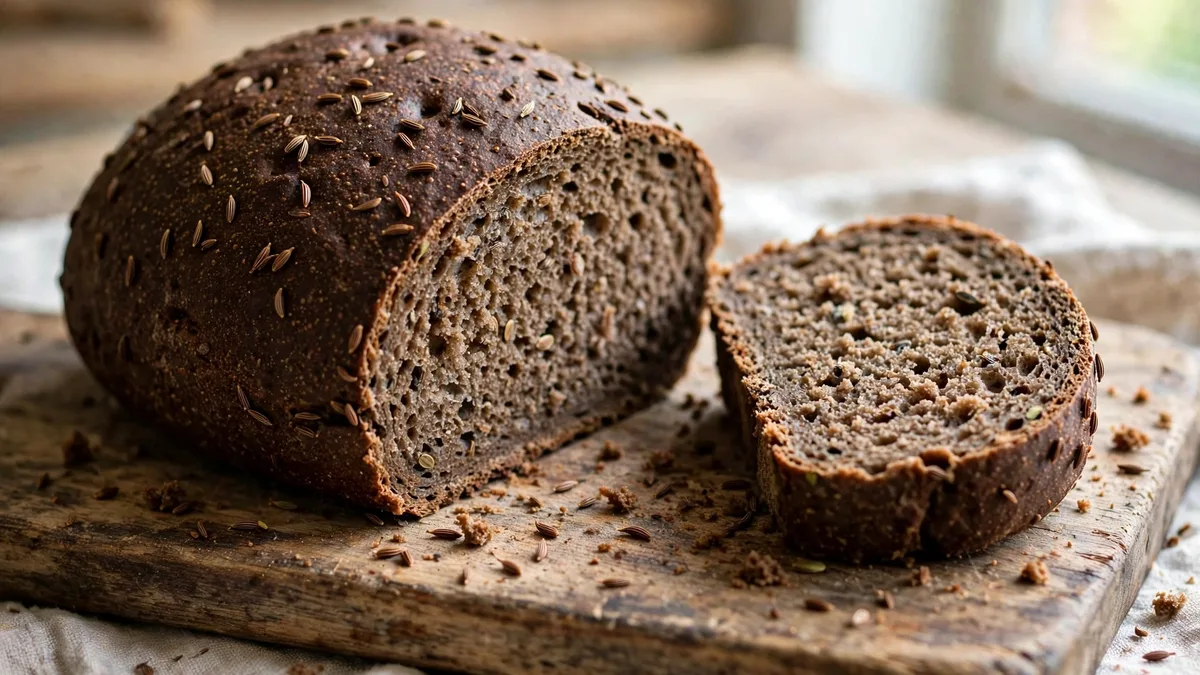
Dark seeded rye is the loaf for people who want rye to taste like rye. It is made with a high share of rye flour, which gives it a dark crumb, a dense bite and a proper sour tang, and it is studded with caraway seeds that add a warm, aniseed note and a little crunch. It is the best rye for a cheese board, for cured meats and for smoked fish, because its flavour stands up to strong partners instead of being drowned by them.
3. Marble rye: the best-looking sandwich loaf
Marble rye is the showpiece of the rye family, made by swirling a light rye dough and a dark rye dough together so every slice has a marbled pattern. It looks wonderful on a plate, and it is the best rye for a sandwich you want to look as good as it tastes. The flavour is usually milder than a dark rye, because the light dough softens the sourness, which makes it a good introduction to rye for anyone who finds a dark loaf too strong. A good marble rye still has a proper sour note and a dense, moist crumb. Slice it a little thicker than a deli rye so the pattern shows, and use it for sandwiches where the bread is part of the pleasure rather than just the wrapper.

4. Pumpernickel-style rye: the best for pastrami and smoked fish
Pumpernickel-style rye is the darkest and densest loaf in this guide, and for pastrami, smoked fish and rich fillings it is the best partner there is. It is heavy, and a single slice is filling in a way that two slices of white bread are not. That density is exactly what makes it work: it holds a wet, rich filling without going soggy, and its flavour stands up to pastrami, smoked salmon and strong cheese without being overwhelmed. The classic pairing is a Reuben, and our guide to the best Russian dressing of 2026 covers the sauce that makes a Reuben a Reuben.
5. Wholemeal rye: the best hearty snacking loaf
Wholemeal rye is the most filling loaf in this guide, made with whole rye grain rather than refined flour, and it is the best choice for hearty snacking and soup. The whole grain gives it a rough, chewy texture, a nutty flavour and a density that makes a single slice with butter feel like a proper snack rather than a nibble. It is the rye that keeps you full longest, and it pairs well with soup, soft cheese and cured meats, where its texture adds something the filling does not. Keep it cut side down and it will stay good for days, which is one of the reasons it is the sensible buy for a household that eats bread slowly.

6. Supermarket sliced rye: the best budget option
Supermarket sliced rye is the cheapest and most convenient option, and for a quick sandwich it does the job. The best ones are sliced evenly, wrapped well and made with a real share of rye flour, and you can tell the difference by the smell: a decent sliced rye smells faintly sour when you open the pack, while a poor one smells of nothing at all. That makes them fine for everyday sandwiches, where the filling carries the meal, and a poor choice for eating on their own with cheese, where the bread itself has to add something. If you buy one, check the label for rye flour near the top of the ingredients, buy the smallest pack you will finish in a few days, and keep it sealed so the slices do not dry out at the edges.
7. Rye crispbread: the best rye for snacking
Rye crispbread is not a sandwich bread at all, and that is exactly why it earns the last place in this guide: it is the best rye for snacking. Thin, dry and crackling, it is made from rye flour baked until crisp, and it keeps for months rather than days, which makes it the rye to keep in the cupboard for cheese boards, soup and afternoon snacking. A good crispbread snaps cleanly, tastes of rye first, and holds a spread without shattering into crumbs. Keep it dry and sealed, and it will outlast every other bread in this guide by months. For the spread itself, our guide to the best mayonnaise of 2026 covers the jar that turns a plain slice into a proper snack.
What to avoid when buying rye bread
The most common rye mistake is buying by colour instead of by ingredients. A dark brown loaf is not necessarily a rye loaf: many supermarket breads are wheat bread darkened with molasses or caramel colour, and they taste of almost nothing. Read the label and look for rye flour near the top of the list, not last, and be suspicious of a loaf whose first ingredient is wheat flour and whose rye content is a mystery. And avoid buying a whole dark rye if you have never tried it: the flavour is strong and the texture is dense, so buy a small loaf or a few slices first. Rye bread rewards a careful buyer and punishes a careless one, and the label tells you more than the colour ever will.
Checklist: buying rye bread for sandwiches and snacking
- Read the label: rye flour should be near the top of the ingredients, not last.
- Pick the loaf up: a good rye feels heavy and dense for its size, not light and airy.
- Smell it: a real rye has a faint sour note, while a fake one smells of nothing.
- Match the type to the job: light deli rye for everyday sandwiches, dark rye for pastrami and cheese.
- Slice it thin for dense loaves, a little thicker for light deli rye so the pattern shows.
- Store it cut side down in a paper bag or a bread box, never in the fridge, and eat it within five days.
Frequently asked questions
How long does rye bread keep?
Rye bread keeps far longer than white bread, usually four to five days at room temperature, because its dense crumb holds moisture and its acidity slows mould.
Why is rye bread so dense?
Rye flour has very little gluten, so it cannot trap gas the way wheat flour does, and the loaf stays dense and moist instead of rising high and light. That density is what makes rye so good for sandwiches: it holds wet fillings without going soggy.
Is rye bread healthier than white bread?
Rye bread is usually higher in fibre and more filling than white bread, and it has a lower glycaemic response, so it keeps you full for longer.
What is the difference between rye bread and pumpernickel?
Pumpernickel is a type of rye bread, traditionally made from coarse rye meal and baked low and slow for many hours, which gives it a near-black crumb and a deep malty flavour. Most supermarket pumpernickel is a dark rye loaf coloured and flavoured to taste like the real thing, rather than baked the traditional way.
Can you freeze rye bread?
Yes, and rye freezes better than most breads because its dense crumb holds up well. Slice it first, freeze the slices in a bag, and toast them straight from frozen. A whole loaf needs a hot oven to revive, and the slices are more practical for everyday use.
What should I serve with rye bread?
Butter and cheese are the classic pairing, and a good rye needs nothing more. It also suits pastrami, smoked salmon, cured meats and soup, and thin slices with butter make the base for open sandwiches. A Reuben on rye, with Russian dressing and sauerkraut, is the most famous rye sandwich of all.
Bottom line
The best rye bread for sandwiches and snacking in 2026 is the loaf that tastes of rye, holds its fillings and keeps for days: a light deli rye for everyday sandwiches, a dark seeded rye for cheese and cured meats, and a pumpernickel-style loaf for pastrami and smoked fish. Read the label before you buy, slice it thin, store it properly, and let the bread do the work.