Bread Knives That Slice Cleanly Without Crushing in 2026
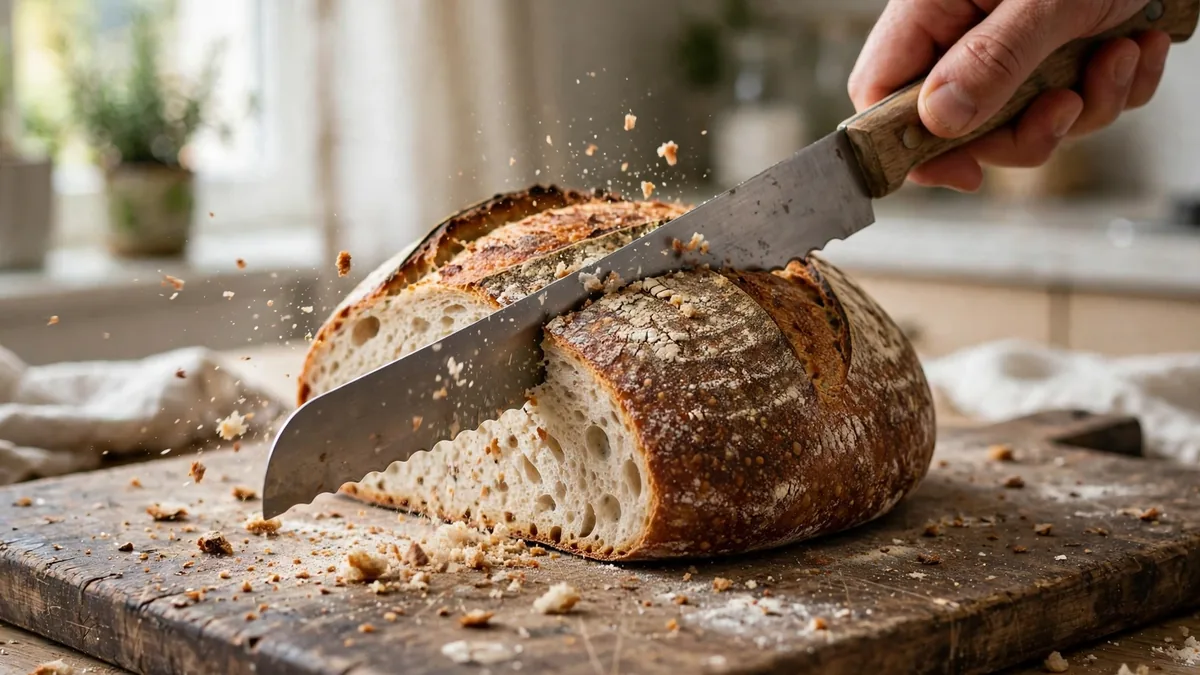
A bread knife that slices cleanly is the difference between neat, even slices and a loaf squashed flat. Press a dull blade into a crusty sourdough and the crust shatters, the soft crumb compresses, and the slice comes out torn. A proper bread knife glides through the crust with a gentle sawing motion and leaves the crumb open and airy.
Serrated blades that look alike behave very differently. Blade length, tooth shape, steel, and handle all decide whether a knife saws or crushes. This guide explains what makes a bread knife cut cleanly and how to pick one you will reach for daily.
Key Takeaways
- A serrated edge is essential: the teeth grip the crust and saw through it instead of pressing down and crushing the crumb.
- A blade of eight to ten inches suits most loaves, crossing a wide sourdough in one smooth stroke.
- Pointed teeth bite into hard crusts; rounded scallops cut gently and suit soft loaves and cakes.
- A comfortable, secure handle matters as much as the blade, because the long sawing motion punishes a poor grip.
- Keep it sharp with a ceramic rod or a professional service, and store it in a block or on a magnetic strip.
Why a Bread Knife Is Different From Every Other Knife
A chef’s knife cuts by pressing a straight, razor-sharp edge down through food, and that works beautifully on vegetables, meat, and herbs. Bread defeats that approach: a loaf has a hard, dry crust outside and a soft, springy crumb inside, and a straight edge pushes the crust down into the crumb before it starts to cut. The slice comes out uneven and the loaf loses its shape.
A bread knife solves the problem with teeth. The serrations catch on the crust and saw through it with very little downward pressure, so the crumb keeps its structure. That is why even a good chef’s knife is a poor substitute: our guide to the best chef knives of 2026 covers blades that excel at almost everything else in the kitchen, but for a crusty loaf a serrated bread knife is the right tool. Bread knives are also longer: a long blade crosses a wide loaf in one stroke, so the slice comes out even.

Serrated, Scalloped or Straight: Which Edge Cuts Cleanest?
Not all serrations are the same, and the shape of the teeth decides what a bread knife does best. Pointed teeth are the aggressive option: each tooth is a sharp point that bites into a hard, thick crust and starts the cut quickly, making them the best choice for crusty sourdough, baguettes, and artisan loaves. The trade-off is that pointed teeth can tear a very soft crumb if you press too hard, so they reward a light hand.
Scalloped edges, sometimes called wavy edges, have rounded, shallow curves instead of sharp points. They cut more gently and are kinder to soft sandwich loaves, brioche, and cakes, where a pointed tooth would snag and shred. Straight or micro-serrated edges are compromises: neat on soft bread, weak on a hard crust. Match the teeth to the bread you eat most: crusty loaves every day means pointed teeth, and soft sandwich bread means scalloped.
Blade Length and Shape: Getting the Fit Right
An eight-inch blade is the most versatile size: long enough for a standard loaf, short enough to control easily, and comfortable for smaller hands and kitchens. A ten-inch blade suits wide round loaves and anyone who bakes at home, because it crosses the whole loaf without a second stroke. Blades shorter than eight inches struggle with wide loaves, and blades longer than ten inches become unwieldy on a normal board.
Shape matters too. Most bread knives have a straight spine with a gently curved tip, which lets the blade rock slightly at the end of the stroke. Some have an offset handle, where the handle sits above the line of the blade, keeping your knuckles clear of the board when you cut through a tall loaf. If you regularly slice tall sandwich loaves or stacked cakes, an offset handle is worth looking for.
What to Look For: Steel, Handle and Balance
Steel decides how long the edge lasts. High-carbon stainless steel is the standard for good bread knives: it takes a keen edge, resists rust, and holds its teeth through months of daily slicing. Cheaper stainless steel goes dull quickly and its teeth round off, which is when a knife starts crushing instead of cutting. Forged blades, made from a single piece of steel, tend to be heavier and better balanced than stamped blades cut from a sheet.
The handle is where many bread knives fail. Because the cutting motion is a long sawing stroke, a handle that is too thin, too slippery, or too short will tire your hand and let the blade wander. Look for a handle that fills your palm, with a slight curve and a texture that stays secure when your hands are damp or dusty with flour. Wood handles need occasional oiling and must stay out of the dishwasher; synthetic handles are tougher.
Balance is the third test. Hold the knife where the blade meets the handle: it should feel level, neither tipping forward nor falling back toward your wrist. A well-balanced knife feels like an extension of your hand, and you notice the difference within a minute of slicing a loaf.
The Main Types of Bread Knife, Compared
There is no single best bread knife for every kitchen, because the right choice depends on the bread you eat and the size of your loaves. The table below compares the main types on the things that matter most.
| Type | Best For | Hard Crust | Soft Loaves | Upkeep |
|---|---|---|---|---|
| Pointed serrated, 10 inch | Crusty sourdough and baguettes | Excellent | Fair, can tear | Low |
| Scalloped, 8 inch | Soft sandwich loaves and cakes | Good | Excellent | Low |
| Pointed serrated, 8 inch | Everyday mixed bread | Very good | Good | Low |
| Offset handle, 9 inch | Tall loaves and layer cakes | Very good | Very good | Low |
| Forged, pointed, 10 inch | Serious home bakers | Excellent | Good | Moderate |
For most homes, a pointed serrated knife of eight or ten inches is the safest all-round buy. If you eat mostly soft sandwich bread, a scalloped eight-inch blade gives cleaner slices. If you bake tall loaves, the offset handle makes the biggest difference.
The Best Bread Knives of 2026 at a Glance
The best bread knives of 2026 share the same traits: sharp, well-shaped teeth that bite the crust without pressing, a blade long enough to cross a wide loaf in one stroke, a handle that stays secure through a long sawing motion, and steel that holds its edge for months. Pointed serrated knives win on crusty sourdough, scalloped knives win on soft loaves and cakes, and offset-handle knives win for tall loaves.
Price is a poor guide on its own. Some of the best-performing bread knives in 2026 sit in the middle of the price range, while some expensive knives have teeth too aggressive for soft bread or handles too slim for a comfortable grip. A bread knife is only as good as the loaf it cuts, and our guide to bread boxes that keep loaves fresh longer in 2026 explains how to store that loaf so the crust stays crisp until the last slice.

Slicing Technique: Let the Teeth Do the Work
Even the best bread knife will crush a loaf if you use it like a chef’s knife. Place the loaf on a stable board, hold it steady with your free hand kept well clear of the blade, and rest the teeth lightly on the crust. Use a gentle back-and-forth sawing motion and let the weight of the blade do the cutting. Pressing down hard is the most common mistake: it compresses the crumb and tears the crust.
Keep the stroke long and even, using as much of the blade as you can. Short, choppy strokes leave ridges in the slice and tire your arm. For a round loaf, cut from the top down; for a long baguette, cut at a slight angle for longer slices. If the knife skids on the crust instead of biting, the teeth are dull and the knife needs sharpening, not more pressure.
Care: Keeping the Edge Sharp and the Teeth Intact
Serrated edges stay sharp far longer than straight edges, because only the tips of the teeth touch the board, but they do eventually dull, and a dull bread knife crushes. A ceramic honing rod, used gently along the flat side of the teeth, keeps the edge keen between sharpenings. For a full sharpening, use a professional service: serrated teeth need a tapered rod that fits each tooth.
Washing matters as much as sharpening. Hand wash with warm water and a little soap, dry straight away, and never leave the knife soaking in the sink. The dishwasher is the fastest way to ruin a good bread knife: heat, detergent, and rattling dull the teeth and loosen the handle. Store it in a block or on a magnetic strip, and use a blade guard if a drawer is the only option. Our guide to knife sharpeners that bring a dull edge back in 2026 covers the tools that work for serrated blades and the ones to avoid.
Your Bread Knife Checklist
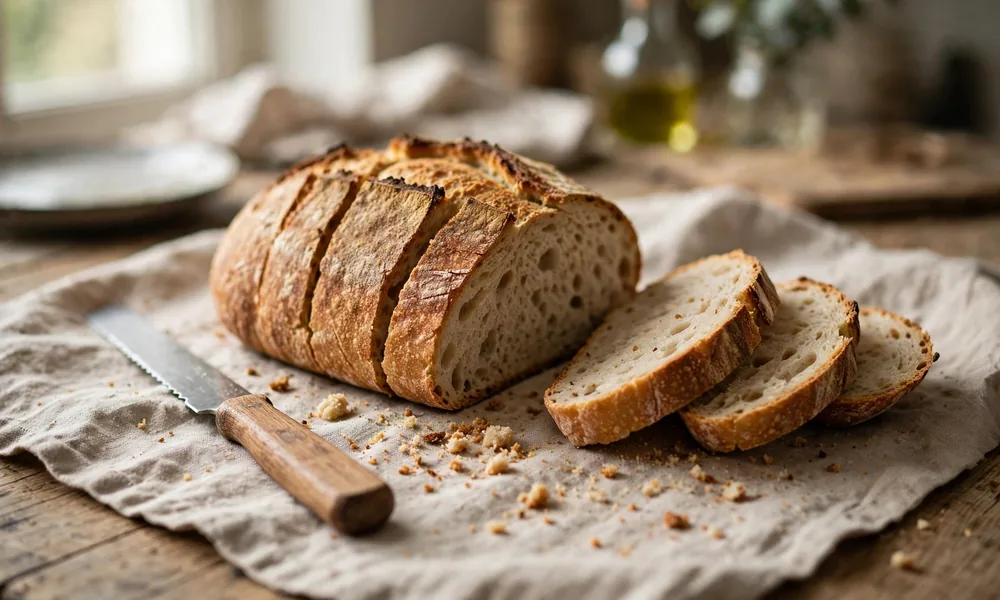
- Serrated edge with teeth matched to your bread: pointed for crusty loaves, scalloped for soft ones.
- Blade length of eight to ten inches, long enough to cross your widest loaf in one stroke.
- High-carbon stainless steel that holds its edge for months.
- Handle that fills your palm and stays secure when damp; offset design if you cut tall loaves.
- Balanced weight that feels level at the bolster, solid without tiring your wrist.
- Care plan: hand wash and dry, store in a block or on a strip, sharpen with a ceramic rod or a professional service.
Frequently Asked Questions
What is the best bread knife for crusty sourdough?
A pointed serrated knife with a ten-inch blade is the best choice for crusty sourdough. The pointed teeth bite into a hard crust quickly, and the long blade crosses a wide round loaf in one stroke, so the crumb stays open and airy.
Can I use a bread knife on cakes and tomatoes?
Yes. A scalloped blade is the better choice for layer cakes and soft tomatoes, because its gentle edge saws without tearing, while a pointed blade can be too aggressive on delicate surfaces.
How long should a bread knife be?
Eight to ten inches suits most kitchens. An eight-inch blade is the most versatile and easiest to control, while a ten-inch blade is better for wide round loaves and home baking.
How do I sharpen a serrated bread knife?
Use a ceramic honing rod on the flat side of the teeth for regular upkeep, and take the knife to a professional sharpening service for a full sharpening. Standard pull-through sharpeners can damage serrated teeth.
Why does my bread knife crush the bread?
It is usually dull teeth, a blade that is too short, or too much downward pressure. A sharp serrated edge should cut with a light sawing motion and almost no pressure.
Should a bread knife go in the dishwasher?
No. The heat, harsh detergent, and rattling against other cutlery dull the teeth and loosen the handle. Hand wash with warm water and soap, dry straight away, and store the knife in a block or on a magnetic strip.
The Bottom Line
The best bread knife of 2026 is the one that matches your bread: pointed teeth and a long blade for crusty sourdough, a scalloped edge for soft loaves, and a handle that stays comfortable through a long sawing stroke. Buy the length your loaves need, keep the teeth sharp, wash it by hand, and let the blade do the work. Do that, and every slice will come out clean, even, and uncrushed.


