Pie Servers That Lift a Clean Slice Every Time in 2026
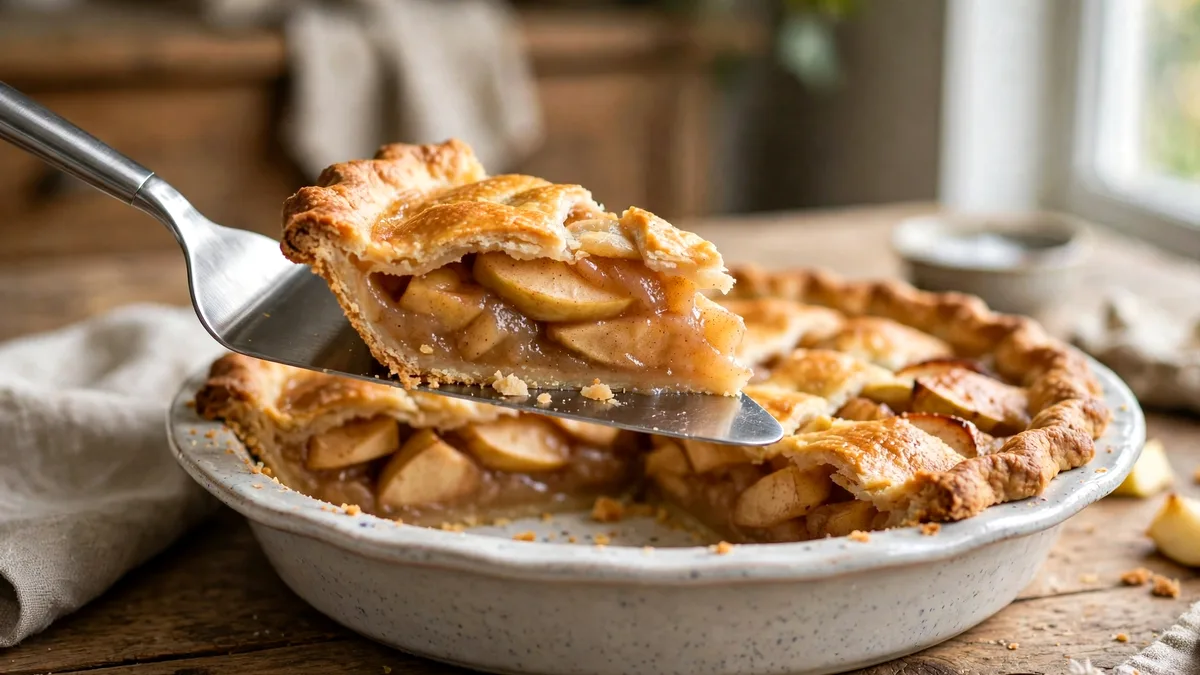
The best pie servers lift a slice clean out of the dish, crust intact and filling where it belongs, and set it down on a plate looking like it was cut by someone who knew what they were doing. A pie server is the flat, triangular spatula made for exactly this one job: sliding under a wedge of pie, supporting it all the way to the plate, and letting go without tearing the crust or spilling the filling. A butter knife bends and a spoon mashes the crust. This guide explains the blade shapes, handles and materials that decide whether a slice arrives whole or in pieces.
Key Takeaways
- A pie server is a flat triangular spatula, not a spoon or a knife: the wide blade supports a whole slice from crust to tip.
- An offset handle keeps your knuckles clear and the blade flat against the dish, the single most useful feature on any pie server.
- A blade 7 to 8 centimetres wide at the base suits a standard 9-inch pie; narrower blades suit tarts, wider blades suit deep-dish slices.
- Stainless steel is the safest all-round choice: thin enough to slide under a slice, stiff enough not to flex, and dishwasher-safe.
- Cut the pie first, let it rest ten minutes so the filling sets, then slide the server under each slice in one smooth movement.
What a Pie Server Is, and What It Is Not
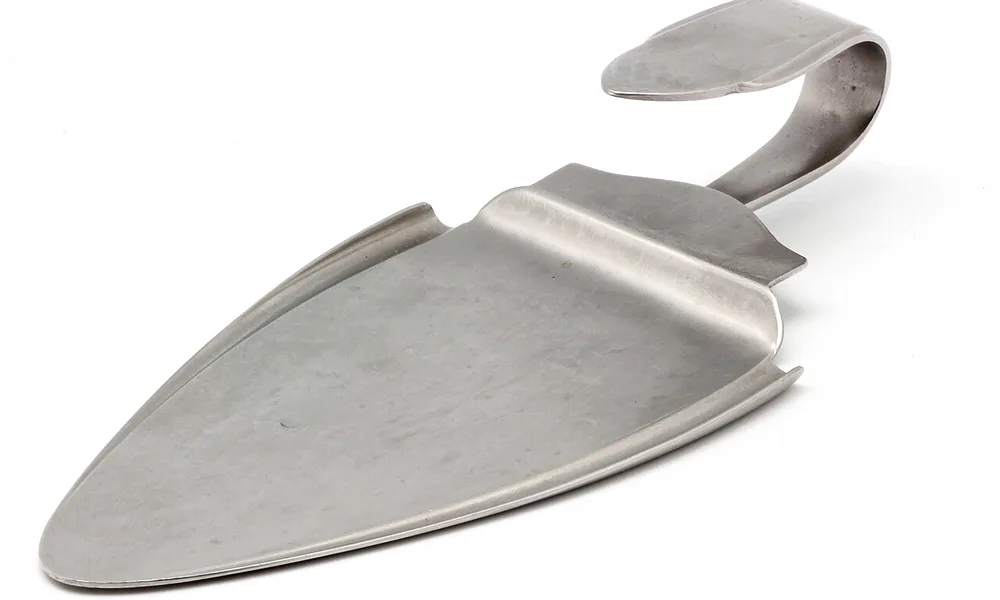
A pie server is a serving utensil with a flat, wide, roughly triangular blade and a handle set at a slight angle to it. The blade slides under a slice, the slice rests on it, and the server carries it to the plate. The triangle matches a slice, so the crust and the point are both supported. The blade is thin at the front edge so it slips between the slice and the dish, and stiff enough that a heavy slice does not bend it.
It is not a spatula: a spatula is made for flipping food in a pan, and its blade is usually rectangular, flexible, and too wide to fit between two cut slices. It is not a cake server either: a cake server is built for slices of cake, which are taller, lighter and firmer than pie, so cake servers are often narrower and more delicate. And it is not a serving spoon, which scoops and pours: a spoon cannot lift a slice at all. Our guide to the best serving spoons covers the tools for food that can be scooped; a pie server is the tool for food that must be lifted whole. The dish matters too: a smooth base and low, sloped sides make serving easiest, as our guide to the best pie dishes for a golden crust explains.

The Main Types of Pie Server
Almost every pie server falls into one of three designs, differing mainly in the blade angle, the edge, and whether it is sold alone or as part of a set. Pick the blade first: it decides whether the slice survives the journey.
The Classic Triangular Server
The classic server is a flat triangular blade on a straight handle, and it is the design most people should buy first. The blade is wide at the base and tapers to a point, matching a slice almost exactly, so the whole slice is supported from crust to tip. Look for a blade thin at the front edge and rigid through the middle, so a heavy slice does not sag. Stainless steel is the standard: thin, stiff, and easy to clean.
The Offset Server
An offset server has the handle raised above the blade, joined by a bent neck, so your hand sits higher than the pie while the blade stays flat on the dish. This is the single most useful feature on a pie server, and it is worth paying a little more for. With a straight handle, your knuckles brush the pie as you slide the blade under a slice, and the blade tilts as your hand rises.
The Serrated-Edge Server
A serrated-edge server has a fine toothed edge along one side of the blade, so it can cut as well as lift. It is useful when the slices have not been cut cleanly through, or when the crust is tough and a smooth edge would push rather than slice. The serrations should be fine, like a bread knife, not coarse: coarse teeth tear pastry. A serrated server is a good second server rather than a first: the teeth make it harder to slide under a cut slice, and they are fiddly to clean.
Blade Shape and Size: What Actually Decides a Clean Slice
The blade is where a pie server succeeds or fails, and three measurements decide it: width, length, and thickness. Width matters most. A blade about 7 to 8 centimetres wide at the base suits a standard 9-inch pie, matching the crust edge of a slice cut into eight. A narrower blade, around 5 centimetres, suits small tarts. A wider blade, 9 centimetres or more, suits deep-dish slices.
Length should match the radius of the dish: around 10 to 12 centimetres for a 9-inch pie, so the tip reaches the centre and the base reaches the crust. A blade that is too short leaves the tip unsupported, and the point snaps off as you lift. Thickness is a balance: too thin and the blade flexes, too thick and it will not slide under the slice. The front edge should be bevelled, ground thin on one side.
Handles and Materials
The handle decides how the server feels in the hand, and a server that is awkward to hold will not serve a clean slice whatever the blade is like. A handle of 12 to 14 centimetres suits most hands, long enough for a firm grip and short enough to stay out of the way. The join between handle and blade fails first on cheap servers, so check it: twist the handle gently and reject anything that moves.
Stainless steel handles are the safest choice: they match the blade, they do not stain, and they survive the dishwasher. Wooden handles look warmer and feel comfortable, but wood needs hand washing and occasional oiling, and it can split if left soaking. Black nylon handles are the most comfortable for serving many slices, because they do not slip when hands are damp. Silver-plated servers look beautiful on a formal table, but they tarnish and are usually too delicate for a heavy deep-dish slice.
Pie Servers Compared
| Type | Blade | Best for | Weakness |
|---|---|---|---|
| Classic triangular | Flat triangle, 7–8 cm wide | Everyday pies, first buy | Knuckles can brush the pie |
| Offset | Triangular, raised handle | Deep dishes, frequent serving | Takes more drawer space |
| Serrated-edge | Triangle with fine teeth | Cutting and serving at the table | Harder to clean, rougher slide |
| Silver-plated | Delicate, decorative | Formal occasions | Tarnishes, too light for heavy slices |
How to Serve a Clean Slice, Step by Step
A good server still needs good technique. Cut the pie first: use a sharp knife, cut straight down through the crust and the filling, and wipe the knife between cuts so filling does not drag across the next slice. Let the pie rest for ten minutes after cutting, longer for a fruit pie, so the filling sets and the slices hold together.
Slide the server in from the outside: start at the crust edge, keep the blade flat against the dish, and push it smoothly under the slice in one movement. Do not saw or wiggle it, which breaks the crust. Once the blade is fully under the slice, lift straight up, keeping the blade level, and carry it to the plate without tilting. Set it down by sliding the blade out from under the slice rather than tipping it off, which is the moment most slices break.
What to Avoid When Buying a Pie Server
The most common mistakes are buying a blade too narrow for the pie, choosing a server that flexes under a heavy slice, and picking a handle that is uncomfortable to hold. Avoid servers with a blunt, square front edge, which push slices instead of sliding under them, and avoid very cheap servers where the handle is glued rather than riveted or welded to the blade. Avoid novelty servers with decorative cut-outs, which weaken the blade and trap filling. Clean the server soon after use, and store it flat, never loose among heavy pans.

Your Pie Server Checklist
- Choose a triangular blade 7 to 8 centimetres wide at the base for a 9-inch pie, narrower for tarts, wider for deep-dish slices.
- Pick an offset handle if you serve from deep dishes or serve pie often; it keeps the blade flat and your knuckles clear.
- Check the front edge is bevelled and thin enough to slide under a slice without pushing it.
- Make sure the blade is stiff: press it against a hard surface and reject anything that flexes.
- Choose stainless steel for everyday use, wood for the table, silver plate only for formal occasions.
- Cut the pie first, let it rest ten minutes, slide the server in from the crust edge, and slide it out under the slice on the plate.
Frequently Asked Questions
What is the difference between a pie server and a cake server?
A pie server is wider and stiffer, built for a heavy, wet slice of pie that can fall apart. A cake server is narrower and more delicate, built for a tall, firm slice of cake. Either can do the other’s job in a pinch, but a cake server will flex under a deep-dish fruit pie.
Can I use a spatula instead of a pie server?
You can, but it will not work as well. A spatula is rectangular and flexible, so it does not support the triangular shape of a slice, and it is usually too wide to fit between cut slices.
Do I need an offset pie server?
Not always, but it is the most useful upgrade. An offset handle keeps your hand above the pie while the blade stays flat, which matters most with deep dishes. If you serve pie only occasionally from a shallow dish, a classic straight server is fine.
What size pie server do I need for a 9-inch pie?
A blade about 7 to 8 centimetres wide at the base and 10 to 12 centimetres long, matching the radius of a 9-inch dish. Smaller blades suit tarts, wider blades suit deep-dish pies.
How do I stop a slice falling apart when I serve it?
Cut the pie first, let it rest ten minutes so the filling sets, and slide the server under the slice in one smooth movement from the crust edge. Lift level, carry without tilting, and slide the blade out instead of tipping it off.
Can a pie server go in the dishwasher?
A stainless steel server can, though hand washing is gentler on the edge. Wooden handles should never go in the dishwasher or be soaked, and silver-plated servers need hand washing and polishing.
The Bottom Line
A pie server is a small, simple tool, and it is the difference between a pie that arrives on the plate looking like it did in the dish and a pie that arrives as a pile. Buy a classic triangular server in stainless steel, 7 to 8 centimetres wide at the base, with a bevelled edge and a stiff blade, and choose an offset handle if you serve from deep dishes. Cut the pie, let it rest, and slide the server under each slice in one smooth movement. When the pie needs to travel, our guide to the best pie carriers keeps it in one piece.